Calcium Carbonate Knowledge Hub
How to Set Up a Calcium Carbonate Plant
2026-09-04 17:26:09
We are Liming Heavy Industry, a manufacturer of various types of industrial crushers, such as Raymond Mill, Trapezoidal Mill, Vertical Mill, Ultrafine Mill, Ball Mill, etc.
Our mills can process the following minerals:
limestone, quicklime, kaolin, talc, barite, bentonite, calcium carbonate, dolomite, coal, gypsum, clay, carbon black, slag, cement raw materials, cement clinker, etc.
If you need a mill to process stone or minerals into powder, please feel free to contact me (WhatsApp: +8615333807511). Thank you.
To set up a calcium carbonate plant, begin with the product and raw material—not with a grinding mill quotation. Define the GCC grades you intend to sell, test the actual calcite, marble, limestone, or chalk feedstock, select a process route that can meet the required D50/D97 and throughput, then engineer the complete plant around crushing, grinding, classification, dust collection, storage, packing, quality control, permits, and logistics.
A viable plant is a market-and-process project rather than an equipment purchase. For customers in PVC, PP, PE, masterbatch, rubber, sealants, adhesives, coatings, paper, and construction materials, success depends on consistently supplying the specified particle-size distribution, whiteness, moisture, purity, and—where required—surface-treated GCC at a competitive delivered cost.
1. Define the Product Portfolio
Start by deciding what the plant will sell. “Calcium carbonate powder” is too broad because construction filler, PVC filler, paint extender, masterbatch filler, and coated ultrafine GCC may require very different raw material, processing intensity, quality control, and packaging.
For each proposed product grade, define:
End-use market: PVC pipe, cable compound, PP/PE masterbatch, rubber, sealant, adhesive, coating, paper, putty, dry-mix mortar, or another application.
Uncoated GCC or coated calcium carbonate.
Target D10, D50, D90, and D97 or D98.
Maximum sieve residue and the agreed test method.
Minimum whiteness or brightness.
CaCO3 content and impurity limits.
Maximum moisture and expected bulk-density range.
Coating-agent requirement, treatment level, and performance test where applicable.
Packaging format: bulk tanker, valve bags, open-mouth bags, or jumbo bags.
Expected annual tonnes by grade and target selling price.
Use PSD instead of mesh alone. “1,250 mesh” does not sufficiently define a fine GCC grade. A better commercial specification is:
Coated GCC for rigid PVC: D50 5–7 μm, D97 maximum 25 μm, defined coarse-residue limit, specified whiteness and moisture, controlled stearic-acid treatment, and agreed dispersion performance in the customer’s compound.
That specification can be used for equipment selection, laboratory control, customer qualification, and supplier performance guarantees.
2. Confirm the Raw Material
Raw material determines the value ceiling of a GCC plant. Before buying land or machinery, obtain representative samples from the intended quarry, mine, or stone supplier. Test multiple samples across likely production zones and seasons—not only one favorable laboratory sample.
Key raw-material tests include:
| Parameter | Why it matters | Typical plant implication |
|---|---|---|
| CaCO3 content | Determines chemical purity and market suitability | Higher-value applications may require tighter impurity control |
| Whiteness and brightness | Affects coatings, paper, plastics, and premium filler value | Low whiteness may limit market access regardless of fineness |
| Silica and quartz | Raises abrasion and may create exposure concerns | Can increase wear, lower product purity, and require stronger dust controls |
| Iron and dark minerals | Can reduce whiteness and visual consistency | May require sorting, beneficiation, or rejection of certain quarry zones |
| Moisture | Influences feed flow, grinding efficiency, and classification | May require covered storage, drying, or seasonal operating adjustments |
| Hardness and abrasiveness | Influence energy use and wear-part consumption | Needed for mill selection and realistic operating-cost estimates |
| Grindability | Shows achievable fineness and capacity | Must be confirmed through mill or pilot testing |
Common GCC feedstocks include calcite, marble, limestone, and chalk. The standard GCC route mechanically crushes, grinds, classifies, collects, conveys, and stores these minerals. However, mineral name alone is not a quality specification. Two limestone sources can deliver very different whiteness, silica, moisture, grinding energy, and end-use performance.
3. Choose the Process Route
Most industrial GCC projects use dry processing. The stone is crushed, ground, air classified, collected, and packed. Coated grades add a surface-modification section. Wet processing may be justified for special ultrafine grades or slurry markets, but it adds water management, dewatering, drying, and potentially wastewater-treatment requirements.
Typical dry GCC process flow
Receive and segregate raw stone: Store material by quarry grade, moisture condition, or intended product quality.
Clean and remove contaminants: Remove soil, weathered stone, visible dark materials, and tramp metal.
Crush and screen: Reduce stone to the feed size required by the grinding mill.
Buffer and dose: Use a day bin and controlled feeder to keep material flow stable.
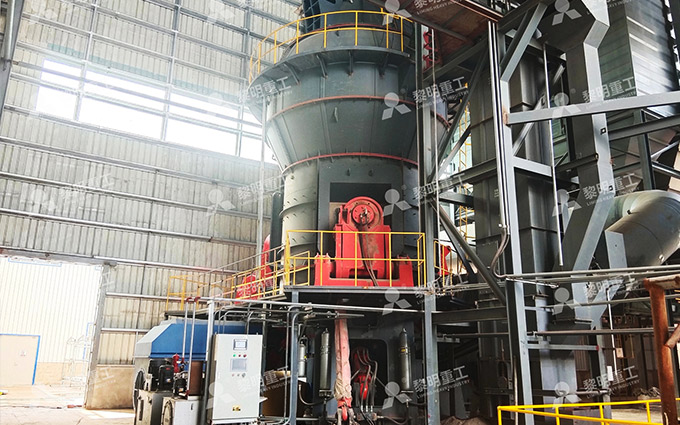
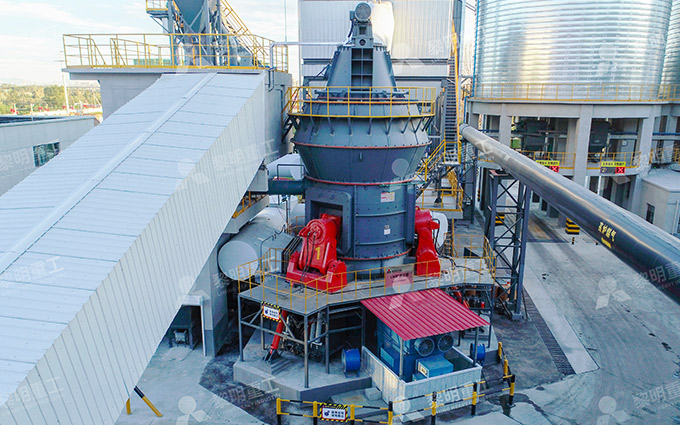
Grind: Reduce material through a ball mill, vertical roller mill, ring-roller mill, pendulum mill, or other selected technology.
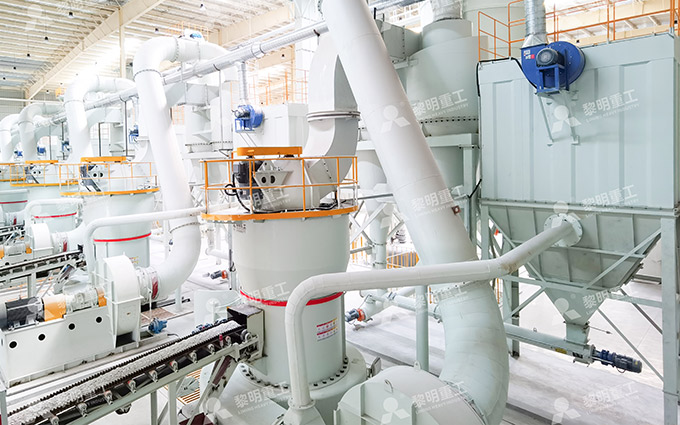
Classify: Use air classification to remove qualified powder and return coarse particles for additional grinding.
Collect dust and product: Use cyclones, bag filters, fans, and sealed discharge equipment.
Coat if required: Apply stearic acid or another selected modifier under controlled conditions.
Store and dispatch: Transfer qualified product to silos, packing equipment, or bulk loading.
Published process guidance describes the GCC production route as crushing, grinding, classifying, dust collection, transportation, and storage. For finer products, the grinding and classification sections must be designed as a closed circuit because coarse material returns for further size reduction while qualified fine particles leave as finished product.
4. Select Equipment by Required Grade
Equipment should be selected against the required product PSD and net hourly capacity. Do not select a mill only because it has a suitable maximum capacity in a catalog. The same mill may produce a high tonnage at a coarse grade and a much lower tonnage at D97 10 μm or D97 5 μm.
| Product direction | Indicative PSD range | Potential grinding route | Main selection issue |
|---|---|---|---|
| Coarse or standard GCC | Approximately D97 45–75 μm | Pendulum/Raymond-type mill or simpler dry grinding circuit | High throughput and reliable material handling |
| Fine GCC | Approximately D97 20–45 μm | Ball mill + air classifier, vertical roller mill, or ring-roller mill | Stable PSD, controlled coarse residue, and energy efficiency |
| Ultrafine GCC | Approximately D97 5–20 μm | High-efficiency ball-mill-and-classifier circuit or dedicated ultrafine mill | Classifier precision, circulating load, wear, and reduced output |
| Very fine specialty GCC | Approximately D97 below 5–10 μm | Advanced air classification, stirred-media system, jet mill, or specialty circuit | Market margin must justify higher energy and process complexity |
One published process-selection guide describes primary crushing to approximately 50 mm and fine-grinding options in the approximate 5–45 μm range. Treat such values as early planning references, not plant guarantees. The actual design must be validated with the intended mineral source, feed moisture, target D50/D97, and capacity requirement.
Essential plant equipment
Raw-material receiving hopper and controlled feeder.
Primary and, where needed, secondary crushing equipment.
Screening, magnetic separation, and feed-storage bins.
Grinding mill and associated drives, lubrication, and protection systems.
Dynamic air classifier and coarse-return equipment.
Induced-draft fan, cyclone, bag filter, ducts, and rotary airlocks.
Product silos and powder conveying equipment.
Coating mixer, additive storage, melting/dosing equipment, and cooling system for coated GCC.
Packing machines, FIBC fillers, bulk-tanker loaders, and pallet/warehouse systems.
PLC or DCS controls, laboratory equipment, electrical distribution, and safety systems.
5. Plan the Site and Utilities
Select a site based on raw-material access, customer logistics, power availability, permitting feasibility, water and drainage requirements, labor, and room for future expansion. A lower land price can be outweighed by costly stone transport, weak grid capacity, poor truck access, or insufficient space for silos and stockpiles.
Design the layout around material flow. Stone should move from receiving to crushing, feed storage, grinding, classification, finished-product silos, and dispatch with minimal unnecessary handling. At the same time, leave access for mill maintenance, classifier inspection, filter-bag replacement, lifting equipment, dust-cleanout points, and safe truck circulation.
Planning references for GCC plant setup specifically identify land and location strategy near limestone deposits, process layout, crushing and grinding, classification, raw-material and finished-product storage, bagging, utilities, manpower, and dust-control systems as core project elements.
Utility checklist
Electrical supply, transformer capacity, motor-control center, backup philosophy, and local energy price.
Compressed air for pulse-jet bag filters, pneumatic valves, and packing equipment.
Process air and fan capacity for classification, pneumatic conveying, and filtration.
Thermal energy where drying wet feed or melting coating agent is needed.
Water, drainage, stormwater management, and wastewater handling where washing or wet processing is used.
Fire protection, emergency power, lighting, communications, and site security.
6. Build Environmental and Safety Systems In
Dust control must be included in the original process design, not added after commissioning. Enclose transfer points, use correctly sized local exhaust and bag filters, seal rotary valves and conveyors, maintain stable process-air balance, and design housekeeping procedures for fine mineral powder.
Where raw material contains crystalline silica, evaluate respiratory exposure at crushing, screening, transfer, grinding, maintenance, and cleanup points. In the United States, OSHA’s general-industry silica standard requires engineering and work-practice controls to reduce exposure to or below the permissible exposure limit where feasible. It also prohibits dry sweeping or dry brushing, and restricts use of compressed air for cleaning, when those activities could contribute to respirable crystalline silica exposure.
Environmental and safety planning should also cover dust emissions, noise, combustible-dust evaluation where applicable, confined spaces, machine guarding, lockout/tagout, electrical safety, fall protection, mobile-equipment traffic, chemical handling for coating agents, and emergency response. Obtain local legal, engineering, and environmental advice before construction; permits and operating conditions differ by jurisdiction.
7. Build the Business Case
Before committing capital, build a financial model by product grade. The relevant question is not only “Can the plant make powder?” but “Can it sell enough qualified powder at a margin that covers quarry cost, power, labor, wear parts, coating agent, packaging, logistics, maintenance, finance, and compliance?”
| Business-case item | What to calculate | Why it matters |
|---|---|---|
| Sales volume | Annual tonnes by product grade and customer segment | Defines realistic plant capacity and product-silo needs |
| Net selling price | Delivered price by grade, packaging type, and market | Fine and coated grades may justify more processing cost |
| Raw-material cost | Quarry or purchased-stone price plus transport and handling | Often the largest cost before energy and logistics |
| Energy cost | kWh/t by product grade and local electricity tariff | Rises as GCC becomes finer |
| Wear and maintenance | Media, liners, rollers, classifier wear parts, filters, labor, downtime | Depends strongly on feed abrasiveness and equipment choice |
| Coating and packaging | Stearic acid or modifier, bags, FIBCs, pallets, bulk loading | Changes margin and determines product-market fit |
| Capital cost | Land, civil works, equipment, electrical, installation, permits, commissioning, contingency | Prevents underestimating the complete project cost |
| Working capital | Stone inventory, packaged inventory, customer credit, spare parts | Essential for operating stability after start-up |
Prepare at least three cases: conservative, base, and upside. Include realistic ramp-up time because new GCC plants often need trial production, customer validation, PSD tuning, coating optimization, and sales qualification before operating at full commercial capacity.
8. Run Trials and Obtain Guarantees
Before placing an equipment order, conduct grinding and classification trials using representative raw material. Do not rely only on generic supplier data or one laboratory sample. The trial should verify achievable PSD, net output, specific energy, product yield, wear behavior, moisture sensitivity, whiteness retention, and coating performance where needed.
Require supplier guarantees that clearly state:
Raw-material test conditions and permitted variability.
Guaranteed net finished-product output.
Target D50 and D97/D98 with agreed test method.
Maximum coarse residue, moisture, and product-quality limits.
Specific energy basis and major utility assumptions.
Dust-collection and emission performance, where contractually applicable.
Equipment boundary of supply, including auxiliaries and controls.
Commissioning scope, training, spare parts, warranty, and acceptance-test procedure.
Project guidance for GCC plants commonly separates the build process into project planning, process-flow design, and equipment selection, while emphasizing that local environmental requirements affect both construction and equipment configuration.
9. Commission in Phases
Commissioning should proceed from individual equipment checks to integrated production trials. Starting at full load too early can create damage, dust problems, excessive off-spec stock, and poor customer samples.
Verify civil works, electrical systems, lubrication, guarding, interlocks, and safety devices.
Run conveyors, feeders, crushers, fans, filters, and packing equipment without material.
Introduce material at low feed rate and verify flow, dust collection, and stable air balance.
Increase mill loading gradually while monitoring power, vibration, pressure, temperature, and classifier performance.
Adjust classifier and airflow settings to achieve target D50 and D97.
Validate silos, packing, bulk loading, and lot traceability.
Produce qualification samples for target customers.
Complete a performance test only after the line operates stably at agreed conditions.
Common Setup Mistakes
Starting with a mill quotation
Buying the main mill before defining markets, raw material, PSD, capacity, and logistics can create a plant that makes powder but cannot produce the highest-value grades profitably.
Using mesh as the only quality requirement
Mesh does not adequately define fine or ultrafine GCC. Use D50, D97/D98, coarse residue, whiteness, moisture, and an agreed test method.
Ignoring wet-season feed conditions
Moisture can lower capacity, cause caking, disrupt classification, and create filter or silo problems. Test seasonal feed variation and design storage or drying accordingly.
Underestimating classification, filtration, and packing
The classifier controls product top size; the baghouse stabilizes airflow and recovers powder; the packing and loading system controls dispatch. These are not minor accessories.
Not designing for maintenance and expansion
Leave room for lifting, filter-bag replacement, media loading, classifier inspection, duct cleaning, future silos, and a possible second grinding train. A compact layout that blocks maintenance will cost more over the plant’s life.
FAQ
What is the first step in setting up a calcium carbonate plant?
Define the marketable GCC grades and test the actual raw material. Confirm customer requirements for PSD, whiteness, moisture, purity, coating status, packaging, annual volume, and price before choosing equipment.
What equipment is needed for a dry GCC plant?
A typical line includes raw-material receiving and feeding equipment, crushers, screens, magnetic separation, feed bins, a grinding mill, dynamic air classifier, fan, cyclone, pulse-jet bag filter, product silos, conveyors, packing or bulk-loading equipment, controls, and laboratory instruments. Coated-GCC production also needs additive storage, melting/dosing, mixing, cooling, and surface-treatment control.
Should the plant be near the quarry or near customers?
Choose the location by comparing stone transport, finished-product transport, electricity, land, permits, labor, market access, and storage requirements. GCC is bulky, so proximity to a consistent mineral source is often valuable, but a location closer to high-volume customers can be preferable if logistics or product distribution economics justify it.
How long does it take to set up a GCC plant?
The timeline depends on land acquisition, permits, civil works, equipment lead times, electrical infrastructure, installation complexity, and commissioning. Build the schedule from these workstreams rather than relying on a generic equipment-delivery date. Allow additional time for customer qualification and product optimization after mechanical completion.
Bottom Line
Set up a calcium carbonate plant by working in the correct order: define the product portfolio, validate raw material, select the process route, engineer the complete system, secure permits and utilities, model the economics, run trials, obtain guarantees, and commission gradually.
The best GCC plant is not necessarily the one with the largest mill. It is the one that reliably converts the available mineral into customer-approved calcium carbonate grades—at the required D50/D97, whiteness, moisture, coating level, cost, and delivery format—while meeting safety, environmental, and operational requirements.