Calcium Carbonate Knowledge Hub
How to Design a GCC Production Line
2026-09-04 17:27:02
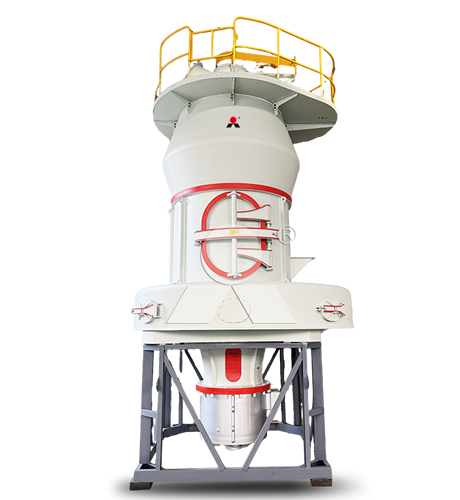
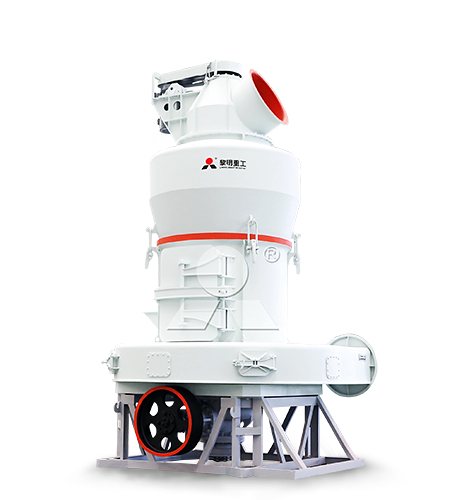
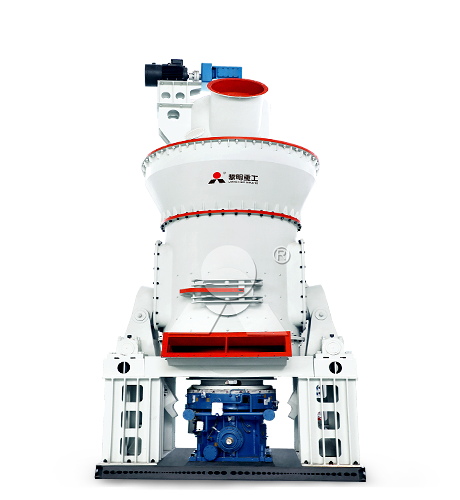
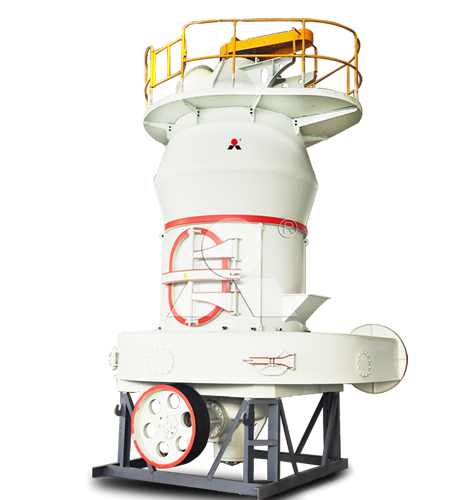
We are Liming Heavy Industry, a manufacturer of various types of industrial crushers, such as Raymond Mill, Trapezoidal Mill, Vertical Mill, Ultrafine Mill, Ball Mill, etc.
Our mills can process the following minerals:
limestone, quicklime, kaolin, talc, barite, bentonite, calcium carbonate, dolomite, coal, gypsum, clay, carbon black, slag, cement raw materials, cement clinker, etc.
If you need a mill to process stone or minerals into powder, please feel free to contact me (WhatsApp: +8615333807511). Thank you.
Design a GCC production line by defining the saleable powder first, validating the actual mineral feedstock, and then sizing crushing, grinding, classification, collection, coating, storage, and dispatch around a complete material balance. The line should be designed to deliver a guaranteed net output at the required D50 and D97—not merely to process a certain amount of raw limestone per hour.
For industrial markets such as PVC, PP, PE, masterbatch, rubber, sealants, adhesives, coatings, paper, and construction products, GCC line design is fundamentally a product-quality exercise. The plant must consistently control particle-size distribution, coarse residue, whiteness, moisture, purity, surface treatment, and delivery format while maintaining practical energy use and uptime.
1. Establish the Design Basis
Before selecting a mill or drawing the layout, prepare a written design basis. This document aligns the quarry, sales, process-engineering, equipment, finance, and operations teams. It also provides a consistent basis for comparing supplier proposals.
The design basis should define the following.
| Design input | What to define | Why it matters |
|---|---|---|
| Product portfolio | Each GCC grade, end use, coating status, and annual volume | Determines fineness, equipment configuration, silo count, and dispatch system |
| PSD specification | D10, D50, D90, D97/D98, coarse residue, and test method | Defines the actual grinding and classification duty |
| Quality targets | Whiteness, CaCO3 content, moisture, bulk density, impurity limits | Controls raw-material selection and product-market suitability |
| Coating requirement | Uncoated or coated GCC, modifier type, dosage range, and performance criteria | Changes process flow, utilities, handling, and quality-control needs |
| Capacity | Net t/h by grade, annual tonnes, operating hours, and availability target | Prevents use of a coarser-grade catalog capacity as the design capacity |
| Raw material | Calcite, marble, limestone, or chalk source and expected variability | Determines achievable quality, wear, energy use, and process risk |
| Site conditions | Power, climate, altitude, space, logistics, permits, and expansion plans | Influences plant layout, fan sizing, feed-moisture control, and capital cost |
A useful capacity statement is: Produce 20 t/h of coated GCC from approved calcite, with D50 4–6 μm, D97 maximum 20 μm, defined residue and whiteness limits, moisture below the agreed threshold, and output measured at the finished-product silo. That is meaningful for process design. “20 TPH calcium carbonate plant” is not enough.
2. Test and Qualify the Raw Material
GCC quality begins with the natural mineral. Test representative samples from every intended quarry bench, supplier, or stockpile. One favorable sample is not sufficient if material characteristics change across the deposit or between wet and dry seasons.
At minimum, determine:
CaCO3 content and full chemical composition.
Whiteness, brightness, and color variation.
Silica, quartz, iron-bearing minerals, clay, dolomite, and other impurities.
Moisture range at quarry, receiving point, and mill feed.
Hardness, abrasiveness, and grindability.
Natural fracture behavior and crushed-feed size distribution.
Potential metal contamination and magnetic separation requirements.
Raw-material properties influence far more than product purity. High silica or quartz can increase wear on crushers, grinding media, liners, classifier wheels, and ducts. Iron-bearing impurities may lower whiteness. Excess moisture can cause agglomeration, unstable feeding, reduced grinding efficiency, classifier problems, and powder buildup in hoppers or bag filters.
Use raw-material test work to establish the maximum acceptable moisture, permitted impurity levels, expected specific energy, and likely wear rates. Then include those limits in the supplier’s performance guarantee and the plant’s incoming-material quality-control plan.
3. Select the Process Route
Most GCC production lines use a dry process: crushing, controlled feeding, grinding, air classification, collection, optional surface treatment, and packing. A wet route may be justified for specialty ultrafine products or slurry markets, but it introduces water management, dewatering, drying, and possibly wastewater-treatment requirements.
Typical dry GCC process flow
Raw-material receiving and stockpiling: Receive calcite, limestone, marble, or chalk and segregate it by quality and moisture condition.
Cleaning and impurity removal: Remove soil, weathered stone, visible dark material, tramp metal, and unsuitable rock.
Crushing and screening: Reduce stone to a stable mill-feed size and remove oversize particles.
Buffer storage and dosing: Use a day bin and controlled feeder to provide continuous, stable feed to the grinding circuit.
Grinding: Reduce calcium carbonate to the target powder range.
Air classification: Separate qualified fine GCC from particles that must return for further grinding.
Collection and filtration: Recover finished powder in cyclones and bag filters while maintaining stable process airflow.
Optional coating: Surface treat selected GCC grades for polymer, rubber, sealant, and adhesive applications.
Storage and dispatch: Store product in silos and load it into bags, FIBCs, or bulk tankers.
In a ball-mill-and-air-classifier circuit, the mill reduces particle size and the classifier determines which particles are sufficiently fine to become product. Qualified powder is collected in cyclone or dust-collection equipment, while coarse particles return to the mill through a closed loop. This principle applies whether the plant uses a ball mill, ring-roller mill, vertical roller mill, or another air-classified grinding system.
4. Size the Grinding and Classification Circuit
Grinding and classification must be designed together. The mill creates the particle-size distribution; the classifier determines the fine cut and prevents oversize particles from entering the finished product. The finer the required product, the higher the energy demand, circulating load, and sensitivity to operating conditions.
| Product direction | Indicative PSD target | Potential equipment route | Primary design focus |
|---|---|---|---|
| Coarse or standard GCC | Approximately D97 45–75 μm | Pendulum/Raymond-type mill or simple dry grinding circuit | High throughput, stable crushing, and low handling cost |
| Fine GCC | Approximately D97 20–45 μm | Ball mill + classifier, vertical roller mill, or ring-roller system | Controlled PSD, reliable collection, and energy efficiency |
| Ultrafine GCC | Approximately D97 5–20 μm | High-efficiency ball-mill/classifier circuit or dedicated ultrafine mill | Classifier efficiency, coarse-tail control, and higher circulation |
| Specialty very-fine GCC | Approximately D97 below 5–10 μm | Advanced classification, stirred-media milling, jet milling, or specialty circuit | Margin justification, energy intensity, contamination, and wear |
Do not use mesh as the sole design parameter. At fine and ultrafine sizes, two products sold under the same mesh description can have different D50 values, D97 values, coarse residue, particle shape, and application performance. Specify the measurement instrument, dispersant or sample preparation, reporting method, and acceptance tolerance along with the PSD values.
Build a complete material balance
Design the classifier, fan, baghouse, ducts, and return conveyor from the full internal flow, not only from net finished-product capacity. In a closed circuit, the classifier handles fresh feed plus coarse material returning for regrinding. At a fine classifier cut, the circulating load may be several times the final product rate.
Ask the equipment supplier to provide a material balance that includes:
Raw-stone feed and crusher capacity.
Crushed-feed rate and maximum particle size.
Fresh feed to the mill.
Total mill discharge rate.
Classifier feed rate.
Fine-product yield and net finished-product rate.
Coarse-return rate and circulating-load ratio.
Expected product losses in collection, grade changes, and dust recovery.
Build a complete air balance
Airflow is part of the classification process, not merely ventilation. The induced-draft fan, classifier, cyclone, baghouse, ductwork, rotary airlocks, and seals must be designed as one system. Changes in bag-filter pressure drop, fan performance, duct leakage, or hopper discharge can alter classification conditions and cause unstable D97.
The air balance should specify:
Process-air volume at each operating grade.
Fan static pressure, efficiency point, motor rating, and speed-control range.
Classifier pressure condition and required airflow.
Cyclone duty and expected separation performance.
Bag-filter air-to-cloth ratio, filter area, pressure-drop range, and cleaning-air demand.
Duct sizes, transport velocities, insulation where needed, and cleanout access.
Air-leakage control at feeders, valves, inspection doors, and product discharge points.
5. Design the Coating Section
If the product portfolio includes coated GCC for PVC, PP, PE, masterbatch, rubber, sealants, or adhesives, surface modification must be integrated into the production design. It should not be treated as a minor addition after the mill is selected.
The coating section typically includes low-moisture GCC feed, additive storage, stearic-acid melting or conditioning, precision dosing, high-intensity mixing, temperature control, cooling, product collection, and coated-product storage. Coated and uncoated products should have segregated routing and storage to avoid contamination.
Fine powders have higher specific surface area, so coating-agent dosage and mixing conditions become more sensitive as the product gets finer. Confirm coating quality through both powder tests and application testing in the intended PVC compound, PP/PE masterbatch, rubber compound, adhesive, or sealant.
6. Design Storage, Packing, and Logistics
A GCC line is only productive when it can store and dispatch its powder. Product handling is especially important for ultrafine GCC because powder can be aerated, cohesive, and prone to bridging, ratholing, segregation, and dust leakage.
| Area | Design requirement | Common oversight |
|---|---|---|
| Finished-product silos | Capacity for production, laboratory release, dispatch variation, and grade segregation | Too little storage forces grinding stops when truck loading is delayed |
| Silo discharge | Mass-flow or suitable discharge design, venting, level measurement, and flow aids when justified | Assuming coated and uncoated powders flow the same way |
| Bagging | Enough bags per hour, dust control, weighing accuracy, and traceability | Bagging becomes the hidden bottleneck after the mill is commissioned |
| FIBC loading | Stable bulk density, filling accuracy, safe lifting, and contamination control | Not allowing sufficient space for handling and storage |
| Bulk loading | Separate silos, dust-free tanker loading, truck circulation, and scheduling capacity | Loading equipment cannot match continuous plant production |
Design separate silos for major product families where possible, particularly for coated and uncoated grades. If one grinding circuit must produce several grades, include cleanout access, flushing procedures, lot segregation, and production scheduling that minimize grade-change losses.
7. Integrate Safety and Environmental Controls
Design dust control into the plant from the beginning. Enclose crushers, screens, conveyors, transfer chutes, mills, classifiers, filters, and packing stations as appropriate. Use sealed rotary valves, local exhaust, properly sized bag filters, pressure monitoring, and dust-minimizing housekeeping methods.
Where the raw material includes crystalline silica, evaluate potential respirable silica exposure during crushing, screening, grinding, maintenance, and cleanup. California’s silica guidance identifies crushing, grinding, cutting, and similar mechanical actions on silica-containing materials as high-exposure trigger tasks in relevant settings. A process design should therefore control dust at the source through enclosure and local exhaust, supported by appropriate work practices and exposure assessment.
Engineering-control literature identifies wet methods and local exhaust ventilation as major approaches for reducing silica and mineral-dust exposure. In a dry GCC plant, wet suppression may not be compatible with the grinding process because added moisture can cause caking and reduce capacity. Local exhaust, sealed transfer, efficient filtration, and suitable cleaning methods are therefore especially important. Final requirements should be confirmed against local occupational, environmental, fire, and building regulations.
8. Plan Automation and Quality Control
Automation is increasingly important as capacity and product variety increase. Stable feed rate, classifier speed, airflow, mill load, and bag-filter pressure support stable particle-size distribution. Manual operation may be adequate for a simple single-grade line, but it becomes less practical when a plant switches frequently between fine, ultrafine, coated, and uncoated GCC products.
Include monitoring and control for:
Raw-material feed rate and feeder calibration.
Mill motor load, vibration, bearing temperature, and lubrication condition.
Classifier-wheel speed and classifier operating status.
Fan speed, airflow, static pressure, and duct pressure.
Bag-filter differential pressure, cleaning-cycle condition, and hopper level.
Product-silo high-level protection and discharge status.
Coating-agent temperature, flow, and dosing accuracy.
Batch records, lot traceability, alarms, interlocks, and maintenance history.
The quality-control laboratory should provide rapid feedback on incoming mineral quality, moisture, whiteness, PSD, residue, bulk density, and coating performance. At higher output, delays in laboratory feedback can result in large volumes of off-spec material before operators adjust the process.
9. Design for Reliability and Expansion
Consider the business cost of downtime before deciding between one large train and multiple parallel trains. A single large grinding and classification line can reduce duplicated equipment, but a major mill, classifier, filter, or fan failure can stop nearly all production. Parallel lines can improve availability and allow simultaneous grade production, but add capital cost and operating complexity.
Reserve layout space and utility capacity for future expansion, including additional mill capacity, classifier capacity, bag-filter area, product silos, coating equipment, and loading stations. It is usually less expensive to preserve expansion corridors and electrical allowances during initial civil design than to retrofit them after the plant starts operating.
10. Validate Through Trials and Guarantees
Before placing the final equipment order, test representative raw material with the proposed grinding and classification technology. The test program should verify achievable D50 and D97, net output, specific energy, product yield, moisture sensitivity, whiteness retention, wear behavior, and coating performance if coated GCC is planned.
Require a written performance guarantee covering:
Representative raw-material properties and permitted variation.
Guaranteed net finished-product output.
Target PSD, including D50 and D97/D98, using an agreed test method.
Maximum moisture, coarse residue, and relevant whiteness criteria.
Specific energy or defined electrical-load basis.
Dust-collection or emission-performance boundary, where applicable.
Equipment scope, control scope, commissioning support, training, and spare parts.
Acceptance-test protocol, sampling procedure, and remedies if results are not achieved.
FAQ
What is the first step in designing a GCC production line?
Define the product portfolio and test the actual raw material. Establish customer requirements for D50, D97, whiteness, moisture, purity, coating status, packaging, and annual demand before choosing the grinding technology.
Should a GCC line use a ball mill or a roller mill?
The answer depends on target PSD, capacity, raw-material properties, power cost, layout, maintenance resources, and grade flexibility. Ball mill plus external classifier systems are common for flexible fine-GCC production; roller-based systems can offer integrated dry grinding and classification. Compare options using the same guaranteed product specification and material balance.
Why is an air classifier necessary?
Grinding creates a range of particle sizes. The classifier removes material that already meets the target fineness and returns oversize particles to the mill. This helps control D97, reduce unnecessary overgrinding, and maintain product quality.
How should plant capacity be calculated?
Calculate net finished-product capacity separately for every grade. A plant rated at 20 t/h for D97 45 μm may deliver far less at D97 10 μm. Use annual demand by grade, planned operating hours, anticipated downtime, and grade-change losses to establish required design capacity.
Bottom Line
Design a GCC production line from the customer specification backward: define the grade portfolio, validate the mineral source, select the dry or wet route, build material and air balances, size grinding and classification together, and integrate coating, collection, storage, packing, safety, and controls from the start.
The strongest GCC plant is not the one with the biggest mill. It is the one that reliably produces customer-approved calcium carbonate at the required D50/D97, whiteness, moisture, coating level, cost, and dispatch format—while remaining maintainable, safe, compliant, and expandable.