Calcium Carbonate Knowledge Hub
How to Match Calcium Carbonate Mill Capacity to Your Plant
2026-09-04 17:16:22
We are Liming Heavy Industry, a manufacturer of various types of industrial crushers, such as Raymond Mill, Trapezoidal Mill, Vertical Mill, Ultrafine Mill, Ball Mill, etc.
Our mills can process the following minerals:
limestone, quicklime, kaolin, talc, barite, bentonite, calcium carbonate, dolomite, coal, gypsum, clay, carbon black, slag, cement raw materials, cement clinker, etc.
If you need a mill to process stone or minerals into powder, please feel free to contact me (WhatsApp: +8615333807511). Thank you.
Match calcium carbonate mill capacity to your plant by sizing the system for tonnes per hour of qualified finished powder, not for the mill’s maximum nameplate output. Start with annual sales volume, operating hours, target particle-size distribution, feed moisture, and product mix; then add realistic allowances for maintenance, grade changes, start-up losses, and demand growth.
A mill that appears large enough on paper can become undersized when the product is finer, the D97 limit is stricter, feed moisture rises, or the classifier and bag filter restrict the circuit. Conversely, an oversized mill can create unnecessary capital cost, poor load stability, and higher cost per tonne if the plant cannot keep it sufficiently loaded.
Start with qualified output
Installed mill capacity and saleable production capacity are not the same. The useful capacity is the amount of calcium carbonate that meets every agreed requirement: particle-size distribution, coarse-particle limit, moisture, whiteness, purity, coating quality where applicable, and packaging standard.
For example, a mill may produce a high tonnage of nominal “400-mesh” powder, but the actual market may require a defined D50, a low D97 or D98, limited sieve residue, low moisture, and stable whiteness. Material outside those limits must be reground, downgraded, blended only where permitted, or rejected. That is why capacity planning must begin with the finished-product specification.
Mill suppliers consistently note that calcium carbonate capacity varies with model, feed size, hardness, and target fineness. In real projects, feed moisture, silica content, classifier efficiency, airflow, and required product consistency also have a major effect.
Calculate the plant requirement
First define how much saleable calcium carbonate the plant must produce each year. Then convert that number into an hourly qualified-output requirement using the real number of productive operating hours—not the total hours in a calendar year.
Use the following planning logic without relying on an overly optimistic utilization assumption:
Set the annual sales target for each calcium carbonate grade.
Add stock-building needs, contract commitments, seasonal demand, and expected growth.
Estimate scheduled operating days and shifts.
Deduct planned maintenance, unplanned downtime, cleaning, grade changes, and start-up losses.
Calculate the required tonnes per hour of qualified finished powder.
Add a sensible capacity margin if future demand or feed variability is likely.
For a plant expected to sell 60,000 tonnes per year, operating 300 days per year on two 10-hour productive shifts, the base requirement is 10 tonnes per hour of saleable output. If the plant expects downtime, grade changes, or future sales growth, selecting equipment with only a nominal 10 t/h rating would be risky. The final mill should have enough reserve capacity to meet the product specification under normal—not ideal—operating conditions.
Define productive operating hours
Do not divide annual tonnage by 8,760 hours unless the plant truly operates continuously without interruption. Calcium carbonate plants lose production time through crusher maintenance, mill inspections, wear-part replacement, filter maintenance, power interruptions, material handling issues, bagging downtime, product changeovers, laboratory holds, and scheduled shutdowns.
| Planning factor | Effect on real capacity | What to do |
|---|---|---|
| Scheduled maintenance | Reduces annual productive hours for mill, crusher, classifier, bag filter, and packing equipment. | Build maintenance time into the annual operating-hour calculation. |
| Unplanned downtime | Can result from feed blockage, wear failure, power issues, filter problems, or conveyor failure. | Use realistic availability based on equipment quality, maintenance capability, and local spare-parts support. |
| Grade changeover | Consumes time and can create off-spec transitional material. | Group production campaigns by product grade where possible and include changeover losses. |
| Quality adjustments | Classifier changes, feed variation, and laboratory corrections can temporarily lower output. | Use a capacity margin for products with strict PSD or whiteness limits. |
| Packing and dispatch limits | Finished powder may accumulate if bagging, bulk loading, or truck dispatch cannot match mill output. | Size silos, bagging lines, bulk loading, and logistics for the planned production rate. |
A high-capacity mill cannot create saleable output if the plant loses several hours each shift due to feeder interruption, product silo changeover, insufficient bags, or a packing-line bottleneck. Capacity matching must cover the entire plant.
Fineness changes throughput
Grinding capacity falls as calcium carbonate becomes finer. A mill may produce much more 200-mesh powder than 400-mesh powder, and much more 400-mesh powder than a fine grade controlled around 10 µm or 5 µm. The reason is that finer product requires more grinding energy, more internal circulation, and more precise classification.
The relationship is especially important for plants producing multiple grades. A mill sized from the capacity of a coarse 200-mesh product may be unable to meet the annual plan when a significant share of production shifts to 800-mesh, 1250-mesh, or ultrafine powder.
| Product direction | Capacity effect | Planning implication |
|---|---|---|
| Conventional powder, 80–325 mesh | Generally allows higher throughput and lower grinding energy per tonne. | MTW Raymond mill or LM vertical roller mill can be sized for broad-volume standard GCC markets. |
| Fine GCC, roughly 325–1250 mesh | Requires more grinding energy and higher classifier precision; qualified output is lower than for standard grades. | Size an MW micro powder mill using the strictest planned fine-grade specification, not the coarsest product. |
| Ultrafine GCC, roughly 1250–2500 mesh | Has higher energy demand, more recirculation, greater classification sensitivity, and lower tonnes per hour. | Use an LUM ultrafine mill and validate capacity at the required D97 or D98 limit. |
| Very fine specialty powder or slurry | May require specialized grinding and classification, with substantially lower output than conventional GCC. | Evaluate dry ultrafine or wet grinding systems based on application-specific value and demand. |
GCC can range from very coarse material used in feed applications to approximately 2 µm material used in paper coatings. That wide product range explains why there is no single “calcium carbonate mill capacity” figure. The target product defines the usable output.
Choose the right mill size
After defining qualified hourly output and target fineness, select the mill family that fits the product and then choose a model with sufficient reserve capacity. Use only capacity data obtained for the same limestone, moisture condition, target PSD, and product-quality limits.
| Plant requirement | Recommended mill direction | Capacity-matching approach |
|---|---|---|
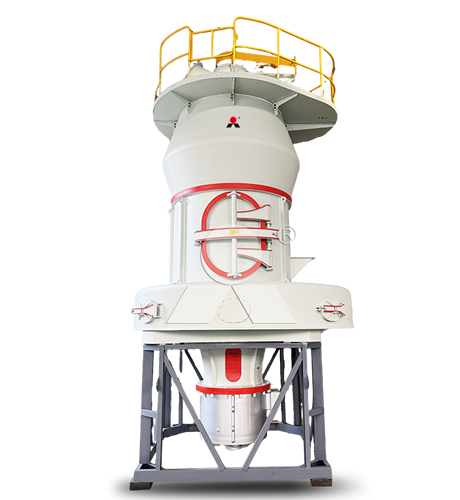
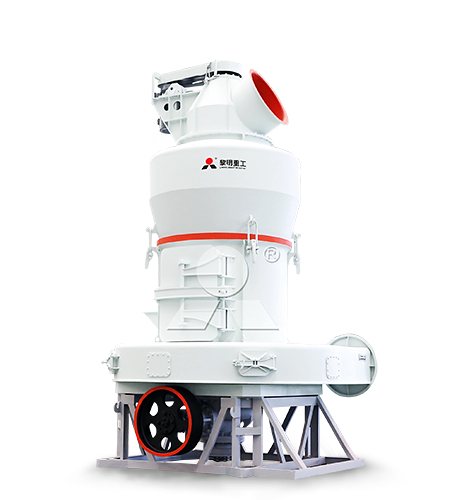
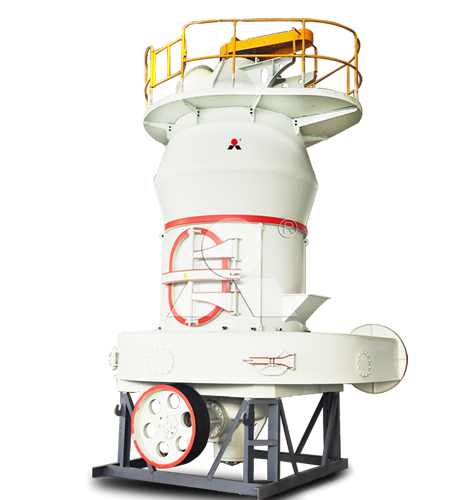
| Small to medium conventional GCC plant | MTW Raymond mill | Size for the required tonnes per hour at 200–325 mesh and include reserve for feed variability and maintenance. |
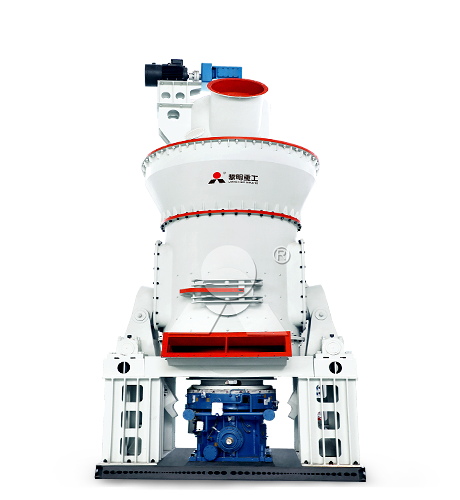
| Large-volume standard to fine GCC plant | LM vertical roller mill | Size around qualified output at the target D50 and D97, including actual feed moisture and available drying capacity. |
| Fine GCC plant producing several grades | MW micro powder mill | Use the weighted annual production mix; do not size only for the fastest, coarsest grade. |
| Premium ultrafine and coated GCC plant | LUM ultrafine mill | Size according to the strictest commercial grade, classifier cut, low coarse residue, and downstream coating-line capacity. |
Published calcium carbonate plant guidance places Raymond-type mills in smaller standard-powder duties and vertical mills in larger-scale production, while emphasizing that capacity depends on final fineness and complete plant design. Use these ranges only as an early screening tool. The final model must be selected after material testing and process engineering.
Size every bottleneck
The overall plant capacity equals the capacity of its narrowest bottleneck. A correctly sized mill still cannot achieve its target if another system cannot keep up.
| Plant section | Capacity requirement | Common sizing mistake |
|---|---|---|
| Raw-material receiving | Must unload, stockpile, and reclaim enough limestone to sustain mill demand. | Ignoring truck, loader, crusher, or stockpile limitations during peak production. |
| Crushing and screening | Must exceed the mill’s required feed rate and provide consistent feed size. | Selecting a crusher with nominal capacity equal to mill demand and no allowance for wear or feed variation. |
| Drying or hot-air system | Must remove moisture at worst normal feed conditions while maintaining stable mill airflow. | Sizing from average dry-season moisture rather than wet-season or worst-case moisture. |
| Mill and classifier | Must deliver the required PSD at the planned qualified output. | Using mill output at a coarse product setting to represent capacity at a fine specification. |
| Bag filter and fan | Must maintain airflow, pressure balance, and powder collection at full process load. | Undersizing filter area or fan capacity, causing poor classification and low output. |
| Conveying and product silos | Must move and store powder without backup, blockage, segregation, or contamination. | Installing a large mill with inadequate conveying lines or insufficient silo buffer capacity. |
| Coating line | Must match grinding output if coated GCC is part of the sales plan. | Producing more uncoated base powder than the coating section can process. |
| Packaging and dispatch | Must pack or bulk-load the qualified output produced during each campaign. | Creating a bottleneck at bagging, palletizing, bulk loading, or truck scheduling. |
As particle size becomes finer, closed-loop classification becomes increasingly important because the classifier determines the accepted cut and returns oversized particles for further grinding. GCC PSD control depends on the combined performance of the mill, classifier, airflow, and feed-rate balance.
Use the product mix, not one grade
Many calcium carbonate plants produce several grades. One month may focus on 200-mesh construction filler, while the next may produce 800-mesh plastic filler or a fine coated GCC grade. Each product has a different hourly capacity, changeover time, and yield of saleable material.
Build the capacity plan around the expected annual product mix:
List each product grade and expected annual sales volume.
Define the required PSD, moisture, whiteness, coating, and packaging format for each grade.
Obtain or test the mill’s qualified output for each grade.
Estimate operating hours required for each production campaign.
Add grade-change time, cleaning time, laboratory approval time, and expected off-spec transition material.
Confirm that total required production hours are lower than the available productive hours.
This approach prevents a common planning error: selecting a mill based on a fast-selling coarse grade, then discovering that a smaller-volume ultrafine grade consumes a disproportionate share of annual operating time.
Feed moisture can change capacity
Moisture affects capacity because wet limestone is harder to grind, classify, convey, and collect. Water can cause material buildup in feed chutes and inside the mill, increase pressure drop, blind classifier components, reduce airflow, and cause powder to bridge in silos or bags.
One limestone grinding guide recommends maintaining raw calcium carbonate moisture below 1% for dry grinding, noting that higher moisture can create buildup on the grinding track and restrict classifier airflow. The exact acceptable moisture depends on mill type and plant design, but the broader principle is valid: size the mill and drying system using the wettest normal feed condition.
For an LM Vertical Roller Mill, integrated drying may help manage variable feed moisture. For an MTW Raymond mill, MW micro powder mill, or LUM ultrafine mill, a pre-drying system may be needed if the feed moisture exceeds the practical limit for stable dry grinding and classification.
Plan reserve capacity carefully
Reserve capacity protects production against demand growth, feed variation, maintenance, and stricter future product specifications. But too much reserve can increase capital cost and lead to inefficient part-load operation.
A sensible reserve margin depends on the plant’s business model:
Stable local-market plant: A moderate reserve may be sufficient when sales demand and feed quality are predictable.
Export-oriented GCC plant: More reserve may be appropriate because shipment schedules, contract tonnage, and port logistics can create peak-demand periods.
Multi-grade plant: Additional flexibility is valuable because fine and ultrafine grades reduce output and require more grade-change time.
Coated GCC plant: Capacity reserve must be aligned across both grinding and coating; extra mill capacity has little value if coating remains the bottleneck.
Growth-stage plant: Consider modular equipment, spare silo space, expansion-ready electrical capacity, and layout space for a second mill or coating line.
Rather than oversizing every component, identify the parts of the plant that can be expanded later with minimal disruption. Additional storage, packing capacity, classifier upgrades, or a parallel coating line may be more practical expansion steps than replacing the main mill.
What to request from the supplier
Ask the mill supplier for a proposal based on a clear process basis. The proposal should state performance conditions, not just list a model and a broad capacity range.
Representative raw-material test report.
Guaranteed qualified output for each planned calcium carbonate grade.
Target D50 and D97/D98, plus sieve residue where relevant.
Feed-size range, moisture, hardness, purity, whiteness, and silica assumptions.
Specific power consumption at the guaranteed output.
Classifier, fan, cyclone, bag-filter, and conveying capacity.
Finished-powder moisture and temperature.
Expected wear-part life and recommended spare-parts inventory.
Drying requirement and thermal-energy demand if applicable.
Coating-line capacity and treatment-control requirements for coated GCC.
Plant availability assumptions and recommended maintenance schedule.
Acceptance-test method, product-sampling method, and analytical PSD method.
Written acceptance criteria are important. Define whether capacity is measured by total powder collected or by tonnes of product that passes the final PSD, moisture, whiteness, and other quality requirements. Only the latter represents saleable plant capacity.
Common capacity-planning mistakes
Using nameplate capacity: Nameplate output often assumes a particular feed and fineness that may not match the planned commercial product.
Ignoring product fineness: Fine and ultrafine calcium carbonate grades require more grinding and classification time than coarse powder.
Using calendar hours instead of productive hours: Maintenance, changeovers, cleaning, and downtime reduce actual annual output.
Sizing only the mill: Crushers, dryers, classifiers, fans, bag filters, silos, coaters, and bagging lines must all match the production target.
Ignoring feed moisture variation: Wet feed can lower capacity and cause severe stability problems in dry grinding systems.
Planning only one product: Multi-grade production must be based on a weighted annual product mix.
Not defining qualified output: Production is not saleable if it fails PSD, moisture, whiteness, purity, coating, or packaging requirements.
Key takeaway
Match calcium carbonate mill capacity to your plant by working backward from annual sales of qualified powder. Define the actual product mix, PSD requirements, operating hours, feed moisture, grade-change losses, and full-plant bottlenecks; then select an MTW Raymond mill, LM vertical roller mill, MW micro powder mill, or LUM ultrafine mill that can meet the required tonnes per hour under real conditions.
The best capacity decision is not the largest mill. It is the plant configuration that delivers the required volume of saleable calcium carbonate consistently, at the required quality, with the lowest practical total cost per tonne.