Calcium Carbonate Knowledge Hub
LUM Ultrafine Vertical Mill for Calcium Carbonate
2026-09-04 17:17:10
We are Liming Heavy Industry, a manufacturer of various types of industrial crushers, such as Raymond Mill, Trapezoidal Mill, Vertical Mill, Ultrafine Mill, Ball Mill, etc.
Our mills can process the following minerals:
limestone, quicklime, kaolin, talc, barite, bentonite, calcium carbonate, dolomite, coal, gypsum, clay, carbon black, slag, cement raw materials, cement clinker, etc.
If you need a mill to process stone or minerals into powder, please feel free to contact me (WhatsApp: +8615333807511). Thank you.
The LUM Ultrafine Vertical Mill is designed for producing fine and ultrafine ground calcium carbonate (GCC) where particle-size control, low coarse residue, and stable product quality are more important than maximum coarse-powder throughput. It is a suitable choice for calcium carbonate used in high-value plastics, filler masterbatch, paint, coatings, paper, rubber, adhesives, sealants, and other applications that require a controlled micron-scale powder.
For calcium carbonate projects, LUM is most appropriate when buyers specify D50, D97, D98, or a strict coarse-particle limit rather than only a nominal mesh number. The mill integrates grinding, multi-stage classification, and pneumatic conveying, but its commercial performance depends on feed quality, moisture control, classifier settings, airflow balance, and the ability to maintain the agreed PSD at the required qualified output.
What is an LUM Ultrafine Vertical Mill?
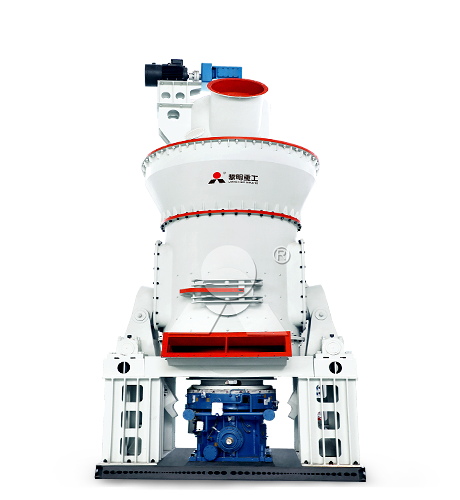
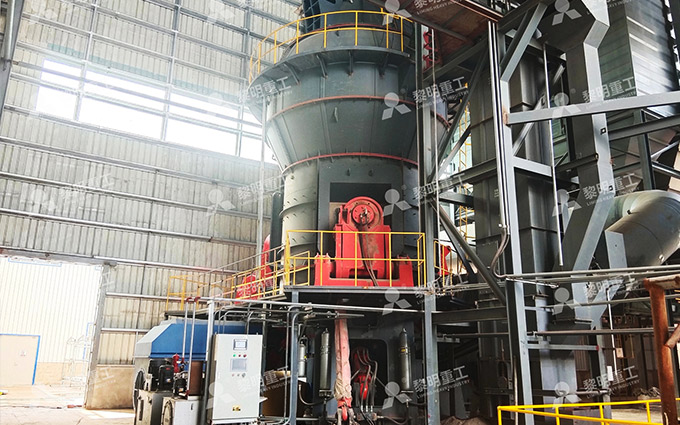
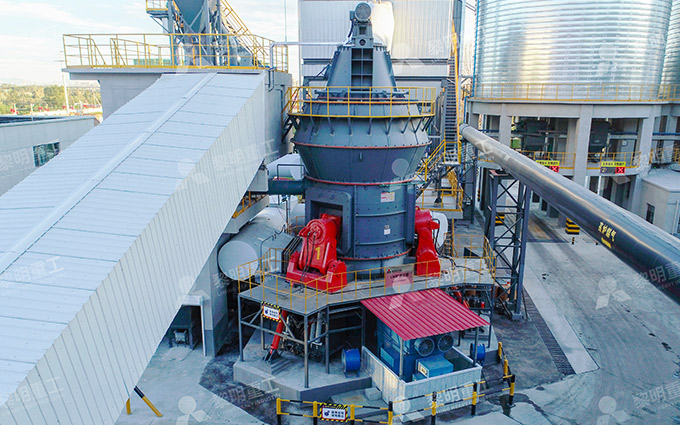
The LUM Ultrafine Vertical Mill is a vertical roller grinding system for ultrafine non-metallic mineral powder. In a calcium carbonate line, crushed limestone, marble, or calcite enters the mill and is ground between rollers and a rotating grinding table. Airflow carries the ground material upward to the classifier system, where particles are separated by size.
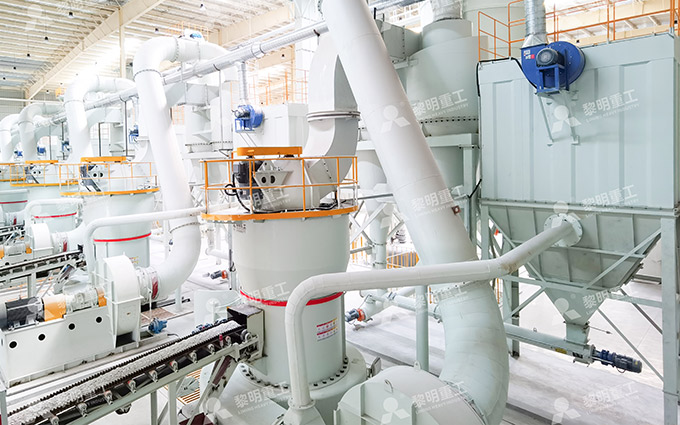
Qualified fine powder exits with the air stream and is collected by cyclone and bag-filter equipment. Coarse particles that do not meet the fineness target return to the grinding area for further reduction. This closed-circuit process allows the plant to control product fineness while avoiding unnecessary regrinding of material that already meets specification.
Liming describes the LUM series as suitable for brittle, non-flammable and non-explosive materials with Mohs hardness up to 7 and feed moisture below 3%; listed feed materials include calcite, a common source of high-purity calcium carbonate.
Best calcium carbonate range
The LUM Ultrafine Vertical Mill is intended for fine and ultrafine GCC rather than conventional 200-mesh or 325-mesh filler. It is generally selected when the final product is around 600–2500 mesh, or when the customer uses micron-based particle-size specifications.
| Calcium carbonate fineness | Approximate particle-size direction | LUM suitability | Typical applications |
|---|---|---|---|
| 400–600 mesh | About 38–25 µm | Possible, but usually finer than necessary for many standard filler markets. | Fine PVC, rubber, paint, coating, and general industrial filler products. |
| 600–1250 mesh | About 25–10 µm | Strong fit | Fine coated GCC, PVC, PP, PE, masterbatch, paint, coatings, rubber, adhesives, and sealants. |
| 1250–2500 mesh | About 10–5 µm | Excellent fit | Premium coated GCC, white plastic, film, paper, smooth coatings, high-value rubber, sealants, and specialty fillers. |
| Below about 5 µm | Very fine specialty powder | Possible in selected dry-process conditions, but requires detailed testing and strict classifier control. | Specialty ultrafine GCC and application-specific high-value powder products. |
Published LUM technical data list a typical output range of 325–2500 mesh, with feed size generally below 10–20 mm and feed moisture below 3%. The real project specification should use laser particle-size data rather than relying on mesh alone, especially for products finer than approximately 1000 mesh.
Why use LUM for ultrafine GCC?
Controlled particle-size distribution
The main reason to use an LUM mill is not simply to make powder finer. It is to control the complete particle-size distribution. In high-value calcium carbonate applications, the customer may accept a target D50 only if the coarse end of the distribution is also controlled.
For example, two powders may both have a D50 near 5–10 µm, but one may contain a larger coarse-particle tail. That coarse fraction can create visible defects in plastic film, reduce surface smoothness in coatings, affect gloss in paint, produce rough sealant beads, or reduce dispersion quality in polymer compounds.
LUM uses a multi-stage powder-concentrating arrangement to separate fine particles from coarse particles. Technical data for the LUM series list multiple classifiers, with the larger models using seven classifier units. The practical benefit is improved control of fine powder separation when the system is properly set up and operated.
Integrated grinding, separation, and conveying
Grinding, classification, and pneumatic conveying occur within the same process system. This can reduce the number of transfer points compared with separate grinding and classification equipment, while supporting continuous ultrafine GCC production.
The integrated process is particularly valuable when the plant must maintain consistent powder quality across long production runs. However, the supporting fan, dust collector, airlocks, conveyors, finished-product silos, and control system must be correctly matched to the mill. An ultrafine mill cannot maintain stable output if the airflow or powder-handling system becomes the bottleneck.
Suitable base powder for coated GCC
LUM-produced GCC can be used as the base powder for stearic-acid-coated calcium carbonate. This is important in PVC, PP, PE, filler masterbatch, rubber, adhesives, and sealants, where fine particle size and low coarse residue can improve dispersion and surface quality.
Fine powder has more surface area than conventional GCC, so coating control becomes more demanding. The coating line must accurately manage powder feed, stearic-acid dosage, temperature, mixing intensity, cooling, and dust collection. Coated-product quality should be evaluated by PSD, moisture, coating level, hydrophobicity, flowability, and performance in the intended polymer or sealant formulation.
Typical LUM process flow
A dry ultrafine calcium carbonate line based on an LUM mill normally includes the following stages:
Raw-material selection: Choose high-purity limestone, marble, or calcite with suitable whiteness and low silica, clay, and colored impurities.
Crushing: Reduce the stone to a controlled feed size, generally below the LUM mill’s maximum feed limit.
Drying if required: Reduce feed moisture to the practical limit for stable ultrafine dry grinding.
Controlled feeding: Use stable, accurate feeding to maintain a consistent grinding bed and classifier load.
Ultrafine grinding: Rollers grind the calcium carbonate on the rotating mill table.
Multi-stage classification: Fine particles are separated and carried out with airflow; oversized particles return to the grinding zone.
Collection and dust control: Cyclones, bag filters, and related equipment collect finished powder and control process air.
Storage and coating: Finished uncoated GCC is stored in silos or transferred to a surface-treatment line where coated GCC is required.
Packing or bulk dispatch: Qualified product is packed in bags, bulk bags, or delivered through bulk powder logistics.
In a typical ultrafine vertical-mill flow, air carries material from the grinding disc to the powder concentrator; coarse material returns to the disc, while qualified fines are collected by dust-collection equipment and transferred to finished-product storage.
Feed requirements for ultrafine GCC
LUM performance depends heavily on feed preparation. Ultrafine milling is less tolerant of excessive moisture, unstable feed size, and abrasive contamination than conventional GCC grinding.
| Feed requirement | Why it matters for LUM milling |
|---|---|
| High calcium carbonate content | Supports high-purity GCC products and reduces the risk of off-spec chemistry in demanding applications. |
| High whiteness and brightness | Important for white PVC, film, paper, premium paint, coatings, sealants, adhesives, food, and pharmaceutical-related products. |
| Low silica and hard impurities | Reduces wear on rollers, table liners, classifier components, ducts, fans, and conveying equipment. |
| Controlled feed size | Maintains a stable grinding bed and prevents overload, vibration, and capacity loss. |
| Low feed moisture | Prevents buildup, poor classification, powder sticking, unstable airflow, and reduced output. |
| Low clay and weathered material | Protects whiteness, reduces moisture variation, and improves powder flow and downstream coating consistency. |
Liming lists LUM feed moisture below 3% as a basic operating condition. In practice, a lower and more stable moisture level is often preferable for demanding ultrafine GCC, especially when the product is intended for coating, polymer compounding, adhesives, or sealants.
Classifier control is the key
For ultrafine calcium carbonate, the classifier is central to commercial product quality. The grinding section creates a range of particle sizes, while the classifier determines which particles leave as finished product and which return for further grinding.
Key classifier controls include:
Classifier rotational speed.
System airflow and air velocity.
Feed rate and feed stability.
Grinding pressure and material-bed condition.
Mill differential pressure.
Product collection efficiency.
Wear condition of classifier components.
Increasing classifier speed generally creates a finer product but can reduce throughput and increase power consumption. Lowering classifier speed can increase output but may allow too many coarse particles into the product. The correct setting is the one that meets the customer’s PSD with the lowest practical cost per tonne of accepted powder.
Do not manage the mill only by an average particle-size target. For premium GCC, routine laboratory testing should track D10, D50, D90, D97 or D98, moisture, whiteness, and coarse-particle residue. This is especially important when the powder is supplied to film, white masterbatch, paper, coating, or high-gloss paint customers.
Typical LUM capacity range
Ultrafine capacity depends on final fineness. As the powder becomes finer and the coarse-particle limit becomes stricter, the qualified output decreases. Therefore, capacity must always be stated with the product PSD, feed condition, and test method.
| LUM model direction | Indicative capacity range* | Typical project role |
|---|---|---|
| LUM1125X | About 5–14 t/h | Small to medium ultrafine GCC line serving fine plastics, paint, coatings, rubber, adhesive, and sealant markets. |
| LUM1232X | About 7–16 t/h | Medium-scale ultrafine GCC production with multiple fine grades and downstream coating capability. |
| LUM1436X | About 9–18 t/h | Larger premium-GCC plant for continuous supply of fine or ultrafine powder. |
*Indicative manufacturer ranges. Actual capacity changes with feed material, feed moisture, target D50, required D97 or D98, classifier setting, product moisture, and accepted coarse-particle limit.
Published LUM technical data list capacities of approximately 5–14 t/h for LUM1125X, 7–16 t/h for LUM1232X, and 9–18 t/h for LUM1436X. The same data describe typical fineness around 0.045–0.02 mm, with the finest stated at 0.01 mm. These figures should be verified through representative material testing before plant design or commercial commitment.
How to match LUM to applications
| Application | Why ultrafine GCC is used | Important LUM product controls |
|---|---|---|
| PVC and filler masterbatch | Fine particles can support improved dispersion, smoother surfaces, and higher-value filler performance. | D50, D97/D98, moisture, stearic-acid coating response, bulk density, and dispersion. |
| PP and PE compounds | Low coarse residue helps reduce defects in molded products, film, and extrusion applications. | PSD, coating quality, moisture, agglomerate control, and polymer-compounding trials. |
| Paint and coatings | Fine GCC can support smoothness, gloss control, pigment packing, and titanium dioxide optimization. | PSD width, whiteness, low coarse residue, oil absorption, and dispersion in the resin system. |
| Paper and coating color | Fine particles support optical properties, coating smoothness, and printability in selected systems. | Brightness, PSD, particle shape, slurry or dry-powder compatibility, and low coarse-particle content. |
| Rubber | Fine GCC can improve surface uniformity and provide a better balance of filler cost, hardness, and compound properties. | Particle size, surface treatment, moisture, coating uniformity, and dispersion in the elastomer. |
| Adhesives and sealants | Ultrafine filler can control viscosity, thixotropy, bead smoothness, anti-sag performance, and cured-material properties. | Low moisture, narrow PSD, surface treatment, coarse-residue control, and compatibility with the binder and curing system. |
Not every application requires the finest available calcium carbonate. For example, a standard PVC pipe compound may perform well with a medium-fine GCC grade, while a premium white film or high-value coated masterbatch can require tighter D97 or D98 control. The LUM mill should therefore be selected when the market pays for ultrafine quality—not simply because ultrafine powder is technically possible.
Supporting equipment for an LUM plant
An LUM ultrafine calcium carbonate mill requires correctly matched supporting equipment. The mill is only one part of the production line. If feeding, drying, classification, dust collection, conveying, coating, or packing is undersized, the plant will not achieve its designed qualified output.
| System section | Main function | Why it matters for ultrafine GCC |
|---|---|---|
| Crushing and screening | Produces stable feed below the mill’s maximum feed-size requirement. | Oversized or variable feed can reduce output, disrupt the grinding bed, and accelerate wear. |
| Drying system | Reduces moisture before or during ultrafine grinding. | Moisture can cause buildup, poor classification, unstable airflow, and poor finished-powder flowability. |
| Feeding system | Provides continuous, accurate material flow to the mill. | Stable feed is essential for stable differential pressure, classifier loading, PSD, and output. |
| Air system and fan | Moves powder through the grinding and classification circuit. | Airflow directly affects classification cut, product fineness, powder transport, and energy consumption. |
| Bag filter and collection system | Collects fine powder and keeps the system under controlled pressure. | Insufficient filter area or high pressure drop can restrict airflow and reduce qualified capacity. |
| Finished-product silo | Provides buffer storage before packing or coating. | Prevents mill stoppage when bagging, loading, or coating temporarily slows down. |
| Coating system | Applies stearic acid or another surface treatment to GCC. | Required for coated calcium carbonate used in many PVC, PP, PE, rubber, adhesive, and sealant applications. |
| Packaging system | Packs powder into valve bags, open-mouth bags, bulk bags, or bulk transport. | Must match the mill output and protect the fine powder from moisture, contamination, and handling loss. |
Capacity must be based on qualified powder
LUM capacity should be defined as tonnes per hour of powder that meets the agreed final product specification. It should not be based only on total powder collected from the mill.
For a fine or ultrafine calcium carbonate project, the acceptance standard should include:
Target D10, D50, and D90 where relevant.
Maximum D97 or D98, which controls the coarse end of the distribution.
Maximum sieve residue or coarse-particle contamination.
Finished-powder moisture.
Whiteness, brightness, and color consistency.
Calcium carbonate content and acid-insoluble residue.
Bulk density and flowability.
Surface-treatment level and hydrophobicity for coated grades.
A mill may produce a high gross tonnage at a looser classifier setting, but that powder may contain too many coarse particles for high-value applications. Tightening the classifier cut improves fineness and reduces coarse residue, but it usually lowers hourly throughput and raises specific energy use. The correct operating point is the lowest-cost condition that consistently meets the customer’s real product specification.
Operating factors that affect LUM performance
Feed rate
Stable feeding is essential. Excessive feed can overload the grinding bed and increase the coarse fraction. Insufficient feed can lower productivity and lead to unnecessary overgrinding. Automatic feeding based on mill load, differential pressure, classifier condition, and product PSD helps maintain a stable operating window.
Classifier speed
Classifier speed is one of the main controls for product fineness. Increasing the classifier speed generally produces a finer powder because more particles are rejected back to the grinding zone. However, this can lower throughput and increase power consumption. Lower classifier speed can increase output but may allow excessive coarse material into the final product.
Airflow balance
Airflow carries ground powder to the classifier and then to the collection system. Too little airflow can reduce transport efficiency and cause internal accumulation. Too much airflow can carry oversized particles into the product or create unstable separation. The fan, ducting, classifier, cyclone, and bag filter must work as one balanced system.
Grinding pressure and wear condition
Grinding pressure must be appropriate for the hardness and grindability of the calcium carbonate feed. Worn rollers, table liners, classifier components, or air-distribution parts can reduce grinding efficiency and cause PSD drift. Preventive maintenance is particularly important in ultrafine GCC because small equipment changes can affect product quality.
Moisture control
Even when feed moisture remains below the mill’s maximum limit, moisture variation can affect stability. A quarry feed that changes from dry material to wetter material can alter the grinding bed, classifier operation, airflow, finished-product moisture, and downstream coating behavior.
For fine coated GCC, stable low moisture is especially important. Moisture can impair stearic-acid coating uniformity, reduce powder flowability, and create handling problems in storage, packaging, and polymer compounding.
Typical operating problems
| Problem | Likely causes | Practical response |
|---|---|---|
| Product is too coarse | Classifier speed too low, excessive feed rate, inadequate grinding pressure, worn components, or airflow imbalance. | Verify PSD, inspect classifier and grinding parts, then adjust one controlled operating parameter at a time. |
| Product is too fine | Classifier speed too high, feed rate too low, excessive residence time, or unnecessary fineness target. | Review the customer PSD requirement and optimize the classifier setting to avoid overgrinding. |
| Capacity is below target | Wet feed, oversized feed, high silica, worn grinding parts, low airflow, high filter pressure drop, or an overly strict PSD target. | Compare actual conditions with design assumptions and identify the limiting section before changing the mill configuration. |
| High vibration | Unstable feed, poor material-bed formation, foreign metal, excessive feed size, mechanical wear, or incorrect pressure settings. | Stabilize feed, inspect mechanical systems, verify metal protection, and check the grinding-bed condition. |
| High energy consumption | Overgrinding, excessive recirculation, poor classification efficiency, worn components, or an unnecessarily fine product target. | Optimize classifier operation, confirm product requirements, and inspect wear parts and airflow balance. |
| Poor coating quality | High powder moisture, unstable PSD, inconsistent feed rate, poor stearic-acid dosing, insufficient mixing, or inadequate cooling. | Control base-powder quality first, then optimize treatment dosage, temperature, mixing, and cooling conditions. |
How to select an LUM mill project
Before selecting an LUM ultrafine vertical mill, prepare a complete technical brief for the equipment supplier. The more accurately the product and feed are defined, the more reliable the mill selection and capacity guarantee will be.
Define the market: Identify whether the powder is for PVC, masterbatch, PP, PE, paint, coatings, paper, rubber, adhesive, sealant, or another application.
Set the PSD target: Specify D50 and upper-size limits such as D97 or D98, not only a mesh number.
Analyze the feed: Test calcium carbonate content, whiteness, silica, acid-insoluble residue, moisture, hardness, and normal quarry variation.
Set qualified capacity: Define tonnes per hour of product that meets the agreed PSD, moisture, purity, and color requirements.
Confirm drying needs: Use the highest normal feed-moisture condition when sizing pre-drying or hot-air capacity.
Design the full air circuit: Size the classifier, fan, ducting, cyclone, bag filter, and discharge equipment for the required fine-powder load.
Plan downstream handling: Size silos, coating equipment, packing lines, and bulk-loading systems to match the mill’s qualified output.
Validate with testing: Run representative material trials and request a written performance guarantee for PSD, output, power consumption, and moisture.
Key takeaway
The LUM Ultrafine Vertical Mill is suitable for fine and ultrafine calcium carbonate where product value depends on controlled particle size, low coarse residue, stable whiteness, and reliable powder quality. It is particularly appropriate for premium GCC used in coated plastics, masterbatch, paint, coatings, paper, rubber, adhesives, and sealants.
Its success depends on more than the mill itself. High-purity low-moisture feed, stable crushing and feeding, high-efficiency classification, balanced airflow, adequate dust collection, quality control, and properly sized coating and packing systems are all required to produce saleable ultrafine GCC consistently.