Calcium Carbonate Knowledge Hub
MW Micro Powder Mill for Calcium Carbonate
2026-09-04 17:18:14
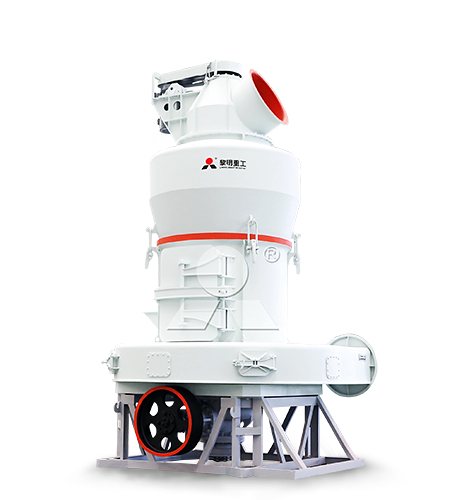
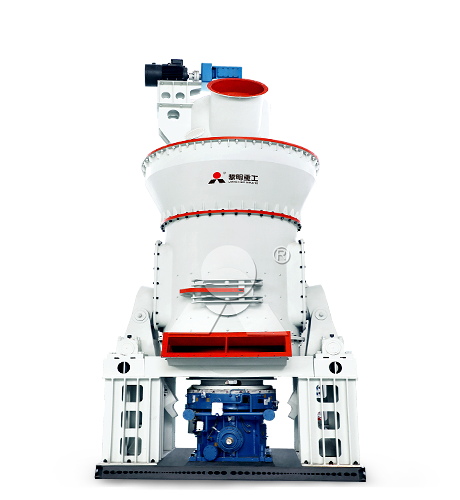
We are Liming Heavy Industry, a manufacturer of various types of industrial crushers, such as Raymond Mill, Trapezoidal Mill, Vertical Mill, Ultrafine Mill, Ball Mill, etc.
Our mills can process the following minerals:
limestone, quicklime, kaolin, talc, barite, bentonite, calcium carbonate, dolomite, coal, gypsum, clay, carbon black, slag, cement raw materials, cement clinker, etc.
If you need a mill to process stone or minerals into powder, please feel free to contact me (WhatsApp: +8615333807511). Thank you.
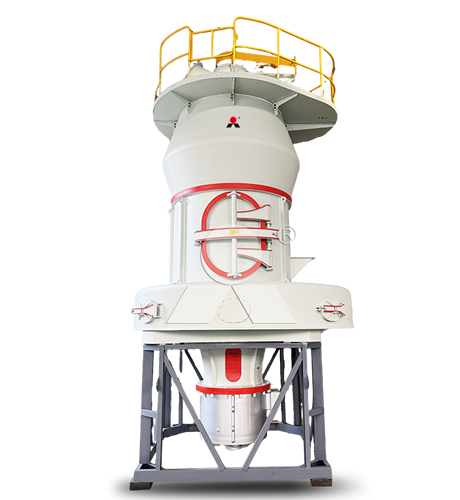
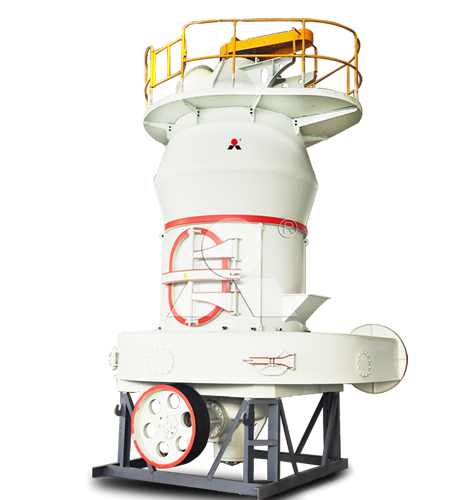
An MW micro powder mill is an air-classified roller grinding system used to produce fine and ultrafine ground calcium carbonate (GCC), commonly in the approximate range of 5–45 μm. It is a practical option when a calcium carbonate producer needs controllable fine powder, a relatively compact dry process, and consistent separation of oversize particles from the finished product.
For calcium carbonate plants serving plastics, PVC, PE, PP, rubber, sealants, adhesives, coatings, and selected paper applications, the key value of an MW micro powder mill is not simply its advertised mesh range. The important question is whether the complete system can deliver the required particle-size distribution (PSD), throughput, whiteness retention, powder stability, and operating cost with the customer’s actual calcite or limestone feedstock.
What Is an MW Micro Powder Mill?
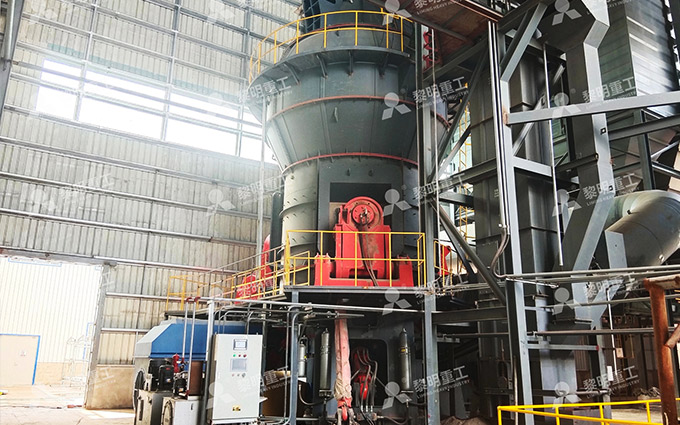
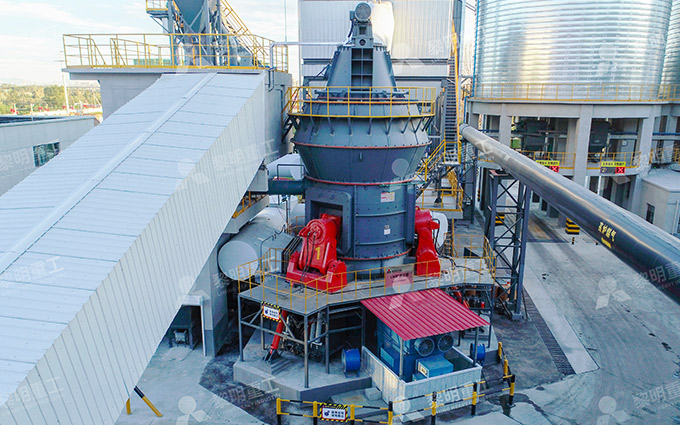
MW generally refers to a multi-ring, multi-roller micro powder grinding mill. Material enters the grinding chamber after crushing and feeding, then is ground between rolling elements and grinding rings. Airflow transports the fine fraction upward to a classifier. Particles that meet the target cut size leave with the air stream for collection, while coarse particles return to the grinding zone for further size reduction.
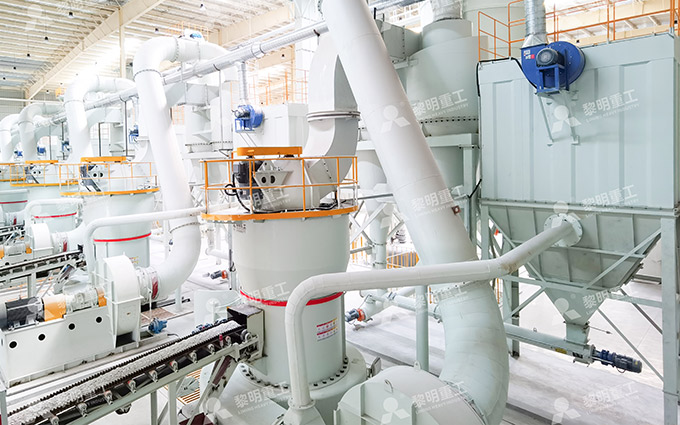
In a typical calcium carbonate line, the MW mill is more than the main grinding machine. It operates as part of a dry powder system that normally includes feeding, conveying, air classification, dust collection, induced-draft airflow, electrical control, and finished-product handling.
Where It Fits in Calcium Carbonate Processing
An MW micro powder mill is usually installed after primary and secondary crushing. The feed must be sufficiently small, dry, and stable before entering the mill. Supplier configurations vary, but many MW-type mills are designed for feed below approximately 10–20 mm and finished powder in the fine-to-ultrafine range. Published MW-series data commonly state adjustable finished-product ranges around 5–45 μm, corresponding approximately to 325–2,500 mesh, although mesh is only a rough screening reference and should not replace PSD specifications.
The mill is particularly relevant for dry GCC production where the target is finer than conventional coarse filler grades but does not require the submicron performance associated with some wet-ground calcium carbonate processes.
Typical process flow
Crushed calcite, marble, chalk, or high-quality limestone is stored in a feed hopper.
A controlled feeder delivers material continuously to the MW mill.
Grinding rollers and rings reduce the feed to fine powder.
A classifier separates particles according to the selected cut size.
Fine calcium carbonate is collected by a cyclone and/or pulse-jet bag filter.
Collected powder is conveyed to a silo, packing station, bulk tanker loading point, or downstream coating unit.
How the Mill Produces Fine GCC
The process combines mechanical grinding and pneumatic classification. Grinding alone cannot reliably produce a narrow product because particles spend different amounts of time in the mill. Classification is therefore central to product control: fine particles leave the system, while particles above the classifier cut point recirculate for additional grinding.
The classifier setting, airflow, mill load, feed rate, roller and ring condition, and raw-material behavior all influence the final PSD. A customer asking for “1,250 mesh” should therefore provide a measurable specification such as D50, D97, or D98, together with the permitted coarse-tail limit. For example, two powders sold under the same nominal mesh description can perform very differently in a PVC compound if one has a much coarser tail or a broader particle-size distribution.
Why particle-size distribution matters
Calcium carbonate’s particle size affects surface area, dispersion behavior, opacity, rheology, extrusion behavior, mechanical properties, gloss, and formulation cost. As particles become finer, the material usually has a higher specific surface area and may require more careful feeding, dust control, dispersion, and—where applicable—surface treatment.
| Operating variable | Effect on calcium carbonate product | Practical concern |
|---|---|---|
| Classifier speed | Changes the fine cut and coarse-particle rejection | Too aggressive a setting can reduce throughput |
| Feed rate | Affects residence time and mill loading | Overfeeding can raise coarse residue and power draw |
| Air volume | Controls powder transport and classification conditions | Incorrect airflow can destabilize product fineness |
| Grinding-part wear | Influences grinding efficiency and product consistency | Wear monitoring is necessary for stable quality |
| Raw-material moisture | Can increase agglomeration and reduce flowability | Drying or stricter feed control may be required |
Suitable Calcium Carbonate Feedstocks
MW micro powder mills are commonly considered for naturally occurring calcium carbonate materials, including calcite, marble, chalk, and limestone. However, mineral name alone is not enough to determine suitability. The plant design should be based on laboratory and pilot testing of the actual deposit or purchased feed.
Important feedstock parameters include:
Calcium carbonate content and associated mineral impurities
Whiteness, brightness, and color consistency
Silica, quartz, iron-bearing minerals, and other abrasive contaminants
Mohs hardness and grindability
Initial size distribution after crushing
Surface moisture and tendency to cake
Required end-use purity and heavy-metal limits, where relevant
Abrasive impurities deserve special attention. Quartz and other hard minerals can accelerate roller, ring, and classifier wear, reduce operating efficiency, and introduce unwanted variation into the final powder. If silica-bearing contamination is present, the plant also needs an appropriate dust-control and worker-exposure program. OSHA identifies respirable crystalline silica as a regulated workplace hazard in general industry, with the U.S. permissible exposure limit set at 0.05 mg/m³ as an 8-hour time-weighted average.
Typical Applications for MW-Milled Calcium Carbonate
Fine GCC from an MW mill can be used where a dry, controlled fine-powder grade is required. The exact market fit depends on PSD, surface treatment, whiteness, purity, and customer formulation requirements.
Plastics and PVC compounds
Fine calcium carbonate is widely used as a filler in rigid PVC pipe, profile, sheet, cable compounds, flexible PVC, PP, PE, and masterbatch. The producer must control coarse particles because they can affect dispersion, surface appearance, processing stability, and mechanical performance. For coated grades, the dry grinding stage may be followed by surface modification with stearic acid or another treatment system.
Rubber, sealants, and adhesives
In rubber compounds and sealant or adhesive formulations, fine GCC can contribute bulk, rheology adjustment, cost optimization, and controlled consistency. Particle-size distribution and surface properties are especially important because they influence viscosity, filler wetting, extrusion, and final texture.
Coatings and construction materials
For architectural coatings, putties, joint compounds, and related dry-mix materials, calcium carbonate fineness affects smoothness, packing, rheology, and surface finish. A mill should be selected against the finished-product specification rather than only against a nominal mesh label.
Key Equipment Selection Criteria
An MW micro powder mill should be selected as a system, not only by the main-mill model or nominal hourly capacity. Published capacities are typically conditional on raw-material hardness, moisture, target fineness, and the tested operating conditions. For example, supplier data for MW-series equipment show that capacity ranges change substantially among models and target output sizes.
Before requesting a quotation, define the project using the following production information:
Target product PSD: D50, D97 or D98, and any maximum coarse-particle requirement
Required production rate at the target fineness, not at a coarser reference grade
Annual operating hours and expected annual tonnage
Raw-material chemical analysis, whiteness, moisture, and hardness data
Whether the product will remain uncoated GCC or proceed to coating
Required collection efficiency, emission-control approach, and dust-handling standard
Packaging format: 25 kg bags, valve bags, jumbo bags, bulk tanker, or silo storage
Available electrical supply, plant footprint, installation height, and maintenance access
Do not specify by mesh alone
“800 mesh calcium carbonate” is not a complete purchasing specification. Mesh is a screen-based expression and becomes less useful as powder gets finer, especially when particles are not spherical and the product has a broad distribution. A better technical purchase specification might state:
Uncoated GCC for PVC compound: D50 target 10 μm, D97 maximum 30 μm, defined moisture limit, minimum whiteness, and a specified residue limit on the customer’s agreed test method.
This gives both the mill supplier and the end user a measurable basis for acceptance testing.
Advantages and Limitations
| Potential advantage | Practical limitation to manage |
|---|---|
| Dry process with integrated grinding and classification | Feed moisture can cause caking, unstable flow, and lower efficiency |
| Adjustable fine-product range for multiple GCC grades | Finer grades normally reduce throughput and increase specific energy demand |
| Recirculation helps reject oversize particles | PSD control depends on steady airflow, feeding, and classifier operation |
| Suitable for many industrial filler applications | Not every end use requires, or benefits from, the finest possible grade |
| Can connect with coating, collection, and packaging systems | Overall project performance depends on auxiliaries, not only the mill |
Operating Practices That Protect Product Quality
Stable production starts with stable feed. Use controlled feeding rather than intermittent manual loading, keep oversized material out of the grinding chamber, and prevent metal contamination with appropriate magnetic separation where needed. Monitor the product with agreed PSD testing methods, rather than relying only on classifier settings or motor load.
For high-value ultrafine grades, routine monitoring should include finished-product fineness, moisture, whiteness, bulk density, residue, and—when relevant—coating level. The operating team should also trend mill current, fan current, differential pressure, bag-filter condition, temperature, and feed rate. These measurements help identify changes in feed moisture, internal buildup, wear, or airflow before they become customer-quality problems.
Dust collection is both a quality and plant-management requirement. A pulse-jet dust collector is commonly incorporated into MW mill systems to recover powder and maintain cleaner operation; suppliers specifically describe pulse precipitators as part of MW mill configurations. The final design should still be reviewed against local environmental, occupational-health, and combustible-dust requirements.
FAQ
Can an MW micro powder mill produce 5 μm calcium carbonate?
Some MW-type systems are marketed for products down to approximately D97 ≤5 μm, but actual performance depends on feed mineralogy, moisture, installed power, classifier design, airflow balance, and the required production rate. Confirm the result through testing with the actual calcium carbonate sample.
Is MW milling suitable for coated calcium carbonate?
Yes, it can be part of a coated GCC production line. In many configurations, the MW mill first produces the required base powder and a separate downstream coating system applies stearic acid or another surface treatment. The coating process and the grinding process should be engineered together because finer powder has more surface area to treat.
What is the difference between an MW micro powder mill and a conventional Raymond mill?
An MW micro powder mill is generally selected for finer calcium carbonate grades and incorporates fine classification suited to ultrafine powder control. A conventional Raymond-type mill is usually more appropriate for coarser mineral powders. Selection should follow the required PSD, capacity, raw-material properties, and total operating economics.
What should be tested before buying an MW mill?
Test the actual feedstock for chemical composition, moisture, whiteness, abrasiveness, grindability, and achievable PSD at the requested capacity. Also verify the final powder in the intended application, such as PVC compound, masterbatch, rubber, paint, adhesive, or sealant.
Bottom Line
An MW micro powder mill is a strong dry-processing option for fine and ultrafine calcium carbonate when the target product is defined by measurable PSD requirements, not by mesh alone. Its success depends on matching the mill, classifier, airflow, dust collector, feed preparation, and—if required—coating equipment to the actual raw material and end-use market.
For a calcium carbonate project, specify the required D50/D97 values, minimum whiteness, moisture limit, throughput at the target grade, and downstream application before selecting equipment. That approach provides a more reliable basis for achieving consistent GCC quality in plastics, PVC, rubber, sealants, adhesives, coatings, and other industrial mineral markets.