Calcium Carbonate Knowledge Hub
Ultrafine Calcium Carbonate Grinding Mill Guide
2026-09-04 17:19:13
We are Liming Heavy Industry, a manufacturer of various types of industrial crushers, such as Raymond Mill, Trapezoidal Mill, Vertical Mill, Ultrafine Mill, Ball Mill, etc.
Our mills can process the following minerals:
limestone, quicklime, kaolin, talc, barite, bentonite, calcium carbonate, dolomite, coal, gypsum, clay, carbon black, slag, cement raw materials, cement clinker, etc.
If you need a mill to process stone or minerals into powder, please feel free to contact me (WhatsApp: +8615333807511). Thank you.
An ultrafine calcium carbonate grinding mill is selected when a GCC producer needs a controlled powder below conventional filler grades—often in the approximate D97 5–25 μm range, with some systems designed to reach D97 near or below 5 μm. The right choice depends primarily on the required particle-size distribution (PSD), hourly capacity, feedstock quality, coating requirement, and total operating cost—not on a mesh number alone.
For B2B applications such as PVC, PP, PE, masterbatch, rubber, sealants, adhesives, paints, and paper coating, ultrafine grinding is a complete process system. Crushing, feeding, milling, air classification, powder collection, conveying, surface treatment, and packaging all affect whether the plant can consistently make a sellable calcium carbonate grade.
What “Ultrafine” Means for GCC
In calcium carbonate processing, “ultrafine” is used commercially for several fine-powder ranges, so it should always be translated into a measurable PSD requirement. A practical reference is that fine GCC may occupy a range around D97 5–45 μm, while ultrafine grades are often specified at D97 5–10 μm or below, depending on the supplier, end-use market, and testing method.
Mesh can be useful as a rough sales description, but it is not sufficient for mill selection or customer acceptance. Ultrafine powders are usually evaluated through laser diffraction and reported as D10, D50, D90, D97, or D98 values. The coarse tail is especially important because a small proportion of oversized particles can affect dispersion, gloss, surface smoothness, screen-pack pressure, extrusion stability, and appearance in downstream products.
| Specification method | What it tells the buyer | Why it matters in ultrafine GCC |
|---|---|---|
| D50 | Median particle diameter | Useful for comparing the center of the distribution |
| D97 | 97% of particles are below the reported size | Helps control oversize particles and coarse residue |
| D10 | Fine-end portion of the distribution | Indicates the quantity of very fine material |
| Specific surface area | Available particle surface per unit mass | Relevant to coating demand, rheology, and dispersion |
| Sieve residue | Oversize material retained on an agreed screen | A fast quality-control indicator for selected grades |
Core Process for Ultrafine Calcium Carbonate
A dry ultrafine GCC line normally begins with high-quality calcite, marble, chalk, or limestone. The material is crushed to a controlled feed size, metered into the grinding system, reduced by the mill, separated by an air classifier, collected in a high-efficiency filter, and transferred to storage or packing. If coated calcium carbonate is required, surface treatment is integrated after or around the grinding stage according to the process design.
The three functional stages are crushing, grinding, and classification. Equipment selection at each stage depends on feed hardness, feed moisture, desired fineness, and required capacity. The grinding mill cannot compensate indefinitely for poor feed preparation. Oversized feed, inconsistent moisture, abrasive impurities, or fluctuating chemical quality will reduce throughput and make fine-product control more difficult.
Typical dry ultrafine GCC flow
Raw calcite, marble, or limestone is crushed and screened.
A buffer silo and dosing system stabilize feed to the mill.
The grinding mill reduces particles through compression, impact, attrition, or a combination of these mechanisms.
An air classifier rejects coarse particles and returns them for further grinding.
A cyclone and pulse-jet bag filter collect the qualified ultrafine GCC.
Finished powder moves to a silo, coating system, packing line, jumbo-bag station, or bulk loading system.
Main Ultrafine Mill Options
No single mill is best for every ultrafine calcium carbonate project. A technology that performs well at a moderate output and D97 10 μm may not be the best choice for high-volume D97 5 μm production. The proper comparison must use the same raw feed, final PSD, coating condition, test method, and guaranteed throughput.
| Mill or circuit type | Typical role in GCC production | Best-fit project conditions | Key consideration |
|---|---|---|---|
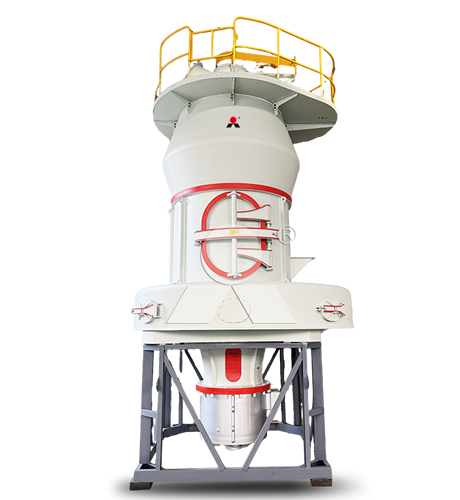
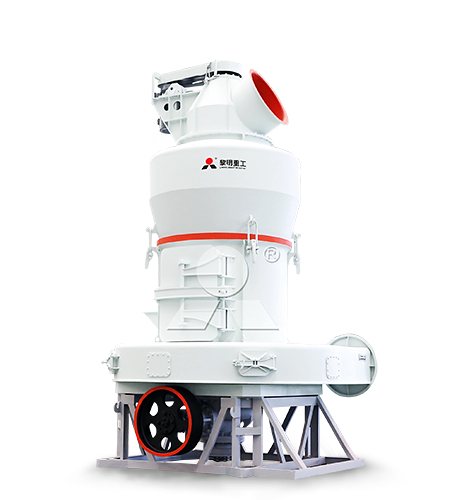
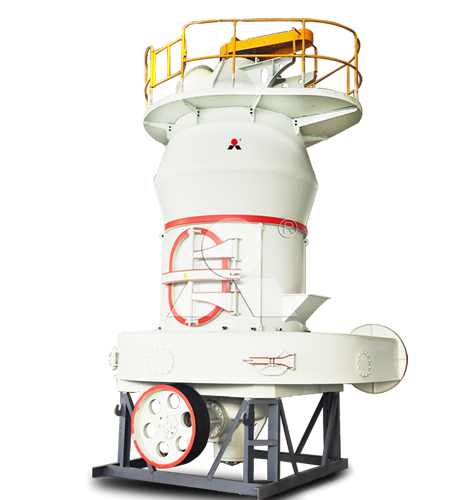
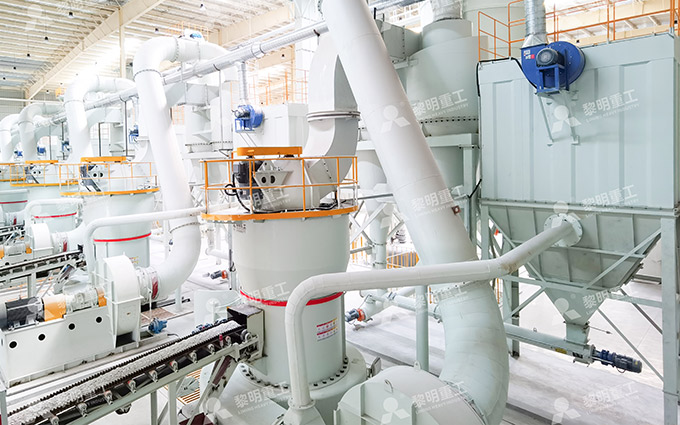
| Ring-roller ultrafine mill | Fine and ultrafine dry GCC with integrated classification | Small to medium capacity; flexible multi-grade production | Performance depends strongly on airflow and classifier control |
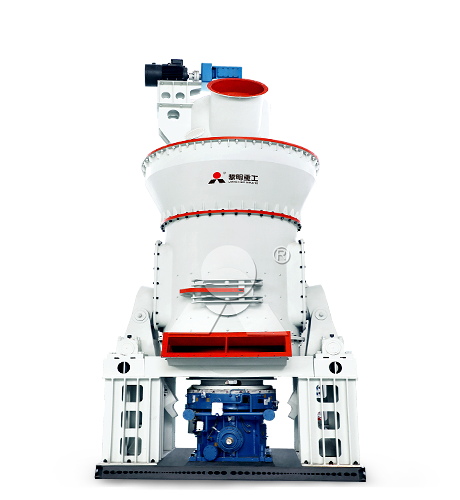
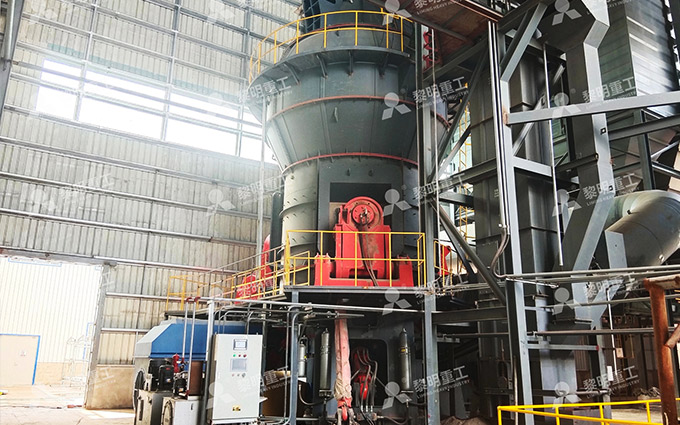
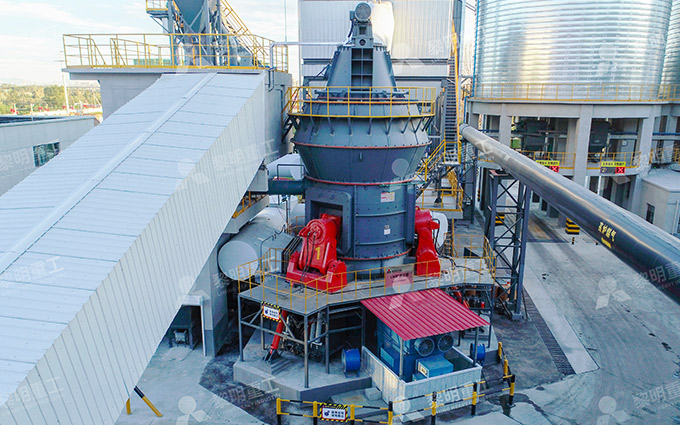
| Vertical roller mill with classifier | Continuous fine grinding and classification in a compact vertical layout | Higher-capacity projects or plants with limited floor area | Evaluate drying needs, wear, and fineness stability at guaranteed output |
| Ball mill plus air classifier | Large-scale dry GCC production with separate grinding and classification stages | Projects requiring flexible PSD adjustment and high installed capacity | Requires careful media, classifier, circulation, and energy optimization |
| Stirred media mill | Very fine wet or dry grinding, depending on configuration | Specialty grades and processes where extremely fine PSD is needed | Media wear, slurry handling, and downstream drying can affect economics |
| Jet mill | Specialized ultrafine size reduction using high-velocity gas | Very fine, high-value products at lower production volumes | Usually requires a strong business case because energy demand can be high |
Supplier guidance commonly positions ultrafine mill systems for approximately 2–10 μm products and high-value plastic, coating, paper, sealant, and adhesive applications. These ranges are useful as initial screening references, but a production guarantee should always be confirmed through sample testing.
How to Select the Right Mill
Start with the product the customer will buy, then work backward to raw material and equipment. Do not begin by choosing a mill model based on a catalog capacity table. A capacity figure is meaningful only if it states the feedstock, target fineness, product moisture, operating mode, and test conditions.
1. Define the saleable product
Specify the finished powder using the same test methods that your customer uses. At a minimum, define D50, D97 or D98, maximum coarse residue, whiteness or brightness, moisture, bulk density range, and coating status. For coated GCC, also define the surface-treatment chemistry and expected activation or hydrophobicity performance.
A useful project specification may look like this:
Coated ultrafine GCC for PVC cable compound: D50 2.5–3.5 μm, D97 maximum 10 μm, controlled coarse residue, defined whiteness minimum, moisture limit, specified stearic-acid treatment, and guaranteed output in tonnes per hour.
This is substantially more useful than asking for a “2,500 mesh calcium carbonate mill.”
2. Test the actual raw material
Calcite, marble, and limestone can all contain calcium carbonate, but they do not necessarily grind or perform identically. Test the actual quarry sample or purchased feedstock for chemical composition, whiteness, moisture, silica content, iron contamination, hardness, abrasiveness, and grindability.
High quartz or silica contamination can increase wear in grinding and classification equipment, impair whiteness, and create occupational-exposure concerns. In the United States, OSHA’s respirable crystalline silica standard sets a permissible exposure limit of 50 μg/m³ as an 8-hour time-weighted average. Even where a plant operates outside the United States, this benchmark reinforces the importance of enclosed transfer points, effective local exhaust ventilation, sealed collection systems, housekeeping, exposure monitoring, and appropriate worker protection.
3. Match capacity to fineness
As the target product becomes finer, grinding energy increases and mill throughput generally falls. A line sized for 10 t/h at a relatively coarse grade cannot be assumed to produce 10 t/h at D97 5 μm. Ask suppliers for a capacity guarantee at the exact target PSD, using your own raw material where possible.
For a multi-grade plant, calculate annual demand by product grade rather than only total annual tonnage. A mill may have enough annual capacity in theory but still become a bottleneck if the highest-value ultrafine grade requires long operating time at reduced hourly output.
4. Evaluate classification before choosing the mill
For ultrafine GCC, the air classifier is a decisive component of the circuit. Its job is to separate qualified fine particles from material that needs more grinding. Poor classification raises circulating load, wastes energy, broadens PSD, and allows coarse particles into the product.
Classifier rotor speed is one of the principal controls for cut size. Increasing speed generally produces a finer cut, but it can also increase circulating load and reduce net throughput. Production optimization should therefore track D50, D97, throughput, specific energy, and product yield together—not fineness in isolation.
5. Plan for powder collection and conveying
Ultrafine calcium carbonate is difficult to handle because it is dusty, aerated, and prone to agglomeration. The bag filter, fan, duct layout, rotary valve, screw conveyor, pneumatic conveying system, silo design, and packing equipment need to match the powder’s bulk density and flow behavior.
A poorly designed collection and transfer system can create more production loss than the mill itself. Common symptoms include filter pressure instability, powder leakage, excessive product retained in the system, silo bridging, inaccurate packing weights, and contamination between grades.
Surface Treatment and Coated GCC
Many ultrafine calcium carbonate grades used in polymers, rubber, sealants, and adhesives are surface treated to improve compatibility with organic matrices and to reduce particle agglomeration. Stearic acid is a common treatment for coated GCC, although the optimum treatment level and process configuration depend on particle surface area, mineral chemistry, downstream resin, and customer formulation.
Grinding and coating should be considered as one commercial system. A finer product has more surface area, so coating demand and process sensitivity increase. If the coating is insufficient, dispersion and moisture resistance may be poor. If treatment is excessive or inconsistent, the powder may have undesirable flow, odor, processing, or formulation effects.
| Product type | Typical downstream use | Primary production focus |
|---|---|---|
| Uncoated ultrafine GCC | Paints, putty, paper-related applications, selected dry mixes | Whiteness, PSD, low residue, stable powder handling |
| Coated ultrafine GCC | PVC, PP, PE, masterbatch, rubber, sealants, adhesives | PSD plus surface compatibility, dispersion, and controlled treatment level |
| Narrow-PSD specialty GCC | Premium plastics, high-gloss coatings, demanding sealant systems | Tight classification, low coarse tail, repeatable quality control |
Operating Factors That Control Performance
Ultrafine GCC production is sensitive to small process changes. Stable operation comes from managing the whole circuit instead of adjusting one variable only after a quality problem appears.
Feed consistency: Keep feed size, moisture, and mineral quality as stable as possible.
Mill loading: Avoid both underfeeding and overfeeding; each can reduce grinding efficiency.
Classifier setting: Set cut size using actual PSD results, not only machine speed.
Air balance: Maintain stable fan performance, duct pressure, and filter condition.
Wear control: Inspect grinding parts, classifier components, and liners before wear changes product quality.
Temperature management: Monitor temperature where heat-sensitive coating agents or moisture-related agglomeration are concerns.
Quality sampling: Use a defined sampling plan for PSD, moisture, whiteness, residue, bulk density, and coating performance.
Common Selection Mistakes
Choosing by mesh number only
Mesh does not adequately describe ultrafine GCC. Two grades called “2,500 mesh” may have different D50 values, different D97 values, different coarse residue, and very different application performance. Use laser-diffraction PSD targets and an agreed test method.
Accepting capacity at the wrong fineness
Supplier capacity may be stated at a coarser product or under ideal feed conditions. Require a written guarantee tied to the requested fineness, actual raw material, feed moisture, and operating hours.
Ignoring raw-material contamination
A white-looking limestone is not automatically suitable for premium ultrafine GCC. Silica, iron-bearing minerals, dark inclusions, and abrasive impurities can raise wear, lower whiteness, and limit access to high-value end uses.
Undersizing the dust-collection system
Fine powder must be collected efficiently and transferred without leakage or unstable airflow. A mill with a good grinding chamber cannot compensate for inadequate filtration, fan capacity, duct design, or pressure control.
Separating coating from milling decisions
For polymer-grade coated GCC, powder fineness and surface-treatment performance are interdependent. Confirm both during trial production instead of qualifying the mill only on raw PSD.
FAQ
What mill is best for ultrafine calcium carbonate?
The best mill is the one that achieves the specified D50/D97, throughput, product quality, and operating cost with the actual feedstock. Ring-roller ultrafine mills, vertical roller mills, and ball-mill-plus-classifier systems are common choices. The best fit changes with capacity, target PSD, moisture, coating needs, and local power economics.
Can a dry mill make D97 5 μm GCC?
Yes, certain dry ultrafine grinding systems are designed for that range. However, achieving D97 5 μm at a commercially useful throughput requires appropriate raw material, a high-efficiency classifier, stable airflow, suitable installed power, and disciplined operating control. Supplier references commonly associate D97 5–10 μm with ultrafine GCC production.
Should an ultrafine GCC plant use a ball mill or a roller mill?
A ball-mill-and-classifier circuit can be attractive for large-scale production and flexible grade control. A roller-based ultrafine mill can be attractive for a more integrated, compact dry system and for flexible production at smaller to medium scales. Compare both using the same guaranteed product PSD, capacity, energy basis, wear assumptions, and auxiliary-equipment scope.
How important is raw-material moisture?
It is highly important. Excess moisture can cause caking, poor feed flow, internal buildup, reduced classification efficiency, and unstable product quality. Some mill configurations incorporate hot-air drying capability for wetter feed, while other projects require upstream drying or stricter raw-material storage controls.
Bottom Line
An ultrafine calcium carbonate grinding mill should be chosen around a precise saleable powder specification: target D50 and D97, coarse-tail control, whiteness, moisture, coating status, and guaranteed throughput. The mill itself is only one part of the solution; classifier performance, feed quality, dust collection, conveying, coating, and quality control determine whether the operation can produce stable, high-value ultrafine GCC.
For industrial mineral producers, the most reliable approach is to test the actual calcium carbonate feedstock, define product acceptance criteria with end users, and compare complete grinding systems on a like-for-like basis. That is the foundation for supplying consistent ultrafine GCC to demanding PVC, plastics, rubber, sealant, adhesive, coating, and paper markets.