Calcium Carbonate Knowledge Hub
Calcium Carbonate Classifier Selection
2026-09-04 17:19:53
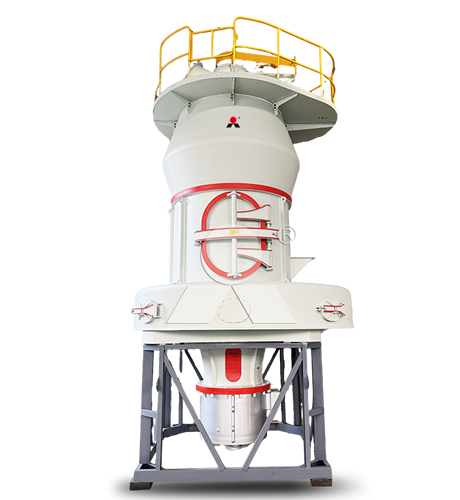
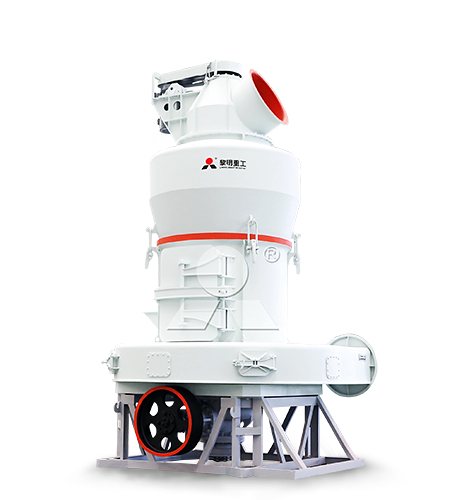
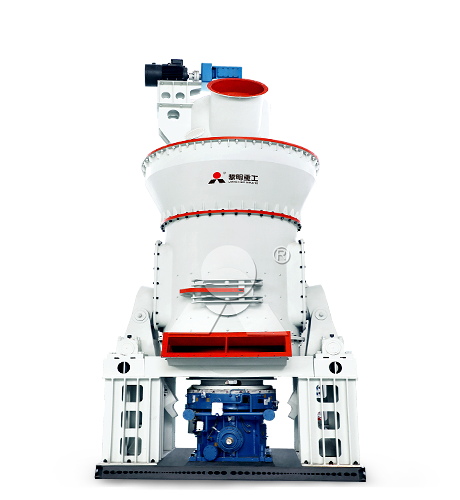
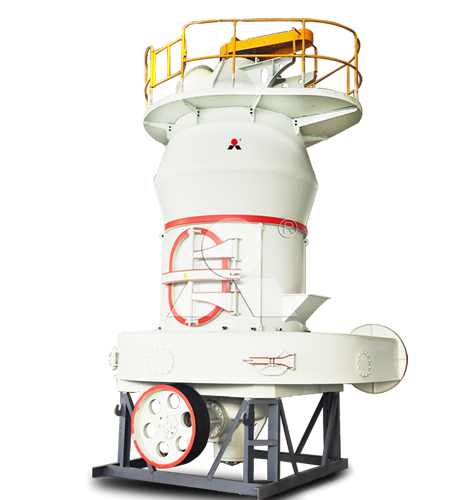
We are Liming Heavy Industry, a manufacturer of various types of industrial crushers, such as Raymond Mill, Trapezoidal Mill, Vertical Mill, Ultrafine Mill, Ball Mill, etc.
Our mills can process the following minerals:
limestone, quicklime, kaolin, talc, barite, bentonite, calcium carbonate, dolomite, coal, gypsum, clay, carbon black, slag, cement raw materials, cement clinker, etc.
If you need a mill to process stone or minerals into powder, please feel free to contact me (WhatsApp: +8615333807511). Thank you.
Select a calcium carbonate classifier by starting with the finished-product particle-size distribution—not with the classifier model, nominal mesh, or maximum feed rate. For GCC production, the classifier must consistently achieve the required D50 and D97, reject the unwanted coarse fraction, match the grinding circuit’s circulating load, and do so without excessive energy use, wear, or contamination.
In fine and ultrafine calcium carbonate processing, an air classifier often determines whether a mill produces a stable commercial grade or an inconsistent powder with too much coarse residue. This is especially important for PVC, PP, PE, masterbatch, rubber, sealants, adhesives, coatings, and paper-related products, where a coarse particle tail can affect dispersion, gloss, extrusion behavior, surface finish, and customer acceptance.
What a Calcium Carbonate Classifier Does
A classifier separates calcium carbonate particles according to their aerodynamic behavior in an air stream. In a dynamic air classifier, fine particles are carried through the classification zone and collected as product, while particles that are too coarse are rejected and returned to the mill or discharged as a coarse fraction.
Classification is not the same as grinding. A mill reduces particle size; a classifier decides which particles are sufficiently fine to leave the circuit. In a closed-circuit GCC plant, this separation controls product top size, circulating load, grinding efficiency, and overall capacity. Air classifiers are therefore essential components in airswept milling systems because they affect product size, recirculation, power consumption, and plant profitability.
Start with the Product Specification
The first selection question is: What powder must the plant sell? “800 mesh,” “1,250 mesh,” or “3,000 mesh” is not enough for a serious classifier specification. These labels can refer to products with very different PSD curves, testing methods, and coarse-particle limits.
Instead, define the target grade using measurable criteria agreed with the end user:
Target D50, the median particle diameter.
Maximum D97 or D98, which limits the coarse tail.
Required D10 or fine-end distribution where rheology and surface area matter.
Maximum screen residue on an agreed sieve and test method.
Whiteness, brightness, moisture, and chemical purity requirements.
Whether the material is uncoated GCC or coated calcium carbonate.
Required hourly output at the target PSD.
For example, a useful specification for a polymer filler may be:
Coated GCC for PVC compound: D50 3.0–4.0 μm, D97 maximum 12 μm, controlled coarse residue, specified moisture limit, agreed whiteness minimum, and guaranteed output of 5 t/h using the customer’s calcite feedstock.
This tells the equipment supplier what the classifier must achieve. A request for a “3,000-mesh classifier” does not.
Choose the Classifier Type
Calcium carbonate plants commonly use dynamic air classifiers for fine and ultrafine production. Static or gravity-type separation devices can remove large particles, but they usually do not provide the precise cut control needed for demanding GCC grades.
| Classifier type | How it works | Typical GCC role | Selection consideration |
|---|---|---|---|
| Static air classifier | Uses airflow geometry, gravity, and inertial separation with no high-speed classification wheel | Coarser separation, pre-classification, or simpler circuits | Lower complexity, but limited fine cut accuracy |
| Dynamic turbine air classifier | Uses a rotating classifier wheel and airflow to make a controlled fine/coarse separation | Fine and ultrafine GCC, often in closed circuit with a mill | Strong choice where D97 and narrow PSD control are important |
| Multi-wheel air classifier | Uses multiple classification wheels to distribute high feed volume | Higher-capacity ultrafine GCC production | Useful when one wheel would become a throughput bottleneck |
| Air classifier mill | Combines grinding and internal dynamic classification in one machine | Lower- to medium-capacity fine powder production | Compact arrangement, but assess wear and capacity at the required PSD |
| Separate external classifier | Installed after or above a ball mill, vertical mill, or ring-roller mill | Dedicated fine and ultrafine GCC circuits | Offers flexible optimization of grinding and classification independently |
Dynamic classifiers are normally preferred when the plant requires precise ultrafine control. Industry guidance commonly identifies turbine-type classifiers as appropriate for fine cuts below roughly D90 10 μm, while broader inertial systems are more suitable for coarser separations. The final equipment decision should still be based on pilot testing and a written guarantee using the actual raw material.
Understand the Main Control Variables
A classifier does not produce one fixed fineness. Its cut point changes with wheel speed, airflow, feed rate, powder loading, material density, particle shape, system pressure, and internal wear condition. A successful calcium carbonate line must control these variables as a system.
Classifier wheel speed
In a dynamic classifier, wheel speed is usually the most direct control for product fineness. Increasing wheel speed generally makes the product finer because larger particles experience greater centrifugal rejection and are less likely to pass into the fine-product stream. Lower wheel speed normally allows a coarser product and can increase throughput.
Supplier guidance for air-classifying mills similarly identifies classifier-wheel speed as the primary particle-size control: increasing speed tightens the top-size cut and lowers D97. However, the finest possible setting is not necessarily the best operating point. Excessively high wheel speed can increase circulating load, reduce net production, raise power consumption, and make the system more sensitive to feed fluctuations.
Airflow and fan performance
Airflow transports powder through the circuit and provides the fluid conditions required for separation. If airflow is too low, fine particles may not be carried efficiently to collection and the system can become overloaded. If airflow is too high, the classifier may allow too many coarse particles into the product or create unstable separation, depending on the design and operating point.
Airflow must be evaluated together with the induced-draft fan, duct sizing, cyclone, bag filter, rotary valve, and pressure losses across the system. A classifier cannot perform consistently if the dust collector loads up, the fan curve is unsuitable, or duct leakage disrupts the designed air balance.
Feed rate and circulating load
The classifier must handle not only new feed but also the coarse material returning from the separation process. In a closed grinding circuit, this recirculating stream can be several times larger than the fresh feed. Therefore, classifier capacity must be sized against the expected circulating load, not merely the desired tonnes per hour of finished GCC.
If a system is overfed, product D97 may become too coarse, mill current may rise, pressure may become unstable, and the classifier may lose separation efficiency. If it is underfed, the plant may meet fineness but operate at poor capital productivity.
Feed PSD, density, and shape
Air classification responds to aerodynamic behavior rather than geometric size alone. Calcium carbonate with a different feed distribution, moisture level, particle shape, or impurity level can classify differently even when it has the same nominal mesh size. This is why a classifier selected for one calcite source should not be assumed to deliver identical results with another limestone or marble source.
Match the Classifier to the Grinding Circuit
Classifier selection must follow the grinding technology. A classifier paired with a ball mill has different loading, air volume, and recirculation requirements from one integrated into a ring-roller mill, vertical roller mill, or air classifier mill.
| Grinding arrangement | Classifier requirement | Typical priority |
|---|---|---|
| Ball mill + external air classifier | High-volume handling, stable air balance, efficient coarse return | Flexible grade changes and scalable capacity |
| Ring-roller or micro powder mill | Integrated fine separation with controlled product extraction | Compact layout and fine-product flexibility |
| Vertical roller mill | Classifier compatible with internal circulation and vertical air stream | Continuous operation, compact footprint, high throughput |
| Air classifier mill | Internal classifier that balances impact grinding and fine separation | Integrated fine grinding for smaller or specialty production lines |
For an existing plant upgrade, collect operating data before selecting a replacement classifier: current feed rate, mill power, air volume, pressure differential, product D50/D97, coarse-return rate, filter performance, wear history, and the actual bottleneck. Replacing a classifier will not solve a capacity problem caused by insufficient grinding power, wet feed, poor dust collection, or undersized conveying equipment.
Key Selection Criteria for GCC Plants
Target fineness and coarse-tail control
For fine GCC, an acceptable D50 alone is not enough. A product may reach its average particle size target while still containing too many coarse particles. Select a classifier based on the ability to control D97 or D98 consistently at the required production rate.
For ultrafine calcium carbonate in the approximate 1–10 μm filler range, classifier selection becomes especially important because the equipment controls the relationship between finished-product yield, coarse-particle rejection, and power consumption. Industry selection guidance for GCC plants emphasizes defining application, fineness range, PSD, and planned capacity first, then matching the classifier to the mill circuit and circulating load.
Capacity at the required cut point
Ask for capacity at the exact required D97, not the maximum catalog capacity. A classifier may process a large tonnage at a coarse cut but substantially less at an ultrafine setting. Compare offers on a like-for-like basis:
Same raw calcium carbonate source and feed PSD.
Same finished D50 and D97 specification.
Same product moisture and coating condition.
Same net finished-product capacity.
Same annual operating hours.
Same boundary of supply for fan, filter, cyclone, conveyors, and controls.
Wear resistance and contamination control
Calcium carbonate itself is relatively soft compared with quartz, but natural deposits may contain abrasive silica, silicates, or iron-bearing minerals. High-speed classifier wheels, guide vanes, liners, and internal seals can wear over time. Wear changes internal clearances and can gradually affect cut size, efficiency, and product contamination.
Specify wear-resistant materials where feed analysis and operating history justify them. Also consider the risk of metal contamination in high-whiteness or premium polymer grades. Supplier guidance for abrasive powders, including calcium carbonate where contamination is present, recommends abrasion-resistant rotor and liner configurations to reduce wear-related performance loss.
Energy and total cost of ownership
A lower purchase price does not necessarily mean a lower-cost classifier. The relevant comparison includes classifier drive power, fan power, filter pressure loss, mill recirculation, wear parts, maintenance labor, spare-part availability, downtime, and product yield.
An inefficient classifier can force the mill to repeatedly grind particles that should already have been released as product, or it can allow oversize particles into the fine stream. Both outcomes reduce profitability: one wastes energy, while the other can create customer complaints or downgraded inventory.
Automation and quality control
For multi-grade GCC plants, use variable-frequency control for the classifier wheel and fan, trend key operating data, and connect production settings to laboratory PSD results. A practical control strategy tracks:
Classifier wheel speed.
Fan speed or damper position.
System pressure and filter differential pressure.
Fresh feed rate and coarse-return rate.
Mill current and specific energy.
Finished-product D50, D97, moisture, whiteness, and residue.
Regular start-up tuning and maintenance checks are necessary because classifier settings can drift as feed characteristics and wear conditions change.
How to Evaluate Classifier Performance
Do not judge a classifier only by the fineness of the final product. A system can make a fine powder while operating inefficiently, losing too much product to the coarse stream, consuming excessive energy, or producing unstable PSD from shift to shift.
Evaluate performance using these indicators:
| Performance indicator | What to check | Possible issue if poor |
|---|---|---|
| Product D50 and D97 | Consistency versus target across multiple samples | Unstable cut point, feed changes, airflow problems, or wear |
| Coarse-fraction PSD | Whether rejected material is truly too coarse | Excess fine-product loss to the return stream |
| Yield of fine product | Qualified product recovered from the circuit | Over-classification or poor separation efficiency |
| Specific energy | kWh per tonne of qualified GCC | High circulating load, worn parts, or poor operating point |
| Pressure stability | Fan, duct, and filter differential-pressure trends | Leaks, filter loading, buildup, or airflow imbalance |
| Wear and contamination | Wheel, liner, seal, and product-metal monitoring | Quality drift, rising maintenance cost, or reduced whiteness |
Common Classifier Selection Errors
Using nominal mesh as the main specification
Mesh alone does not define ultrafine calcium carbonate quality. Use D50, D97 or D98, residue, and an agreed measurement method.
Ignoring the coarse-return load
A classifier must process the total internal circulation, not only new feed. Underestimating this load can cause poor separation, unstable operation, and lower-than-expected output.
Selecting on maximum capacity
Maximum capacity is usually associated with a coarser product. Require the supplier to state guaranteed net output at the required fineness and using representative calcium carbonate feed.
Neglecting filter and fan design
Classifier performance depends on stable airflow. An undersized bag filter, poor duct design, air leakage, or a fan operating away from its efficient range can undermine the entire circuit.
Skipping pilot testing
Pilot trials are the most reliable way to verify achievable PSD, fine-product yield, energy demand, and wear behavior. GCC classifier-selection guidance recommends validating classification accuracy, throughput, and energy performance with trial production before committing to a full-scale purchase.
FAQ
What type of classifier is best for ultrafine calcium carbonate?
A dynamic turbine air classifier is commonly the preferred choice when a plant needs tight D97 control and an ultrafine product. For higher production rates, a multi-wheel dynamic classifier may be appropriate. The final selection depends on target PSD, circuit type, feed properties, and required net throughput.
How does classifier wheel speed affect calcium carbonate fineness?
Increasing wheel speed generally produces a finer cut and lowers the product’s D97 by rejecting more coarse particles. It can also reduce throughput and increase circulating load, so it should be optimized with airflow, feed rate, and mill performance rather than adjusted independently.
Can a classifier improve a calcium carbonate mill’s capacity?
Yes. A more efficient classifier can remove qualified fine particles sooner, reduce unnecessary overgrinding, lower circulating load, and allow the grinding mill to focus on material that still needs size reduction. The improvement depends on whether classification is the real bottleneck in the existing circuit.
What information should be sent to a classifier supplier?
Provide raw-material analysis, feed PSD, moisture, hardness or abrasiveness, target D50 and D97, desired net output, current or planned mill type, plant elevation and ambient conditions, available power, space limits, dust-collection requirements, coating requirement, packaging format, and acceptance-test method.
Bottom Line
Calcium carbonate classifier selection is fundamentally a product-quality and circuit-efficiency decision. Choose a dynamic air classifier based on the required D50/D97, allowable coarse tail, actual feedstock, internal circulating load, and net capacity at the required grade—not on mesh labels or catalog maximums.
For a reliable GCC plant, validate the classifier with representative material, integrate it correctly with the mill, fan, and bag filter, and measure performance through PSD stability, qualified-product yield, energy use, and wear. This approach gives calcium carbonate producers a stronger basis for supplying consistent grades to plastics, PVC, rubber, sealant, adhesive, coating, and other industrial-mineral customers.