Calcium Carbonate Knowledge Hub
Chalk vs Limestone
2026-09-04 16:26:32
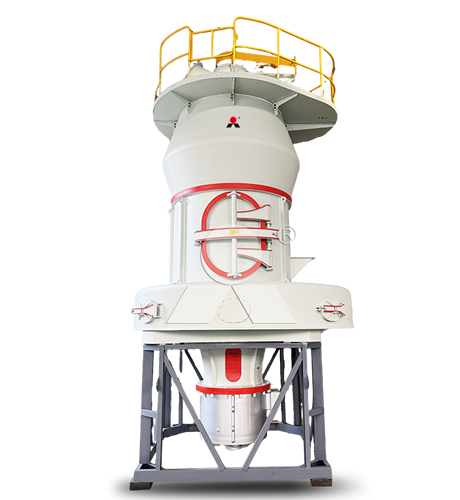
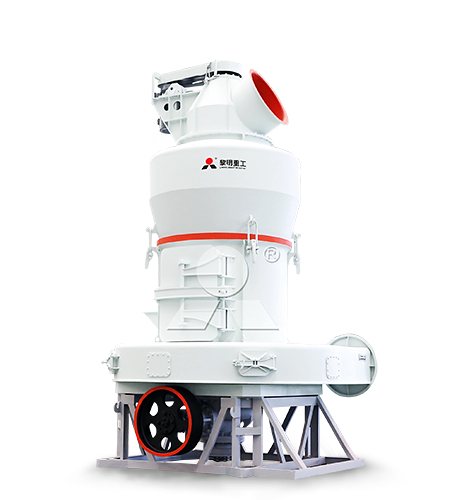
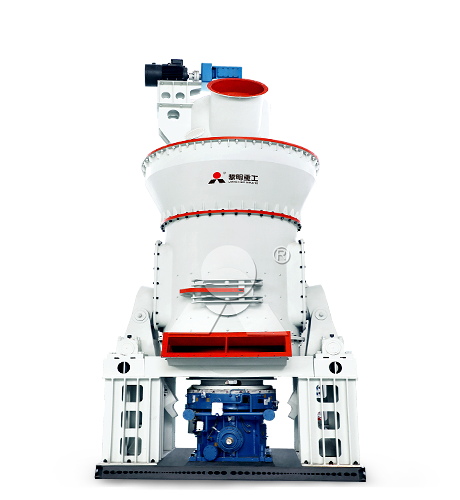
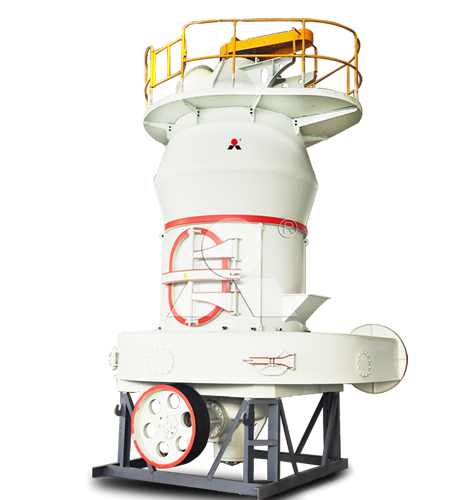
We are Liming Heavy Industry, a manufacturer of various types of industrial crushers, such as Raymond Mill, Trapezoidal Mill, Vertical Mill, Ultrafine Mill, Ball Mill, etc.
Our mills can process the following minerals:
limestone, quicklime, kaolin, talc, barite, bentonite, calcium carbonate, dolomite, coal, gypsum, clay, carbon black, slag, cement raw materials, cement clinker, etc.
If you need a mill to process stone or minerals into powder, please feel free to contact me (WhatsApp: +8615333807511). Thank you.
Chalk is a type of limestone, but it is softer, finer-grained, more porous, and formed mainly from microscopic marine organisms. Limestone is the broader rock category: it includes chalk as well as dense, fossiliferous, crystalline, oolitic, and chemically precipitated carbonate rocks.
Both can be valuable feedstocks for ground calcium carbonate (GCC), but they behave differently in quarrying, crushing, drying, grinding, and slurry processing. The better choice for PVC, paper, coatings, plastics, rubber, sealants, or construction products depends on the tested deposit quality—not simply on whether the raw material is called chalk or limestone. The British Geological Survey defines chalk as a friable and porous sedimentary rock containing more than 50% calcite and/or aragonite, largely of biogenic origin from particles such as coccoliths.
Chalk vs Limestone at a Glance
| Feature | Chalk | Limestone |
|---|---|---|
| Relationship | A specific variety of limestone | Broad category of carbonate sedimentary rock |
| Typical composition | Mainly calcite, CaCO3, often from microfossils | Mainly calcite and/or aragonite; may also contain dolomite and non-carbonate minerals |
| Formation | Largely biogenic accumulation of microscopic marine carbonate remains | Can form biologically, chemically, mechanically, or through mixed sedimentary processes |
| Texture | Fine-grained, soft, earthy, friable, and porous | Highly variable: dense, crystalline, layered, fossiliferous, oolitic, porous, or chalky |
| Typical color | White to pale gray, cream, or light buff | White, cream, gray, tan, brown, red, black, or other colors depending on impurities |
| Porosity | Generally high | Ranges from low to high depending on rock type and geological history |
| Grinding behavior | Often soft and easy to break down, but moisture and flint can be important constraints | Varies widely with density, crystal texture, clay, chert, silica, and dolomite content |
| Common industrial role | Natural CaCO3 source for fine powder and slurry products | Large-volume natural CaCO3 feedstock for GCC and many other industrial uses |
Chalk Is a Soft Limestone
Chalk is best understood as a specialized limestone. It formed when the microscopic calcium carbonate remains of marine plankton accumulated on the seafloor, then underwent burial and lithification. Its most characteristic components are coccoliths, tiny calcite plates produced by planktonic algae, together with other calcareous microfossils.
The Geological Society describes chalk as a soft white limestone made of microscopic coccolith remains from tiny planktonic organisms. This biological origin explains why chalk is commonly fine-textured, light colored, and porous.
Limestone, in contrast, includes many different carbonate rocks. Some limestones are made largely of shell fragments or coral material; others consist of carbonate mud, rounded ooids, chemically precipitated crystals, or recrystallized calcite. As a result, limestone can range from soft and chalk-like to very dense and hard.
How each rock forms
| Formation pathway | Chalk | Limestone |
|---|---|---|
| Marine microfossil accumulation | Primary formation mechanism | Can occur, but is only one of many limestone-forming processes |
| Shell and coral accumulation | May contribute, usually alongside fine microfossil material | Common in many fossiliferous and reef-associated limestone deposits |
| Chemical precipitation from water | Not usually the defining process | Important for some limestone, travertine, tufa, and carbonate sediment types |
| Ooid formation | Not typical | Common in oolitic limestone deposited in shallow, agitated marine settings |
| Recrystallization | Can occur during later burial but is not its defining feature | Can occur in some limestones; extensive metamorphic recrystallization produces marble |
Composition Differences
Both chalk and limestone are commonly dominated by calcium carbonate, usually as calcite. However, their chemical composition can vary significantly from deposit to deposit. A high-quality chalk may be very high in CaCO3, but a chalk deposit can also contain clay, flint, silica, iron-bearing minerals, phosphate, organic matter, or dolomite. The same is true of limestone, although limestone’s broader geological range creates even more variation.
For industrial calcium carbonate production, the useful comparison is not “chalk versus limestone” as a nameplate distinction. It is the comparison of CaCO3, MgO, silica, iron, acid-insoluble residue, whiteness, mineralogy, moisture, and grinding behavior for the specific quarry source.
| Component or feature | Chalk tendency | Limestone tendency | Effect on GCC production |
|---|---|---|---|
| Calcite | Often dominant, commonly derived from coccoliths | Often dominant, but crystal size and origin vary widely | Provides the calcium carbonate value of the feedstock |
| Aragonite | May occur in carbonate sediment but often transforms to calcite over time | May occur in some young or special carbonate deposits | Same formula as calcite but different mineral phase and crystal structure |
| Dolomite | Can occur in selected deposits but is often limited in high-calcium chalk | Can be minor or major, especially in dolomitic limestone | Raises MgO and reduces suitability for low-magnesium calcitic GCC grades |
| Clay | May occur as seams, marl layers, or fine contamination | May occur in bedding planes, shale partings, weathered zones, or mixed carbonate beds | Can reduce whiteness, complicate moisture control, and affect slurry rheology |
| Silica | Often associated with flint nodules or siliceous bands | Can occur as quartz, sand, chert, or siliceous layers | Raises abrasion, grit, acid-insoluble residue, and grinding-media wear |
| Iron-bearing minerals | Can occur in stained zones or impurity layers | Can occur in clay-rich, weathered, organic-rich, or mineralized zones | Can reduce whiteness and create yellow, brown, gray, or red color |
Physical Properties and Mining Behavior
Chalk is typically softer and more porous than many limestones. It can often be excavated or crushed with lower energy than dense limestone, which is a potential advantage in powder production. Its natural fine texture may also make it attractive for wet processing and fine slurry manufacture.
However, those same properties create operational challenges. Porous chalk may retain moisture after rainfall or washing. It can break down during handling, produce dust, compact under storage, and require robust moisture control before dry grinding. Flint nodules can be especially problematic because flint is far harder than calcite and can sharply increase wear in crushing and milling equipment.
Limestone behavior is more variable. Dense crystalline limestone may require more crushing energy but have lower moisture and better bulk handling. Soft limestone may process similarly to chalk. Fossiliferous, layered, or clay-rich limestone can require selective mining and blending to maintain stable feed quality.
| Processing factor | Chalk | Limestone |
|---|---|---|
| Excavation and crushing | Often easy to break due to friable texture | Can range from easy to difficult depending on density and rock strength |
| Moisture management | Often important because of high porosity and water retention | Depends on quarry conditions, porosity, weathering, and clay content |
| Grinding energy | Potentially lower for clean soft chalk | Ranges widely; dense limestone or abrasive contaminants can increase energy demand |
| Equipment wear | Usually modest for clean chalk but can rise sharply with flint | Driven by chert, quartz, sand, silica, and other hard impurities |
| Powder bulk density | May be relatively low because of fine, porous source texture | Depends on mineralogy, milling system, and target particle-size distribution |
| Feed variability | May change with flint beds, marl layers, moisture, and weathering | May change with benches, clay partings, dolomitization, chert, fossils, and color zones |
Chalk vs Limestone for GCC
Both chalk and limestone can produce ground calcium carbonate, but the optimal processing route may differ. GCC is made by mechanically processing natural calcium carbonate rock through crushing, grinding, classification, and, when needed, surface treatment. The raw feed may be limestone, chalk, marble, or calcite ore.
Chalk can be especially attractive for fine powder and slurry products because it is naturally soft and fine-grained. Limestone can provide large reserves, wider geographic availability, and a broad range of GCC grades. Neither is automatically better; the preferred feedstock depends on the final product and the plant’s processing capability.
| GCC requirement | When chalk may be advantageous | When limestone may be advantageous |
|---|---|---|
| Fine wet-ground slurry | Soft, fine-textured chalk may grind and disperse efficiently when low in flint and clay | High-purity limestone can also perform well if it has suitable fine-grinding response and slurry behavior |
| High-brightness powder | When the chalk deposit is clean, white, low in iron, and low in colored impurities | When selected limestone provides equivalent or better whiteness and low dark-speck content |
| Coated GCC for PVC and polyolefins | When the finished chalk GCC meets particle-size, moisture, purity, and coating requirements | When limestone GCC provides equivalent dispersion and consistent supply at lower delivered cost |
| Low abrasive residue | When flint and silica are effectively controlled or absent | When chert, quartz, and siliceous bands are controlled through quarry selection |
| Large-volume supply | Where suitable chalk reserves and local infrastructure are available | Often advantageous because limestone resources are widely available and commonly developed at scale |
| Dry powder logistics | Suitable after effective drying and moisture control | Often straightforward for dry, dense, low-moisture limestone sources |
For the paper, plastics, paint, rubber, and sealant sectors, calcium carbonate is used as an industrial mineral filler or coating pigment. Chalk, limestone, and marble are all recognized natural calcium carbonate sources in industrial mineral applications.
How to Select Between Them
Choose chalk or limestone based on finished-product performance and total delivered cost. The comparison should include quarry quality, process requirements, plant capacity, energy consumption, wear, water management, coating response, logistics, and customer qualification results.
Compare these parameters
Purity: CaCO3, CaO, MgO, acid-insoluble residue, and relevant trace components.
Mineralogy: Calcite, dolomite, quartz, flint, clay, feldspar, iron minerals, and other phases identified by XRD.
Optical properties: Whiteness, brightness, Lab* color values, and dark-speck content after grinding.
Particle-size performance: D10, D50, D97, coarse residue, surface area, and bulk density after pilot milling.
Moisture behavior: Quarry moisture, water retention, drying energy, storage stability, and finished-powder moisture.
Wear and energy: Flint or chert content, grinding-media consumption, liner wear, specific energy, and maintenance demand.
Surface treatment: Hydrophobicity, coating degree, and polymer dispersion for stearic-acid-coated GCC.
Supply economics: Mineable reserve consistency, quarry stripping, plant distance, transport, packaging, and supply security.
For example, a nearby chalk deposit may have excellent whiteness and low grinding energy but need significant drying capacity because of high moisture. A denser limestone deposit may cost more to crush but have lower moisture and more stable powder handling. The better choice depends on whether the lower energy at one stage outweighs added cost or risk elsewhere in the process.
Key Takeaway
Chalk is a soft, porous, fine-grained, biogenic type of limestone composed mainly of calcite. Limestone is the broader category and includes rocks with a much wider range of textures, origins, compositions, and processing characteristics.
For calcium carbonate production, both can be excellent GCC feedstocks. Select the material that can consistently meet the required CaCO3 purity, MgO limit, whiteness, low silica and iron, particle-size performance, moisture control, coating response, supply reliability, and delivered cost for the target PVC, plastic, paper, coating, rubber, adhesive, sealant, or construction application.