Calcium Carbonate Knowledge Hub
How to Choose a Mill Based on Calcium Carbonate Fineness
2026-09-04 17:07:45
We are Liming Heavy Industry, a manufacturer of various types of industrial crushers, such as Raymond Mill, Trapezoidal Mill, Vertical Mill, Ultrafine Mill, Ball Mill, etc.
Our mills can process the following minerals:
limestone, quicklime, kaolin, talc, barite, bentonite, calcium carbonate, dolomite, coal, gypsum, clay, carbon black, slag, cement raw materials, cement clinker, etc.
If you need a mill to process stone or minerals into powder, please feel free to contact me (WhatsApp: +8615333807511). Thank you.
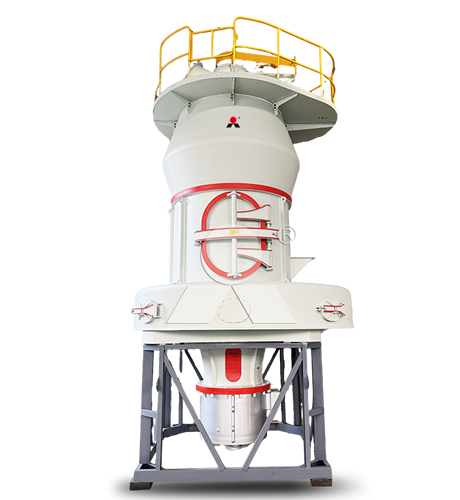
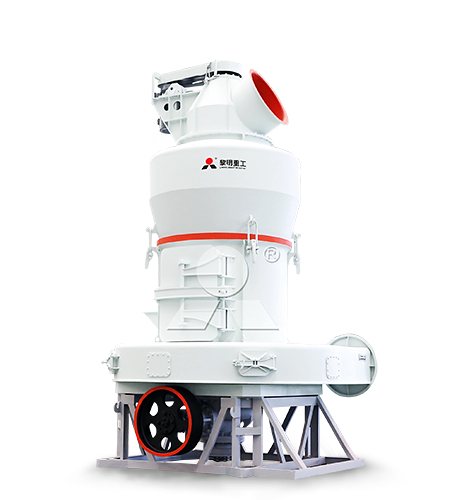
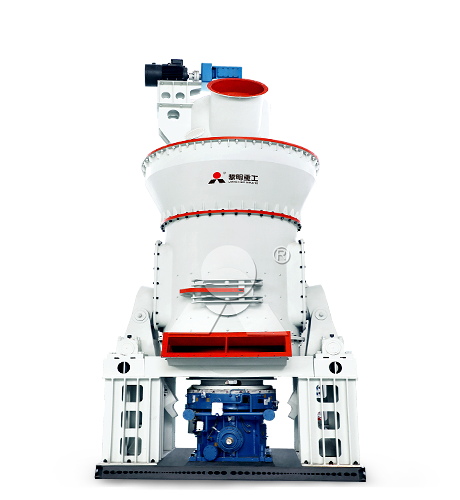
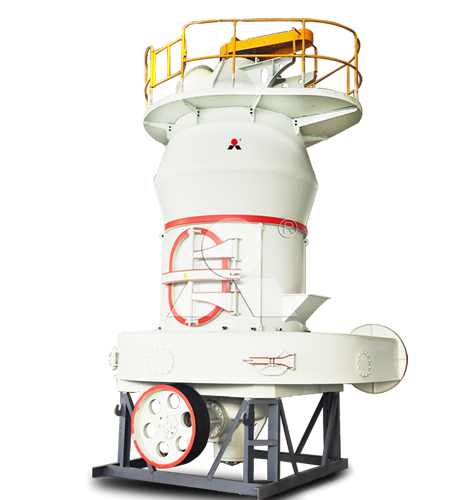
Choose a calcium carbonate mill by the finished powder fineness and particle-size distribution, not by the raw mineral alone. An MTW Raymond mill is generally suitable for conventional 80–325 mesh GCC; an LM vertical roller mill is best for high-capacity standard-to-fine production; an MW micro powder mill fits fine grades from roughly 325 to 1250 mesh; and an LUM ultrafine mill is the better choice for premium 1250–2500 mesh and finer products that require strict D97 or D98 control.
Mesh is only a starting point. For any fine or ultrafine calcium carbonate project, specify the target D50, allowable top size, D97 or D98, required capacity, feed moisture, and end use. A 1250-mesh powder for PVC is not necessarily equivalent to a 1250-mesh powder for paint, paper, film, or sealants because the required coarse-particle limit and PSD width can be very different.
Quick mill selection by fineness
| Finished powder range | Typical micron direction | Recommended mill | Typical markets |
|---|---|---|---|
| 80–200 mesh | About 180–75 µm | MTW Raymond mill | Construction materials, mortar, putty, coarse fillers, general industrial mineral products. |
| 200–325 mesh | About 75–45 µm | MTW Raymond mill or LM vertical roller mill | General GCC, standard PVC filler, rubber, masterbatch, paint extenders, and common industrial applications. |
| 325–600 mesh | About 45–25 µm | LM vertical roller mill or MW micro powder mill | Finer PVC, PP, PE, rubber, coating, paper, and standard paint applications. |
| 600–1000 mesh | About 25–13 µm | MW micro powder mill | Fine plastic filler, filler masterbatch, rubber, sealants, adhesives, decorative paint, and coating products. |
| 1000–1250 mesh | About 13–10 µm | MW micro powder mill or LUM ultrafine mill | Fine coated GCC, high-whiteness plastics, paint, coatings, paper, rubber, and sealant applications. |
| 1250–2500 mesh | About 10–5 µm | LUM ultrafine mill | Premium coated GCC, high-grade plastic filler, fine paint, coated paper, sealants, adhesives, and high-specification compounds. |
| Above 2500 mesh | Below about 5 µm | LUM ultrafine mill or specialized wet grinding system | High-value ultrafine GCC and specialty slurry products requiring very tight PSD control. |
Industry guidance commonly places conventional Raymond-type milling in the 80–400 mesh range and dry ultrafine classification systems from roughly 325 mesh to 2500 mesh or finer. It also emphasizes that ultrafine GCC should be specified by a top-size value such as D97, not only by a nominal mesh number.
80–325 mesh: MTW Raymond mill
For conventional calcium carbonate powder, an MTW Raymond mill is usually the most practical choice. It is designed for dry grinding of crushed limestone, marble, or calcite into standard GCC grades where stable output and economical investment matter more than producing the narrowest ultrafine particle-size distribution.
This range is commonly used for:
Construction filler and mineral powder.
Wall putty, mortar, and related building products.
General-purpose rubber compounds.
Standard PVC pipe, fitting, profile, and flooring formulations.
Economical filler masterbatch.
General paint and coating extenders.
For a 200-mesh or 325-mesh product, an MTW Raymond mill is normally appropriate if the buyer does not need a strict micron-based top-size limit. If the product must have low coarse residue, controlled D97, or especially smooth dispersion in a high-value plastic or coating application, a finer milling and classification option may be more suitable.
200–600 mesh: choose by capacity
The 200–600 mesh range is a transition zone. Both an MTW Raymond mill and an LM vertical roller mill may be suitable, but capacity, moisture, and product consistency determine the better option.
| Plant requirement | Better choice | Reason |
|---|---|---|
| Moderate capacity and conventional product range | MTW Raymond mill | Lower-complexity dry-grinding solution for standard GCC. |
| Large annual output and continuous operation | LM vertical roller mill | Integrated grinding, drying, classification, and conveying support high-throughput production. |
| Feed moisture must be reduced during grinding | LM vertical roller mill | Integrated hot-gas drying can simplify the production flow. |
| Finer product with tighter coarse-particle control | LM vertical roller mill with optimized classification, or MW micro powder mill | Classification performance becomes more important as the target moves toward fine GCC. |
An LM vertical roller mill is particularly useful when the feed contains moisture and production volume is high. It combines grinding, drying, classification, and conveying, reducing the number of process stages. However, its capacity should be evaluated at the actual product fineness. A system that produces high tonnes per hour at 200 mesh may produce substantially less qualified product at a fine 600-mesh target.
325–1250 mesh: MW micro powder mill
An MW micro powder mill is typically the best choice when calcium carbonate must move from standard filler into fine GCC. This range is important for coated calcium carbonate, PVC, PP, PE, masterbatch, paint, coating, rubber, adhesive, and sealant applications where finer particles and controlled coarse residue affect downstream performance.
Choose an MW micro powder mill when:
The target product is approximately 325–1250 mesh.
Customers request D50 and D97 data instead of only a mesh number.
The powder will be coated with stearic acid for plastic or rubber applications.
Smooth extrusion, film appearance, coating gloss, or sealant bead quality matter.
The plant must produce several fine grades with reliable changeover and repeatable results.
For example, a 1000-mesh GCC product for filler masterbatch should not be specified only as “1000 mesh.” The buyer may need a particular D50, very low coarse particles, low moisture, high whiteness, and stable dispersion in PE or PP. The grinding mill, classifier, bag filter, and conveying system must all be selected around that complete product requirement.
1250–2500 mesh: LUM ultrafine mill
An LUM ultrafine mill is generally the best choice for high-value ultrafine GCC from about 1250 to 2500 mesh. At this fineness, the project is less about simply making fine powder and more about maintaining stable particle-size distribution, reducing the coarse tail, controlling excessive fines, and managing energy use.
Typical uses for this range include:
Fine coated calcium carbonate for PVC, PP, PE, and high-loading masterbatch.
Premium decorative paint and selected industrial coatings.
Coated paper and specialty paper applications.
Fine rubber compounds and technical molded products.
High-performance sealants and adhesives.
White or light-colored compounds sensitive to surface defects and coarse particles.
Industry selection guidance commonly describes ultrafine GCC as approximately 1250–2500 mesh, often associated with D97 values around 5–10 µm. Exact conversion should not be assumed, because mesh and laser-diffraction particle-size values describe different measurements. The production contract should specify the actual PSD acceptance limits.
Above 2500 mesh: assess whether dry grinding is enough
For calcium carbonate finer than about 2500 mesh, product value must justify the increasing grinding and classification demand. This range can be used in specialty coatings, high-end paper, premium polymer compounds, and selected slurry applications, but it requires careful evaluation of market demand and total production cost.
An LUM ultrafine mill can be considered for dry ultrafine production when the required PSD remains within a practical dry-grinding range. Where the product needs extremely fine particles, a very narrow distribution, or slurry delivery, a specialized wet grinding and classification system may be more appropriate.
The important point is that finer is not automatically better. Each reduction in target size generally increases specific energy consumption, wear, classifier loading, dust-collection demand, and operating sensitivity. Choose the finest grade that produces measurable value in the end application.
Use D50 and D97, not mesh alone
Mesh is useful for broad commercial communication, especially for conventional powder. It becomes less precise as calcium carbonate becomes finer. A modern mill-selection request should include laser-diffraction particle-size data.
| PSD value | What it tells the mill supplier | Why it matters |
|---|---|---|
| D10 | The fine end of the product distribution. | Helps assess excessive fines, surface area, coating demand, and rheology effects. |
| D50 | The median particle size. | Useful for defining the main product grade and comparing nominal fineness. |
| D90 | The upper part of the distribution. | Shows whether a powder has a broad coarse tail. |
| D97 or D98 | The practical top-size control point. | Critical for film, paint, coatings, paper, white plastics, adhesives, and other appearance-sensitive applications. |
| Sieve residue | Oversized particles and hard agglomerates retained on a specified screen. | Helps prevent defects, grit, poor dispersion, and surface roughness. |
D97 is especially useful for fine powder projects because it defines the maximum practical particle-size allowance in the product. Grinding-solution guidance recommends providing D50 together with D90, D97, top-cut limits, or mesh requirements rather than sending only one target such as “10 µm.”
Fineness changes capacity and cost
Mill capacity is not fixed. The same mill can produce a high tonnage of 200-mesh GCC and a much lower tonnage of 1250-mesh or 2500-mesh GCC. As powder becomes finer, more energy is required for size reduction, more material circulates through the classifier, and wear on grinding and classification components increases.
When comparing mill proposals, ask suppliers to state:
Guaranteed tonnes per hour at the exact D50 and D97/D98 target.
Feed size, feed moisture, and feed chemistry assumed in the guarantee.
Specific power consumption for the mill, classifier, fan, filter, feeder, conveying system, and auxiliaries.
Expected wear rate of grinding parts and classifier components.
Product moisture, coarse residue, and whiteness retention after grinding.
Product-changeover time if several fineness grades will be produced.
A quoted “20 t/h” capacity is not useful if it applies to 325 mesh while the project needs 1250 mesh with a strict D97. Qualified throughput at the commercial specification is the number that matters.
Classifier selection follows fineness
As fineness increases, air classification becomes more important. The classifier determines whether the finished powder meets the specified D50 and top-size limit, and whether coarse particles return efficiently to the grinding zone.
For coarse and conventional GCC, simpler classification may be sufficient. For fine and ultrafine grades, the system needs precise airflow, classifier speed control, stable feed rate, sealed conveying, and efficient dust collection. Poor classification can create two expensive outcomes: coarse contamination in the finished product or unnecessary overgrinding of acceptable fine powder.
For an ultrafine project, evaluate the mill and classifier as a single production system. A high-power mill cannot compensate for a classifier that cannot consistently control the required coarse tail.
Practical selection checklist
Identify the end-use market and actual customer specification.
State the target mesh as a reference, then define D50 and D97/D98.
Confirm the required qualified output per hour and annual production plan.
Test representative limestone or marble for CaCO3 content, whiteness, silica, moisture, hardness, and grindability.
Select MTW Raymond milling for conventional grades, LM vertical roller milling for high-capacity standard-to-fine production, MW micro powder milling for fine GCC, or LUM ultrafine milling for premium ultrafine grades.
Size the classifier, fan, bag filter, conveying equipment, silos, and packaging line for the same target capacity.
Include a coating system if plastic-grade coated GCC is part of the product plan.
Require representative-material testing and a written performance guarantee for PSD, capacity, energy, and product quality.
Common mistakes
Using mesh as the complete specification: Fine GCC must be defined by PSD and top-size control, not only nominal mesh.
Choosing the finest mill for every product: Overgrinding raises operating cost and may not improve customer performance.
The product target is mainly 80–325 mesh.
The market values stable standard filler rather than premium ultrafine powder.
Moderate production capacity is sufficient.
The feed limestone, marble, or calcite is dry and pre-crushed to a controlled size.
Investment cost, simple operation, and maintenance accessibility are major priorities.
The plant requires large-scale, continuous GCC production.
The target product is mainly 200–600 mesh or a comparable fine micron specification.
Raw limestone contains moisture that should be managed in the grinding circuit.
The business needs an efficient process layout with fewer transfer points.
The market includes high-volume PVC, paint, rubber, coatings, and general industrial filler applications.
The target is approximately 325–1250 mesh.
Customers specify D50, D90, D97, D98, or a maximum coarse-particle limit.
The product will be used as fine filler in plastics, coatings, paint, rubber, adhesives, or sealants.
The plant will produce several fine grades and needs practical flexibility between them.
Downstream stearic-acid coating is planned for coated GCC products.
The target product is roughly 1250–2500 mesh or around 10–5 µm.
Customers require a strict D97 or D98 specification.
Low coarse-particle content matters for high-value coated GCC, film, white masterbatch, paper, paint, coatings, or premium sealants.
The plant must produce consistent ultrafine powder across long production runs.
The product’s selling price supports greater investment in grinding, classification, dust collection, and process control.
Target D10, D50, and D90 where available.
Maximum D97 or D98, also called the practical top-size limit.
Permitted coarse-particle or sieve residue.
Target whiteness, brightness, and CaCO3 purity.
Feed size, feed moisture, and silica or abrasive impurity level.
Required capacity in tonnes per hour of qualified finished powder.
Downstream application and whether coating is required.
Maintain the specified D50 and D97/D98.
Reduce coarse-particle carryover into the final product.
Limit overgrinding of already fine powder.
Improve qualified-product capacity.
Reduce energy used per tonne of accepted GCC.
Maintain lot-to-lot consistency for downstream customers.
Selecting by mesh only: Fine GCC should be specified using D50 plus an upper PSD limit such as D97 or D98.
Comparing nameplate capacities: Capacity must be compared at the same feed quality, moisture, product PSD, and acceptance standard.
Choosing a coarse mill for an ultrafine market: It may produce nominally fine powder but fail coarse-residue, dispersion, or consistency requirements.
Grinding finer than the customer needs: Excessive fineness increases energy, wear, and cost without necessarily improving the end product.
Ignoring feed moisture: Moist limestone can lower output, destabilize classification, overload filters, and impair finished-powder flow.
Undersizing classification equipment: A powerful mill cannot compensate for a classifier that cannot make the required cut.
Choose a calcium carbonate mill by the required fineness and particle-size distribution, then confirm the capacity at that exact product target. For conventional 80–325 mesh powder, use an MTW Raymond mill; for large-volume standard and fine GCC, choose an LM vertical roller mill; for fine grades around 325–1250 mesh, select an MW micro powder mill; and for premium ultrafine powder above roughly 1250 mesh with strict coarse-particle control, use an LUM ultrafine mill.
Do not select equipment from mesh alone. For fine GCC, customers normally care about D50, D97 or D98, the allowable coarse tail, whiteness, moisture, and dispersion performance. A mill may produce a stated mesh size yet still fail the required particle-size distribution for PVC, masterbatch, paint, paper, coatings, rubber, adhesives, or sealants. D97 is especially useful because it indicates the product’s practical top size.
Mill selection by fineness
| Target fineness | Approximate micron reference | Recommended mill | Typical calcium carbonate markets |
|---|---|---|---|
| 80–200 mesh | About 180–75 µm | MTW Raymond mill | Construction materials, mortar, putty, coarse fillers, and general limestone powder. |
| 200–325 mesh | About 75–45 µm | MTW Raymond mill or LM vertical roller mill | Standard GCC, rubber, basic plastics, construction filler, and general industrial mineral products. |
| 325–600 mesh | About 45–25 µm | LM vertical roller mill or MW micro powder mill | PVC compounds, pipe and profile filler, standard paint, coatings, rubber, and general masterbatch. |
| 600–1000 mesh | About 25–13 µm | MW micro powder mill | Fine PVC filler, PP and PE compounds, filler masterbatch, rubber, paint, adhesives, and sealants. |
| 1000–1250 mesh | About 13–10 µm | MW micro powder mill or LUM ultrafine mill | Fine coated GCC, higher-quality plastics, decorative paint, selected paper and coating applications. |
| 1250–2500 mesh | About 10–5 µm | LUM ultrafine mill | Premium coated GCC, high-value plastic filler, paint, coatings, paper, rubber, adhesives, and sealants. |
| Above 2500 mesh | Below about 5 µm | LUM ultrafine mill or a specialized wet grinding and classification system | Specialty ultrafine GCC and slurry products with strict PSD and low coarse-residue requirements. |
These fineness bands are practical equipment-selection ranges, not fixed conversion rules. A published GCC guide similarly places conventional Raymond milling around 80–400 mesh and air-classified ultrafine systems from roughly 325 mesh to 2500 mesh and finer.
80–325 mesh: MTW Raymond mill
For conventional calcium carbonate powder, an MTW Raymond mill is normally the most economical and practical choice. This range covers a large share of basic GCC demand, including construction filler, wall putty, mortar, standard plastics, general rubber products, and other applications where ultrafine PSD control is not the main value driver.
Choose MTW Raymond milling when
MTW Raymond milling is not normally the best choice when the customer requires a narrow micron-based PSD, very low D97 or D98, low coarse residue, or consistent performance in premium film, paper, high-gloss coating, and ultrafine coated-GCC applications.
200–600 mesh: LM vertical roller mill
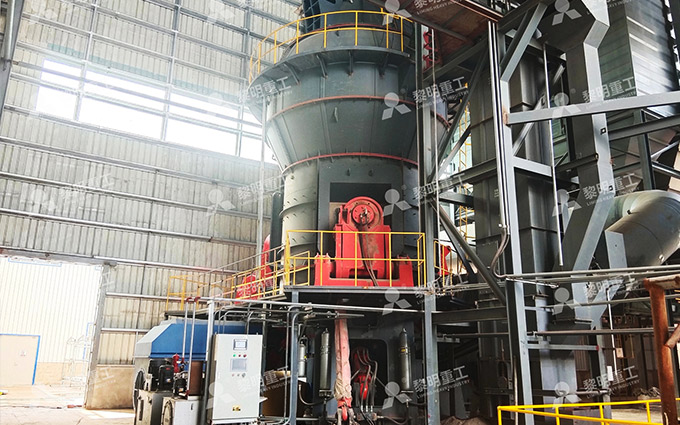
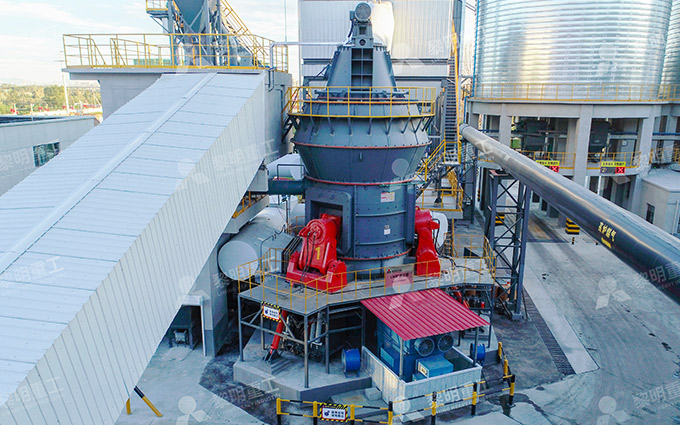
An LM vertical roller mill is often the strongest choice when a producer needs high output in standard to fine calcium carbonate grades. It is particularly suitable for integrated production lines where grinding, drying, classification, and conveying must operate continuously.
Choose LM vertical milling when
Capacity must always be evaluated at the required finished PSD. A vertical mill may achieve a high tonnage at a relatively coarse cut, while qualified output falls at a finer target or when a strict D97 limit is imposed. Specify both the target D50 and upper particle-size limit before comparing offers.
325–1250 mesh: MW micro powder mill
An MW micro powder mill is the appropriate direction when calcium carbonate moves from conventional filler into fine GCC. This range is common in PVC, PP, PE, masterbatch, rubber, paint, coatings, adhesives, and sealants, where smoother surfaces, better dispersion, and lower coarse-particle content create commercial value.
Choose MW micro powder milling when
For this fineness range, classification quality becomes a major production factor. The system should remove qualifying fine powder quickly, return oversize particles for additional grinding, and avoid excessive overgrinding. Coarse carryover can reduce performance in thin film, smooth extrudates, white PVC, glossy coatings, and sealant beads even if the average particle size is on target.
1250–2500 mesh: LUM ultrafine mill
An LUM ultrafine mill is generally the best choice for high-value ultrafine GCC. At this fineness, the goal is not merely to create smaller particles; it is to control the full distribution, minimize oversized particles, preserve whiteness, maintain stable output, and avoid wasting energy through unnecessary overgrinding.
Choose LUM ultrafine milling when
Guidance for ultrafine GCC commonly places 1250–2500 mesh in the approximate 5–10 µm D97 range, with applications including high-end masterbatch, architectural topcoat, automotive coatings, coated paper, and high-performance sealants. The exact definition varies by supplier and test method, so buyers should always specify laser-diffraction PSD values rather than relying on mesh terminology alone.
Above 2500 mesh: assess the real need
When the required product is finer than about 5 µm, the project enters a specialty ultrafine market. An LUM ultrafine mill may be appropriate for dry powder, while a specialized wet grinding and classification system can be considered for very fine slurry products.
This range should be selected only when the end application requires it. Grinding finer increases energy use, wear, classifier load, dust-collection demand, and production cost. It can also create excessively high surface area, which may complicate dispersing, coating, and handling. A powder that is “finer” is not automatically better for the customer.
Mesh is only a starting point
Mesh is useful for describing broad coarse-powder categories, but it becomes less reliable for fine and ultrafine calcium carbonate. A sieve opening tells you the largest opening through which material may pass; it does not define the actual proportion of fines, the median size, the coarse tail, agglomerates, or distribution width.
For a fine GCC project, provide the mill supplier with:
A particle-size target should include more than one value. Industry guidance recommends giving D50 together with D90, D97, top-cut, or mesh information because a single target such as “10 µm” does not define the product distribution well enough for equipment design.
Fineness must match the application
| Downstream application | Typical fineness direction | Why the PSD matters |
|---|---|---|
| Construction materials and putty | Coarse to conventional fine GCC. | Economical bulk, workability, body, and reliable filling performance are usually more important than ultrafine PSD. |
| PVC pipe, profile, flooring, and cable compounds | Standard to fine GCC. | Particle size affects compound flow, surface finish, stiffness, dispersion, and practical filler loading. |
| PP and PE filler masterbatch | Fine to ultrafine coated GCC. | Low coarse residue and consistent dispersion help avoid film defects, poor elongation, and surface roughness. |
| Paint and decorative coatings | Medium-fine to ultrafine GCC, depending on gloss. | Fine particles support smoother surfaces and pigment efficiency; coarser grades help provide matting, body, or texture. |
| Rubber | Medium-fine to fine GCC. | PSD affects dispersion, hardness, surface finish, compound viscosity, and the balance of tensile and elongation properties. |
| Adhesives and sealants | Fine to ultrafine GCC or PCC. | Particle size affects viscosity, thixotropy, anti-sag performance, extrusion force, bead smoothness, and cured properties. |
| Paper and high-value coating applications | Fine to ultrafine GCC. | Narrow PSD and low coarse residue are important for coating smoothness, brightness, printability, and optical performance. |
The classifier becomes more important as fineness increases
For calcium carbonate above roughly 600 mesh, the air classifier becomes a central part of mill selection. The mill produces particles across a range of sizes; the classifier determines which particles leave as product and which particles return for more grinding.
A correctly sized and configured classifier helps:
For this reason, compare complete grinding systems rather than comparing only installed mill power. The real production result depends on the interaction of mill, classifier, fan, bag filter, ducting, feed control, finished-product collection, and process automation.
Common mistakes
Key takeaway
Choose a calcium carbonate mill according to the required fineness: MTW Raymond mill for 80–325 mesh conventional GCC, LM vertical roller mill for high-capacity 200–600 mesh production, MW micro powder mill for fine 325–1250 mesh grades, and LUM ultrafine mill for 1250–2500 mesh premium products with strict PSD control. For every project, define the final product by D50 and D97/D98, test the actual limestone feed, and require guaranteed qualified capacity rather than relying on a broad mesh label.