Calcium Carbonate Knowledge Hub
Raymond Mill for Calcium Carbonate
2026-09-04 17:12:08
We are Liming Heavy Industry, a manufacturer of various types of industrial crushers, such as Raymond Mill, Trapezoidal Mill, Vertical Mill, Ultrafine Mill, Ball Mill, etc.
Our mills can process the following minerals:
limestone, quicklime, kaolin, talc, barite, bentonite, calcium carbonate, dolomite, coal, gypsum, clay, carbon black, slag, cement raw materials, cement clinker, etc.
If you need a mill to process stone or minerals into powder, please feel free to contact me (WhatsApp: +8615333807511). Thank you.
A Raymond mill is used to produce conventional ground calcium carbonate (GCC) from limestone, marble, or calcite. It is most suitable for stable dry grinding in the standard fine-powder range—typically about 80–325 mesh—where producers need a practical balance of investment cost, operating simplicity, and throughput.
For calcium carbonate, the modern choice is an MTW Raymond mill configured with controlled feeding, air classification, dust collection, and finished-powder handling. It is a strong solution for general fillers and standard industrial powder, but it is usually not the best option for premium ultrafine GCC that requires very narrow particle-size distribution or strict low-coarse-particle limits.
What a Raymond mill does
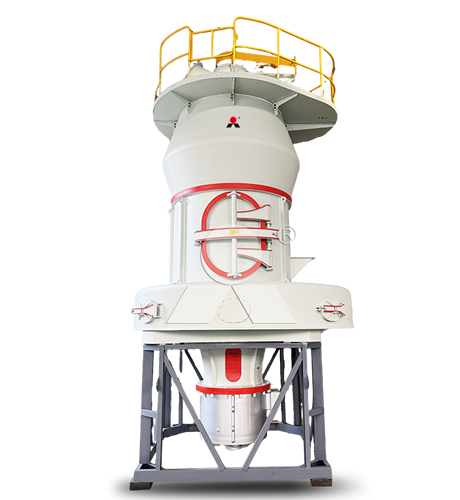
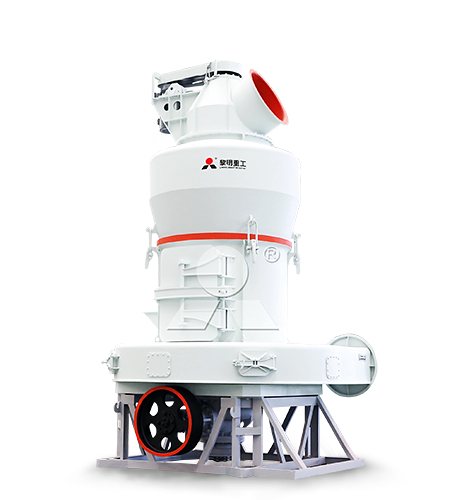
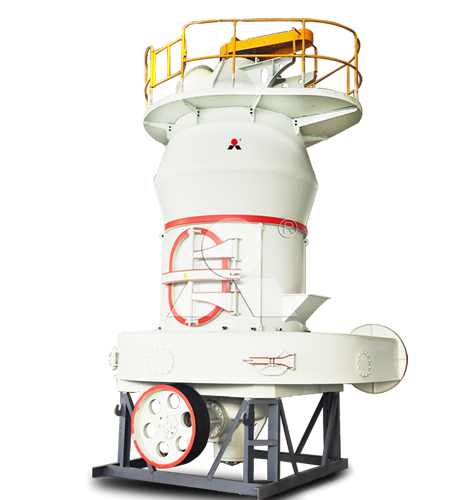
A Raymond mill is a dry roller-milling system. Crushed limestone or other calcium carbonate feed enters the mill, where grinding rollers press material against a rotating grinding ring. Airflow carries fine particles upward to the classifier, while oversized particles fall back into the grinding zone for further size reduction.
The qualified powder leaves the system with the air stream and is collected by a cyclone, bag filter, or other powder-collection equipment. The final product is then transferred to storage or packaging.
For calcium carbonate, a complete Raymond milling line normally includes:
Crushed limestone, marble, or calcite feedstock.
Feed hopper and controlled feeder.
MTW Raymond mill.
Integrated or external air classifier.
Blower, ducting, and circulation-air system.
Cyclone separator and pulse bag filter.
Powder conveying, silo storage, and bagging or bulk-loading equipment.
A representative calcium carbonate grinding flow includes crushing, controlled feeding, grinding, dynamic air classification, dust collection, storage, and packaging.
Best fineness range for Raymond milling
An MTW Raymond mill is mainly intended for conventional GCC rather than high-end ultrafine calcium carbonate. A practical operating range is usually around 80–325 mesh, or roughly 180–45 µm, depending on feed properties, mill configuration, classifier setting, and required production rate.
| Target powder range | Raymond mill suitability | Typical calcium carbonate markets |
|---|---|---|
| 80–200 mesh | Very suitable | Construction materials, mortar, putty, coarse filler, agricultural and general limestone powder. |
| 200–325 mesh | Suitable | Standard GCC for rubber, PVC, general plastics, basic coatings, and common industrial fillers. |
| 325–400 mesh | Possible in selected configurations, but capacity and PSD control require closer evaluation. | Selected finer standard GCC products where customer specifications are not extremely strict. |
| Above 400 mesh | Generally less competitive for consistent commercial production. | Fine and ultrafine applications better served by MW micro powder milling or LUM ultrafine milling. |
Published Raymond-milling guidance for limestone identifies a typical range of about 80–325 mesh, while noting that an internal classifier allows qualified powder to exit and recycles coarse material for further grinding. In practical projects, the achievable output at 325 mesh will be lower than the output at 200 mesh because finer grinding requires more energy and more internal circulation.
When an MTW Raymond mill is the right choice
An MTW Raymond mill is a good choice when the plant is producing standard calcium carbonate filler and does not need very fine, narrow-distribution powder. It is particularly relevant for small- to medium-scale GCC projects that prioritize dependable production and reasonable overall investment.
Suitable applications
General limestone powder.
Standard 200-mesh, 325-mesh, and similar GCC grades.
Wall putty, mortar, and construction-material filler.
Standard rubber filler.
Basic PVC and general plastic filler.
Lower-to-medium specification paint and coating filler.
General-purpose mineral powder supplied in bags or bulk.
Choose Raymond milling when
The required powder is mainly within the conventional 80–325 mesh range.
The customer accepts a standard commercial PSD rather than a tightly controlled ultrafine distribution.
The limestone feed is dry or can be dried before milling.
Production capacity is moderate.
Capital cost, operator familiarity, and accessible maintenance are important.
The end-use market does not require premium coated GCC with a strict D97 or D98 limit.
When Raymond milling is not the best choice
A Raymond mill should not be selected simply because the requested powder is described as “400 mesh,” “800 mesh,” or “ultrafine.” At higher fineness, the mill can face lower throughput, higher recirculation load, more difficult classifier control, higher wear, and a greater risk that the finished powder does not meet the required particle-size distribution.
| Requirement | Why Raymond milling may be unsuitable | Better equipment direction |
|---|---|---|
| Fine product around 600–1250 mesh | Standard Raymond milling may not deliver sufficient capacity or reliable upper-particle-size control. | MW micro powder mill. |
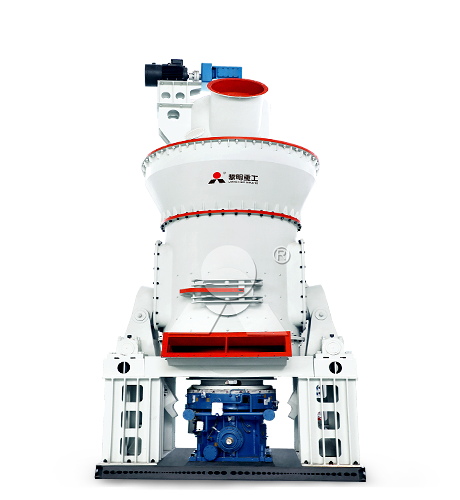
| Ultrafine product around 1250–2500 mesh | Requires more precise grinding and classification than a conventional Raymond system normally provides. | LUM ultrafine mill. |
| Strict D97 or D98 target | The application may reject a broad PSD or coarse-particle carryover even if nominal mesh is achieved. | MW micro powder mill or LUM ultrafine mill with high-efficiency classification. |
| Very high production capacity with moist feed | Separate drying and handling can make a Raymond circuit less efficient at plant scale. | LM vertical roller mill with integrated drying and classification. |
| Premium coated GCC for film or high-value masterbatch | Low coarse residue and tight PSD are essential for downstream dispersion and surface quality. | MW micro powder mill or LUM ultrafine mill, followed by a controlled coating system. |
Industry commentary on GCC ultrafine processing similarly notes that conventional Raymond milling remains strong in the 200–400 mesh market but is less competitive for strict ultrafine products, particularly where the required coarse-particle limit is below approximately 5 µm.
Feed preparation for calcium carbonate
Raymond mill performance starts with stable feed. Large, wet, variable, or contaminated limestone causes output fluctuations and makes it difficult to control fineness. Before grinding, the feed should be crushed, screened, and conditioned to match the mill’s feed-size and moisture limits.
| Feed factor | Impact on Raymond milling |
|---|---|
| Maximum feed size | Oversized feed can reduce capacity, increase vibration, and accelerate wear. Crushing must supply a consistent mill-feed size. |
| Feed moisture | Excess moisture can cause material buildup, unstable airflow, poor classification, and blocked conveying or collection equipment. |
| CaCO3 purity | Determines whether the final GCC can meet the requirements of plastics, rubber, paint, coating, food, or pharmaceutical markets. |
| Whiteness | Directly affects suitability for white PVC, paper, paint, coatings, sealants, and light-colored compounds. |
| Silica and hard impurities | Increase wear on rollers, rings, classifier components, ducts, and fans, while potentially reducing product quality. |
| Clay and weathered zones | Can increase moisture, reduce whiteness, affect flowability, and cause unstable milling performance. |
The most reliable project basis is representative material testing. The limestone sample should represent normal long-term quarry feed, including expected variation in purity, moisture, color, and abrasive impurity levels—not only a small sample of the best stone.
Classification is critical
The classifier determines what leaves the Raymond mill as finished powder. It separates fines carried by the air stream from particles that remain too coarse and must return to the grinding zone.
Proper classification helps maintain:
Stable product fineness.
Consistent D50 and upper particle-size control.
Lower coarse-particle residue.
Better mill capacity by avoiding unnecessary regrinding of finished powder.
More stable quality across shifts and production lots.
In calcium carbonate production, classify the finished powder according to the real customer specification. For general construction filler, a nominal mesh target may be sufficient. For plastics, coatings, paper, adhesives, or sealants, customers may require D50 and D97 or D98 data, low residue on sieve, moisture limits, whiteness, and dispersion performance.
Dust collection and powder handling
Calcium carbonate is a fine mineral powder, so dust collection is an essential part of the Raymond milling system. A correctly sized pulse bag filter captures entrained powder, protects workers and the environment, and stabilizes the mill’s air circuit.
Key system design points include:
Stable airflow and pressure balance through the mill and classifier.
Bag-filter area sized for the required airflow and dust loading.
Reliable filter-cleaning system and dust-discharge arrangement.
Leak-resistant ducts and sealed transfer points.
Powder conveying designed to avoid segregation, blockage, and unnecessary contamination.
Finished-product silos sized for continuous operation and packaging demand.
For applications such as food, pharmaceutical, white plastics, high-value coatings, or toothpaste, plant design must also address foreign-material control, metal detection, hygienic handling where required, and segregation from non-qualified mineral products.
How to evaluate Raymond mill capacity
Do not compare Raymond mill capacity from a brochure headline. Output depends on limestone hardness, feed size, feed moisture, target fineness, classifier setting, airflow, system pressure, wear condition, and the permitted coarse-particle content of the product.
When requesting an MTW Raymond mill quotation, provide:
Representative limestone, marble, or calcite sample for testing.
Feed-size range and maximum feed size.
Feed moisture under normal and worst-case conditions.
CaCO3 content, whiteness, silica, and other impurity data.
Target mesh plus D50 and D97/D98 if the grade is fine or high value.
Required tonnes per hour of accepted final powder.
Operating hours per year and planned grade-change frequency.
Downstream application and whether stearic-acid coating is planned.
Packaging, storage, dust-emission, and automation requirements.
The supplier should then guarantee capacity and quality at the required finished-product specification. A stated output at 200 mesh should not be used as evidence of output at 325 mesh, and a nominal mesh claim should not replace an agreed upper PSD limit.
Common mistakes
Using a Raymond mill for every fineness: It is highly suitable for conventional GCC but not automatically for fine and ultrafine premium products.
Defining product only by mesh: Fine calcium carbonate should be controlled with D50 and D97/D98 data, not a mesh label alone.
Ignoring feed moisture: Moist feed can reduce output, create buildup, destabilize airflow, and cause collection or conveying problems.
Undersizing the classifier or filter: Classification and airflow determine product quality and practical mill capacity.
Comparing capacity at different product specifications: All supplier offers must use the same feed quality, fineness target, and acceptance limits.
Planning only the mill: A commercial GCC plant also needs crushing, feeding, classification, dust collection, storage, and packaging.
Using poor-quality limestone for premium customers: Grinding cannot remove colored minerals, silica, or other impurities from unsuitable feedstone.
FAQ
Can a Raymond mill produce 325-mesh calcium carbonate?
Yes. An MTW Raymond mill is commonly used for 325-mesh conventional GCC, provided the limestone feed is suitable and the classifier, airflow, and dust-collection system are properly configured. Capacity should be confirmed at the required 325-mesh product quality, not assumed from a lower-fineness rating.
Can a Raymond mill make 1250-mesh calcium carbonate?
It is generally not the preferred choice for reliable commercial 1250-mesh production. An MW micro powder mill is more suitable for fine grades in this range, while an LUM ultrafine mill is a stronger choice when the product requires very fine powder with a narrow PSD and low coarse residue.
What limestone is suitable for a Raymond mill?
Dry, pre-crushed limestone with stable chemical composition, suitable whiteness, controlled feed size, and low abrasive impurities is preferred. For premium GCC, the stone should also have high calcium carbonate content and low levels of silica, clay, iron-bearing minerals, and dark particles.
Is a Raymond mill suitable for coated calcium carbonate?
It can produce the uncoated base GCC for standard coated products if the required fineness is within its practical range. For fine coated GCC used in PVC, PP, PE, masterbatch, film, premium rubber, adhesives, or sealants, an MW micro powder mill or LUM ultrafine mill may provide better PSD control before the coating stage.
Key takeaway
An MTW Raymond mill is a reliable choice for calcium carbonate powder in the conventional 80–325 mesh range. It is best suited to standard GCC markets that value dependable dry grinding, practical investment, and stable output. For finer products, strict D97/D98 limits, premium coated GCC, or high-capacity moist-feed processing, choose an MW micro powder mill, LUM ultrafine mill, or LM vertical roller mill according to the actual product specification.