Calcium Carbonate Knowledge Hub
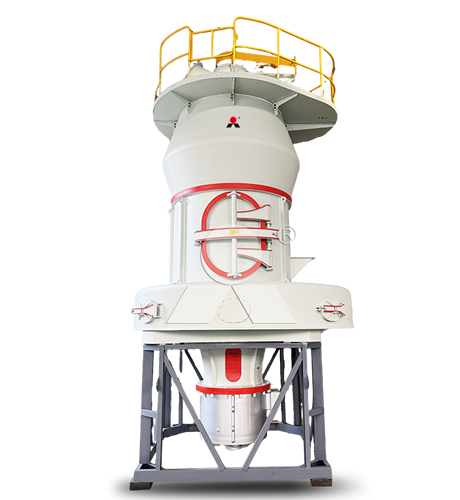
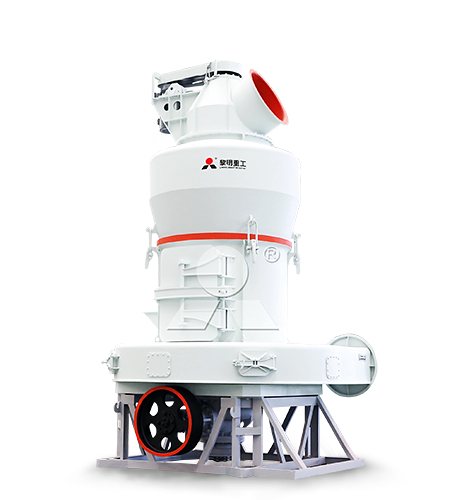
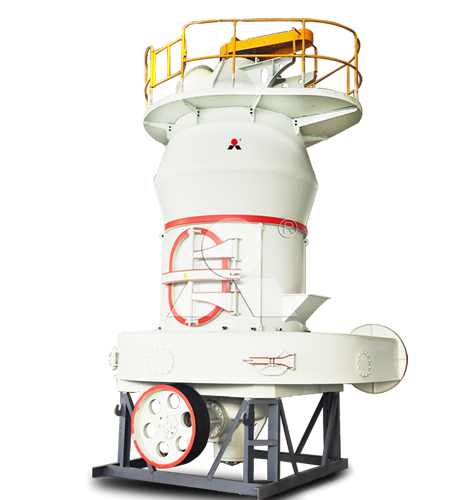
MTW European Grinding Mill for Calcium Carbonate
2026-09-04 17:14:18
We are Liming Heavy Industry, a manufacturer of various types of industrial crushers, such as Raymond Mill, Trapezoidal Mill, Vertical Mill, Ultrafine Mill, Ball Mill, etc.
Our mills can process the following minerals:
limestone, quicklime, kaolin, talc, barite, bentonite, calcium carbonate, dolomite, coal, gypsum, clay, carbon black, slag, cement raw materials, cement clinker, etc.
If you need a mill to process stone or minerals into powder, please feel free to contact me (WhatsApp: +8615333807511). Thank you.
The MTW European Grinding Mill is a practical dry-grinding solution for producing conventional calcium carbonate powder from limestone, marble, or calcite. It is best suited to standard GCC production in the approximate 80–325 mesh range, where the producer needs reliable output, controlled fineness, lower operating complexity, and an economical plant investment.
For calcium carbonate projects, the MTW mill should be treated as part of a complete production system—not as an isolated machine. Stable feed preparation, accurate feeding, air classification, dust collection, powder conveying, storage, and packaging determine whether the plant can consistently deliver qualified GCC to PVC, rubber, paint, coatings, putty, and general industrial-filler markets.
What is an MTW European Grinding Mill?
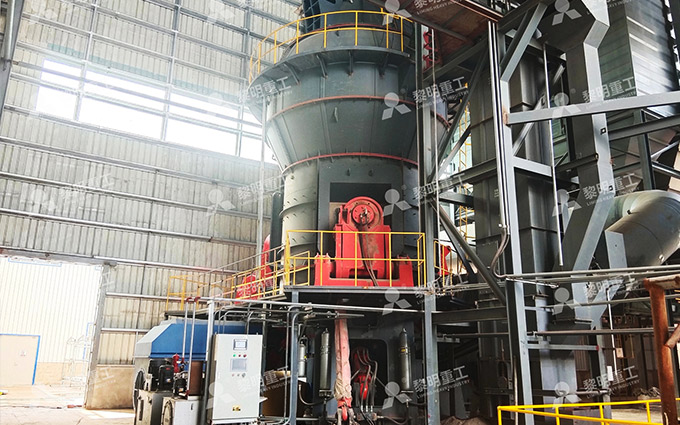
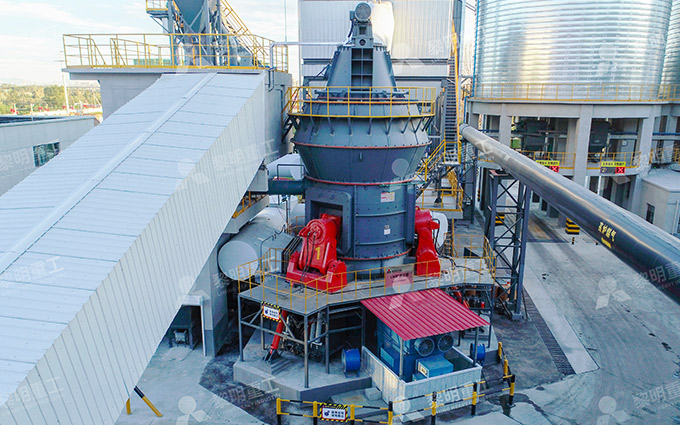
An MTW European Grinding Mill is a modern roller-and-ring grinding system for dry non-metallic mineral powder production. In calcium carbonate processing, pre-crushed limestone, marble, or calcite enters the grinding chamber, where rollers apply pressure to the material on the grinding ring. Airflow lifts the ground particles to the powder concentrator, which separates acceptable product from particles that require additional grinding.
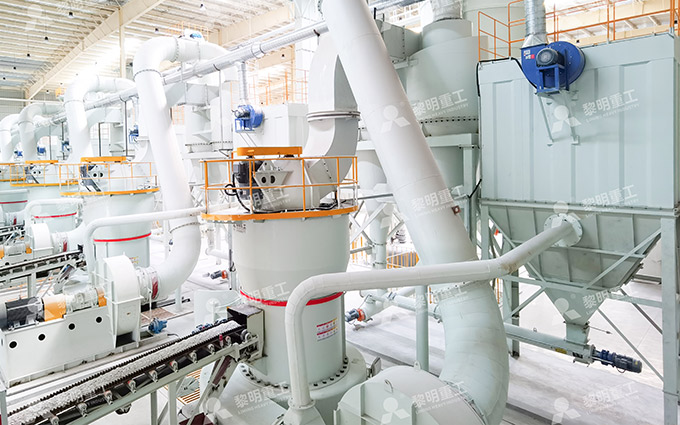
The qualified calcium carbonate powder is carried to a cyclone collector and dust-collection system, while oversized particles return to the grinding zone. This closed-circuit arrangement supports continuous operation and adjustable product fineness.
Liming’s MTW European Type Trapezium Mill process description follows this sequence: crushed material is lifted to a hopper, fed evenly into the grinding chamber, classified by the powder concentrator, collected as finished product in a cyclone, and returned for regrinding when it does not meet the selected fineness.
Best calcium carbonate range
The MTW European Grinding Mill is mainly intended for conventional GCC rather than premium ultrafine calcium carbonate. Its strongest commercial range is typically about 80–325 mesh, although some configurations can reach approximately 400–425 mesh under favorable conditions and at lower output.
| Calcium carbonate target | MTW suitability | Typical downstream applications |
|---|---|---|
| 80–200 mesh | Excellent fit | Construction materials, mortar, wall putty, coarse filler, agricultural limestone, and general powder products. |
| 200–325 mesh | Strong fit | Standard GCC for PVC, rubber, basic plastics, primers, general paint, coatings, and industrial filler. |
| 325–425 mesh | Possible, subject to feed and capacity verification | Selected fine standard GCC grades where PSD requirements are moderate. |
| Above 425 mesh | Usually not the preferred solution | Fine and ultrafine GCC for high-value plastics, paper, coatings, adhesives, and sealants. |
The published MTW product range is 1.6–0.045 mm, with fineness reaching 0.038 mm, equivalent to approximately 80–400 mesh in practical terms. Another Liming MTW series specification presents a common output range down to 0.045 mm, with capacity varying by model, feed size, and material properties.
Actual performance must be verified using the project’s own limestone. Feed moisture, hardness, silica content, feed size, required whiteness retention, classifier setting, and target coarse-particle limit all affect qualified production capacity.
Why use MTW for standard GCC?
For conventional calcium carbonate powder, the MTW mill offers a practical balance of capacity, fineness, investment cost, and operating reliability. It is particularly suitable for producers that serve broad-volume markets rather than highly specialized ultrafine grades.
Suitable for common industrial grades
Many calcium carbonate applications do not require an ultrafine powder. Standard PVC filler, rubber filler, construction products, putty, mortar, and general coatings can use conventional fine GCC grades when the material meets required purity, whiteness, moisture, and particle-size limits.
An MTW mill allows producers to make several standard products by adjusting the classifier and operating conditions. This flexibility is useful for plants that sell more than one grade, such as 200-mesh and 325-mesh calcium carbonate.
Closed-circuit grinding and classification
The separator returns oversized material for further grinding while qualified particles leave as finished product. This reduces the amount of unqualified coarse material in the product and allows the mill to operate as a controlled grinding-and-classifying circuit.
However, classification must be evaluated against the actual customer specification. For basic products, a nominal mesh range may be sufficient. For higher-value applications, the buyer may require laser particle-size data, including D50 and D97 or D98, as well as sieve residue and dispersion performance.
Practical maintenance and plant operation
MTW milling is designed for dry mineral processing with accessible operating principles: controlled feed, grinding rollers and ring, air separation, dust collection, and mechanical conveying. This can be advantageous for producers that need dependable operation and manageable maintenance practices.
The actual maintenance cost depends on the feed material. High-silica limestone, sand contamination, hard impurities, tramp metal, excessive moisture, and unstable feed size can accelerate wear and reduce production stability. Source-material quality should therefore be part of mill selection from the beginning.
Typical process flow
A calcium carbonate MTW grinding plant normally follows a dry-process flow. The exact equipment arrangement changes with capacity, feed moisture, final product, packaging method, and whether downstream coating is required.
Raw-material receiving: Limestone, marble, or calcite is received from the quarry or stockpile and inspected for quality variation, color, moisture, and contamination.
Crushing: Large stone is reduced through primary and secondary crushing to a stable mill-feed size.
Screening and metal protection: Screens remove oversize material; magnets or other protection systems reduce the risk of tramp metal entering the mill.
Drying when needed: Feed with excessive moisture may require pre-drying to avoid buildup, poor classification, and unstable powder conveying.
Controlled feeding: A feeder delivers a stable and uniform flow of crushed material to the MTW mill.
Grinding: Rollers grind the calcium carbonate against the ring inside the mill.
Air classification: The powder concentrator separates qualified fine product from oversized material, which returns for regrinding.
Collection and dust control: The cyclone and bag filter recover product and maintain a controlled plant air system.
Storage and packing: Finished GCC is conveyed to silos or bins, then packed in bags, bulk bags, or loaded into bulk transport.
A 325-mesh limestone production case published by Liming describes the same core sequence: crushing, MTW grinding, classification, transfer of qualified powder to finished-product storage, and return of unqualified material for additional grinding.
Match MTW capacity to the project
The MTW family includes multiple sizes. The appropriate model is selected according to required qualified output, target fineness, feed size, material characteristics, and plant operating hours—not merely by motor power.
| MTW model direction | Typical capacity range* | Typical use case |
|---|---|---|
| MTW115G | About 3–12 t/h | Small to medium standard GCC projects, local-market supply, and multiple lower-volume powder grades. |
| MTW145G | About 6–23 t/h | Medium-scale calcium carbonate plants serving regional PVC, rubber, putty, coating, and general-filler demand. |
| MRN158 | About 8–30 t/h | Medium-to-large conventional GCC production requiring higher continuous throughput. |
| MTW178G | About 10–38 t/h | Large-volume standard powder production with a stable quarry feed and established industrial customer base. |
| MTW198G | About 15–46 t/h | High-output GCC projects for broad-volume industrial filler markets. |
| MTW218G | About 18–55 t/h | Large integrated GCC lines where high sustained capacity is required. |
*Indicative manufacturer ranges. Actual capacity changes with feed size, feed moisture, hardness, silica content, target fineness, classifier setting, and the required PSD acceptance limit.
Liming publishes MTW model capacities from approximately 3–12 t/h for MTW115G through approximately 18–55 t/h for MTW218G, with maximum feed size varying by model from 30 mm to 50 mm. These figures should be treated as equipment-selection guidance. A plant must be sized according to tonnes per hour of accepted powder at the agreed finished-product specification.
Raw material requirements
MTW performance depends strongly on limestone feed quality. The mill can grind many non-metallic minerals, but premium GCC customers may impose quality requirements that begin at the quarry.
| Feed characteristic | Why it matters for MTW grinding |
|---|---|
| Calcium carbonate content | Controls whether the finished product can meet purity requirements for PVC, paint, coatings, paper, food, or pharmaceutical applications. |
| Whiteness and brightness | Important for white PVC, paint, paper, sealant, adhesive, and light-colored compounds. |
| Silica and abrasive impurity level | Influences wear on rollers, grinding ring, classifier parts, ducts, fans, and conveying equipment. |
| Feed moisture | Excess moisture can cause buildup, lower grinding efficiency, destabilize airflow, and reduce powder flowability. |
| Maximum feed size | Must match the selected model’s feed limit; inconsistent oversize feed can reduce capacity and accelerate wear. |
| Clay, organic matter, and weathered material | Can reduce whiteness, increase moisture, affect grinding behavior, and cause poor downstream product performance. |
Before ordering equipment, analyze representative material from the planned long-term source—not only a selected high-quality sample. The testing program should include chemical composition, whiteness, moisture, silica or acid-insoluble residue, particle characteristics, and grindability.
What applications fit MTW-produced GCC?
MTW-produced calcium carbonate is most suitable for standard industrial powder markets. The final product must still meet the customer’s required PSD, purity, whiteness, moisture, and packaging specification.
Wall putty, dry mortar, construction products, and fillers.
Standard PVC pipe, profile, flooring, and cable-compound filler.
General rubber sheet, mats, hoses, footwear, and molded products.
Basic paint, primer, textured coating, and low-to-medium sheen coating formulations.
General-purpose adhesive and sealant filler where a conventional grade is sufficient.
Calcium carbonate for agricultural, environmental, and industrial mineral uses.
For standard coated calcium carbonate, the MTW mill can supply a suitable base powder when the target grade remains within its practical fineness range. The coated-powder line should include controlled storage, accurate stearic-acid dosing, heating, mixing, cooling, and dust collection. Fine coated GCC for high-value film, premium masterbatch, glossy coatings, or highly sensitive sealant applications may require an MW micro powder mill or LUM ultrafine mill before coating.
When to choose another mill
An MTW European Grinding Mill is not the best answer for every calcium carbonate project. Mill selection should follow the required final product, not the desire to use one technology across all grades.
| Project requirement | Better mill direction | Reason |
|---|---|---|
| Very high-volume standard or fine GCC with meaningful feed moisture | LM vertical roller mill | Integrates grinding, drying, classification, and conveying for large continuous production. |
| Fine GCC around 600–1250 mesh | MW micro powder mill | Provides stronger fine-powder and classification capability than standard MTW milling. |
| Premium ultrafine GCC around 1250–2500 mesh | LUM ultrafine mill | Better suited to strict D97/D98 targets, low coarse residue, and narrow PSD requirements. |
| Very fine slurry product | Wet grinding and classification system | Designed for slurry processing and specialty very-fine particle targets. |
Common project mistakes
Choosing by nominal mesh only: Fine GCC customers may require D50, D97/D98, sieve residue, moisture, whiteness, and dispersion data.
Using brochure capacity without conditions: Capacity must be stated at the actual feed quality and required finished-product fineness.
Ignoring moisture: Wet limestone can reduce mill output, destabilize classification, overload bag filters, and cause conveying problems.
Undersizing the classifier: The grinding chamber may have sufficient power, but the finished product can still fail because coarse particles are not separated efficiently.
Neglecting upstream crushing: Oversized or inconsistent feed reduces MTW stability and can limit total plant output.
Producing powder finer than the market needs: Unnecessary fineness increases power use, wear, and cost while reducing throughput.
Using poor limestone for high-value GCC: Grinding cannot remove all silica, colored minerals, or low-whiteness contamination from unsuitable stone.
Key takeaway
The MTW European Grinding Mill is an effective solution for conventional calcium carbonate powder, especially in the 80–325 mesh range. It is best for producers that need stable GCC output for standard fillers, construction products, PVC, rubber, paint, coatings, and related industrial markets. To achieve reliable results, design the project as a full grinding system with suitable crushing, feeding, classification, dust collection, storage, and packing—and size the mill based on guaranteed qualified output at the required particle-size distribution.