Calcium Carbonate Knowledge Hub
GCC vs PCC for Paper
2026-09-04 16:15:15
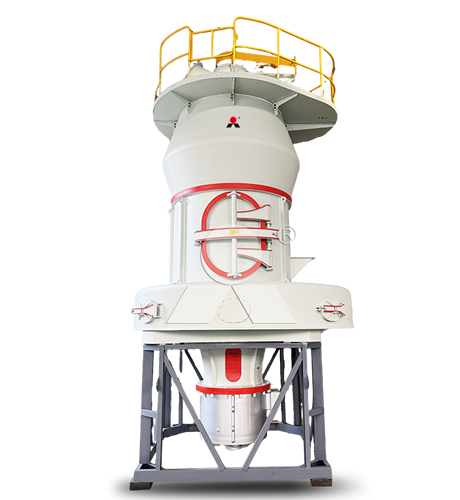
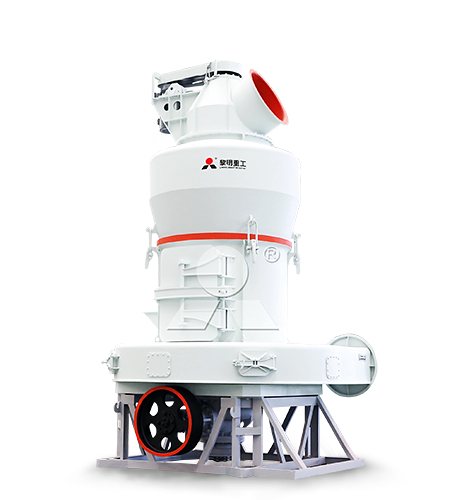
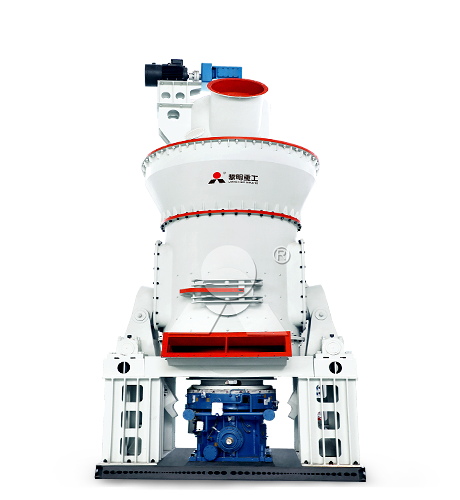
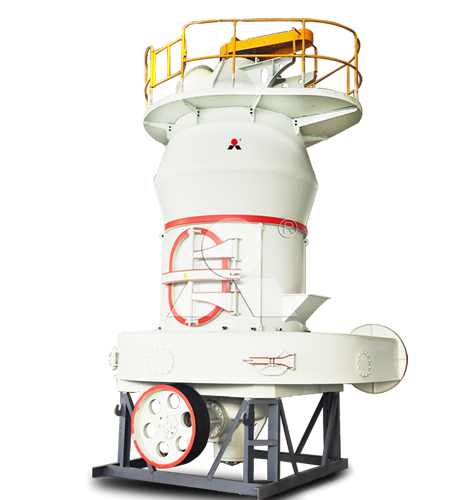
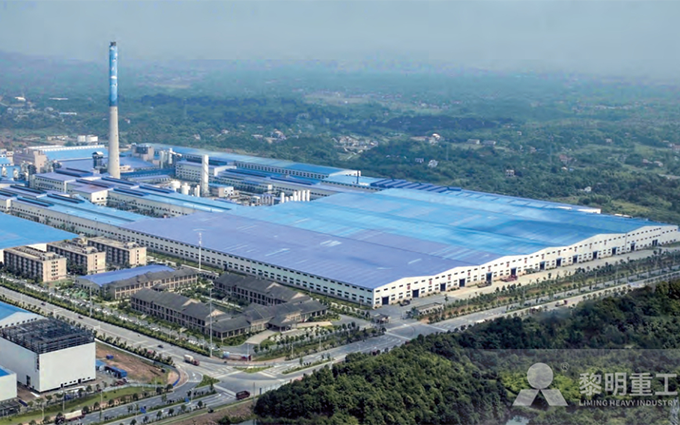
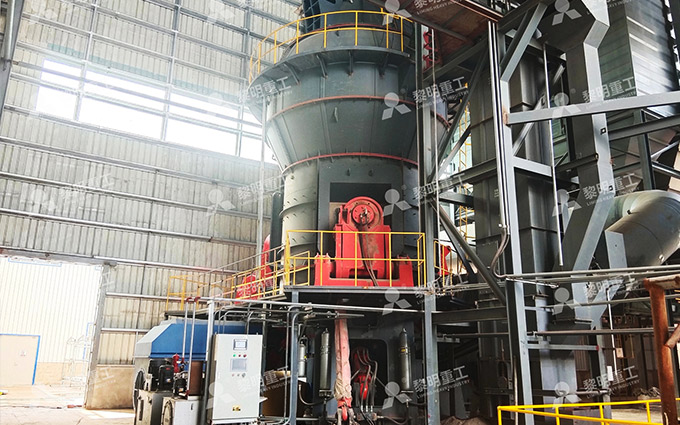
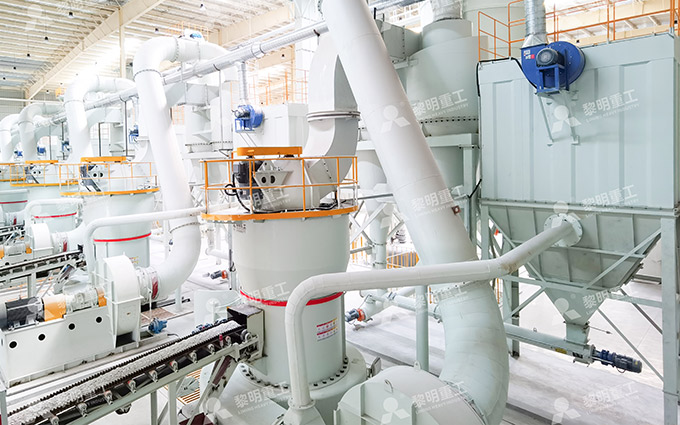
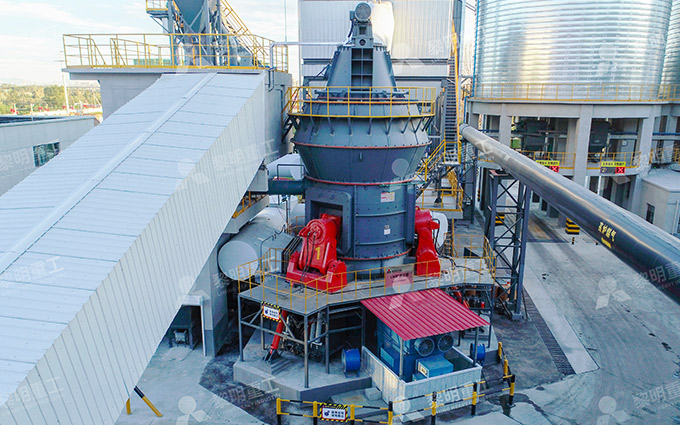
We are Liming Heavy Industry, a manufacturer of various types of industrial crushers, such as Raymond Mill, Trapezoidal Mill, Vertical Mill, Ultrafine Mill, Ball Mill, etc.
Our mills can process the following minerals:
limestone, quicklime, kaolin, talc, barite, bentonite, calcium carbonate, dolomite, coal, gypsum, clay, carbon black, slag, cement raw materials, cement clinker, etc.
If you need a mill to process stone or minerals into powder, please feel free to contact me (WhatsApp: +8615333807511). Thank you.
Ground calcium carbonate (GCC) and precipitated calcium carbonate (PCC) are both widely used in paper and paperboard manufacturing. They can function as paper fillers, coating pigments, or components of pre-coating formulations. However, they differ in particle origin, morphology, particle-size distribution, porosity, brightness, opacity, drainage behavior, coating rheology, and cost.
GCC is mechanically ground from natural limestone, marble, calcite, or chalk. PCC is chemically precipitated from calcium hydroxide and carbon dioxide, allowing greater control over crystal morphology and particle structure. GCC is often chosen for cost-effective filler and coating applications, while PCC is frequently selected when paper producers need engineered opacity, bulk, brightness, or specific coating and printing properties. The best option depends on the paper grade, furnish, paper machine, coating method, fiber cost, target optical properties, and total production economics.
GCC vs PCC for Paper: Quick Comparison
| Feature | GCC for Paper | PCC for Paper |
|---|---|---|
| Full name | Ground calcium carbonate | Precipitated calcium carbonate |
| Source | Natural limestone, marble, calcite, or chalk | Chemically produced from calcium hydroxide and carbon dioxide |
| Particle formation | Natural mineral particles are reduced by grinding and classification | New crystals are formed during controlled precipitation |
| Particle shape | Usually irregular, angular, or block-like ground particles | Can be engineered as scalenohedral, rhombohedral, prismatic, or porous clustered particles |
| Particle-size distribution | Controlled by grinding and classification; can be broad or narrow depending on grade | Can be engineered with controlled morphology and relatively narrow PSD |
| Optical performance | Can provide high brightness, whiteness, opacity, and smoothness with the right grade | Often selected for strong light scattering, opacity, bulk, and controlled optical properties |
| Drainage behavior | Often associated with more favorable drainage in paper furnish | Can slow drainage because fine or porous particles retain more water |
| Coating rheology | Depends on particle size and PSD; coarse GCC can lower low-shear viscosity | Porous fine PCC can change water retention and rheology significantly |
| Cost position | Usually more cost-effective, especially where natural mineral supply is nearby | Usually higher cost because of chemical precipitation and particle engineering |
| Supply format | Dry powder or wet-ground slurry | Dry powder or slurry; may be produced on-site at or near a paper mill |
Why Calcium Carbonate Is Used in Paper
Calcium carbonate is used in paper because it can improve optical properties and reduce reliance on more expensive fiber. It is commonly used as a filler within the paper sheet and as a coating pigment applied to the paper surface.
Key paper-related benefits can include:
Improved brightness and whiteness.
Higher opacity and reduced show-through.
Smoother paper surface.
Better printability and ink holdout.
Increased sheet bulk.
Potential fiber substitution and lower furnish cost.
Controlled gloss, porosity, and coating structure.
Potentially improved visual quality and market value.
Calcium carbonate is compatible with alkaline and neutral papermaking systems. It is generally not suitable for strongly acidic paper-making conditions because acid can dissolve calcium carbonate and release carbon dioxide.
GCC in Paper Manufacturing
GCC is a natural mineral pigment made by grinding selected limestone, marble, calcite, or chalk. In paper production, it is used as a filler, coating pigment, or pre-coating pigment.
For paper applications, GCC is often produced by wet grinding to create a stable slurry with controlled particle-size distribution. Dry GCC can also be used in some applications, but wet-ground GCC is especially common for paper and coating systems because it can offer fine particle control and convenient slurry handling.
How GCC Works in Paper
As a filler, GCC is distributed among cellulose fibers in the paper furnish. It can improve brightness, opacity, smoothness, and printability while replacing part of the fiber content. As a coating pigment, GCC helps create a more uniform paper surface for printing.
GCC particle size is important. Fine grades can improve smoothness and coating coverage, while coarser GCC grades may reduce coating-color viscosity and improve certain drainage characteristics. However, excessive coarse particles can increase surface roughness and reduce paper gloss.
A 2023 study on white top testliner found that GCC coating improved whiteness, brightness, opacity, color coordinates, and yellowness values, indicating improved overall visual quality.
GCC Advantages for Paper
Cost efficiency: GCC is often a lower-cost mineral pigment than PCC, especially near high-quality limestone or marble sources.
Wide availability: Natural calcium carbonate resources are widely available globally.
Broad grade range: GCC can be supplied in coarse, fine, ultrafine, dry, and wet-ground slurry grades.
Strong optical potential: High-whiteness GCC can support brightness, opacity, and printability.
Potential drainage benefit: GCC is often associated with more favorable furnish drainage than PCC.
Flexible coating design: Particle-size distribution can be selected to balance viscosity, water retention, surface roughness, and gloss.
GCC Limitations for Paper
Particle shape is governed mainly by the natural mineral and grinding process, so morphology is less directly engineered than PCC.
Optical performance depends strongly on raw-material purity, whiteness, particle-size distribution, and dispersion quality.
Coarse particles may increase coating roughness and reduce gloss.
Natural quarry variation requires strong raw-material selection and quality control.
High filler loading can reduce paper strength if the fiber-filler balance is not optimized.
PCC in Paper Manufacturing
PCC is chemically manufactured calcium carbonate. It is produced by carbonating a calcium hydroxide slurry with carbon dioxide, which creates new CaCO3 particles. This process allows producers to tailor crystal morphology, particle size, surface area, porosity, and particle-size distribution.
In paper, PCC is widely used as a filler and coating pigment. Its engineered morphology can improve light scattering and create specific combinations of opacity, brightness, bulk, porosity, and printability.
How PCC Works in Paper
PCC particles can be designed in shapes such as scalenohedral, rhombohedral, or porous clustered structures. These shapes influence how particles scatter light and occupy space between fibers. In selected paper grades, this can improve opacity and bulk while reducing the amount of fiber required.
PCC can also be produced as a slurry near or directly at a paper mill. On-site PCC production can reduce the cost and complexity of shipping dry mineral powder or long-distance slurry transport, while allowing the product to be tailored for the mill’s specific furnish and machine conditions.
Specialty Minerals identifies PCC as a preferred paper filler and emphasizes its use in paper and paperboard technologies. The suitability of PCC still depends on paper grade, machine operation, retention system, drainage requirements, and target optical properties.
PCC Advantages for Paper
Engineered morphology: Particle shape can be designed for specific opacity, bulk, brightness, and paper-performance goals.
Controlled light scattering: PCC can provide high opacity and brightness in selected paper grades.
Particle-size precision: Chemical precipitation can provide controlled primary particle size and PSD.
High whiteness potential: Properly produced PCC can provide consistent optical quality.
On-site production potential: PCC slurry can be produced close to a paper machine in integrated systems.
Fiber-substitution potential: Engineered PCC may help increase filler content while protecting selected optical and bulk properties.
PCC Limitations for Paper
PCC can have higher purchase cost than GCC.
Fine or porous PCC can retain water and slow drainage or drying in some paper-making systems.
Higher surface area may increase interactions with retention aids, sizing chemistry, binders, or other wet-end additives.
High filler loading can reduce paper strength if fiber bonding, retention, and sheet structure are not optimized.
Particle morphology must be matched to the exact paper grade; not every PCC shape is suitable for every furnish.
GCC vs PCC as Paper Filler
When used as a filler, GCC and PCC are added to the fiber furnish before sheet formation. The filler can improve optical properties and reduce fiber cost, but it also changes drainage, retention, strength, porosity, and machine behavior.
| Filler Consideration | GCC | PCC |
|---|---|---|
| Particle source | Ground natural mineral | Chemically precipitated crystals |
| Particle morphology | Natural, ground-particle shape | Engineered morphology, often selected for opacity and bulk |
| Optical role | Supports brightness, whiteness, opacity, and printability | Often selected for high light scattering, opacity, whiteness, and bulk |
| Drainage | Often more favorable for drainage | Can reduce drainage speed, especially with fine or porous grades |
| Paper strength | Must be balanced against filler loading and fiber bonding | Must be balanced against filler loading, retention, and fiber bonding |
| Bulk and porosity | Depends on GCC grade and furnish structure | Engineered morphology can provide advantageous bulk or porosity in selected grades |
| Cost | Often favorable for cost-sensitive, high-volume production | Can be justified when optical or bulk performance provides higher value |
Industry literature has often characterized PCC as a strong opacifying pigment, with potential disadvantages related to slower drainage and drying, while GCC is often associated with more favorable drainage behavior. These are general tendencies rather than universal rules; product grade and paper-machine conditions can change the result.
GCC vs PCC as Coating Pigment
In paper coating, GCC and PCC are mixed with binders, dispersants, rheology modifiers, and other pigments to make a coating color. The coating is then applied to paper or paperboard to improve surface smoothness, printability, brightness, opacity, gloss, and appearance.
| Coating Consideration | GCC | PCC |
|---|---|---|
| Particle-size flexibility | Available from coarse to fine wet-ground grades | Available in engineered fine and porous particle structures |
| Coating viscosity | Coarser GCC may reduce low-shear viscosity | Fine, porous PCC can create different rheology and water-retention behavior |
| Water retention | Depends on PSD, dispersant, and coating formulation | Porous PCC may retain water and reduce dehydration in selected systems |
| Surface roughness | May increase as GCC particle size becomes coarser | Fine PCC can support a controlled coated surface when well formulated |
| Gloss | Can decrease if coarse particles increase surface roughness | Can support gloss and smoothness when particle morphology and coating conditions are appropriate |
| Printability | Can provide good printability with appropriate PSD and coating design | Can provide controlled pore structure and surface properties for selected print requirements |
| Cost | Often favorable for base coat, precoat, or cost-controlled formulations | May be selected for topcoat or performance-focused coating layers |
A paperboard coating study found that increasing GCC particle size reduced low-shear coating viscosity but increased coating-surface roughness and reduced paper gloss. The same study reported that coatings containing relatively small, porous PCC particles showed less dehydration than coatings containing only GCC.
This illustrates an important principle: coating pigment selection is a formulation decision. GCC and PCC influence viscosity, water retention, solids content, coating holdout, drying, roughness, gloss, and printability differently. The best choice depends on the coating method, coat weight, base sheet, drying capacity, binder package, and print requirement.
Optical Properties: Brightness, Whiteness, and Opacity
Optical performance is a major reason paper mills compare GCC and PCC. Both materials can improve brightness, whiteness, and opacity, but their particle structures influence light scattering differently.
Brightness and Whiteness
High-whiteness GCC can improve the visual appearance of paper and paperboard. The result depends on mineral purity, iron content, particle size, coating formulation, sheet structure, and the optical properties of the fiber furnish.
PCC can provide strong whiteness because its particles are precipitated from controlled chemical feedstock. Its morphology can also be engineered to create favorable light-scattering behavior. However, a PCC grade should be evaluated using the actual paper formulation rather than assumed to be better based on whiteness alone.
Opacity
Opacity describes how well paper prevents light from passing through and how effectively it reduces show-through from text or images on the opposite side. PCC is often selected for strong opacity because engineered particles can create efficient light scattering and a porous sheet structure.
GCC can also improve opacity, especially with carefully selected fine grades and coating formulations. The final result depends on filler loading, particle size, particle shape, fiber type, sheet density, basis weight, coating weight, and the complete paper-making process.
Gloss and Surface Smoothness
Fine pigments with low coarse-particle content are generally important for smooth, glossy coated papers. Coarse GCC can increase surface roughness and reduce gloss, while fine PCC may support smoother surfaces when the coating formulation, application method, and drying conditions are optimized.
Drainage, Drying, and Machine Efficiency
Paper mills must consider more than final paper properties. GCC and PCC also affect wet-end drainage, water retention, retention-aid demand, drying load, coating rheology, and production speed.
Drainage
Drainage describes how quickly water leaves the fiber-filler web during sheet formation. Good drainage supports machine efficiency and reduces drying energy demand. PCC can slow drainage in some systems because fine, porous particles can retain water or change furnish structure.
GCC is often associated with more favorable drainage behavior, particularly when compared with highly porous PCC. However, drainage depends on the actual grade, filler loading, fiber refining, retention program, pH, conductivity, machine speed, white-water chemistry, and furnish composition.
Drying
Drying capacity can become a limitation when coating water retention is high or when the filler system changes sheet porosity. PCC may require additional evaluation in systems where drying is already a bottleneck. GCC may be favored where coating dewatering and dryer performance are critical.
Retention and Strength
Both GCC and PCC can reduce paper strength when filler loading increases because fillers occupy space that might otherwise support fiber-to-fiber bonding. Paper mills use retention aids, strength additives, fiber selection, refining, and process optimization to balance filler content against tensile strength, burst strength, stiffness, and runnability.
A study comparing GCC and PCC coating systems reported that a coating color prepared with 100% GCC increased tensile strength by 13.9% and burst strength by 5.6% under its tested conditions. These results are formulation-specific and should not be generalized to all paper grades or production lines.
Cost Comparison
GCC is often selected because it offers a favorable balance of performance and cost. It is produced by grinding natural carbonate minerals, and its economics are especially attractive when a high-quality limestone or marble source is located near the paper mill or pigment plant.
PCC usually has a higher production cost because it requires chemical processing, including lime production or quicklime supply, slaking, carbonation, filtration, and often drying or slurry handling. Its higher cost can be justified if engineered morphology enables greater fiber substitution, higher opacity, better bulk, improved printability, optimized coating performance, or a higher-value paper grade.
| Cost Question | GCC Consideration | PCC Consideration |
|---|---|---|
| Purchase price | Often lower | Often higher |
| Freight sensitivity | Depends on distance from GCC plant and whether supplied as slurry or powder | Can be reduced when PCC is produced on-site or near the paper mill |
| Fiber substitution | Can reduce fiber demand in suitable grades | Engineered morphology may provide greater value in selected high-filler applications |
| Drying and drainage cost | May be favorable in systems requiring efficient dewatering | Must be evaluated where fine or porous PCC increases water retention |
| Product-value impact | Can improve visual quality at competitive cost | Can support premium optical, bulk, printability, or performance targets |
The correct comparison is not simply cost per tonne. Paper producers should calculate total cost per tonne of finished paper, including pigment price, freight, fiber substitution, retention additives, starch or strength additives, coating solids, drying energy, machine speed, waste, print quality, and selling price.
How to Choose GCC or PCC for Paper
Use the following questions to decide which calcium carbonate type should be tested first.
| If Your Priority Is... | Usually Start by Evaluating... |
|---|---|
| Lowest practical mineral-pigment cost | GCC |
| Reliable local supply of high-whiteness limestone or marble | GCC |
| Improving drainage or reducing coating dewatering concerns | GCC, especially with controlled PSD |
| High opacity and engineered light scattering | PCC, then benchmark against fine GCC |
| Higher sheet bulk at a target basis weight | PCC or GCC/PCC blends |
| High-quality paper coating with strict smoothness and gloss requirements | Fine PCC and fine wet-ground GCC in parallel coating trials |
| On-site filler slurry production opportunity | PCC |
| Cost-performance optimization rather than a single-property target | GCC/PCC blend trials |
Many paper mills use blends of GCC and PCC. A blend can balance GCC’s cost efficiency and drainage characteristics with PCC’s engineered opacity, bulk, and particle morphology. The optimal ratio must be developed through mill trials.
Recommended Trial Plan
Before switching from GCC to PCC, PCC to GCC, or changing the blend ratio, conduct a structured trial. The trial should compare materials at equal filler loading and at equal finished-paper targets.
Define the target paper grade, basis weight, brightness, opacity, bulk, gloss, smoothness, strength, and printability requirements.
Collect complete technical data for each GCC and PCC grade, including PSD, morphology, whiteness, brightness, slurry solids, viscosity, surface area, and impurity profile.
Run laboratory hand-sheet or pilot coating tests to screen candidates.
Measure drainage, retention, ash content, tensile strength, burst strength, stiffness, roughness, gloss, opacity, brightness, and printability.
Conduct a controlled paper-machine or coating-line trial with stable furnish and operating conditions.
Compare total economics, including pigment cost, freight, fiber replacement, chemical demand, drying energy, machine speed, rejection rate, and finished-paper value.
Approve the grade or blend only after confirming repeatable production performance.
Frequently Asked Questions
Which is better for paper, GCC or PCC?
Neither is always better. GCC is often preferred for cost efficiency, broad availability, and favorable drainage behavior. PCC is often selected for engineered particle morphology, opacity, bulk, whiteness, and specialized paper performance. The best choice depends on the paper grade and machine conditions.
Why is PCC used in paper?
PCC is used as a filler and coating pigment because its particle shape and size can be engineered to support brightness, opacity, bulk, smoothness, and printability. PCC can also be produced as slurry near a paper mill in some integrated systems.
Why is GCC used in paper?
GCC is used because it is a widely available, cost-effective natural calcium carbonate pigment. Fine or wet-ground GCC can improve brightness, opacity, smoothness, and printability in many paper and paperboard grades.
Does PCC improve paper opacity more than GCC?
PCC often provides strong opacity because of its engineered morphology and light-scattering ability. However, high-quality GCC can also improve opacity. The final result depends on grade selection, filler loading, fiber furnish, basis weight, paper structure, and coating formulation.
Does PCC reduce paper-machine drainage?
It can. Fine or porous PCC may retain more water and slow drainage or drying in some paper-making systems. This is a general tendency, not a universal rule. The actual effect depends on the PCC grade, filler loading, retention chemistry, fiber furnish, and machine conditions.
Can GCC and PCC be blended for paper?
Yes. GCC and PCC are often evaluated in blends to balance cost, drainage, opacity, bulk, brightness, smoothness, and coating performance. The best blend ratio should be determined through laboratory, pilot, and production trials.
Conclusion
GCC and PCC are both important calcium carbonate pigments for paper and paperboard. GCC is a natural mineral pigment made by grinding limestone, marble, calcite, or chalk. PCC is an engineered pigment formed by chemical precipitation, offering greater control over particle shape, porosity, and optical behavior.
GCC is often the practical choice for cost-effective filler and coating applications, especially where drainage, local mineral supply, and broad grade availability matter. PCC is often chosen for engineered opacity, bulk, brightness, and specialized paper performance. In many cases, the best solution is not GCC or PCC alone, but a carefully optimized blend validated against real paper-machine, coating, drying, printing, and total-cost requirements.