Calcium Carbonate Knowledge Hub
GCC vs PCC for Plastics
2026-09-04 16:16:03
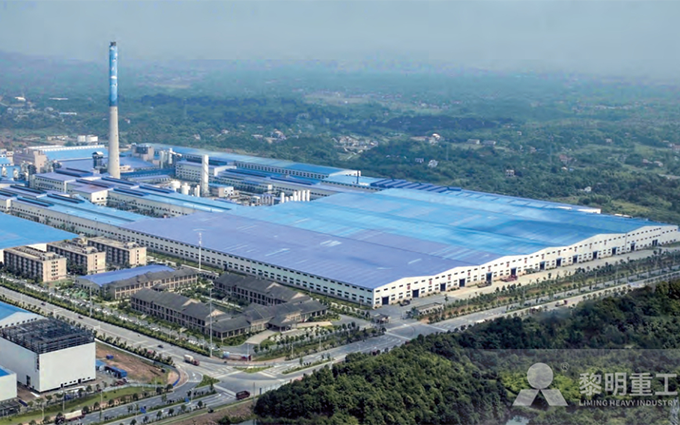
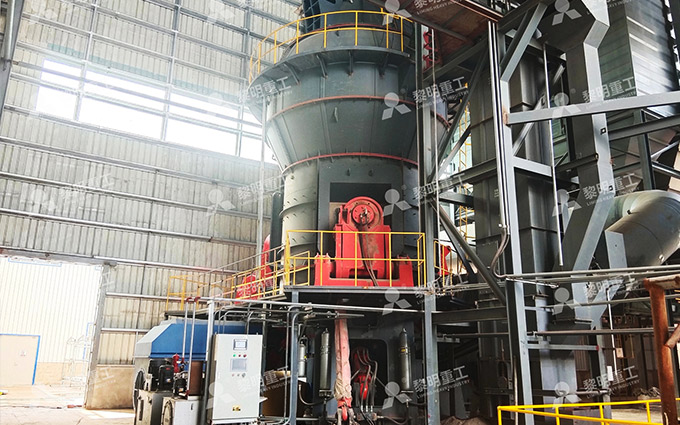
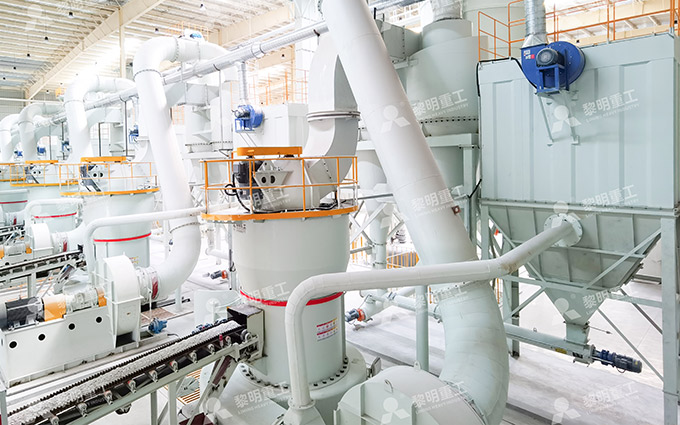
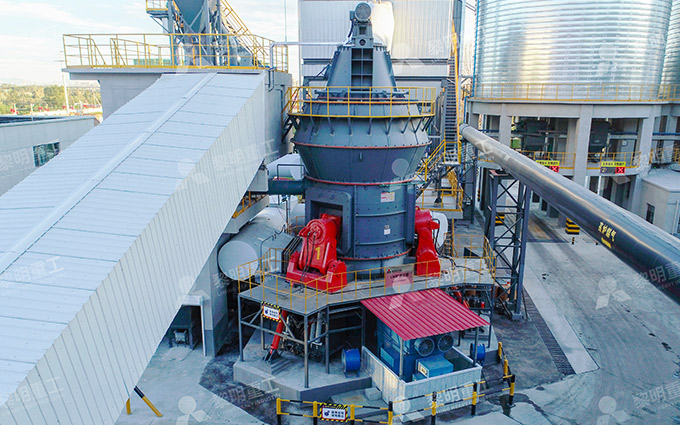
We are Liming Heavy Industry, a manufacturer of various types of industrial crushers, such as Raymond Mill, Trapezoidal Mill, Vertical Mill, Ultrafine Mill, Ball Mill, etc.
Our mills can process the following minerals:
limestone, quicklime, kaolin, talc, barite, bentonite, calcium carbonate, dolomite, coal, gypsum, clay, carbon black, slag, cement raw materials, cement clinker, etc.
If you need a mill to process stone or minerals into powder, please feel free to contact me (WhatsApp: +8615333807511). Thank you.
Ground calcium carbonate (GCC) and precipitated calcium carbonate (PCC) are both widely used as mineral fillers in plastics. Both are mainly CaCO3, but their production methods create different particle shapes, particle-size distributions, surface areas, bulk densities, dispersion behavior, and cost structures.
GCC is made by mechanically grinding natural limestone, calcite, marble, or chalk. PCC is produced by chemical precipitation, usually through carbonation of a calcium hydroxide slurry. For plastics, GCC is often the first choice for high-volume, cost-sensitive compounds, while PCC is considered when controlled morphology, fine particle size, surface area, stiffness, rheology, or specialty performance creates measurable value. The correct material depends on the polymer, filler loading, surface treatment, processing method, performance target, and total compound cost.
GCC vs PCC for Plastics: Quick Comparison
| Feature | GCC | PCC |
|---|---|---|
| Full name | Ground calcium carbonate | Precipitated calcium carbonate |
| Source | Natural limestone, calcite, marble, or chalk | Chemically precipitated calcium carbonate, usually from lime and CO2 |
| Particle formation | Natural mineral particles mechanically reduced by grinding | New crystals formed during controlled carbonation |
| Particle morphology | Usually irregular, angular, block-like, or ground-mineral shaped | Can be engineered as rhombohedral, scalenohedral, prismatic, acicular, cubic-like, or structured particles |
| Particle-size control | Controlled by grinding and air or wet classification | Controlled by precipitation, crystal growth, drying, deagglomeration, and classification |
| Surface area | Depends mainly on fineness and particle-size distribution | Can be higher because of fine primary particles, porous morphology, or engineered structure |
| Surface treatment | Often coated with stearic acid for PVC, PE, PP, rubber, adhesives, and sealants | Can also be coated or chemically modified for polymer compatibility |
| Bulk density | Often relatively higher, depending on particle size and packing | Often lower because of morphology, porosity, and agglomerate structure |
| Cost position | Usually lower and attractive for high-volume filler loading | Usually higher because of chemical processing and engineered particle control |
| Typical plastic use | PVC, masterbatch, flooring, pipes, profiles, cable compounds, film, sheet, woven bags, injection molding | Performance-oriented PVC, specialized masterbatch, elastomers, sealants, fine films, and technical polymer compounds |
Why Calcium Carbonate Is Used in Plastics
Calcium carbonate is one of the most common mineral fillers in plastic manufacturing. It can reduce the cost of polymer compounds while influencing stiffness, hardness, dimensional stability, shrinkage, surface finish, opacity, processing behavior, and final-product appearance.
However, calcium carbonate is not a universal reinforcement solution. Its performance depends on particle size, morphology, dispersion, surface treatment, loading level, polymer type, compatibilizer package, processing conditions, and the specific mechanical properties required by the final product.
As filler loading increases, cost savings can improve, but mechanical properties may change in different directions. Stiffness may increase, while elongation, impact strength, tensile strength, weld-line performance, or surface quality may decrease if particles are too coarse, poorly dispersed, inadequately coated, or used at excessive loading.
GCC in Plastic Compounds
GCC is the most widely used calcium carbonate type in many plastic applications because it is available in a broad range of particle sizes and is usually more cost-effective than PCC. It can be supplied as untreated powder, coated powder, fine powder, ultrafine powder, or customized grades for specific polymer systems.
For hydrophobic polymers, coated GCC is often preferred. Stearic acid or another surface modifier can improve compatibility between the hydrophilic calcium carbonate surface and the hydrophobic polymer matrix.
Common GCC Plastic Applications
Rigid PVC pipes and fittings.
PVC profiles, window systems, and siding.
SPC, LVT, and vinyl flooring.
Wire and cable insulation or sheathing compounds.
Polyethylene and polypropylene masterbatch.
Plastic film and sheet.
Woven bags, raffia products, and sacks.
Injection-molded household and industrial parts.
Rotomolded products.
Selected automotive plastic components.
Why GCC Is Popular
Cost efficiency: GCC can replace a portion of more expensive polymer resin in suitable compounds.
Wide grade availability: GCC is available from coarse grades to fine and ultrafine coated powders.
Natural mineral supply: High-quality limestone, calcite, and marble deposits support large-scale production.
Good processing flexibility: Particle size, whiteness, moisture, coating, and bulk density can be tailored to many applications.
Low hardness: Calcite-based GCC is generally less abrasive than silica-rich fillers.
Proven use at scale: GCC is widely used in high-volume PVC, masterbatch, flooring, pipe, profile, and general plastic markets.
GCC Limitations
Natural mineral quality can vary by quarry, deposit, and production batch.
Particle morphology is less directly controlled than PCC morphology.
Poor surface treatment or high moisture can reduce polymer compatibility.
Coarse particles may create surface defects in thin film, high-gloss products, or fine molded components.
High filler loading can reduce impact strength and elongation if compound design is not optimized.
PCC in Plastic Compounds
PCC is used in plastics when engineered particle properties can provide a technical advantage. Because PCC particles form during chemical precipitation, producers can control crystal morphology, particle size, surface area, porosity, and surface treatment more directly than with conventional GCC.
PCC can be used in rigid and flexible PVC, polyolefins, elastomers, plastisols, sealants, adhesives, and selected technical polymer compounds. It may be surface-treated to improve dispersion in hydrophobic resins.
Potential PCC Advantages
Controlled morphology: Particle shape can be selected for a specific rheology, stiffness, reinforcement, opacity, or packing target.
Fine particle size: Fine PCC can support smooth surface quality when dispersion is well controlled.
High whiteness potential: Useful for white or light-colored PVC, masterbatch, and specialty polymer products.
Tailored surface area: Can support specialized interaction with polymer matrices, but must be balanced against viscosity and plasticizer demand.
Surface modification: PCC can be coated or chemically modified for particular resin systems.
Functional filler role: Selected PCC can contribute to stiffness, dimensional stability, rheology, reinforcement, and surface appearance.
PCC Limitations
PCC is often more expensive than GCC.
High surface area can increase viscosity, oil absorption, plasticizer demand, or processing complexity.
Fine PCC can agglomerate if drying, coating, feeding, or compounding is poorly controlled.
Higher filler loading does not automatically improve mechanical properties.
The morphology that works well in one polymer may not be suitable for another resin or processing method.
Particle Shape and Plastic Performance
Particle shape influences how calcium carbonate packs, disperses, and transfers stress within the polymer. GCC particles are produced by grinding and are commonly irregular or block-like. PCC can be engineered into more specific shapes, including rhombohedral, scalenohedral, prismatic, and acicular forms.
| Particle Characteristic | Potential Effect in Plastics |
|---|---|
| Smaller particle size | Can improve surface smoothness and reduce visible particle defects when dispersion is good |
| Low coarse-particle content | Important for thin films, glossy surfaces, cable insulation, and fine molded products |
| Higher aspect ratio | Can influence stiffness, reinforcement, shrinkage, rheology, and orientation effects |
| Higher surface area | Can improve filler-polymer interaction but may increase viscosity, plasticizer demand, or agglomeration risk |
| Porous particle structure | Can influence bulk density, oil absorption, plasticizer uptake, and compound rheology |
| Strong agglomeration | Can cause poor dispersion, weak points, surface defects, voids, and inconsistent mechanical properties |
In a PVC study using precipitated calcium carbonate, lower PCC loading showed good dispersion, while loading above 20 wt% led to agglomeration and interfacial voids. As loading increased, tensile strength, elongation at break, and impact strength decreased, even though flexural strength reached a maximum at 5 wt% PCC. This illustrates why filler selection must consider loading and dispersion, not only the material name.
Surface Treatment: Coated GCC vs Coated PCC
Surface treatment is critical when calcium carbonate is used in hydrophobic polymers. Natural calcium carbonate surfaces are hydrophilic, while resins such as PVC, polyethylene, polypropylene, and many rubbers are hydrophobic. Without suitable surface modification, calcium carbonate may disperse poorly and create processing or performance problems.
Stearic acid is a common coating agent for both GCC and PCC. Other modifiers may include fatty-acid salts, titanates, aluminates, polymer-based modifiers, and application-specific coupling agents.
| Surface-Treatment Question | Coated GCC | Coated PCC |
|---|---|---|
| Main purpose | Improve dispersion and compatibility in PVC, PE, PP, rubber, sealants, and adhesives | Improve compatibility while preserving or tailoring PCC’s engineered particle properties |
| Common coating agent | Stearic acid | Stearic acid, specialty fatty acids, coupling agents, or custom modifiers |
| Key process control | Coating level, temperature, moisture, mixing, and powder flow | Coating level, morphology preservation, surface area, agglomeration, and moisture |
| Typical economic fit | Large-volume, cost-sensitive compounds | Higher-value compounds where engineered morphology justifies added cost |
Coated GCC grades are widely used in plastics because surface treatment improves compatibility and dispersion in polymer systems. PCC can also be coated, but its higher surface area or porous morphology may require more careful modifier selection and compounding optimization.
GCC vs PCC for PVC
PVC is one of the largest uses of calcium carbonate. Both GCC and PCC can be used in rigid PVC pipes, profiles, flooring, cable compounds, sheets, films, and plastisols.
Rigid PVC
In rigid PVC, calcium carbonate can influence cost, stiffness, impact resistance, fusion behavior, surface quality, dimensional stability, extrusion pressure, and processing window. Fine coated GCC is widely used for high-volume PVC pipes, profiles, and flooring because it offers a practical cost-performance balance.
PCC may be selected for rigid PVC when its particle morphology, surface area, particle size, or surface modification improves a specific target. The material should be evaluated through torque rheology, fusion tests, extrusion trials, mechanical testing, color measurement, and surface inspection.
Flexible PVC and Plastisols
In flexible PVC, calcium carbonate interacts with plasticizer, resin, stabilizers, and processing additives. PCC may absorb more plasticizer than GCC when it has a high-surface-area or porous structure. This can affect gelation, viscosity, plastisol rheology, and the amount of plasticizer available to the PVC resin.
One technical comparison notes that porous high-surface-area PCC can absorb plasticizer more strongly than denser GCC, emphasizing the need to optimize filler choice and plasticizer dosage in flexible PVC formulations. The actual result depends on PCC morphology, surface treatment, PVC resin, plasticizer type, mixing process, and filler loading.
GCC vs PCC for Polyethylene and Polypropylene
GCC and PCC can both be used in polyethylene and polypropylene compounds, including masterbatch, film, sheet, woven bags, raffia, injection-molded products, and blow-molded products.
GCC is commonly used in polyolefin filler masterbatch because of its cost efficiency and wide availability. Fine coated GCC can be compounded at substantial loading when the grade, coating, carrier resin, dispersant system, and extrusion conditions are properly matched.
PCC may be selected for specialty polyolefin compounds where fine particle size, morphology, stiffness, surface appearance, or rheology provides an advantage. Because polyolefins are strongly hydrophobic, surface treatment and compatibilizer selection are particularly important.
Key Polyolefin Considerations
Use suitable surface-treated calcium carbonate for good wetting and dispersion.
Control moisture to reduce voids, instability, and surface defects.
Control D97 and coarse particles for thin film and fine surface applications.
Evaluate melt-flow index, torque, die pressure, film appearance, tensile properties, elongation, and impact resistance.
Use compatible carrier resin and coupling or compatibilizer systems where required.
Balance filler loading against mechanical performance and processing stability.
GCC vs PCC for Plastic Film and Sheet
Plastic film and sheet are more sensitive to particle size and agglomeration than thick molded products. Coarse particles, hard agglomerates, or poor dispersion can create visible specks, gels, weak points, pinholes, roughness, die lines, breakage, and poor optical appearance.
Fine coated GCC is widely used in film-grade filler masterbatch. PCC may be useful when its controlled morphology or fine PSD offers a surface-quality advantage. However, high surface area can affect melt viscosity and dispersion, so the product must be tested at the intended film thickness and processing speed.
| Film or Sheet Requirement | Key Calcium Carbonate Property |
|---|---|
| Thin film without visible defects | Fine PSD, low D97, low residue, strong dispersion, minimal hard agglomerates |
| Smooth surface | Controlled particle size, appropriate coating, clean raw material, low contamination |
| Stable extrusion | Consistent bulk density, low moisture, suitable coating, predictable melt rheology |
| Mechanical performance | Appropriate filler loading, particle size, particle morphology, and polymer-filler adhesion |
| Cost reduction | Optimize GCC or PCC loading without exceeding the mechanical and visual quality limits |
GCC vs PCC for Injection Molding
Injection-molded products can use GCC or PCC to reduce resin cost and influence stiffness, shrinkage, dimensional stability, and surface appearance. The best choice depends on part geometry, wall thickness, gate design, cycle time, polymer type, color, impact requirement, and surface-quality target.
GCC is often suitable for cost-sensitive molded components. PCC may be useful where its morphology improves stiffness, surface appearance, or rheology. However, excessive filler loading can reduce impact performance, increase brittleness, and create weld-line weakness or poor flow in thin sections.
Cost Comparison for Plastic Applications
GCC usually has a lower purchase cost than PCC because its production process is simpler. GCC is made through quarrying, crushing, grinding, classification, and optional surface coating. PCC requires calcination or quicklime supply, slaking, carbonation, filtration, drying, deagglomeration, and often more intensive process control.
| Cost Factor | GCC | PCC |
|---|---|---|
| Material price | Usually lower | Usually higher |
| Processing complexity | Mechanical grinding and classification | Chemical precipitation, drying, morphology control, and finishing |
| Best cost role | High-volume filler replacement and compound-cost reduction | Higher-value applications where specific particle properties create measurable formulation value |
| Potential hidden cost | Poor coating, moisture, coarse particles, or impurities can cause processing defects and rejection | High surface area or poor dispersion can increase viscosity, additive demand, and processing difficulty |
The best filler is not always the one with the lowest price per tonne. A more expensive PCC may be justified if it enables better surface quality, higher-value product performance, lower rejection rates, optimized additive use, or a higher usable filler loading. Conversely, GCC may provide the best total economics when standard filler performance is sufficient.
How to Choose Between GCC and PCC for Plastics
| If Your Priority Is... | Usually Start by Evaluating... |
|---|---|
| Lowest practical compound cost | Coated GCC |
| High-volume PVC pipe, profile, or flooring | Fine coated GCC |
| General PE or PP filler masterbatch | Coated GCC, then benchmark against PCC if a specific performance gap exists |
| Thin film, smooth sheet, or low-defect surface | Fine coated GCC and fine PCC in parallel trials; prioritize D97 and dispersion |
| Specialized stiffness, rheology, or morphology target | Surface-treated PCC |
| High whiteness or light-colored premium plastic | High-purity GCC or PCC, selected by color, PSD, and final-product trials |
| Flexible PVC with plasticizer-sensitive rheology | Evaluate GCC first, then compare selected PCC grades with controlled plasticizer adjustment |
| Premium engineered compound | PCC and high-quality ultrafine GCC in controlled benchmarking trials |
Recommended Plastic-Compound Trial Plan
Material selection should be based on compound data, not only supplier literature. A structured trial should compare GCC and PCC under equivalent processing conditions.
Define the target polymer, product type, color, filler loading, mechanical requirements, and cost target.
Collect full technical data for each GCC and PCC candidate: CaCO3 content, SiO2, Fe2O3, MgO, particle-size distribution, D97, whiteness, moisture, bulk density, oil absorption, surface treatment, and morphology.
Prepare compounds at equal filler loading and, when relevant, a range of loadings.
Measure mixer torque, melt-flow behavior, fusion time, extrusion pressure, die buildup, and energy consumption.
Inspect dispersion using microscopy, microtome sections, or other agreed methods.
Test tensile strength, elongation, flexural properties, impact resistance, hardness, density, shrinkage, and dimensional stability.
Inspect color, gloss, surface roughness, visible specks, film defects, and molded-part appearance.
Calculate total compound cost, including resin replacement, additives, scrap, cycle time, energy, quality rejection, and product value.
Frequently Asked Questions
Which is better for plastics, GCC or PCC?
Neither is universally better. GCC is usually preferred for cost-effective, high-volume plastic compounds. PCC is often selected when controlled particle morphology, fine particle size, surface area, or specialized functional performance creates measurable value. The final decision should be based on compound trials.
Why is coated GCC widely used in plastics?
Coated GCC is widely used because surface treatment improves compatibility and dispersion in hydrophobic polymers such as PVC, polyethylene, polypropylene, and rubber. It can support stable compounding, surface quality, and cost-effective filler loading.
Is PCC better than GCC for PVC?
PCC can offer benefits in selected PVC compounds because of its controlled particle morphology and surface properties. However, fine coated GCC is widely used and often provides the best cost-performance balance for PVC pipes, profiles, flooring, and cable compounds. Test both materials in the actual formulation.
Does finer calcium carbonate always improve plastic properties?
No. Finer particles can improve surface quality and dispersion, but they can also increase surface area, viscosity, additive demand, and agglomeration risk. Mechanical properties depend on particle size, morphology, coating, dispersion, filler loading, and polymer-filler adhesion.
Can PCC reduce plasticizer availability in flexible PVC?
It can, especially if the PCC has high surface area or a porous structure. Such PCC may absorb plasticizer and alter plastisol viscosity or gelation behavior. The formulation should be adjusted and tested rather than assuming PCC will behave like GCC.
Can GCC and PCC be blended in plastics?
Yes. GCC and PCC can be blended to balance cost, particle packing, stiffness, surface finish, rheology, whiteness, and mechanical performance. The blend ratio should be optimized through compounding and end-use testing.
Conclusion
GCC and PCC are both important calcium carbonate fillers for plastics. GCC is a natural, mechanically ground mineral filler that is widely used because it is cost-effective, available in many grades, and suitable for PVC, masterbatch, flooring, pipe, profile, film, sheet, and general plastic compounds.
PCC is an engineered calcium carbonate with more controllable particle shape, surface area, and morphology. It can add value in specialized PVC, coatings, films, rubber, sealants, and technical polymer applications where surface quality, stiffness, rheology, or controlled particle performance justifies a higher material cost.
The best choice depends on the full compound design. Evaluate GCC and PCC using equivalent trials that measure dispersion, rheology, processing stability, mechanical properties, surface appearance, and total cost—not just calcium carbonate content or price per tonne.