Calcium Carbonate Knowledge Hub
GCC vs PCC: Production Cost Considerations
2026-09-04 16:16:48
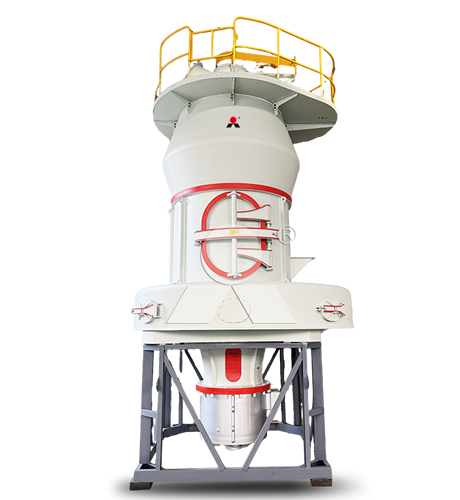
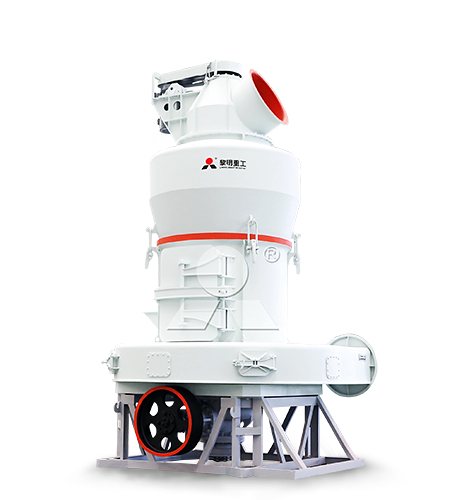
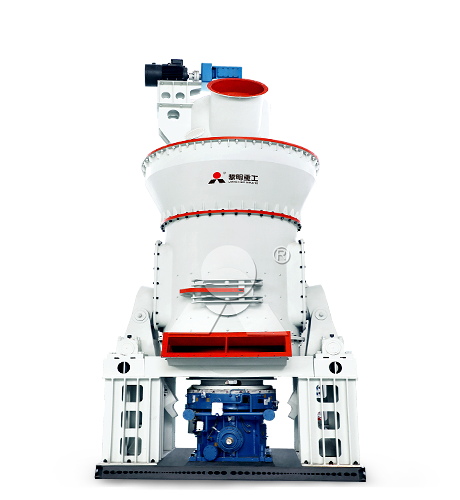
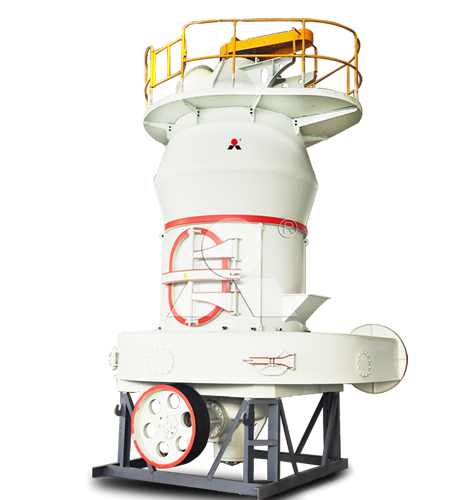
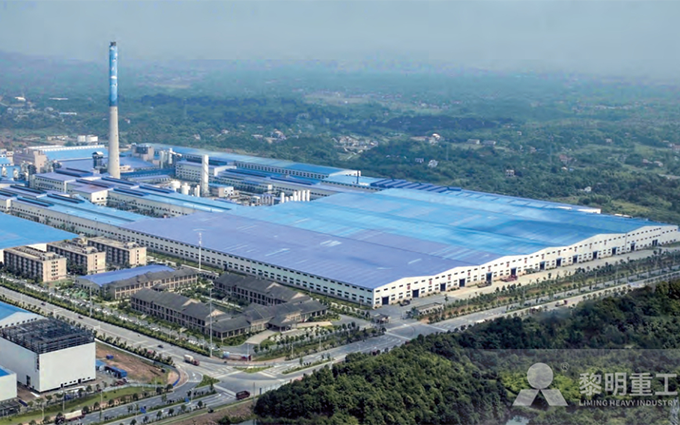
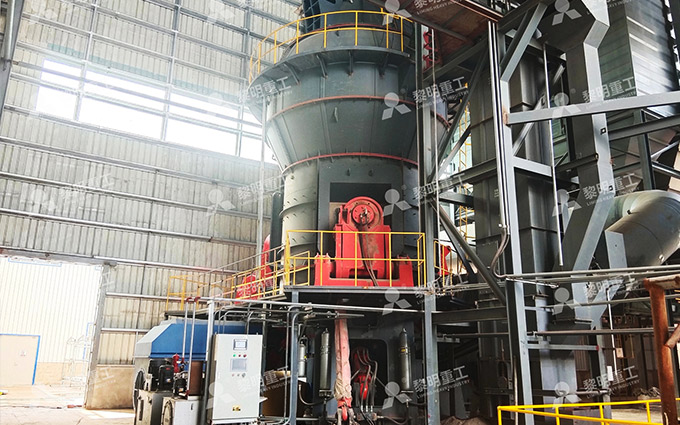
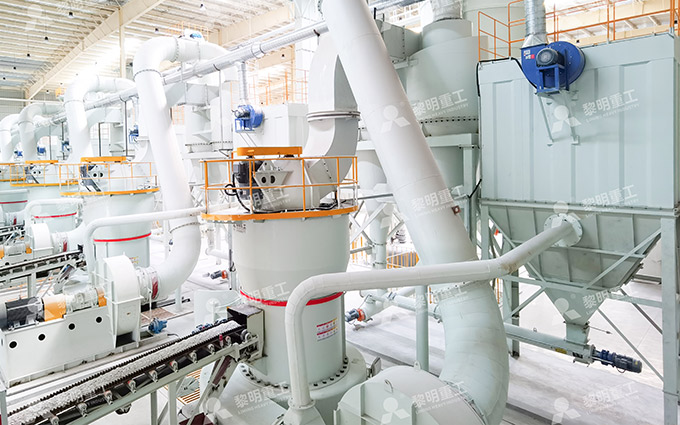
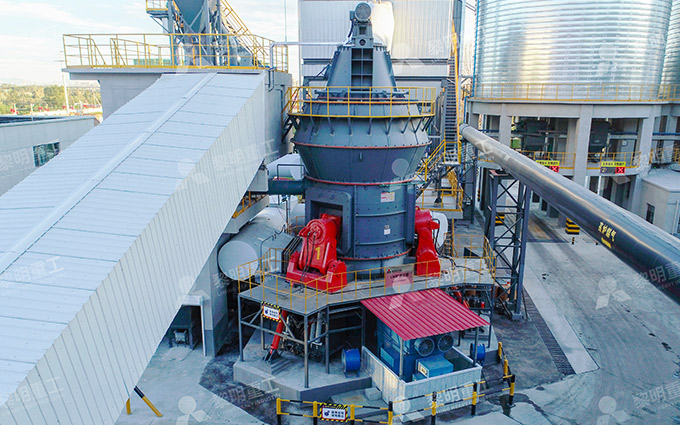
We are Liming Heavy Industry, a manufacturer of various types of industrial crushers, such as Raymond Mill, Trapezoidal Mill, Vertical Mill, Ultrafine Mill, Ball Mill, etc.
Our mills can process the following minerals:
limestone, quicklime, kaolin, talc, barite, bentonite, calcium carbonate, dolomite, coal, gypsum, clay, carbon black, slag, cement raw materials, cement clinker, etc.
If you need a mill to process stone or minerals into powder, please feel free to contact me (WhatsApp: +8615333807511). Thank you.
Ground calcium carbonate (GCC) is usually less expensive to produce than precipitated calcium carbonate (PCC). GCC is made through quarrying, crushing, grinding, classification, and optional surface treatment. PCC requires a more complex chemical route that may include limestone calcination, quicklime handling, slaking, carbonation, filtration, drying, deagglomeration, and optional coating.
However, the lowest production cost per tonne does not always produce the lowest total cost in a finished product. GCC is typically the better economic choice for high-volume filler applications, while PCC may justify its higher cost when engineered morphology, opacity, rheology, whiteness, bulk, reinforcement, or processing performance improves the overall formulation or product value. The financial decision should compare total delivered cost and total product economics—not simply the mineral price. PCC’s chemical route is generally more complex and energy-intensive, while GCC’s operating cost is driven primarily by raw material, electricity for grinding, classification, and logistics.
Quick Cost Comparison
| Cost Dimension | GCC | PCC |
|---|---|---|
| Production route | Mechanical processing | Chemical precipitation |
| Main raw material | Limestone, calcite, marble, or chalk | High-calcium limestone or purchased quicklime, plus water and CO2 |
| Main energy demand | Electricity for crushing, grinding, classification, conveying, dust collection, and optional drying | Thermal energy for calcination plus electricity and utilities for slaking, carbonation, separation, drying, and finishing |
| Capital complexity | Crusher, mill, classifier, dust collection, silos, coating system, and packaging | Lime kiln or quicklime logistics, slaker, carbonation reactors, CO2 system, filters, dryers, finishing equipment, and water systems |
| Typical production cost | Usually lower | Usually higher |
| Best economic fit | High-volume, cost-sensitive filler applications | Higher-value or performance-sensitive applications where engineered properties create value |
| Main risk | Raw-material quality variation, electricity cost, grinding energy, quarry distance, logistics | Fuel cost, calcination emissions, CO2 supply, water use, process complexity, drying energy, quality consistency |
Why PCC Usually Costs More Than GCC
GCC begins as a natural calcium carbonate mineral. The producer reduces the material from rock into a controlled powder or slurry through mechanical processing. The material remains CaCO3 throughout production.
PCC begins with a more complex route. In an integrated PCC plant, limestone is first decomposed into quicklime, then converted into calcium hydroxide slurry, and then converted back into calcium carbonate through controlled carbonation. PCC is therefore not simply “finer calcium carbonate”; it is a newly precipitated material with engineered particle properties.
The main PCC reaction route is:
CaCO3 → CaO + CO2
CaO + H2O → Ca(OH)2
Ca(OH)2 + CO2 → CaCO3 + H2O
Every added step requires equipment, energy, utilities, operators, quality control, maintenance, and process management. This is why PCC generally has a higher production cost than GCC. Industry comparisons consistently identify GCC as a lower-cost mechanical product and PCC as a higher-cost product because it requires calcination and chemical precipitation.
GCC Production Cost Structure
GCC costs depend heavily on raw-material quality, mining conditions, grinding fineness, plant capacity, electricity price, logistics, and whether the product is coated. A standard GCC line is simpler than a PCC plant, but ultrafine or coated GCC can still require significant investment and operating discipline.
Typical GCC Process
Quarry → crushing → screening → drying when required → grinding → classification → powder collection → optional coating → storage and packaging
Major GCC Cost Components
| Cost Component | Why It Matters |
|---|---|
| Raw limestone or calcite | Material quality, quarry stripping ratio, mining method, royalty, stockpile management, and transport distance strongly affect cost |
| Crushing and screening | Energy, wear parts, equipment maintenance, and feed-size control affect mill efficiency |
| Grinding electricity | Usually one of the largest operating costs; increases significantly as target particle size becomes finer |
| Air classification | Classifier power, system airflow, fan energy, circulation load, and particle-size precision affect operating cost |
| Drying energy | Required when feed moisture is high or when product moisture specifications are strict |
| Wear parts | Mill liners, grinding media, rollers, rings, classifier components, ducts, and separators wear faster with silica contamination |
| Dust collection | Bag filters, fans, compressed air, maintenance, and powder recovery are essential for ultrafine GCC operations |
| Surface coating | Stearic acid or other modifiers, heating, mixing, cooling, and quality control increase cost for coated GCC |
| Packaging and logistics | Bags, FIBCs, bulk loading, container freight, and powder-handling costs can exceed processing cost for distant markets |
For GCC plants in one 2026 industry-cost model, raw materials represented an estimated 50–60% of operating expenditure and utilities about 25–30%; these percentages vary widely by location, product fineness, power price, quarry ownership, and logistics model.
PCC Production Cost Structure
PCC has a broader cost base because it requires chemical processing and more complex plant infrastructure. A producer may operate an integrated limestone-to-PCC facility or purchase quicklime and begin at the slaking stage. Both routes have different cost structures.
Typical Integrated PCC Process
Limestone quarry → crushing → calcination → quicklime cooling and storage → slaking → calcium hydroxide slurry refinement → carbonation → PCC slurry → filtration → drying or slurry finishing → deagglomeration → optional coating → packaging
Major PCC Cost Components
| Cost Component | Why It Matters |
|---|---|
| High-calcium limestone or quicklime | Raw-material purity affects PCC yield, whiteness, morphology, grit level, and finishing cost |
| Calcination fuel | Integrated PCC requires high-temperature lime production; fuel is often a major operating-cost driver |
| Calcination equipment | Kiln, burner, refractory, cooling, gas cleaning, and heat-recovery systems require high capital and maintenance spending |
| CO2 handling | Gas capture, cooling, cleaning, compression, blowers, piping, storage, and reactor distribution affect capital and operating costs |
| Slaking and slurry preparation | Water, slaker operation, mixing, temperature control, grit removal, tanks, and pumps add process cost |
| Carbonation reactor control | Mixing, gas-liquid mass transfer, instrumentation, additives, residence time, and pH control determine particle properties and yield |
| Solid-liquid separation | Filters, centrifuges, vacuum systems, washing, filtrate management, and wastewater treatment add cost |
| Drying and deagglomeration | Dry PCC requires thermal energy, powder handling, and careful control to prevent hard agglomerates |
| Surface modification | Coated PCC requires modifiers, heat, mixing, cooling, and specialized quality control |
| Quality-control system | Morphology, PSD, surface area, residual lime, whiteness, purity, moisture, and application testing require advanced laboratory support |
PCC can also carry higher maintenance and compliance costs because kilns, gas-treatment equipment, water systems, filters, dryers, and reaction vessels create more complex maintenance and environmental-management requirements than a standard GCC grinding line.
Capital Expenditure: GCC vs PCC
Capital expenditure, or CAPEX, is the cost of building and commissioning a plant. PCC generally requires higher CAPEX because it includes chemical-process equipment in addition to material handling and powder finishing.
| Plant Area | GCC CAPEX Requirement | PCC CAPEX Requirement |
|---|---|---|
| Quarry and raw material | May require quarry development, crushing, stockpile, and conveyor systems | May require the same systems if the PCC plant is integrated with a limestone quarry |
| Core process equipment | Grinding mill, classifier, fans, filters, silos, and packing line | Calcination kiln or quicklime handling, slaker, slurry tanks, carbonation reactors, CO2 system, filters, dryers, and finishing line |
| Utilities | Electricity, compressed air, limited process heat, dust-collection system | Electricity, fuel, water, steam or heat systems, compressed air, cooling, wastewater, gas handling, and emission control |
| Laboratory and control | Particle-size, chemistry, moisture, whiteness, and coating QC | All GCC-type tests plus reaction control, crystal morphology, residual lime, surface area, slurry properties, and more complex process analytics |
| Environmental equipment | Dust filters, enclosed conveyors, noise control, and wastewater controls where wet grinding is used | Dust filters, kiln-gas treatment, CO2 handling, wastewater management, lime-dust control, and additional emission monitoring |
| Overall capital intensity | Usually lower | Usually substantially higher for an integrated production route |
A quicklime-purchase model can reduce PCC capital expenditure because it avoids building a lime kiln. However, it shifts risk to the cost, quality, availability, and transportation of quicklime. In regions where suitable high-calcium limestone, fuel, and CO2 infrastructure are available, an integrated PCC plant may be more economical at scale.
Energy Costs
Energy is a major difference between GCC and PCC economics.
GCC Energy Profile
GCC relies mainly on electrical energy for crushing, conveying, grinding, air classification, dust collection, coating, and packaging. Grinding energy rises sharply as the target particle size becomes finer. Ultrafine GCC grades require more mill power, higher airflow, more classifier control, and sometimes more wear parts than standard coarse products.
Drying may add thermal energy cost when raw limestone is wet or when the final product must meet low moisture specifications. Wet-ground GCC may reduce some dry-grinding demands but introduces slurry pumping, dispersant, dewatering, drying, and water-management costs depending on the final product format.
PCC Energy Profile
PCC typically requires both thermal and electrical energy. The most energy-intensive stage is calcination, where limestone is heated to produce quicklime. Additional energy is needed for quicklime cooling, slaking, pumping, slurry mixing, CO2 compression or blowing, filtration, drying, deagglomeration, surface treatment, and packaging.
Market analyses identify electricity-intensive grinding for GCC and thermal-energy-intensive precipitation routes for PCC as major cost and carbon-footprint drivers, particularly when energy prices are volatile.
Raw-Material and Location Economics
Location can be more important than the basic GCC-versus-PCC label. A GCC plant located beside a high-purity limestone quarry and close to customers may have a major cost advantage. A PCC operation located near inexpensive quicklime, low-cost fuel, reliable CO2, abundant process water, and a large paper mill may be highly competitive despite its more complex process.
| Location Factor | Impact on GCC | Impact on PCC |
|---|---|---|
| Distance to high-quality limestone | Very important because GCC production starts with natural mineral supply | Important for integrated PCC; less direct when quicklime is purchased |
| Electricity price and reliability | Critical for grinding, classification, fans, filters, and packing | Important for pumps, blowers, reactors, filtration, drying, and finishing |
| Fuel price and availability | Important mainly for drying or captive power, if used | Critical for integrated lime calcination |
| CO2 source | Not required for standard GCC production | Essential for carbonation; quality, cost, capture, cleaning, and transport matter |
| Water availability | Important for wet grinding or dust-control systems | Essential for slaking, slurry processing, washing, and water recycling |
| Distance to customers | Very important because mineral filler freight can be substantial | Important; on-site or near-site PCC slurry production can reduce transport cost in paper applications |
| Environmental requirements | Focused mainly on dust, quarrying, noise, and electricity-related emissions | Includes kiln emissions, CO2, fuel combustion, lime dust, wastewater, and chemical-process controls |
Product Fineness and Cost
For GCC, product fineness is a major cost driver. Coarse calcium carbonate for construction, agriculture, or general filler use is relatively simple to produce. Fine and ultrafine GCC requires more grinding energy, more accurate classification, higher airflow, tighter product control, and sometimes enhanced wear protection.
For PCC, cost is influenced less by mechanical fineness alone and more by the target crystal morphology, primary particle size, surface area, agglomeration control, filtration behavior, drying requirement, and surface modification. Nano PCC or highly specialized PCC can require significant additional process control and higher-cost additives.
| Product Direction | GCC Cost Effect | PCC Cost Effect |
|---|---|---|
| Coarse mineral product | Lower grinding and classification cost | Usually not the main economic target for PCC |
| Standard fine filler | Moderate grinding and classification cost | Can be produced, but PCC may not be economically justified without functional value |
| Ultrafine powder | Higher electricity, classifier, wear, and quality-control cost | Higher process-control and finishing cost; may be economically justified by engineered properties |
| Coated product | Additional modifier, heating, mixing, cooling, and QC cost | Additional coating cost plus the cost of PCC production and morphology control |
| High-whiteness product | Requires selected raw material, clean processing, and strict quarry control | Requires high-purity feedstock, refined slurry, controlled precipitation, and contamination management |
| Specialty morphology | Limited control through grinding; may require alternative sourcing or processing | Can be engineered, but requires tighter reaction control and may increase cost |
Surface Treatment and Finishing Costs
Coating increases the cost of both GCC and PCC. In plastics, PVC, rubber, adhesives, and sealants, calcium carbonate is often surface-treated with stearic acid or another modifier to improve dispersion and compatibility with hydrophobic polymers.
Coated GCC is common because it gives a practical balance of cost and performance. Coated PCC may offer additional functional advantages in specialty formulations, but its cost is usually higher because the base PCC itself costs more and may require more careful handling due to its surface area and morphology.
Finishing costs also include:
Moisture reduction and drying.
Deagglomeration.
Fine classification or screening.
Blending with other grades or additives.
Whiteness and color control.
Dust collection and product recovery.
Bagging, FIBC filling, tanker loading, or slurry shipment.
Lot-specific quality testing and certificates of analysis.
Logistics and Delivered Cost
Calcium carbonate is a bulk material, so freight can be a major share of the delivered cost. A lower-cost GCC produced far from the customer may become less competitive than locally available PCC or another GCC supplier once transportation, packaging, handling, import duties, inventory, and warehouse costs are included.
For export markets, freight economics depend on product density, packaging, container utilization, distance from port, route availability, moisture protection, and whether the product is shipped as powder, big bags, bulk, or slurry. PCC’s often lower bulk density can increase freight cost per tonne of active mineral if shipment volume becomes the limiting factor.
| Logistics Factor | Cost Impact |
|---|---|
| Plant-to-customer distance | Long-distance freight can materially change the cost ranking between GCC and PCC |
| Bulk density | Lower bulk density can reduce tonnes carried per truck or container volume |
| Packaging type | Small bags cost more than bulk loading; FIBCs provide a middle option for export and smaller users |
| Powder vs slurry | Slurry transport moves water as well as mineral, making distance and local production important |
| Warehouse and handling | Fine powders require dust-controlled unloading, silos, feeders, and inventory protection |
| Import and compliance cost | Tariffs, customs, testing, certification, and local packaging requirements affect total delivered cost |
Cost per Tonne vs Cost in Use
A production manager or formulation buyer should compare more than the purchase price. The correct question is: Which calcium carbonate delivers the lowest total cost while meeting the product specification?
Cost in use can include:
Delivered mineral price.
Filler loading that can be used without unacceptable performance loss.
Resin, fiber, binder, pigment, plasticizer, or additive replacement.
Processing energy and throughput.
Extrusion pressure, torque, mixing time, or coating viscosity.
Drying energy and drainage impact.
Scrap rate, surface defects, and quality rejection.
Equipment wear and maintenance.
Product performance and warranty risk.
Finished-product selling price or market position.
Example: PVC Compound
For a high-volume PVC pipe compound, fine coated GCC may offer the lowest cost per tonne and good performance at practical loading. PCC may cost more and may not be justified unless it improves a critical property such as stiffness, surface finish, extrusion stability, or formulation efficiency.
Example: Paper Filler
For paper, PCC may cost more per tonne but can be economically attractive if its engineered morphology improves opacity, bulk, brightness, or fiber substitution enough to offset the higher pigment cost. However, slower drainage or higher drying cost could reduce the benefit. The decision should be based on paper-machine trials and total cost per tonne of finished paper.
Example: High-Gloss Coating
For a high-gloss coating, a specialized fine PCC may be justified if it reduces roughness, improves opacity, or enables better gloss. For a standard wall putty or economy architectural coating, GCC may deliver the required performance at much lower cost.
Environmental Cost Considerations
Energy use and carbon emissions increasingly affect the cost of calcium carbonate production through fuel price, carbon pricing, emission permits, environmental compliance, customer sustainability requirements, and investment in process upgrades.
GCC mainly carries electricity-related emissions from mining, crushing, grinding, classification, and transport. PCC can carry additional emissions from calcination because heating limestone releases CO2 both from fuel combustion and from the chemical decomposition of CaCO3.
However, a broad statement that GCC is always lower-carbon than PCC can be misleading. Local electricity mix, fuel source, transport distance, CO2 capture, on-site PCC production, product performance, and substitution of other materials all influence the true life-cycle result. A product-specific life-cycle assessment is needed for a defensible environmental comparison.
When GCC Is Usually More Economical
High-volume PVC pipes, profiles, flooring, and cable compounds.
General plastic masterbatch and polyolefin compounds.
Wall putty, dry-mix mortar, tile adhesive, and construction products.
General paint and coating formulations where engineered morphology is not essential.
Rubber compounds with conventional filler requirements.
Adhesives and sealants where a cost-effective fine filler is sufficient.
Markets located near high-quality limestone, calcite, or marble deposits.
Applications where high filler volume and reliable supply matter more than specialized particle structure.
When PCC May Justify Higher Cost
Paper fillers requiring engineered opacity, brightness, bulk, or on-site slurry production.
Premium paper coatings requiring controlled morphology and surface properties.
High-value paints, inks, and coatings requiring specific opacity, gloss, or rheology.
Technical plastics or PVC compounds that benefit from controlled morphology, surface area, or surface treatment.
Rubber, adhesives, and sealants requiring targeted rheology or reinforcement behavior.
Pharmaceutical, cosmetic, food-related, or other regulated products requiring specific qualified grades.
Applications where a higher material cost is offset by lower pigment, binder, resin, fiber, or rejection costs.
Plants that can use local quicklime, captured CO2, available process water, and nearby end-use demand efficiently.
Cost-Comparison Checklist
Before choosing GCC or PCC, compare the following factors on the same basis:
Delivered cost per tonne, including packaging, freight, insurance, duties, and handling.
CaCO3 assay, SiO2, Fe2O3, MgO, moisture, and impurity profile.
Particle-size distribution, including D10, D50, D90, D97, and coarse residue.
Particle morphology, primary particle size, agglomeration behavior, and surface area.
Whiteness, brightness, Lab* values, and yellowness where relevant.
Surface-treatment type, coating level, hydrophobicity, and compatibility with the target resin or binder.
Bulk density, powder flow, silo capacity, dosing accuracy, and container or tanker utilization.
Processing effects, including torque, melt flow, extrusion pressure, coating viscosity, drainage, and drying.
Finished-product properties, including opacity, gloss, stiffness, impact, tensile behavior, printability, and surface appearance.
Scrap rate, equipment wear, maintenance, quality rejection, and production throughput.
Environmental and compliance costs, including energy, emissions, waste, water, and documentation.
Supplier reliability, lot consistency, technical support, and available local inventory.
Frequently Asked Questions
Is GCC cheaper than PCC?
In most cases, yes. GCC is usually cheaper because it is produced mainly by mechanical crushing, grinding, and classification. PCC generally costs more because it requires calcination or purchased quicklime, slaking, carbonation, filtration, drying, and tighter chemical-process control.
Why is PCC more expensive than GCC?
PCC has a more complex and energy-intensive process. It requires more equipment, fuel or thermal energy, water, carbon dioxide handling, reaction control, separation, drying, and quality control. Its higher cost can be justified when engineered particle morphology delivers better product performance.
What is the main cost driver for GCC?
Major GCC cost drivers include raw-material cost, grinding electricity, target fineness, classifier efficiency, drying demand, wear parts, surface coating, packaging, and freight. For ultrafine GCC, grinding and classification energy become especially important.
What is the main cost driver for PCC?
Major PCC cost drivers include high-purity limestone or quicklime, calcination fuel, kiln operation, CO2 supply and handling, water, slaking, carbonation control, filtration, drying, deagglomeration, and the complexity of maintaining consistent morphology and quality.
Can PCC reduce total formulation cost even when it costs more?
Yes. PCC can reduce total formulation cost if it enables higher filler loading, reduces use of resin, fiber, TiO2, binder, or other expensive ingredients, improves process efficiency, lowers defects, or increases finished-product value. This must be verified in application trials.
Does coated GCC cost more than uncoated GCC?
Yes. Coated GCC usually costs more because it requires surface modifiers, drying, heating, mixing, cooling, and additional quality control. It can still be more economical for plastics, PVC, rubber, adhesives, and sealants if improved dispersion and process stability reduce total formulation cost.
Conclusion
GCC and PCC have different production-cost structures because they are made through different routes. GCC is a mechanically processed natural mineral, so its economics are driven mainly by raw material, grinding energy, fineness, classification, coating, and logistics. PCC is a chemically engineered material, so its economics include calcination, quicklime, water, CO2, slaking, carbonation, filtration, drying, and more complex process control.
GCC is usually the lower-cost option for large-volume fillers. PCC is usually the higher-cost option, but it can create greater total value where engineered particle morphology, opacity, whiteness, bulk, rheology, reinforcement, or regulated quality is important. The best decision compares delivered cost, process impact, finished-product performance, and total economics—not simply the price per tonne of calcium carbonate.