Calcium Carbonate Knowledge Hub
How to Grind Calcite Into Powder
2026-09-04 16:25:08
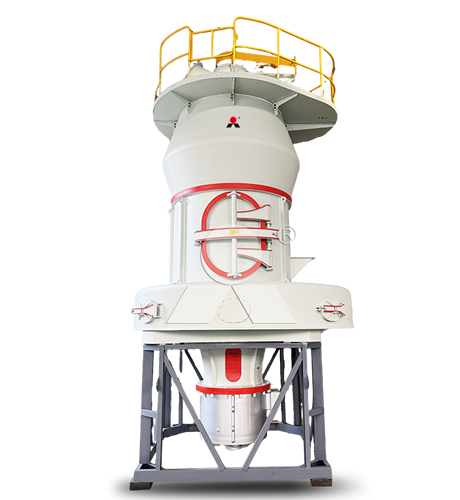
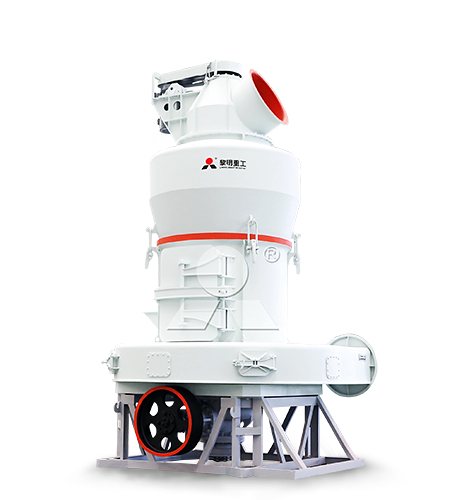
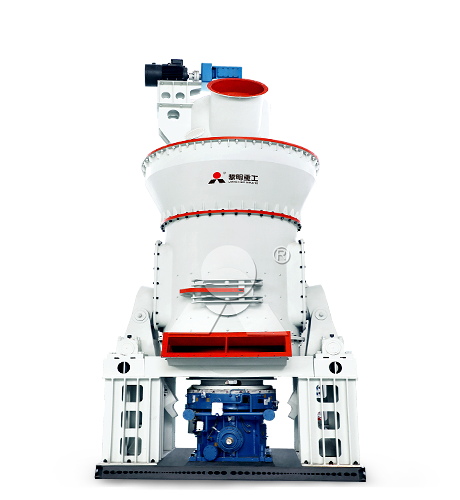
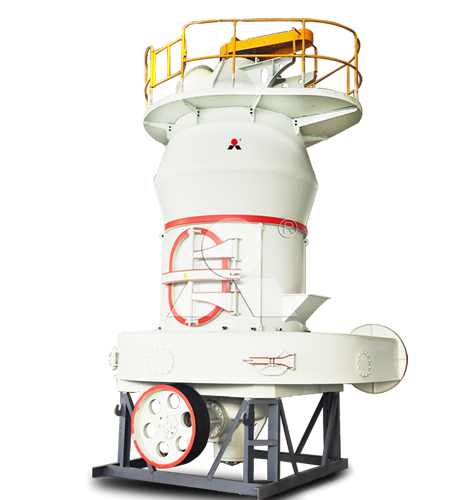
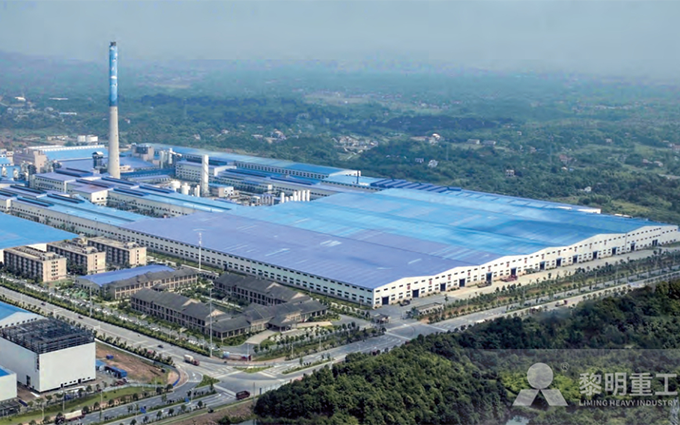
We are Liming Heavy Industry, a manufacturer of various types of industrial crushers, such as Raymond Mill, Trapezoidal Mill, Vertical Mill, Ultrafine Mill, Ball Mill, etc.
Our mills can process the following minerals:
limestone, quicklime, kaolin, talc, barite, bentonite, calcium carbonate, dolomite, coal, gypsum, clay, carbon black, slag, cement raw materials, cement clinker, etc.
If you need a mill to process stone or minerals into powder, please feel free to contact me (WhatsApp: +8615333807511). Thank you.
To grind calcite into powder, first crush clean calcite ore to a controlled mill feed, then dry it if necessary, grind it in a suitable mill, and use air classification to separate the finished fine powder from coarse particles for regrinding. The basic industrial flow is: calcite ore → crushing → drying or moisture control → grinding → air classification → powder collection → optional coating → packing.
The right grinding method depends on the target particle size and market. Coarser calcite powder for construction compounds can use a simpler dry milling route, while fine or ultrafine ground calcium carbonate (GCC) for PVC, coatings, paper, masterbatch, rubber, adhesives, and sealants requires a closed-circuit grinding-and-classification system. Industry process guidance identifies crushing, milling, and classification as the core stages of calcium carbonate grinding.
Start With Qualified Calcite
Grinding cannot turn poor-quality ore into premium calcium carbonate powder. Before installing or operating a mill, confirm the calcite feed’s chemistry, mineralogy, whiteness, moisture, hardness, and impurity profile. The finished powder will reflect the quality of the source material.
For high-value GCC, the preferred raw material is generally calcite-rich ore with high and stable CaCO3, low MgO, low silica, low iron, low acid-insoluble residue, and high whiteness. A material described commercially as “calcite” may still include dolomite, quartz, mica, feldspar, clay, graphite, iron staining, or wall-rock contamination.
| Raw-material control | What to check | Why it affects grinding and product quality |
|---|---|---|
| CaCO3 and CaO | Overall carbonate richness | Supports chemical-purity targets and reduces non-carbonate residue |
| MgO | Dolomite content or magnesium-bearing minerals | Important for high-calcium GCC specifications and end-use consistency |
| SiO2 and insoluble residue | Quartz, silica veins, mica, feldspar, and hard inclusions | Raises equipment wear, grit, and power demand |
| Fe2O3 and color | Iron minerals, staining, gray zones, dark specks | Controls whiteness and suitability for PVC, paper, paints, and coatings |
| Moisture | Quarry, stockpile, seasonal, and washed-feed moisture | Influences dryer demand, mill capacity, classification efficiency, and powder flow |
| Mineralogy | Calcite, dolomite, quartz, clay, mica, feldspar, sulfides | Explains chemical data and helps select sorting, beneficiation, and wear protection methods |
Use representative samples from multiple quarry benches, depths, color zones, and stockpiles. Combine chemical analysis with X-ray diffraction (XRD), whiteness measurement, acid-insoluble residue testing, and pilot grinding. A single bright hand sample or a single CaCO3 result does not establish long-term GCC suitability.
Industrial Calcite Grinding Flow
Most dry calcite powder plants use a closed circuit. Material that is already fine enough leaves as product; oversized particles return to the mill. This recirculating arrangement is the key to controlling particle-size distribution without relying on excessive grinding.
Quarry or ore feed → sorting and blending → primary crushing → secondary crushing and screening → magnetic separation → drying if required → fine or ultrafine grinding → dynamic air classification → cyclone and bag-filter collection → optional surface treatment → silo storage → bagging or bulk loading
For high-whiteness calcite ore, an industry configuration commonly includes a primary crusher, elevator, storage silo, ring roller or ball mill, air classifier, and collection system. For very fine grades, a ball mill plus air classifier line is a widely used configuration.
1. Crush Calcite to a Stable Feed Size
Calcite ore is normally delivered as quarry rock, large lumps, or crushed material. Fine grinding equipment needs a controlled feed size, so crushing is the first essential stage.
| Stage | Typical equipment | Main objective |
|---|---|---|
| Primary crushing | Jaw crusher or heavy-duty impact crusher | Reduce large calcite rock to a size suitable for plant handling |
| Secondary crushing | Hammer crusher, impact crusher, or cone crusher | Create a consistent feed size for the grinding system |
| Screening | Vibrating screen | Control top size and return oversize for further reduction |
| Metal removal | Permanent magnet or metal detector | Remove tramp iron and protect mills, classifiers, and finished-powder quality |
Stable feed size improves mill capacity and helps maintain a consistent particle-size distribution. Oversized fragments can overload the grinding zone, while excessive fines can alter airflow, feed behavior, and classifier loading. Use a buffer silo or day bin after crushing to smooth short-term fluctuations in feed rate and composition.
For bright calcite grades, keep the crushing circuit clean. Iron from worn steel, dirty conveyors, mixed stone stockpiles, and contaminated transfer points can affect whiteness or create visible specks in fine powder. Magnets, housekeeping, dedicated conveying routes, and grade segregation are part of product quality—not only maintenance.
2. Control Feed Moisture
Dry grinding works best with stable, low-moisture calcite feed. Excess water can cause material to bridge in hoppers, stick to chutes, build up in mills, lower grinding efficiency, reduce air-classifier separation, and cause powder caking during storage or packing.
Drying may use a dedicated rotary dryer, flash dryer, fluidized-bed dryer, hot-air generator, or an air-swept mill with integrated drying. The appropriate system depends on feed moisture, production rate, local energy cost, required product moisture, and whether the mill can safely and efficiently use hot gas.
The target is not necessarily absolute zero moisture. The target is a controlled moisture level that allows stable milling, efficient classification, reliable pneumatic transport, free-flowing storage, and predictable performance in customer formulations.
Signs that moisture is too high
Material buildup in bins, feeders, ducts, or mill internals
Lower than expected throughput at normal mill power
Unstable classifier cut point or high coarse residue
Elevated finished-powder moisture and compacted bags
Higher dust-filter pressure drop or sticky dust deposits
Variable bulk density and poor powder flow
3. Select the Right Grinding Mill
Calcite has Mohs hardness of about 3, so it is relatively easy to grind compared with silica-rich minerals. However, mill selection still has a major effect on energy consumption, capacity, particle-size distribution, maintenance, and product quality.
Select the mill based on the final specification, not only on capacity. A 200-mesh construction powder and a 2 µm coated GCC grade are different products that require different grinding and classification control.
| Grinding system | Best fit | Practical strengths | Main limitations |
|---|---|---|---|
| Hammer mill or coarse pulverizer | Coarse calcite powder and pre-grinding | Simple reduction and moderate capital cost | Limited control for fine and ultrafine GCC |
| Raymond or pendulum mill | Conventional fine dry powder | Established route for standard GCC grades | May be less suitable for the finest narrow-distribution products |
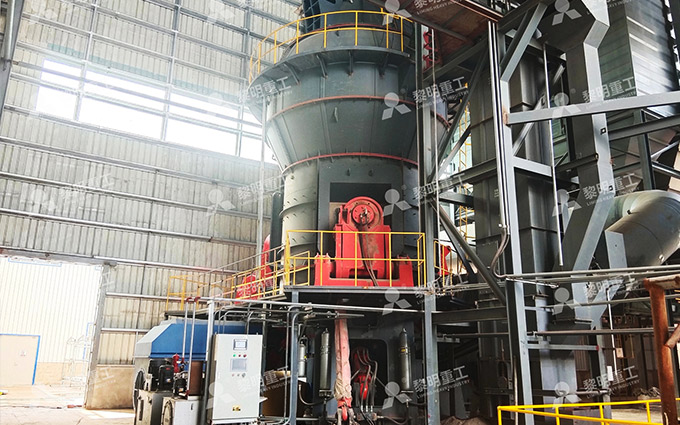
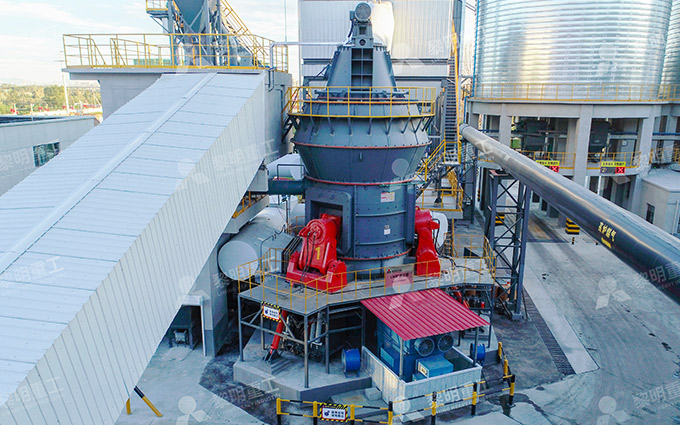
| Vertical roller mill | Large-scale fine grinding with drying integration | High throughput and compact process arrangement | Requires careful process control and suitable feed characteristics |
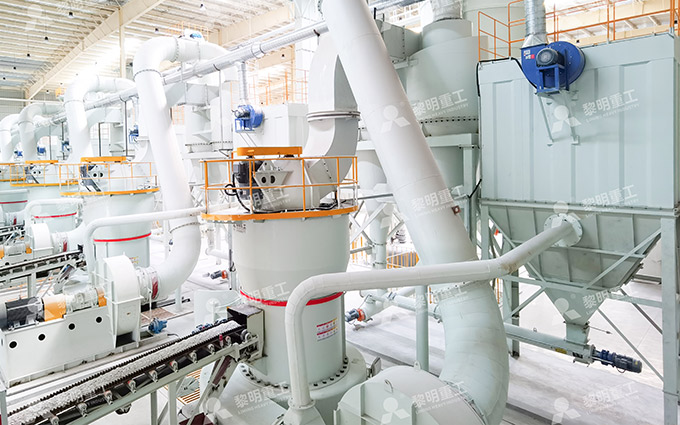
| Ball mill plus air classifier | Fine and ultrafine GCC | Flexible fineness control and proven closed-circuit operation | Requires classifier optimization, grinding-media management, and more complex airflow control |
| Ring roller or ultrafine mill | Fine to ultrafine dry GCC | Compact system for high fineness and specialized grades | Feed quality and moisture must be tightly controlled |
| Wet stirred mill | Fine or ultrafine calcite slurry | Strong fine-grinding capability and suitable for slurry markets | Needs water management, dispersants, slurry handling, and potentially later drying |
Published process guidance lists dry routes such as Raymond mills, vertical mills, ultrafine vertical mills, and ball mills with classifiers, as well as wet grinding routes for calcium carbonate production. In closed-circuit systems, qualified fine product is separated while oversize is returned for regrinding.
4. Grind in a Closed Circuit
For fine GCC, the mill and classifier should work as one system. Calcite is fed at a controlled rate, ground until particles are small enough to be carried by process air, and then sent to a classifier. The classifier releases the fine fraction and returns coarse particles to the mill.
This arrangement avoids two costly problems:
Under-grinding: Too many coarse particles remain in the product, causing high sieve residue, rough surfaces, visible specks, poor gloss, or weak dispersion.
Over-grinding: Excess ultrafines are created, increasing energy consumption and potentially changing bulk density, surface area, oil absorption, coating demand, rheology, and powder flow.
In a typical ball-mill-classifier system, calcite is ground with media in the mill and conveyed to an ultrafine air classifier. The classifier selects qualified fine powder and returns oversized particles to the mill for additional grinding.
Grinding parameters to monitor
Calcite feed rate and feed-size distribution
Feed moisture and drying-air temperature
Mill power draw, vibration, bearing temperature, and throughput
Grinding-media load, size distribution, and wear condition in ball mills
Roller pressure, table speed, and airflow in vertical or pendulum mills
Process airflow, pressure drop, and powder temperature
Classifier rotor speed, secondary air, and circulating load
Product D10, D50, D97, and coarse residue
A process change should be validated by both production data and laboratory results. Increasing classifier speed, for example, may produce a finer powder, but it can also reduce yield, raise circulating load, increase energy per tonne, or move the distribution away from a customer’s optimum formulation range.
5. Use Air Classification to Control Fineness
Air classification is the principal tool for controlling fine calcite powder. It separates particles according to their aerodynamic behavior: finer particles are carried with the airflow to product collection, while larger or heavier particles are rejected and returned for regrinding.
In GCC production, the classifier directly affects final fineness, particle-size distribution, capacity, and energy efficiency. It is the equipment link between grinding and finished-product quality.
Common particle-size language
| Term | Meaning | Why it matters |
|---|---|---|
| D10 | Particle diameter below which 10% of the measured particle volume lies | Indicates the fine end of the distribution |
| D50 | Median particle diameter | Common way to describe nominal product fineness |
| D97 | Particle diameter below which 97% of the measured particle volume lies | Shows control of the coarse tail and is often critical for smoothness and dispersion |
| Screen residue | Material retained on a specified sieve | Useful for coarser grades and for monitoring oversized particles |
| Mesh | Screen opening-based classification language | Useful as a broad commercial reference but insufficient by itself for fine GCC specifications |
Do not purchase or sell fine calcite powder solely as “400 mesh,” “800 mesh,” or “1250 mesh.” Specify the test method, target D50, D97, coarse residue, and acceptable tolerance. This is particularly important for coated GCC used in polymers, where coarse particles and unstable distribution can affect extrusion, surface finish, mechanical properties, and dispersion.
6. Collect, Coat, and Package the Powder
After classification, fine calcite powder is recovered from process air using cyclones, bag filters, cartridge collectors, or a combination of collection devices. The product is transferred through sealed screw conveyors, rotary valves, bucket elevators, or pneumatic conveying systems to storage silos.
For many PVC, plastic, rubber, adhesive, and sealant applications, GCC is surface-treated after grinding. Stearic acid is commonly used to make calcite particles more hydrophobic and improve their compatibility with non-polar polymer systems.
| Finished calcite product | Typical applications | Final processing emphasis |
|---|---|---|
| Coarse uncoated powder | Wall putty, mortar, tile adhesive, terrazzo, construction compounds | Fineness, moisture, powder flow, economical production |
| Fine uncoated GCC | Paints, paper, coatings, selected rubber and industrial fillers | Whiteness, low grit, PSD, oil absorption, dispersion |
| Fine coated GCC | PVC pipe and profile, masterbatch, cable compounds, rubber, sealants, adhesives | Particle size, stearic-acid treatment, hydrophobicity, low moisture, stable bulk density |
| Wet-ground calcite slurry | Paper filler, paper coating, water-based paint, specialty coatings | Fine PSD, solids content, viscosity, dispersant control, slurry stability |
Keep finished powder isolated from moisture, steel contamination, and cross-grade mixing. Fine calcite powder can absorb moisture, compact in storage, and form soft agglomerates. Silo design, filter condition, transfer temperature, packaging material, and warehouse humidity all affect the powder that reaches the customer.
Typical Quality Tests
Quality control should confirm that the calcite powder meets chemical, physical, and application-specific requirements. Test at incoming feed, after milling, after coating where applicable, and at final dispatch.
CaCO3, CaO, MgO, SiO2, Fe2O3, and acid-insoluble residue
XRD mineralogy when a deposit, bench, or incoming supplier changes
Particle-size distribution: D10, D50, D97, top cut, and sieve residue
Whiteness, brightness, Lab* color values, and dark-speck count
Moisture, bulk density, tapped density, and powder flowability
Specific surface area and oil absorption for paints, coatings, rubber, sealants, and related products
Coating degree, activation rate, or hydrophobicity for treated GCC
Slurry solids, viscosity, pH, and sedimentation stability for wet-ground material
Common Calcite Grinding Problems
| Problem | Likely cause | Corrective action |
|---|---|---|
| Low mill capacity | High moisture, oversized feed, incorrect mill settings, worn grinding parts, high silica contamination | Stabilize and dry feed, optimize crushing, inspect mill internals, control abrasive impurities |
| High coarse residue | Insufficient grinding, low classifier speed, excessive feed rate, unstable airflow | Optimize mill load and classifier settings, stabilize feed rate, check airflow and internal wear |
| Too many ultrafines | Over-grinding, excessive classifier speed, inefficient recirculation control | Adjust classifier cut, reduce unnecessary mill residence, review airflow and return load |
| Variable whiteness | Mixed ore zones, iron contamination, poor stockpile blending, dirty equipment | Improve selective mining, feed segregation, magnetic protection, and housekeeping |
| High equipment wear | Quartz, chert, mica, feldspar, tramp metal, unsuitable liner or media selection | Reject abrasive feed, install magnets, inspect crushers and screens, optimize wear materials |
| Poor polymer dispersion | Broad PSD, excess moisture, inadequate surface treatment, powder agglomeration | Refine classification, improve drying and storage, optimize coating, validate with compounding trials |
| Powder caking in bags or silos | High moisture, hot powder packed too early, humid storage, inadequate packaging | Cool and dry product before packing, improve silo aeration, protect warehouse conditions |
Key Takeaway
Grinding calcite into powder is a controlled GCC production process, not simply crushing rock. Start with clean, consistent calcite; reduce it to a stable feed size; manage moisture; grind in a closed circuit; use air classification to control the particle-size distribution; and apply surface treatment when polymer compatibility requires it.
The best calcite powder line is designed backward from the customer specification. Define the required CaCO3 purity, whiteness, MgO limit, particle-size distribution, moisture, coating level, and end-use performance first—then select the quarry controls, crushing circuit, mill, classifier, and quality-control plan needed to produce that grade consistently.