Calcium Carbonate Knowledge Hub
How to Make Calcium Carbonate Powder From Limestone
2026-09-04 16:20:01
We are Liming Heavy Industry, a manufacturer of various types of industrial crushers, such as Raymond Mill, Trapezoidal Mill, Vertical Mill, Ultrafine Mill, Ball Mill, etc.
Our mills can process the following minerals:
limestone, quicklime, kaolin, talc, barite, bentonite, calcium carbonate, dolomite, coal, gypsum, clay, carbon black, slag, cement raw materials, cement clinker, etc.
If you need a mill to process stone or minerals into powder, please feel free to contact me (WhatsApp: +8615333807511). Thank you.
Calcium carbonate powder is made from limestone by mechanically converting selected carbonate rock into a controlled powder. In a typical ground calcium carbonate (GCC) plant, limestone is quarried, sorted, crushed, dried when necessary, milled, air-classified, collected, and packed. For coated grades, the finished powder is additionally treated with a surface modifier—commonly stearic acid—before final storage or packaging.
The essential production principle is simple: high-quality limestone becomes calcium carbonate powder through size reduction and particle separation, not through chemical precipitation. The real challenge is controlling raw-material quality, particle-size distribution, whiteness, moisture, contamination, and coating performance so the powder meets requirements for PVC, plastics, rubber, paper, paints, coatings, adhesives, and sealants. GCC is formed directly by grinding limestone rock into powder, while PCC is chemically produced and precipitated.
Calcium Carbonate Powder Production Flow
A dry GCC production line normally follows this sequence:
Limestone quarrying → crushing → conveying and storage → drying if needed → grinding → air classification → powder collection → optional coating → storage and packing
The exact equipment arrangement changes with the feed moisture, required fineness, plant capacity, target application, and whether the final product is uncoated powder, coated powder, or a calcium carbonate slurry. A commonly described dry process consists of raw limestone feeding, crushing, grinding, classification, dust collection, storage, and packing.
1. Select and Prepare the Limestone
Production starts with the right limestone. For industrial calcium carbonate powder, producers generally prefer calcite-rich limestone with high CaCO3 content, low magnesium, low silica and clay, low iron contamination, and stable whiteness. These properties affect not only product quality but also plant operating cost.
For example, a limestone containing hard quartz or chert particles may still have acceptable average CaCO3 content, but it can increase wear on crushers, mill liners, grinding media, classifiers, and conveying equipment. A limestone with iron staining can produce powder with lower whiteness, making it less suitable for white PVC pipe, profile, masterbatch, decorative coatings, or paper products.
Raw-material checks before processing
CaCO3 content or CaO content
MgO level, which can indicate dolomite content
SiO2, Al2O3, Fe2O3, sulfur, and acid-insoluble residue
Whiteness, brightness, and color consistency
Moisture content and seasonal moisture variation
Hardness, grindability, and abrasive-mineral content
Mineralogy, commonly confirmed with X-ray diffraction analysis
Quarry management matters as much as laboratory chemistry. Limestone quality can vary between benches, layers, weathered zones, and mining faces. Selective mining and controlled stockpile blending help stabilize the feed delivered to the crushing and grinding plant.
2. Crush the Limestone
Run-of-quarry limestone is too large and irregular for fine grinding. The first processing stage reduces blasted rock to a manageable and consistent feed size for the mill.
Primary crushing commonly uses a jaw crusher, gyratory crusher, or heavy-duty hammer crusher. Secondary crushing may use an impact crusher, hammer crusher, cone crusher, or another suitable reduction machine. The objective is to create a stable, narrow feed-size range rather than merely to make the stone smaller.
| Stage | Typical purpose | Important control point |
|---|---|---|
| Primary crushing | Reduce large quarry rock to plant-handling size | Avoid overloads and remove obvious waste rock where possible |
| Secondary crushing | Produce a mill-ready limestone feed | Maintain stable top size for consistent grinding performance |
| Screening | Control oversize and recirculate material if needed | Prevent oversized stone from reaching the mill |
| Magnetic separation | Remove tramp iron from mining and crushing operations | Protect downstream equipment and avoid powder contamination |
Two-stage crushing is common in GCC production. Equipment suppliers describe a first-stage jaw crusher followed by hammer or impact crushing as a typical arrangement for converting carbonate ore into grinding feed.
During crushing, processors should also control dust, remove metal contamination, and prevent mixing between limestone grades. A premium high-whiteness limestone feed should not be handled through dirty transfer points or stockpiles previously used for low-grade, iron-stained, or highly siliceous stone.
3. Dry the Feed When Necessary
Dry grinding requires controlled moisture. Excess moisture can cause limestone to stick in bins and chutes, reduce mill throughput, impair air classification, increase energy consumption, and create unstable product moisture. Whether drying is needed depends on the quarry, climate, stockpile conditions, washing practices, and selected milling technology.
Dryers may be positioned before the grinding mill or integrated into an air-swept milling system. Hot gas can remove moisture while carrying fine particles toward the classifier and dust-collection system. The drying temperature and residence time must be controlled so the material is dried effectively without unnecessary energy consumption or product contamination.
For many dry GCC lines, the target is not “zero moisture.” The practical goal is consistent low moisture suitable for pneumatic conveying, efficient grinding, accurate classification, reliable bagging, and stable performance in the customer’s formulation.
4. Grind Limestone Into Fine Powder
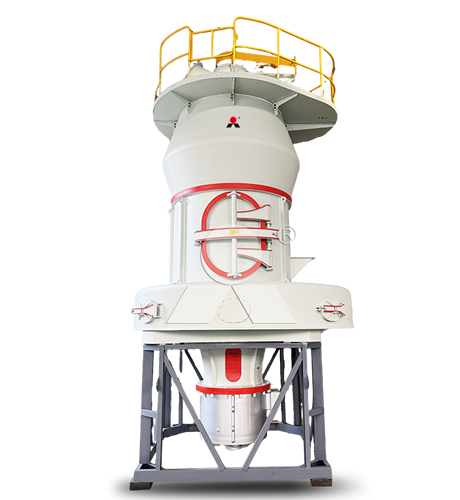
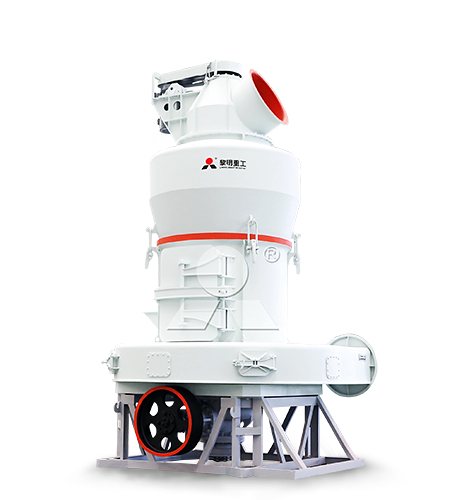
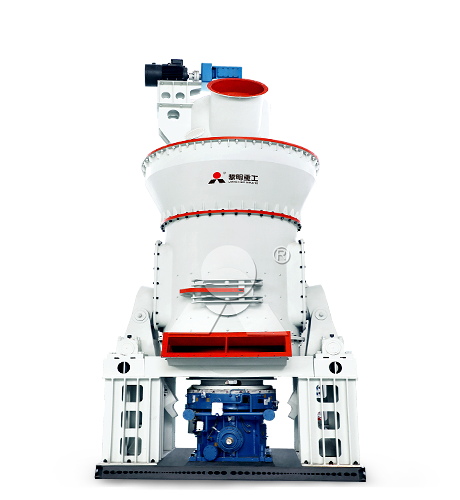
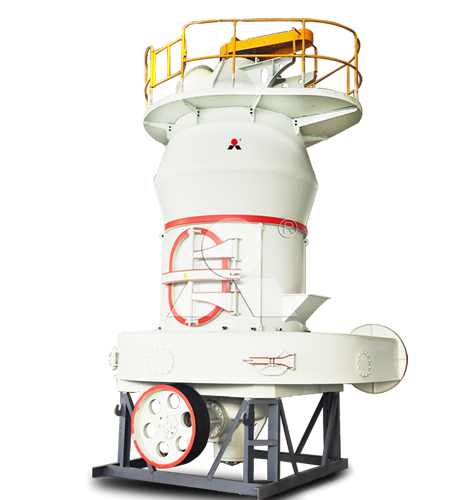
Grinding is the core operation in calcium carbonate powder manufacturing. Crushed limestone is reduced from mill feed into the required micron-level powder. The selected mill depends primarily on target fineness, production capacity, power cost, feed moisture, abrasion level, and particle-size-distribution requirements.
Common grinding equipment
| Grinding system | Best suited for | Typical production advantage |
|---|---|---|
| Raymond or pendulum mill | Conventional fine GCC grades | Established dry-grinding route for standard industrial powder |
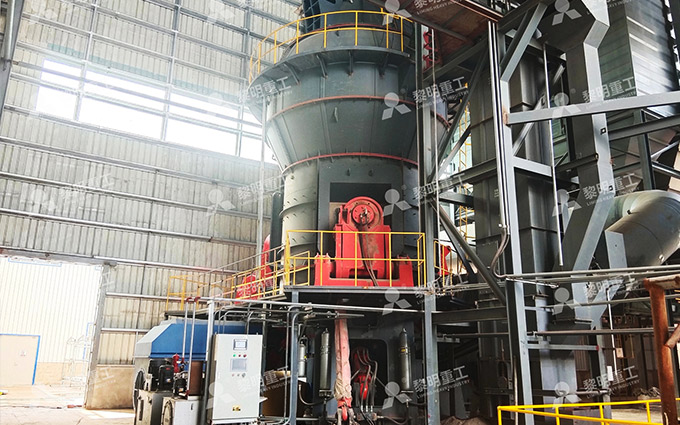
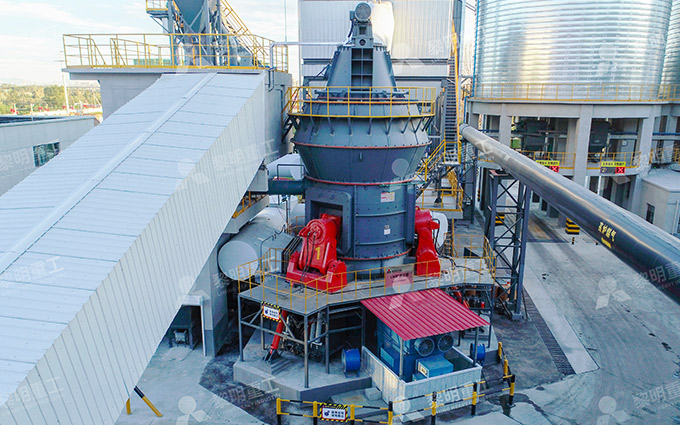
| Vertical roller mill | Large-scale fine grinding with integrated drying | Compact process flow and high-capacity operation |
| Ball mill with air classifier | Fine and ultrafine GCC production | Flexible control of product fineness and broad industrial adoption |
| Ring roller or ultrafine mill | Fine to ultrafine dry powder | High fineness capability in a compact processing arrangement |
| Wet grinding mill | Fine and ultrafine slurry grades | Suitable for slurry products and applications requiring close fine-particle control |
A mill does not independently determine the final product grade. Feed size, mill speed, grinding media or roller pressure, airflow, separator settings, feed rate, moisture, and recycle load all influence powder fineness. Stable production requires operators to control these variables as a system.
Air-classifying mills can combine grinding and particle separation in one unit. Supplier guidance for calcium carbonate notes that internal air classifiers can produce products ranging from approximately 100 mesh to 635 mesh (about 20 µm), with some ultrafine configurations achieving a D50 below 5 µm.
5. Classify the Powder by Particle Size
Grinding creates particles across a wide size range. Air classification separates the finished fine fraction from coarse particles that need additional grinding. This step is essential because customers purchase calcium carbonate not only by chemical purity but also by particle-size distribution.
In a closed-circuit system, the classifier sends acceptable fine powder to collection, while coarse particles return to the mill. This repeated loop continues until particles satisfy the specified cut point. Classification is therefore what converts a broadly ground material into a commercial grade with controlled D50, D97, residue, and top-cut characteristics.
Why particle-size control matters
Coarser GCC grades can be used where cost efficiency and bulk filling are the main priorities.
Fine grades can improve surface smoothness, dispersion, and physical properties in polymer, rubber, and coating formulations.
Ultrafine grades provide higher surface area and may be selected for demanding coatings, sealants, paper, plastics, and specialty compound applications.
A narrow particle-size distribution can improve consistency, while a deliberately broader distribution may be preferred for certain packing, rheology, or formulation requirements.
Oversized particles can cause surface defects, poor gloss, visible specks, screen-blocking issues, or weak points in finished products.
Particle-size specifications are commonly expressed by mesh, median size D50, fine cut D97, or residue on a defined screen. A customer asking for “800 mesh” is not necessarily defining the same product as a customer asking for a specific D50 and D97; the analytical method and complete size-distribution requirement should always be confirmed.
6. Collect, Deagglomerate, and Store the Powder
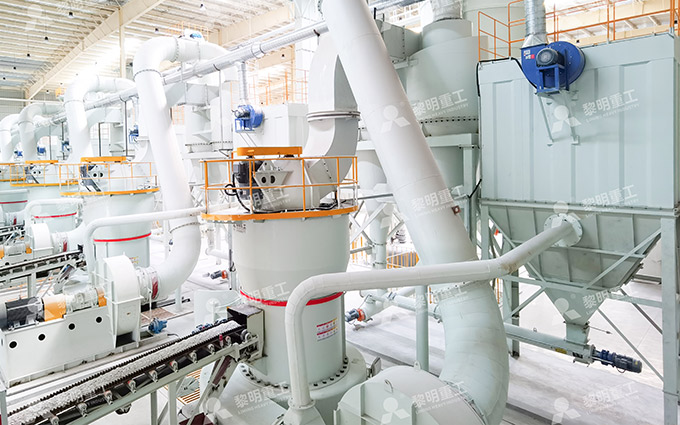
After classification, the fine calcium carbonate powder is separated from process air through cyclones, bag filters, cartridge filters, or other dust-collection equipment. The collected powder is transferred to silos, bins, or finished-product hoppers.
At this stage, plant design must protect powder quality. Calcium carbonate is a fine mineral powder, so uncontrolled transfer can create dust loss, moisture pickup, cross-contamination, segregation, and compaction. Properly designed pneumatic conveying, dust filters, rotary valves, screw conveyors, and storage systems help maintain stable product quality.
Deagglomeration or screening may be used before packaging, especially for fine grades that can form soft agglomerates during storage or conveying. The objective is to deliver a free-flowing powder that disperses predictably in the customer’s process.
7. Coat the Calcium Carbonate When Required
Uncoated calcium carbonate works well in many applications, but polymer, rubber, adhesive, and sealant manufacturers often require coated GCC. The most common treatment uses stearic acid, though the appropriate surface modifier depends on the resin system, filler loading, target viscosity, mechanical-property requirements, and processing conditions.
The coating process is usually performed using heated mixers, coating machines, or milling systems designed to distribute the modifier over the calcium carbonate particle surface. The coating must be controlled carefully. Too little treatment may lead to poor compatibility and high moisture sensitivity; excessive treatment can increase cost and alter powder flow, formulation behavior, or downstream processing.
| Product type | Typical use | Primary manufacturing emphasis |
|---|---|---|
| Uncoated GCC | Paper, paint, construction products, selected rubber and industrial applications | Purity, whiteness, particle size, residue, and stable powder handling |
| Stearic-acid-coated GCC | PVC, polyolefins, masterbatch, cable compounds, rubber, sealants | Hydrophobicity, polymer compatibility, dispersion, and controlled coating level |
| Fine or ultrafine GCC slurry | Paper coating, paints, specialty coatings | Fine particle-size distribution, solids content, viscosity, and slurry stability |
8. Test Before Packaging
Final quality control confirms that the powder meets its product specification. Testing should be linked to the intended market rather than limited to a single “standard” analysis. A calcium carbonate grade for PVC compound may need different controls from a grade for paper coating or water-based paint.
Typical finished-powder tests
Calcium carbonate content, CaO, MgO, and acid-insoluble residue
Particle-size distribution, including D10, D50, D97, top cut, and screen residue
Whiteness, brightness, and color coordinates
Moisture content
Bulk density and tapped density
Specific surface area, where relevant
Oil absorption for coatings, rubber, sealants, and related uses
Coating degree, hydrophobicity, or activation rate for treated GCC
Heavy metals and other regulatory parameters where required by the target market
Production sampling should cover the full process: limestone feed, crushed stone, mill discharge, classifier product, coated powder, silo material, and packed product. Testing only the final bag may identify a problem after large volumes have already been produced.
Dry Grinding vs Wet Grinding
Dry grinding is widely used for bagged and bulk calcium carbonate powder. It is generally the direct route for GCC supplied to plastics, PVC, rubber, sealants, adhesives, dry construction products, and many coating applications.
Wet grinding is commonly used when the product is supplied as slurry or when a very fine particle size and carefully controlled distribution are required. The process includes water, dispersants where appropriate, grinding media, slurry classification, and solids-content control. The slurry may be sold directly or dried and further processed into powder.
| Factor | Dry GCC process | Wet GCC process |
|---|---|---|
| Final form | Powder, usually stored in silos or packed in bags, big bags, or bulk tankers | Slurry, or powder after a later drying step |
| Typical markets | Plastics, PVC, rubber, sealants, adhesives, construction products | Paper, paints, coatings, and selected specialty applications |
| Key control issue | Moisture, air classification, dust control, and coating performance | Particle size, slurry viscosity, solids content, dispersion, and storage stability |
| Logistics | Efficient for dry bulk and packaged sales | Requires slurry tanks or tank-truck infrastructure and may be less economical over long distances |
Common Production Problems
Most calcium carbonate powder quality issues can be traced to one of four areas: unstable limestone feed, insufficient moisture control, poor grinding-classification balance, or inadequate contamination management.
Low or inconsistent whiteness: Check quarry blending, iron contamination, clay seams, weathered limestone, dirty handling equipment, and cross-contamination between grades.
High coarse residue: Review classifier speed, airflow, separator efficiency, mill loading, grinding-media condition, and feed-size consistency.
Excessive mill wear: Investigate silica, chert, quartz, metal contamination, unsuitable liner material, and excessive feed top size.
High moisture in finished powder: Check raw-feed moisture, dryer performance, air leakage, storage conditions, and dust-collector operation.
Poor coating performance: Verify powder temperature, stearic-acid dosage, mixing intensity, surface area, treatment residence time, and coating-agent quality.
Unstable bulk density or poor flow: Review particle-size distribution, agglomeration, storage time, powder temperature, moisture pickup, and conveying conditions.
Key Takeaway
Making calcium carbonate powder from limestone is a controlled mineral-processing operation. The standard route is quarrying, selective feed preparation, crushing, drying when needed, fine grinding, air classification, powder collection, optional surface treatment, and quality-controlled packing.
The final GCC grade is defined by more than fineness. The limestone’s chemistry and mineralogy, powder whiteness, moisture, particle-size distribution, impurity level, coating quality, and batch consistency all determine whether the product is suitable for high-volume PVC, plastics, paper, paint, rubber, adhesive, or sealant applications.