Calcium Carbonate Knowledge Hub
Marble for Calcium Carbonate Production
2026-09-04 16:20:53
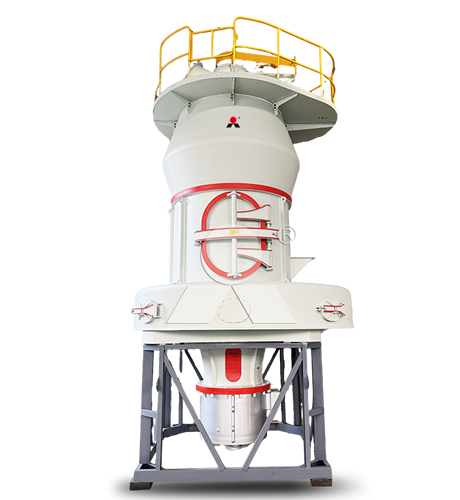
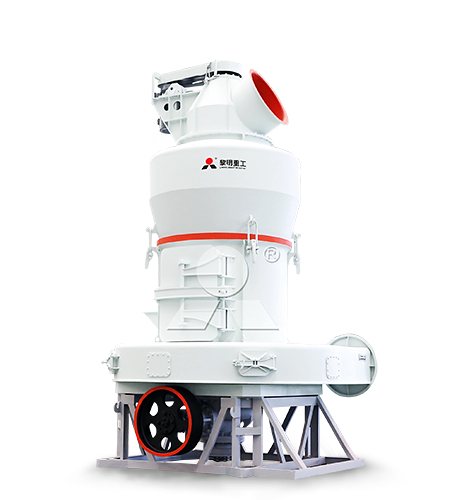
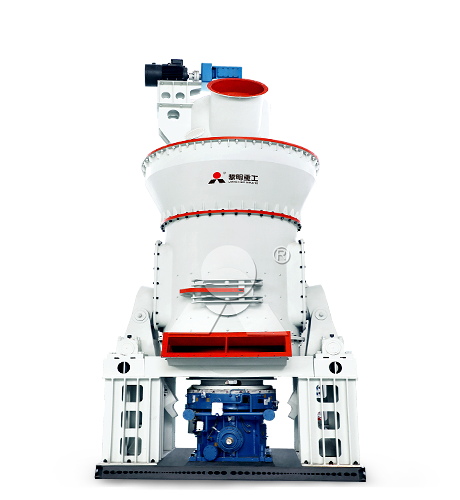
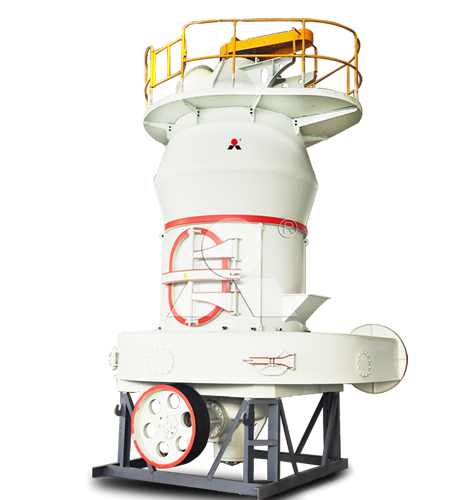
We are Liming Heavy Industry, a manufacturer of various types of industrial crushers, such as Raymond Mill, Trapezoidal Mill, Vertical Mill, Ultrafine Mill, Ball Mill, etc.
Our mills can process the following minerals:
limestone, quicklime, kaolin, talc, barite, bentonite, calcium carbonate, dolomite, coal, gypsum, clay, carbon black, slag, cement raw materials, cement clinker, etc.
If you need a mill to process stone or minerals into powder, please feel free to contact me (WhatsApp: +8615333807511). Thank you.
Marble can be an excellent raw material for calcium carbonate production because many marble deposits are composed predominantly of recrystallized calcite and can offer high purity, high whiteness, and stable mineral quality. When a marble source meets the required chemical, mineralogical, and optical specifications, it can be quarried and mechanically processed into ground calcium carbonate (GCC) for paper, PVC, plastics, coatings, rubber, adhesives, sealants, and other industrial applications.
Marble is not automatically superior to limestone. Its real value depends on the deposit: a white, calcite-rich marble with low silica, low iron, and low magnesium may be ideal for premium GCC, while a colored, veined, dolomitic, siliceous, or highly variable marble may be better suited to construction stone, aggregate, or other markets. In practical terms, marble for calcium carbonate production should be assessed as an industrial mineral feedstock—not simply as decorative stone.
What Marble Means for GCC Production
Marble is a metamorphic carbonate rock formed when limestone or dolostone is altered by heat, pressure, and recrystallization. In calcitic marble, the principal mineral is calcite, CaCO3. This makes calcitic marble a natural source of calcium carbonate. During metamorphism, the original limestone texture may recrystallize into interlocking calcite crystals, often creating a dense, crystalline and visually uniform stone.
For GCC production, marble follows the same basic commercial route as other natural calcium carbonate feedstocks: mining or quarrying, crushing, grinding, classification, optional surface treatment, and packing or slurry preparation. GCC is mechanically produced from natural carbonate materials such as limestone, marble, chalk, or calcite rather than being created through precipitation chemistry. Commercial sources specifically identify marble as a raw material for high-purity, ultrafine, high-brightness GCC.
The difference lies in the raw material. Marble can offer a high-quality starting point where the deposit contains clean, bright, calcite-rich stone. It may also be produced as a by-product or co-product of dimension-stone quarrying, creating an opportunity to convert suitable offcuts, blocks, chips, sawing residues, and non-dimensional material into industrial mineral products.
Why Marble Can Be Valuable
The strongest reason to use marble for calcium carbonate powder is its potential for purity and brightness. Certain marble bodies are very white, chemically consistent, and dominated by calcite. These characteristics are valuable in end uses where calcium carbonate contributes to color, opacity, surface appearance, particle packing, and cost-efficient filler loading.
| Marble characteristic | Potential advantage for GCC | Why it matters to customers |
|---|---|---|
| High calcite content | High CaCO3 purity and low non-carbonate residue | Supports high-calcium product specifications and more consistent formulation behavior |
| High natural whiteness | Bright finished powder after grinding | Important for white PVC, masterbatch, coatings, paper, sealants, and decorative products |
| Low iron content | Lower risk of yellow, gray, brown, or reddish coloration | Helps preserve optical quality in white or light-colored formulations |
| Dense crystalline texture | Potentially stable milling and handling behavior | Can support consistent powder production when feed quality is well controlled |
| Dimension-stone quarry by-products | Possible additional feed source for GCC | Can improve resource utilization if the material meets industrial mineral quality standards |
A practical example comes from Finland, where Nordkalk reports producing calcite for GCC from local marble described as extremely white and stable in quality. Its process includes wet grinding the limestone or marble-derived material into slurry and separating concentrated calcite by flotation before further use in GCC production.
Marble vs Limestone as a Feedstock
Marble and limestone can both be suitable for ground calcium carbonate production because both may be dominated by calcite. The choice should be based on measurable performance, not the rock name. A high-purity limestone may outperform an impure marble, while a clean white marble may provide advantages over limestone for premium applications.
| Factor | Calcitic marble | High-calcium limestone |
|---|---|---|
| Geological origin | Metamorphic rock formed from recrystallized carbonate material | Sedimentary carbonate rock formed through chemical, biological, or detrital processes |
| Main mineral | Often calcite; may also contain dolomite depending on source | Often calcite; may contain dolomite, clay, silica, fossils, chert, or other impurities |
| Whiteness potential | Can be very high in clean white deposits | Ranges widely from very white to gray, cream, buff, or dark material |
| Texture | Crystalline, interlocking calcite grains | May be fine-grained, fossiliferous, chalky, crystalline, or variable by sedimentary layer |
| Impurity pattern | May contain mica, quartz, graphite, pyrite, silicates, iron staining, or dolomite | May contain clay, chert, quartz, organic matter, iron minerals, and dolomite |
| Typical GCC opportunity | Premium bright and high-purity powder when the deposit is clean and consistent | Large-volume standard to premium GCC, depending on quarry quality and processing capability |
The important point is that “marble” does not define a finished calcium carbonate grade. A marble deposit must still be evaluated for CaCO3, MgO, SiO2, Fe2O3, acid-insoluble residue, whiteness, brightness, moisture, mineralogy, particle-size response, and long-term quarry consistency.
Key Quality Requirements
For industrial GCC, the ideal marble source is calcitic, bright, low in abrasive impurities, and consistent over the planned mine life. The required limits depend on the market. A general-purpose filler can tolerate a different raw-material profile from an ultrafine coated GCC used in rigid PVC profile, high-opacity coatings, film, or high-brightness paper products.
Calcium carbonate purity
The central quality parameter is calcium carbonate content. High-purity calcitic marble can contain a very high proportion of CaCO3, allowing producers to market high-calcium GCC with low non-carbonate residue. Published work evaluating marble for industrial use has cited a calcium carbonate content above 96 wt% together with low silica as a suitability criterion, although product specifications should always be set according to the target application and customer requirements.
CaCO3 is normally measured directly or calculated from chemical analysis. CaO is also widely used as a process-control indicator because pure calcium carbonate contains about 56.0% CaO on a theoretical basis. A high CaO result alone is not sufficient, however; mineralogical testing is needed to confirm that the calcium occurs primarily as calcite rather than in mixed carbonate or silicate phases.
Magnesium and dolomite
Some marble is calcitic, while other marble is dolomitic. Dolomitic marble contains significant dolomite, CaMg(CO3)2, and therefore has higher MgO. It can still be a useful industrial mineral, but it is not the same as high-calcium marble.
Low MgO is generally preferred where buyers require high-purity calcium carbonate, stable calcium content, or a low-magnesium formulation. A producer should not assume that a white marble is calcitic. Chemical analysis and X-ray diffraction should confirm the calcite-to-dolomite balance before the source is approved for GCC production.
Whiteness, brightness, and color
White marble is attractive because finished GCC color starts with the raw stone. Fine grinding cannot remove yellow, gray, green, black, brown, or reddish mineral inclusions. It can make their visual effect more apparent by exposing more particle surface area.
Color is affected by iron oxides, manganese minerals, graphite, sulfides, clay, silicate bands, weathered fractures, organic material, and other inclusions. Decorative marble can contain visually interesting veins that increase its architectural value but reduce its suitability for homogeneous white calcium carbonate powder.
Silica and hard-mineral contamination
Quartz, chert, feldspar, mica, and other silicate minerals are important because they can increase abrasion and reduce carbonate purity. Marble may contain silicate-rich bands, metamorphic accessory minerals, or contact-zone contamination. These materials can cause high wear in crushers and grinding mills, increase acid-insoluble residue, and produce grit in fine powder products.
For paper, coatings, premium plastics, and finely finished sealants, low grit is essential. A chemically acceptable marble may still require beneficiation, selective quarrying, optical sorting, or rejection of silicate-rich zones to meet quality targets.
From Marble Quarry to GCC Powder
Marble is processed into GCC using the same broad mineral-processing sequence used for limestone, but the quarry plan and feed preparation strategy must reflect the marble body’s structure, veining, fractures, color zones, and coexistence with dimension-stone production.
1. Geological mapping and selective quarrying
Marble deposits should be mapped by lithology, color, calcite-dolomite ratio, impurity bands, weathering zones, structural features, and expected chemical quality. Where the operation also produces decorative blocks or slabs, mining plans should distinguish between dimension-stone material and industrial-mineral feed.
Non-dimensional blocks, irregular stone, undersized material, offcuts, and selected waste can become GCC feed only after quality verification. It is a mistake to assume that every marble quarry by-product is automatically suitable for calcium carbonate powder. Sawing residues may include metal particles, cutting-tool contamination, process water contaminants, or mixed stone types that require separate management.
2. Crushing and contamination control
Approved marble feed is crushed to a controlled size suitable for grinding. Jaw crushers, hammer crushers, impact crushers, or cone crushers may be selected according to feed size, hardness, capacity, and desired product flow.
Contamination control is particularly important when the target is high-brightness GCC. Magnets should remove tramp iron. Transfer points, hoppers, conveyors, and stockpiles should be cleaned between grades. Equipment that has handled darker limestone, recycled aggregate, metal-bearing material, or contaminated waste should not be used for premium white marble feed without appropriate cleaning and segregation.
3. Grinding and air classification
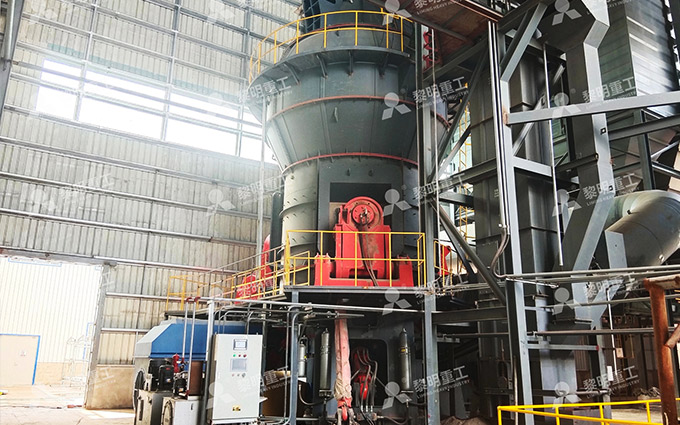
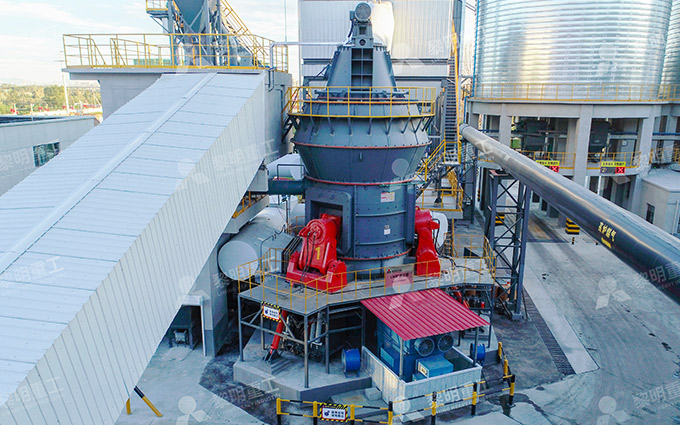
After crushing and moisture control, marble is milled into GCC. Depending on the final grade, producers may use pendulum mills, vertical roller mills, ball mills with air classifiers, ultrafine mills, or wet grinding systems. Air classification separates acceptable fine powder from coarse particles returned for additional milling.
The grinding system must be selected around product requirements rather than only throughput. A standard filler grade may require economical coarse-to-fine grinding, while a premium coating or polymer grade may require a narrow particle-size distribution, low coarse residue, low contamination, and highly stable D50 and D97 values.
4. Flotation or beneficiation where needed
Some marble resources require beneficiation before they can become high-quality GCC. Flotation can be used to separate carbonate minerals from undesirable minerals or to upgrade calcite concentration. In the Nordkalk example, local white marble is wet-ground into slurry and concentrated calcite is separated by flotation.
Beneficiation can expand the usable resource, but it adds capital cost, operating complexity, water management requirements, tailings handling, and quality-control demands. If a naturally clean marble deposit is available, a simpler dry or wet grinding route may be economically preferable.
5. Surface treatment and packaging
After milling and classification, the marble-derived GCC can be sold uncoated or coated. Uncoated grades are common in paper, paints, construction products, and some rubber applications. Coated grades are widely used in PVC, polyolefin compounds, masterbatch, cable compounds, sealants, and adhesives.
Stearic acid is a common surface-treatment agent for GCC. It reduces the hydrophilic character of the calcium carbonate surface and improves compatibility with many non-polar polymer systems. The treatment should be optimized for the specific particle size, surface area, resin, filler loading, and downstream processing method.
Applications for Marble-Derived GCC
Marble-derived calcium carbonate is selected when its purity, whiteness, and particle-size characteristics fit the product design. It competes with limestone-derived GCC, calcite powder, PCC, talc, kaolin, silica, and other industrial fillers depending on the application.
| Application | Why marble-derived GCC may be selected | Most important raw-material controls |
|---|---|---|
| Rigid PVC profile, pipe, and fittings | High whiteness and high-calcium content can support light-colored PVC formulations | Whiteness, MgO, particle size, coating quality, moisture, and dark-speck control |
| Masterbatch and polyolefin compounds | Fine coated GCC can provide economical filler loading and controlled dispersion | Particle-size distribution, hydrophobicity, surface treatment, and low moisture |
| Paints and architectural coatings | Bright fine GCC can contribute to opacity, film structure, and cost control | Whiteness, particle shape, oil absorption, coarse residue, and dispersion behavior |
| Paper and paperboard | High-brightness calcite can support optical and surface-quality targets | Brightness, grit, particle-size distribution, slurry behavior, and low abrasive residue |
| Rubber, adhesives, and sealants | Controlled GCC grades can provide volume extension and rheology adjustment | Particle size, surface area, moisture, coating, and consistency |
| Construction chemicals | Marble powder may be a useful mineral filler in putties, fillers, mortars, and related products | Particle-size range, color, moisture, cost, and supply consistency |
Using Marble Waste Responsibly
Marble quarrying and fabrication can generate chips, fines, offcuts, and sludge. Converting suitable clean material into calcium carbonate products can improve resource efficiency and reduce the amount of stone sent to waste storage. Research on the marble industry identifies the large volume of marble scrap as a driver for circular-economy solutions, including potential use in calcium carbonate-demanding sectors such as paint.
That opportunity requires disciplined quality management. Marble waste streams should be characterized before reuse because they may contain saw-blade metal, abrasives, resins, pigments, process additives, mixed rock types, or contaminated water. Industrial GCC producers should segregate material at source, maintain traceability, test incoming feed, and define acceptance limits for chemistry, whiteness, moisture, particle contamination, and heavy metals where relevant.
How to Evaluate a Marble Source
A marble source should be qualified through representative testing and pilot processing, not by appearance alone. The following program helps determine whether marble can support a commercial calcium carbonate operation:
Map the deposit by color zone, lithology, weathering condition, veins, silicate bands, and calcitic versus dolomitic units.
Take representative samples across benches, drilling depths, production faces, and potential waste or by-product streams.
Measure CaCO3, CaO, MgO, SiO2, Al2O3, Fe2O3, sulfur, loss on ignition, and acid-insoluble residue.
Use X-ray diffraction to identify calcite, dolomite, quartz, mica, feldspar, clay minerals, sulfides, and other mineral phases.
Measure whiteness, brightness, color coordinates, dark-speck content, and color stability after milling.
Conduct pilot crushing, grinding, and air-classification tests at the intended product particle size.
For polymer markets, test coating response, activation rate, moisture resistance, dispersion, and formulation performance.
Confirm reserve consistency, quarry logistics, water and energy needs, by-product availability, and delivered cost to target markets.
Key Takeaway
Marble can be a high-value source of calcium carbonate for GCC production when it is calcite-rich, bright, low in magnesium and silicate impurities, and consistent at quarry scale. Its recrystallized texture and potential for very high whiteness make selected marble deposits particularly attractive for premium powder applications.
But marble should not be chosen because of its name or decorative appearance. The commercially relevant question is whether the deposit can repeatedly deliver the required purity, whiteness, low residue, grinding behavior, and particle-size performance at a competitive cost. When that answer is yes, marble can support high-quality GCC for PVC, plastics, paper, coatings, rubber, adhesives, sealants, and construction formulations.