Calcium Carbonate Knowledge Hub
How to Make GCC From Marble
2026-09-04 16:21:37
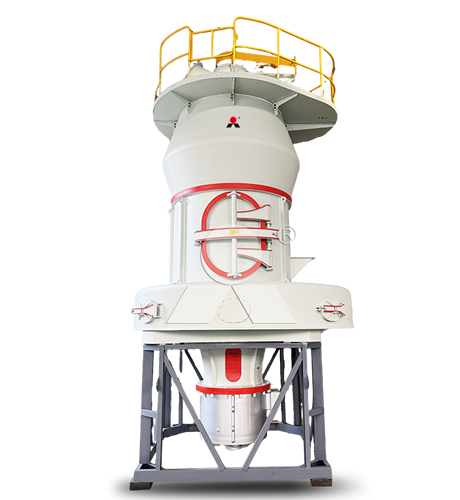
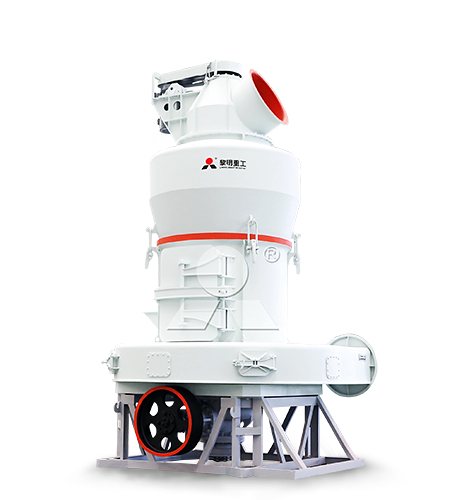
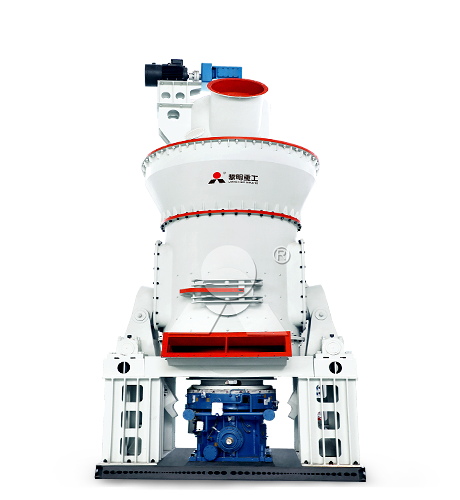
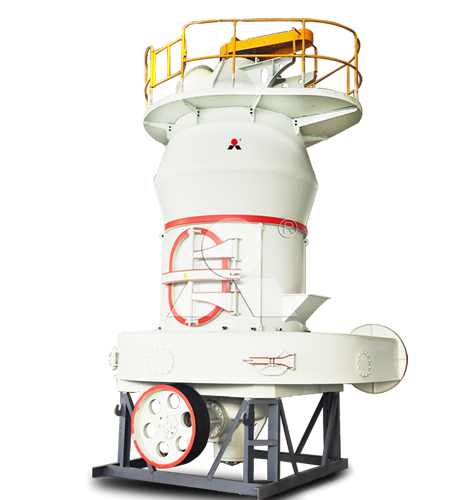
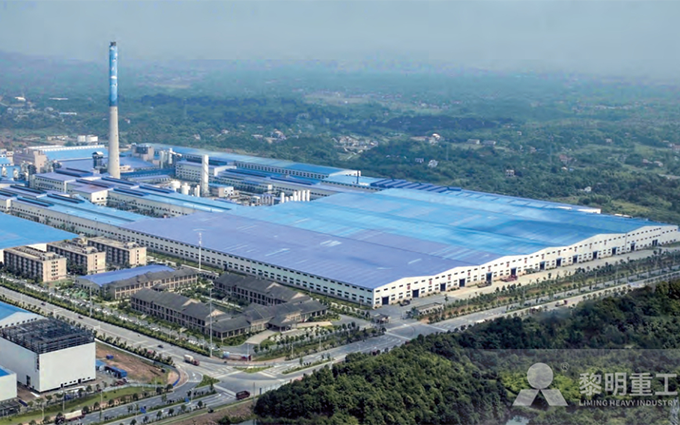
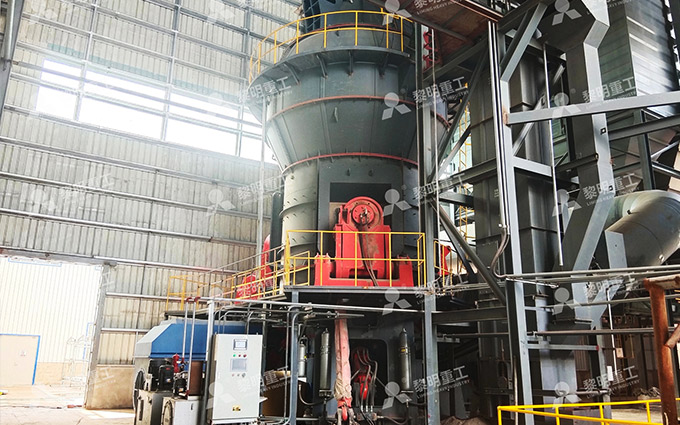
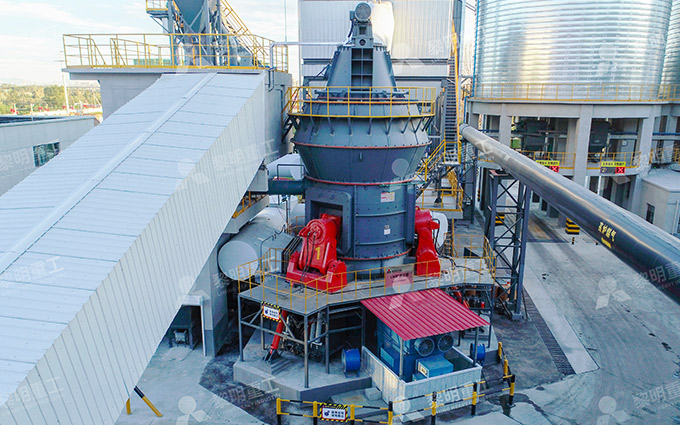
We are Liming Heavy Industry, a manufacturer of various types of industrial crushers, such as Raymond Mill, Trapezoidal Mill, Vertical Mill, Ultrafine Mill, Ball Mill, etc.
Our mills can process the following minerals:
limestone, quicklime, kaolin, talc, barite, bentonite, calcium carbonate, dolomite, coal, gypsum, clay, carbon black, slag, cement raw materials, cement clinker, etc.
If you need a mill to process stone or minerals into powder, please feel free to contact me (WhatsApp: +8615333807511). Thank you.
Ground calcium carbonate (GCC) is made from marble by mechanically processing calcite-rich marble into a precisely controlled powder or slurry. The standard route is: qualify the marble, selectively quarry and clean it, crush it, remove contaminants where necessary, dry or wet-grind it, classify the particles, optionally coat the powder, and package the finished GCC.
Marble-derived GCC remains naturally sourced calcium carbonate throughout the process. It is not calcined, converted to lime, or chemically precipitated. The process changes the marble’s particle size, particle-size distribution, surface condition, and physical form while retaining its underlying mineral identity, usually calcite. Commercial GCC production lines commonly use natural calcite, limestone, chalk, or marble and rely on crushing, milling, and classification to produce market-specific grades.
Start With the Right Marble
The quality of the finished GCC begins at the quarry. Marble is a metamorphic carbonate rock, but not every marble source is appropriate for calcium carbonate powder. Some marble is predominantly calcite and can produce bright, high-purity GCC. Other marble contains substantial dolomite, quartz, mica, graphite, iron staining, colored veins, sulfides, or silicate bands that limit its value in PVC, paper, coatings, masterbatch, sealants, and other white industrial products.
The preferred feedstock is usually calcitic marble with high CaCO3, low MgO, low acid-insoluble residue, low Fe2O3, high whiteness, and stable composition across the mineable resource. “White marble” is not by itself a sufficient specification. A white block can still contain dolomite, abrasive quartz, dark specks, or localized impurity veins that become visible or problematic after fine grinding.
| Raw-marble parameter | What to assess | Why it matters for GCC |
|---|---|---|
| CaCO3 and CaO | Overall calcium carbonate richness | Determines the usable carbonate fraction and supports high-calcium product specifications |
| MgO and dolomite content | Whether the marble is calcitic or significantly dolomitic | High MgO may be unsuitable for high-calcium GCC grades or low-magnesium customer requirements |
| SiO2 and acid-insoluble residue | Quartz, mica, feldspar, chert, and other non-carbonate minerals | Can reduce purity, create grit, and increase wear in crushers and mills |
| Fe2O3 and color | Iron minerals, staining, dark inclusions, and color variation | Controls whiteness and brightness for white plastics, paint, paper, and sealant applications |
| Moisture | Quarry, stockpile, and seasonal water content | Influences drying demand, mill throughput, pneumatic conveying, and powder storage |
| Mineralogy | Calcite, dolomite, quartz, mica, graphite, sulfides, and clay phases | Explains chemical results and indicates whether beneficiation is needed |
Before committing a marble resource to a GCC project, test representative samples from different quarry benches, drilling depths, color zones, weathered areas, and potential by-product streams. Use chemical analysis together with X-ray diffraction (XRD), whiteness testing, acid-insoluble residue testing, and pilot grinding. A single bulk sample or decorative slab does not demonstrate long-term supply consistency.
Typical GCC Process From Marble
The production flow depends on product quality and whether the final material is supplied as dry powder or slurry. A typical dry GCC route is:
Calcitic marble quarry → selective sorting → crushing → contaminant removal → drying if required → fine grinding → air classification → optional coating → quality control → silo storage and packing
A wet route may include washing, wet milling, flotation, thickening, slurry classification, and either direct slurry delivery or later drying. Nordkalk, for example, describes micronized calcium carbonate products manufactured from high-quality calcite marble by removing impurities through optical separation and foam flotation, drying the enriched calcite, and grinding it in an enclosed fine-grinding circuit.
1. Quarry, Sort, and Blend Marble Feed
Selective quarrying is the first production control. A marble body may contain high-whiteness calcitic zones alongside gray material, dolomitic zones, silicate-rich bands, stained fractures, or veined material. These zones should not automatically be mixed together.
Quarry operators map the deposit and establish grade-control rules based on chemistry, mineralogy, color, and processing performance. High-grade marble is routed to premium GCC production, while lower-grade material may be directed to coarse filler, aggregate, construction products, or another market. Controlled blending can reduce normal variation between quarry faces, but blending should not be used to hide highly contaminated material that would compromise the finished grade.
Using marble quarry by-products
Non-dimensional stone, undersized blocks, chips, and selected quarry offcuts may be valuable GCC feed. This can improve total resource utilization because decorative-stone operations may generate substantial material that cannot be sold as blocks or slabs.
However, marble by-products require separate approval. Sawing and fabrication waste may contain metal from cutting tools, abrasives, resins, pigments, mixed stone, process-water solids, or other contaminants. Clean, traceable quarry offcuts can be useful; mixed fabrication sludge should never be assumed to be suitable for high-quality GCC without testing and controlled processing.
2. Crush the Marble to Mill Feed
Quarried marble must be reduced from large blocks or rock fragments into a stable size suitable for fine grinding. The crushing circuit commonly includes a primary crusher followed by secondary crushing and screening.
| Processing stage | Typical equipment | Main objective |
|---|---|---|
| Primary crushing | Jaw crusher or heavy-duty impact crusher | Reduce quarry rock to manageable plant feed |
| Secondary crushing | Hammer crusher, impact crusher, or cone crusher | Produce a consistent size for the grinding mill |
| Screening | Vibrating screen or similar separator | Control top size and recirculate oversize material |
| Metal removal | Permanent magnet or magnetic separator | Protect mills and prevent iron contamination in the powder |
Feed-size consistency is important because an unstable crushing product affects mill capacity and particle-size control. Large oversize fragments may overload the mill, while excess fines can change feed behavior, dust loading, and classification performance.
High-brightness marble production also requires clean handling. The crushing line, hoppers, conveyors, transfer points, and stockpiles should be segregated from darker stone, recycled aggregate, iron-bearing minerals, and other contamination sources. Fine GCC does not conceal contamination; it tends to make contamination more visible in the final product.
3. Remove Impurities When Needed
Some marble deposits are clean enough to proceed directly from crushing to milling. Others need physical or wet beneficiation to remove unwanted minerals. The decision depends on the impurity type, its particle size, its distribution in the marble, the target product specification, and the economics of the process.
Optical sorting
Optical sorting can reject visibly darker, stained, veined, or non-carbonate fragments before fine grinding. This is particularly useful when unwanted material is present as discrete particles or zones that can be detected by color or optical response. Removing poor material before milling avoids wasting energy grinding contaminants into the finished powder.
Washing and screening
Washing may remove loose clay, surface dust, fine weathered material, and handling contamination. Screening can separate unwanted coarse fragments or manage particle-size preparation before wet processing. These operations are useful only when the impurity is physically separable; washing cannot remove minerals locked inside a marble crystal matrix.
Froth flotation
For deposits containing colored, silicate, or other separable impurities, wet processing can include reverse froth flotation. In this approach, impurities are floated and removed as froth while the carbonate-rich fraction is retained. Technical mineral-processing guidance notes that wet GCC processing can improve product purity by reverse froth flotation, with highly colored impurities commonly removed in the froth.
Flotation can make a lower-quality marble resource usable for certain GCC grades, but it requires water, reagents, thickening or filtration, tailings management, wastewater control, and more complex quality monitoring. It should be selected only when the upgrade in product value justifies the additional capital and operating cost.
4. Control Moisture and Choose Dry or Wet Grinding
Marble can be processed through dry grinding or wet grinding. The choice depends on target fineness, product format, impurity-removal needs, available utilities, customer logistics, and economics.
| Factor | Dry GCC route | Wet GCC route |
|---|---|---|
| Typical finished form | Dry powder for bags, big bags, bulk trucks, or silos | Calcium carbonate slurry, or powder after later drying |
| Suitable markets | PVC, plastics, masterbatch, rubber, sealants, adhesives, dry coatings, construction products | Paper, coatings, selected paint applications, and processes requiring wet beneficiation |
| Main operating controls | Feed moisture, air temperature, dust collection, classification, coating | Solids content, dispersion, viscosity, slurry stability, water quality, flotation performance |
| Advantages | Simpler dry-product logistics and no slurry water transport | Supports fine grinding, slurry supply, and impurity removal where needed |
| Key limitations | High moisture can reduce efficiency; difficult impurities may remain in the product | Requires water management and can be less economical for long-distance delivery |
In dry processing, marble is dried to a stable low moisture level if required before entering the grinding system. Excess moisture can create buildup in bins and ducts, reduce mill output, cause poor separation in air classifiers, and produce powder that performs poorly during storage and compounding.
In wet processing, crushed marble is mixed with water and, when appropriate, dispersants. It is then ground in a wet mill to make a controlled slurry. The slurry can be classified, thickened, and delivered to nearby customers, or it can be dewatered and dried before final dry milling or coating.
5. Grind Marble Into GCC
Grinding is the stage that converts marble chips or crushed stone into commercial calcium carbonate powder. The plant must be configured around the required particle-size distribution—not just the nominal mesh number.
Common dry-grinding systems include ball mills with air classifiers, vertical roller mills, pendulum mills, ring roller mills, and ultrafine mills. Ball-mill-classifier systems are widely used where flexible fine and ultrafine product control is required. In a typical arrangement, marble feed enters the mill, grinding media reduce it to fine powder, and the air classifier separates product-sized particles from the coarse fraction that returns to the mill.
Manufacturer process descriptions for marble and limestone GCC lines commonly follow this closed-circuit principle: raw material is milled, fine particles are carried to a classifier, qualified powder goes to product storage, and coarse material is returned to the mill for regrinding.
Grinding variables that control quality
Crushed marble feed size and feed-rate stability
Feed moisture and drying-air conditions
Mill type, internal configuration, and grinding-media condition
Grinding pressure, mill speed, airflow, and process temperature
Classifier rotor speed and air-volume setting
Recirculating load and coarse-return rate
Silica or hard-mineral content, which affects wear and contamination risk
Required D50, D97, top cut, and residue specification
Grinding marble too coarsely can cause rough surfaces, visible particles, poor gloss, and incomplete dispersion. Grinding it too aggressively can increase energy consumption, create excessive fines, change bulk density, raise surface area, and alter coating demand. The correct operating point is defined by the target application.
6. Air-Classify the Powder
After grinding, marble powder contains particles of many sizes. Air classification separates the target fine fraction from oversized particles. The qualified fraction becomes finished GCC; the coarse fraction is returned to the mill for additional grinding.
This step controls the powder’s particle-size distribution, which is one of the main commercial characteristics of GCC. Customers may specify median particle size, often D50; upper particle size, commonly D97 or D98; screen residue; laser-diffraction curve; or a combination of these measures.
For example, a calcium carbonate product described only as “800 mesh” is not fully specified. Two 800-mesh products can have different D50, coarse tails, surface areas, bulk densities, and performance in PVC or coatings. The producer should agree with the buyer on the analytical method and the complete particle-size requirement.
7. Coat GCC for Polymer Applications
After classification, GCC can be sold uncoated or surface-treated. Uncoated marble-derived GCC is used in many coatings, paper, construction, and industrial filler applications. Coated GCC is common in PVC, polyethylene, polypropylene, masterbatch, cable compounds, rubber, sealants, and adhesives.
Stearic acid is widely used to create a hydrophobic surface on GCC particles. Proper treatment can improve compatibility with non-polar polymer matrices, reduce moisture sensitivity, support dispersion, and help formulators achieve higher filler loadings. The process usually uses a heated coating mixer, modifier system, or integrated grinding-and-coating configuration.
| Product type | Typical end uses | Key process controls |
|---|---|---|
| Uncoated marble GCC | Paper, paints, architectural coatings, wall putty, selected rubber and construction products | Whiteness, particle size, grit, moisture, powder flow, and chemical purity |
| Coated marble GCC | PVC profile, PVC pipe, cable compounds, polyolefin masterbatch, sealants, adhesives, rubber | Stearic-acid dosage, treatment temperature, coating uniformity, hydrophobicity, moisture, and dispersion |
| Wet-ground marble GCC slurry | Paper coating, paper filler, water-based paints, selected industrial coatings | Particle-size distribution, solids content, viscosity, dispersant level, pH, and slurry stability |
Surface treatment improves compatibility but does not compensate for poor marble quality. It cannot remove iron staining, reduce silica content, convert dolomitic material into calcitic GCC, or correct a broad and unstable particle-size distribution.
8. Collect, Test, and Package
Finished GCC is collected from the air stream through cyclones, bag filters, or other powder-collection equipment. It is conveyed to silos and then packed in valve bags, open-mouth bags, big bags, or loaded into bulk tankers. For high-quality grades, transfer equipment should minimize contamination, moisture pickup, segregation, and compacted agglomerates.
Final quality control should test both chemical and physical properties. Testing frequency should be based on process risk and customer requirements, with more intensive monitoring when quarry feed changes or when producing premium grades.
Typical quality-control tests
CaCO3, CaO, MgO, and acid-insoluble residue
SiO2, Fe2O3, Al2O3, sulfur, and other relevant impurities
Particle-size distribution, including D10, D50, D97, and sieve residue
Whiteness, brightness, color coordinates, and dark-speck count
Moisture, bulk density, tapped density, and flowability
Specific surface area and oil absorption where required
Coating degree, activation rate, or hydrophobicity for treated GCC
Slurry solids, viscosity, pH, and sedimentation stability for wet GCC products
Common Problems and Corrections
| Problem | Likely cause | Practical response |
|---|---|---|
| Powder whiteness is too low | Iron staining, gray marble, graphite, colored veins, poor grade separation, dirty equipment | Improve quarry sorting, remove contaminated zones, use optical sorting where suitable, clean and segregate the process line |
| High silica or grit | Quartz, mica, feldspar, silicate bands, contaminated by-product feed | Use selective mining, reject impurity bands, screen or sort feed, consider flotation if economically justified |
| High MgO | Dolomitic marble or mixed calcite-dolomite feed | Separate quarry zones, tighten blending control, confirm mineralogy with XRD, redirect unsuitable material to another product |
| Coarse residue above specification | Insufficient grinding, incorrect classifier setting, unstable feed, worn grinding components | Adjust classifier speed and airflow, stabilize feed, inspect mill internals, optimize return load |
| High mill wear | Abrasive silicate contamination or tramp metal | Improve raw-material rejection, protect crushers with magnets, inspect screens, separate hard-mineral zones |
| Poor polymer dispersion | Incorrect particle size, poor coating, excessive moisture, soft agglomerates | Optimize milling and coating conditions, reduce moisture, review storage and conveying, test in the actual polymer formulation |
Key Takeaway
To make GCC from marble, process a qualified calcitic marble resource through selective quarrying, crushing, impurity control, moisture management, fine grinding, air classification, and—when required—surface treatment. The final material is a naturally sourced calcium carbonate powder whose value comes from controlled purity, whiteness, particle-size distribution, and consistency.
For premium applications, the most important decision is made before the mill starts: select marble that can reliably meet the desired CaCO3, MgO, whiteness, silica, and impurity limits across the full production life. A well-designed grinding line can refine the particle size, but it cannot transform an inconsistent or contaminated marble feed into premium GCC.