Calcium Carbonate Knowledge Hub
Marble Powder vs Limestone Powder
2026-09-04 16:22:23
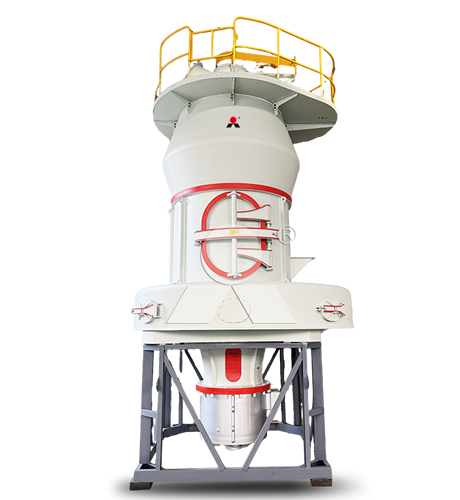
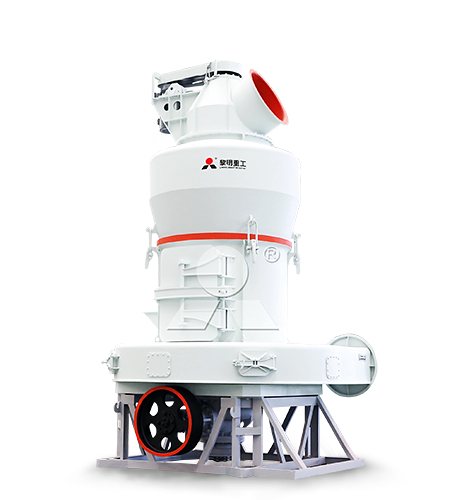
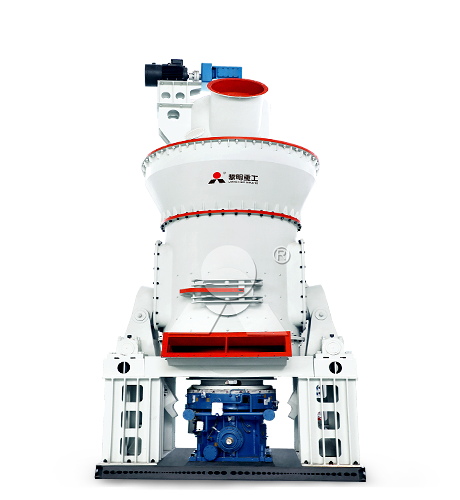
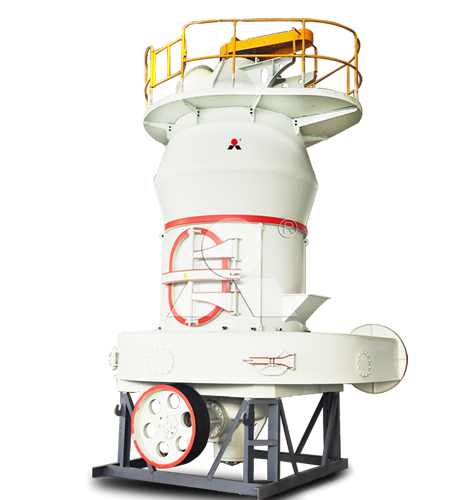
We are Liming Heavy Industry, a manufacturer of various types of industrial crushers, such as Raymond Mill, Trapezoidal Mill, Vertical Mill, Ultrafine Mill, Ball Mill, etc.
Our mills can process the following minerals:
limestone, quicklime, kaolin, talc, barite, bentonite, calcium carbonate, dolomite, coal, gypsum, clay, carbon black, slag, cement raw materials, cement clinker, etc.
If you need a mill to process stone or minerals into powder, please feel free to contact me (WhatsApp: +8615333807511). Thank you.
Marble powder and limestone powder can both be ground calcium carbonate (GCC), but they originate from different rock types and may perform differently because of their mineralogy, purity, whiteness, impurity profile, texture, and consistency. Marble powder comes from metamorphosed carbonate rock; limestone powder comes from sedimentary carbonate rock. For industrial buyers, the meaningful comparison is not the rock name alone—it is the finished powder specification.
A high-purity, bright limestone powder can outperform marble powder in PVC, coatings, paper, rubber, or sealants, while a clean calcitic marble powder can be an excellent premium GCC source. Both materials may be predominantly calcite, CaCO3, and both can be milled into fine or ultrafine filler grades. Marble forms when limestone is naturally altered by heat and pressure, while calcite is the chief component of limestone and one of the principal minerals used for industrial calcium carbonate.
Marble Powder vs Limestone Powder at a Glance
| Factor | Marble powder | Limestone powder |
|---|---|---|
| Original rock type | Metamorphic carbonate rock | Sedimentary carbonate rock |
| Geological relationship | Usually formed by recrystallization of limestone or dolostone under heat and pressure | Original carbonate sediment that may later become marble through metamorphism |
| Primary minerals | Usually calcite; may also be dolomite and accessory silicate minerals | Usually calcite and/or aragonite; may contain dolomite, clay, silica, chert, fossils, or organic matter |
| Calcium carbonate content | Can be very high in calcitic white marble, but varies by deposit | Can be very high in high-calcium limestone, but varies widely by deposit |
| Whiteness potential | Often high in selected white calcitic marble deposits | Ranges from very high to low depending on iron, clay, organic matter, and mineral impurities |
| Typical texture before grinding | Dense, crystalline, interlocking grains | Can be fine-grained, chalky, fossiliferous, crystalline, porous, or layered |
| Common powder markets | High-whiteness GCC, PVC, coatings, paper, plastics, sealants, rubber, construction compounds | General to premium GCC, PVC, paper, paint, rubber, sealants, adhesives, agricultural and construction products |
| Key purchase decision | Check calcite purity, color zones, MgO, silica, and quarry consistency | Check CaCO3, MgO, silica, clay, iron, chert, whiteness, and bench-to-bench variation |
The Main Difference Is Geological Origin
Limestone is a sedimentary carbonate rock. It forms through accumulation, precipitation, or deposition of calcium carbonate-bearing material, often including shell fragments, fossil debris, ooids, carbonate mud, and chemically precipitated calcite. Depending on the geological environment, limestone may be massive, layered, porous, chalky, fossil-rich, fine-grained, or crystalline.
Marble is a metamorphic rock. It forms when limestone, or in some cases dolostone, experiences elevated heat and pressure. The carbonate minerals recrystallize into an interlocking crystalline texture. This process can make some marble deposits visually uniform and very white, but it can also preserve or introduce impurity minerals such as mica, quartz, graphite, pyrite, iron oxides, or colored mineral veins.
That geological difference affects how the raw rock is mined and processed, but it does not automatically determine finished powder quality. A calcium carbonate processor should compare tested physical and chemical parameters, not assume that all marble powder is better than limestone powder or that all limestone powder is lower grade.
Composition: Calcite, Dolomite, and Impurities
Both marble powder and limestone powder can be primarily calcium carbonate when their dominant mineral is calcite. However, either rock can contain magnesium-bearing dolomite, CaMg(CO3)2, and non-carbonate impurities. The composition of the specific deposit determines suitability for GCC applications.
Calcitic material
Calcitic marble and high-calcium limestone are both valuable GCC feedstocks because they contain predominantly calcite, CaCO3. They are generally preferred when the customer requires high calcium carbonate content, low magnesium, good whiteness, low residue, and stable performance in a finished formulation.
High-purity natural calcium carbonate can be mechanically ground into GCC. Commercial descriptions of GCC emphasize that it is produced by crushing and grading naturally occurring calcium carbonate and is categorized by size and other physical properties.
Dolomitic material
Marble and limestone can both be dolomitic. A material may appear white and still contain significant dolomite. This increases MgO and reduces the share of pure calcium carbonate in the powder.
Dolomitic marble powder or dolomitic limestone powder can be useful in construction, glass, agriculture, selected rubber products, and some filler formulations. However, it should not be treated as equivalent to high-calcium GCC where low MgO, high CaCO3, and calcitic mineralogy are required.
Non-carbonate impurities
The most commercially important impurities are usually silica, aluminosilicates, iron-bearing minerals, sulfides, graphite, clay, organic matter, and hard mineral inclusions. Their impact depends on concentration, particle size, distribution, and target market.
| Impurity or feature | More often associated with | Industrial impact |
|---|---|---|
| Quartz, chert, and sand | Can occur in either; chert and sediment-derived silica are common limestone concerns | Raises abrasion, mill wear, acid-insoluble residue, and grit risk |
| Clay and shale partings | Often a significant concern in layered sedimentary limestone | Can reduce whiteness, affect moisture handling, and create variable chemistry |
| Mica, feldspar, and metamorphic silicates | Can occur in marble, particularly near metamorphic contact zones or veins | Can reduce purity, increase residue, and create abrasive contamination |
| Iron oxides and staining | Can occur in both marble and limestone | Can lower whiteness and introduce yellow, beige, gray, brown, or red tones |
| Graphite or dark veins | Can be a specific issue in certain marble deposits | Creates dark specks and limits use in high-whiteness applications |
| Organic matter and fossil-related variation | More often associated with sedimentary limestone | May affect color, odor, thermal behavior, and product consistency |
Whiteness and Brightness
Marble powder is often associated with higher whiteness because premium white marble deposits can contain clean, crystalline calcite with low iron and low colored impurities. This can make marble-derived GCC attractive for white PVC profile, masterbatch, decorative coatings, paper, sealants, and high-value construction chemicals.
But limestone powder should not be assumed to be darker. High-quality limestone, chalk, or calcite deposits can also yield very white calcium carbonate powders. Conversely, a marble with gray veining, yellow iron staining, graphite, mica, or silicate inclusions may produce a less-white powder than a selected high-calcium limestone.
Buyers should request measured whiteness, brightness, and color-coordinate data on the actual finished grade. Raw-stone photographs are not enough. Fine grinding can expose mineral inclusions and make small raw-material color differences more visible in the powder.
Why color matters by application
Rigid PVC, pipe, profiles, and cable compounds require controlled color and low dark-speck risk.
Paints and architectural coatings depend on stable whiteness, tinting behavior, opacity, and clean appearance.
Paper fillers and paper-coating pigments require high optical quality and low abrasive residue.
Sealants, adhesives, silicone compounds, and construction fillers may accept broader color ranges, but consistent batch color remains important.
Rubber and dark-colored compounds may place less emphasis on whiteness than white plastics or coatings, but purity and dispersion still matter.
Particle Shape and Processing Behavior
Marble powder and limestone powder are both typically processed as GCC by crushing, grinding, and classification. Their particles are therefore generally irregular, fractured mineral particles rather than the engineered crystal morphologies associated with PCC.
However, raw-rock texture can influence grindability, energy consumption, particle breakage, and the particle-size distribution generated by a given milling system. Marble’s interlocking crystalline texture may behave differently from a soft chalky limestone, dense fossiliferous limestone, or porous sedimentary limestone. These differences must be measured through pilot milling rather than predicted solely from geological labels.
For GCC buyers, the critical specifications are usually D50, D97, coarse residue, specific surface area, bulk density, oil absorption, moisture, and coating performance. Two powders with the same nominal mesh can perform differently because their full particle-size distributions, surface areas, impurity profiles, and surface treatments differ.
| Processing factor | Marble powder consideration | Limestone powder consideration |
|---|---|---|
| Crushing | Dense blocks may require robust crushing and clean grade separation | Can range from dense rock to softer chalky material; feed behavior may vary substantially |
| Grinding | Crystalline texture may produce stable fine GCC when mineralogy is clean | Grindability depends strongly on calcite texture, moisture, clay, porosity, and hard inclusions |
| Equipment wear | Increases if marble contains quartz, mica, feldspar, or other hard metamorphic minerals | Increases if limestone contains chert, quartz, sand, or siliceous bands |
| Beneficiation need | May require sorting or flotation for veins, color variation, or silicate impurities | May require washing, sorting, or selective mining for clay, chert, and variable sedimentary layers |
| Surface treatment | Often coated with stearic acid for PVC, polyolefins, masterbatch, and sealants | Often coated with stearic acid for the same polymer and compound applications |
Which Powder Is Better for Each Application?
Neither marble powder nor limestone powder is universally “better.” The right choice depends on the required combination of chemical purity, whiteness, particle-size distribution, coating quality, consistency, logistics, and delivered cost.
| Application | When marble powder may be preferred | When limestone powder may be preferred |
|---|---|---|
| White PVC profile and pipe | When high-brightness calcitic marble provides low iron, low dark specks, and consistent coated GCC | When high-calcium limestone meets the same color, MgO, particle-size, and coating requirements at better delivered cost |
| Polyolefin masterbatch | When marble GCC delivers high whiteness, stable ultrafine grade, and strong stearic-acid treatment | When coated limestone GCC provides the required dispersion and loading at lower cost |
| Paper filler and coating | When the marble source offers high brightness, low grit, and stable fine or wet-ground slurry quality | When selected limestone or chalk provides equivalent optical properties and slurry performance |
| Paints and coatings | When a bright fine marble GCC supports color, gloss, and formulation requirements | When limestone GCC meets whiteness, oil absorption, and particle-size targets economically |
| Rubber, adhesives, and sealants | When the product requires a bright, consistent, finely milled and coated filler | When standard or fine GCC specifications can be achieved with locally available limestone powder |
| Wall putty and construction chemicals | When local marble powder is clean, white, and competitively available | When limestone powder meets required fineness, color, moisture, and cost targets at higher volume |
In many markets, limestone has a supply and scale advantage because it is abundant and widely quarried. Marble can command a premium when its purity and optical properties justify that value. Yet a nearby, consistent limestone source may still be commercially superior after transport, grinding energy, waste handling, coating, and supply-security costs are included.
How to Compare Supplier Samples
Do not compare marble powder and limestone powder solely by price per tonne, mesh size, or a single CaCO3 figure. Ask suppliers for full technical data and test the powder in the actual formulation.
Confirm calcium carbonate content, CaO, MgO, SiO2, Fe2O3, acid-insoluble residue, and moisture.
Review XRD mineralogy to distinguish calcite, dolomite, quartz, clay, mica, and other phases.
Compare whiteness, brightness, Lab* color values, and dark-speck content on the finished powder.
Request full laser particle-size data, including D10, D50, D97, and coarse residue—not only nominal mesh.
Measure bulk density, specific surface area, oil absorption, flowability, and moisture according to the application.
For coated GCC, verify coating level, activation rate or hydrophobicity, and dispersion in the target polymer or compound.
Run plant trials using the intended resin, additives, processing conditions, filler loading, and finished-product performance tests.
Calculate total delivered cost, including freight, packaging, supply reliability, product losses, and any required process adjustment.
Key Takeaway
Marble powder and limestone powder are both potential sources of ground calcium carbonate. Marble powder may offer very high whiteness and clean calcitic mineralogy in selected deposits; limestone powder may offer broader availability, large-scale supply, and equally strong performance when sourced from high-calcium, low-impurity stone.
The right choice is specification-led. Select the powder that delivers the required CaCO3 purity, MgO limit, whiteness, low grit, particle-size distribution, surface treatment, consistency, and total delivered cost for the intended PVC, plastic, paper, coating, rubber, adhesive, sealant, or construction application.