Calcium Carbonate Knowledge Hub
Pharmaceutical Grade Calcium Carbonate
2026-09-04 17:04:55
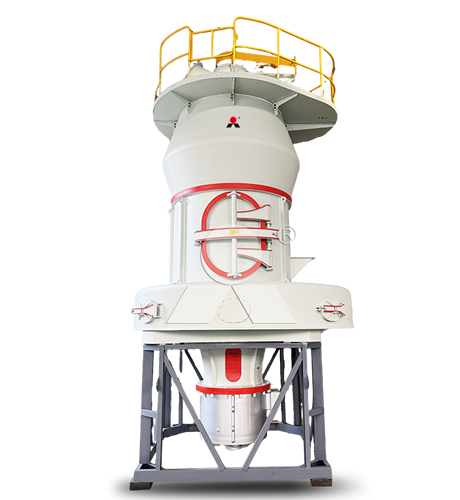
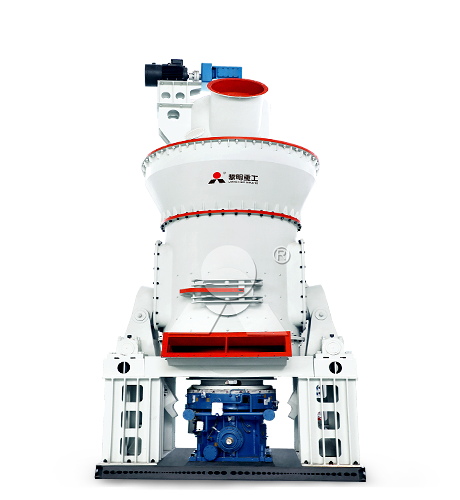
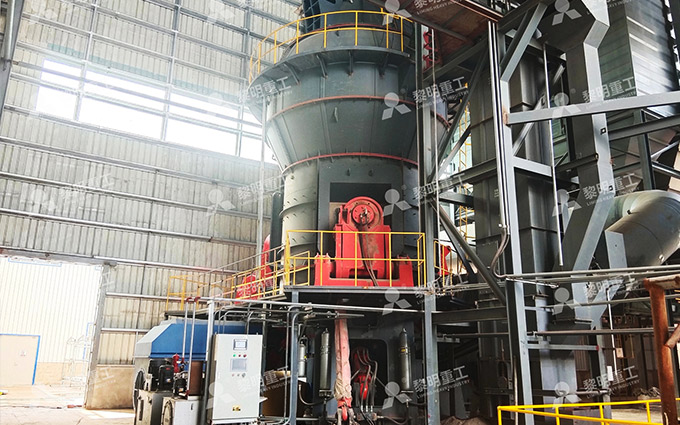
We are Liming Heavy Industry, a manufacturer of various types of industrial crushers, such as Raymond Mill, Trapezoidal Mill, Vertical Mill, Ultrafine Mill, Ball Mill, etc.
Our mills can process the following minerals:
limestone, quicklime, kaolin, talc, barite, bentonite, calcium carbonate, dolomite, coal, gypsum, clay, carbon black, slag, cement raw materials, cement clinker, etc.
If you need a mill to process stone or minerals into powder, please feel free to contact me (WhatsApp: +8615333807511). Thank you.
Pharmaceutical-grade calcium carbonate is a highly controlled calcium carbonate material used as an active ingredient or excipient in drug products. It is commonly used in antacid tablets, calcium supplements, chewable tablets, capsules, oral suspensions, and solid-dose formulations where it can function as a calcium source, diluent, filler, tablet-processing aid, or pH-adjusting ingredient.
A pharmaceutical-grade designation means more than high purity. The material must comply with the applicable pharmacopeial monograph—such as USP–NF, Ph. Eur., BP, JP, or another market-specific standard—and must be manufactured, tested, released, packaged, and documented under a pharmaceutical quality system appropriate for its intended use.
What makes calcium carbonate pharmaceutical grade?
Pharmaceutical-grade calcium carbonate is produced to defined compendial and customer specifications. It requires verified identity, assay, impurity control, particle-size consistency, traceability, and change control. The manufacturer must also demonstrate that the material is suitable for use in a regulated drug-product supply chain.
Calcium carbonate may be produced by mining and processing selected natural calcite, limestone, marble, or chalk, or through controlled chemical precipitation. Regardless of the route, the finished material must meet the relevant pharmacopoeial requirements for the market where the medicine will be registered and sold.
USP-type calcium carbonate monograph data include limits for acid-insoluble substances, iron, heavy metals, and arsenic, together with an assay procedure based on complexometric titration. One published USP monograph version specifies acid-insoluble substances of not more than 0.2%, iron at not more than 0.005%, and arsenic at not more than 3 ppm. Manufacturers should always verify the current official monograph rather than rely on historical summaries.
Active ingredient and excipient uses
Calcium carbonate can have two distinct roles in pharmaceutical products. In some medicines, it is the active ingredient. In others, it is an inactive excipient that supports manufacturing, dosage-form structure, or product appearance.
| Role | How calcium carbonate functions | Typical dosage forms |
|---|---|---|
| Antacid active ingredient | Neutralizes gastric acid and provides acid-relief activity in suitable over-the-counter products. | Chewable tablets, conventional tablets, oral suspensions. |
| Calcium supplement active | Supplies elemental calcium for products intended to support calcium intake. | Tablets, chewables, capsules, powders, effervescent products, oral suspensions. |
| Diluent or filler | Adds mass and volume to tablets or capsules when the drug active is present at a low dose. | Tablets, capsules, chewables. |
| Tablet-processing aid | Can influence powder flow, compressibility, tablet hardness, and manufacturing efficiency. | Direct-compression and granulated tablets. |
| Opacity or color support | Provides white appearance and opacity in selected formulations. | Chewables, tablets, capsules, oral powders. |
| pH-related formulation aid | Can influence acid-neutralization behavior or formulation pH in compatible products. | Oral solid dosage forms, suspensions, selected topical systems. |
Calcium carbonate appears as an inactive ingredient in FDA-approved drug products. FDA’s Inactive Ingredient Database provides information on inactive ingredients present in approved drug products, searchable by ingredient name, route, and dosage form.
Pharmaceutical grade versus food grade
Food-grade and pharmaceutical-grade calcium carbonate can share some quality attributes, but they are not interchangeable claims. Food grade is designed for food and beverage applications, while pharmaceutical grade is intended for regulated drug products and must meet the relevant pharmacopeial and drug-manufacturing requirements.
| Characteristic | Food-grade calcium carbonate | Pharmaceutical-grade calcium carbonate |
|---|---|---|
| Primary applications | Foods, beverages, dietary supplements, confectionery, food fortification, and processing. | Drug products, antacids, medicinal calcium products, pharmaceutical tablets, capsules, and oral suspensions. |
| Typical reference standards | FCC, JECFA, Codex, E 170, and national food regulations. | USP–NF, Ph. Eur., BP, JP, Chinese Pharmacopoeia, or another applicable pharmacopeia. |
| Quality-system expectation | Food-safety system, traceability, food-quality documentation, and applicable food regulation. | Pharmaceutical GMP-aligned controls, validated methods, change control, traceability, and pharmaceutical documentation. |
| Key technical focus | Food safety, purity, sensory quality, particle size, and functional performance in food. | Compendial compliance, impurity profile, dosage-form performance, stability, and regulatory filing support. |
| Interchangeability | May be suitable for supplements if all applicable requirements are met. | Cannot be claimed unless the exact product meets the applicable pharmaceutical specification and quality-system requirements. |
A food-grade calcium carbonate may be unsuitable for a drug product even if it has a high CaCO3 assay. It may lack the required pharmacopeial testing, impurity limits, quality documentation, pharmaceutical change-control process, or support for drug-product registration.
Key quality attributes
Pharmaceutical manufacturers should define calcium carbonate specifications based on dosage form, route of administration, function, and regulatory market. A complete specification normally includes chemical, physical, microbiological, and documentation requirements.
| Quality attribute | Why it matters in pharmaceutical products |
|---|---|
| Identity | Confirms that the material is calcium carbonate and meets the required compendial identification tests. |
| Assay | Controls active-ingredient strength and elemental-calcium content; supports formulation and labeling accuracy. |
| Acid-insoluble substances | Controls silica, sand, clay, and other insoluble mineral contamination. |
| Iron and colored impurities | Important for product appearance, chemical stability, and discoloration risk in tablets and suspensions. |
| Heavy metals and toxic elements | Critical safety parameters, commonly including lead, arsenic, cadmium, mercury, and other elements required by the applicable monograph or risk assessment. |
| Particle-size distribution | Influences blend uniformity, flow, compressibility, tablet hardness, dissolution behavior, suspension stability, and mouthfeel. |
| Bulk density and flowability | Important for tablet presses, capsule fillers, blending, transfer, and dose uniformity. |
| Moisture and loss on drying | Can affect powder flow, blending, tablet compression, chemical stability, and storage behavior. |
| Microbiological quality | Important for oral products and determined by the route of administration, dosage form, and applicable pharmacopeial expectations. |
| Residual solvents and process contaminants | Relevant when the production process uses materials that could leave chemical residues. |
| Lot traceability and change control | Essential for investigations, product registration, GMP compliance, and supply-chain reliability. |
Particle size and dosage-form performance
Particle size is not just a cosmetic property in pharmaceutical calcium carbonate. It affects how the powder flows, blends, compacts, suspends, disperses, and releases from the final dosage form.
Tablets and chewables
For tablets, a suitable particle-size distribution can improve powder flow into the die, reduce weight variation, support compressibility, and help achieve adequate tablet hardness without excessive compression force. The correct grade depends on whether the product uses direct compression, wet granulation, dry granulation, or another manufacturing route.
Very fine calcium carbonate may improve smoothness in chewable tablets but can reduce flowability and increase dusting. Coarser material may flow better but can create a gritty chewable texture or make it difficult to achieve uniform blending. Manufacturers often balance calcium carbonate particle size with granulation, binders, lubricants, disintegrants, sweeteners, flavors, and other excipients.
Capsules
For hard-shell capsules, calcium carbonate must have reliable flowability and low dusting so that it can be blended and filled consistently. Particle size and bulk density influence fill weight and content uniformity, particularly when calcium carbonate is used with a low-dose active pharmaceutical ingredient.
Oral suspensions
For suspensions, particle size affects settling rate, redispersibility, sediment compactness, mouthfeel, and dose uniformity. Fine particles may remain suspended longer, but they can also increase viscosity and require a properly designed suspending-agent system. Particle size should be optimized alongside viscosity, pH, preservative efficacy, flavor, packaging, and shake-before-use instructions.
A USP calcium carbonate oral-suspension monograph specifies that the product contains not less than 90.0% and not more than 110.0% of the labeled amount of calcium carbonate. The finished suspension must meet its own product-specific standards in addition to raw-material controls.
Manufacturing routes
Pharmaceutical-grade calcium carbonate can be manufactured as high-purity GCC or PCC. The production route should be selected based on the desired particle characteristics and ability to meet compendial impurity specifications consistently.
| Production route | Process overview | Potential pharmaceutical advantage |
|---|---|---|
| High-purity GCC | Selected natural limestone, marble, or calcite is crushed, purified when necessary, ground, classified, tested, and packed under controlled conditions. | Economical, broad particle-size options, and useful for tablets, chewables, supplements, and general pharmaceutical applications. |
| PCC | Purified calcium feed is converted to calcium hydroxide and carbonated under controlled conditions; the precipitated calcium carbonate is filtered, dried, classified, tested, and packed. | More controllable particle morphology, particle size, surface area, and physical performance in specialized dosage forms. |
Regardless of route, manufacturing controls must address raw-material source, water quality, process chemicals, cross-contamination, metal fragments, equipment wear, cleaning, packaging, and batch traceability. A pharmaceutical manufacturer will normally audit or qualify the excipient supplier based on quality-system capability as well as analytical results.
Regulatory and quality documentation
Pharmaceutical-grade calcium carbonate suppliers should provide more than a standard industrial technical data sheet. The documentation package should support excipient qualification, risk assessment, audit review, and regulatory submission where necessary.
Current certificate of analysis for every released lot.
Statement of compliance with the applicable USP–NF, Ph. Eur., BP, JP, or other monograph.
Detailed specification and validated or compendial analytical-method references.
Elemental-impurity data and toxicological risk-assessment support where required.
Particle-size distribution, bulk density, flowability, and other relevant physical-property data.
Microbiological specification and test results appropriate to the intended route of administration.
Residual-solvent statement, allergen statement, GMO statement, BSE/TSE statement, and animal-origin declaration where applicable.
Manufacturing-site quality certification, audit information, and GMP or excipient-GMP documentation.
Lot traceability, retain-sample policy, complaint handling, deviation management, and change-control procedure.
Stability, packaging, transport, storage, and shelf-life information.
The Pharmacopoeial Discussion Group maintains a program for harmonizing excipient monographs across major pharmacopoeias, including the European Pharmacopoeia, Japanese Pharmacopoeia, and USP–NF. Even where monographs are harmonized, buyers should verify the current edition and any local regulatory expectations.
Common selection mistakes
Confusing high purity with pharmaceutical grade: A high assay does not prove compliance with pharmacopeial impurity limits, microbial expectations, documentation, and change-control requirements.
Using food-grade material without qualification: Food-grade calcium carbonate may not meet the required compendial specification or excipient quality-system expectations for a drug product.
Ignoring particle size: PSD can affect tablet compression, capsule fill weight, suspension stability, mouthfeel, and blend uniformity.
Approving a material only from a certificate of analysis: Qualification should also include supplier quality assessment, process understanding, sample evaluation, and dosage-form trials.
Assuming one grade suits every dosage form: A calcium carbonate grade optimized for direct-compression tablets may not work in chewables, suspensions, capsules, or antacid formulations.
Overlooking change control: A shift in quarry source, precipitation process, grinding condition, particle-size distribution, or packaging can affect drug-product performance and may require formal evaluation.
FAQ
Is pharmaceutical-grade calcium carbonate the same as USP grade?
USP grade generally means the material complies with the applicable current USP–NF monograph. Pharmaceutical grade is a broader commercial description and should not be accepted as proof of USP compliance unless the supplier provides a formal, current USP–NF compliance statement and supporting certificate of analysis.
Can food-grade calcium carbonate be used in pharmaceuticals?
Only if the material is separately qualified and demonstrated to meet all applicable pharmaceutical requirements. Food-grade status alone does not establish pharmacopeial compliance, excipient-GMP suitability, change control, or acceptability for a regulated drug product.
Is calcium carbonate used as an active ingredient?
Yes. It is used as an antacid active ingredient and as a calcium source in medicinal or supplement products. It is also widely used as an inactive excipient in tablets, capsules, chewables, and oral suspensions.
What particle size is best for pharmaceutical calcium carbonate?
There is no universal best size. Direct-compression tablets may need a free-flowing, compressible grade; chewables may need a smooth, fine grade; suspensions may require a PSD that balances settling and redispersibility. Select the grade through dosage-form development and process validation.
Key takeaway
Pharmaceutical-grade calcium carbonate is a compendial-quality active ingredient or excipient used in antacids, calcium supplements, tablets, capsules, chewables, and suspensions. A suitable grade must meet the relevant current pharmacopeial monograph and support the final dosage form through controlled purity, impurity profile, particle size, moisture, flow, microbiological quality, traceability, and pharmaceutical change control. It should be qualified in the actual drug-product formulation, not selected only by CaCO3 assay or price.