FAQ
How to Produce Ultra-Fine Calcite Powder for Advanced Materials?
2026-08-08 09:23:20
Summary:
For ultra-fine calcite powder used in advanced materials—such as high-performance polymers, engineered coatings, functional fillers, and composite systems—you should target a product in roughly the 1250–3000 mesh range with D97 in the 3–10 µm window, produced by an industrial ultrafine grinding mill with precise dynamic classification.
Details:
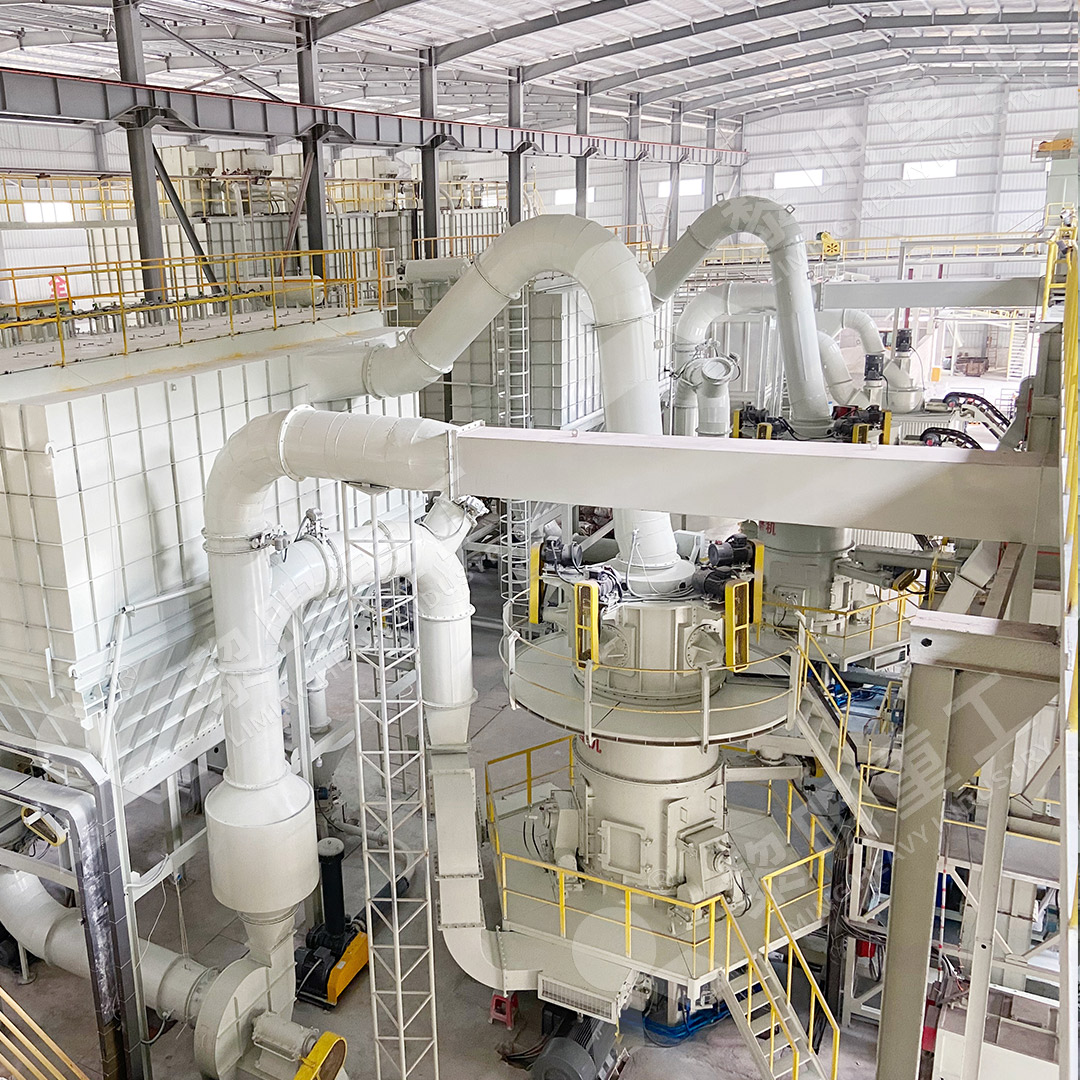
For ultra-fine calcite powder used in advanced materials—such as high-performance polymers, engineered coatings, functional fillers, and composite systems—you should target a product in roughly the 1250–3000 mesh range with D97 in the 3–10 µm window, produced by an industrial ultrafine grinding mill with precise dynamic classification. In practice, this typically means a LUM Ultrafine Vertical Roller Mill or MW Micro Powder Mill (or equivalent stirred/roller ultrafine system), fed by a stable pre-crushing line and paired with a high-efficiency air classifier and pulse-jet baghouse for tight particle size control and clean operation.
Target Fineness for Advanced Material Applications
Ultra-fine calcite for advanced materials is generally defined not just by mesh size but by a narrow particle size distribution (PSD) with D50 often in the 2–5 µm range and D97 below about 10 µm, depending on the downstream application. This fineness is required to achieve specific performance outcomes such as improved mechanical strength in composites, controlled rheology in high-solids systems, and precise optical properties in functional coatings, which cannot be delivered reliably by conventional 400–800 mesh filler grades.
Process Concept: From Quarry to Ultra-Fine Powder
The overall process for ultra-fine calcite powder production combines conventional crushing and pre-grinding with specialized fine and ultrafine grinding plus high-performance classification, all integrated into a stable, controllable production line. The purpose of the front-end crushing stages is simply to prepare a consistent, clean feed for the energy-intensive ultrafine grinding circuit, while the back-end classification and collection stages ensure that only particles meeting the defined PSD are sent to advanced materials customers.
Stage 1: Crushing and Pre-Grinding
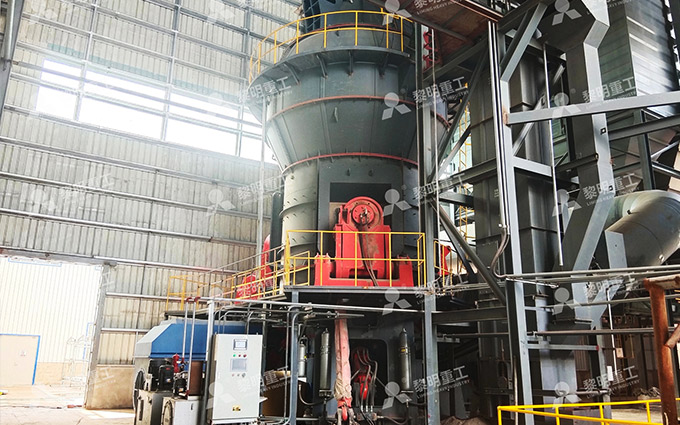
Run-of-quarry calcite is first crushed by jaw crusher and secondary crusher (often hammer or impact) to reduce feed to the 10–30 mm range, suitable for feeding vertical roller mills or micro powder mills. Some plants include a coarse grinding or pre-mill (for example, a small Raymond Mill or LM Vertical Roller Mill) to produce an intermediate 200–400 mesh material, reducing the load on the ultrafine stage and improving overall energy efficiency by shifting part of the size reduction to a lower-cost circuit.
_1761355927036.jpg)
Stage 2: Ultrafine Grinding
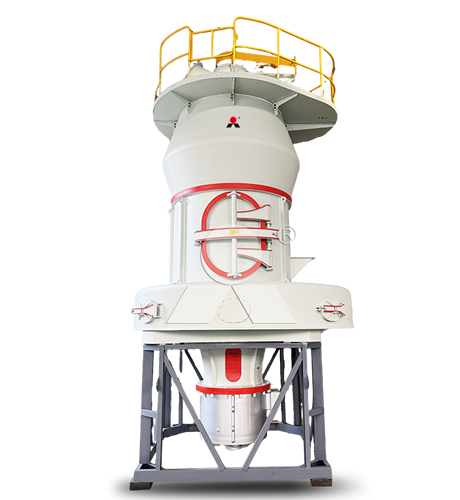
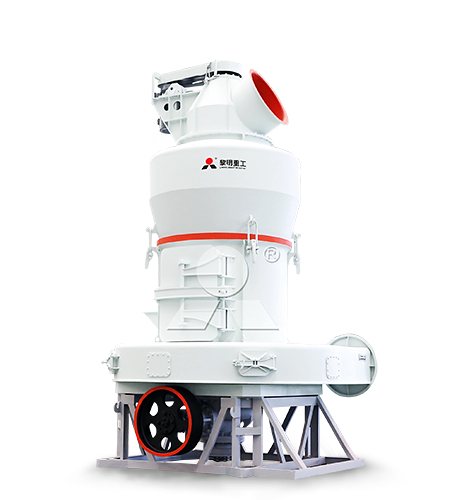
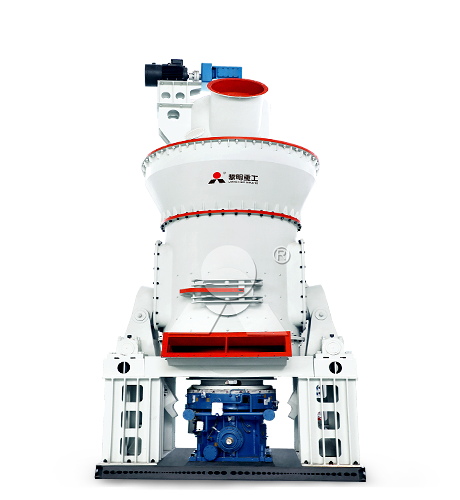
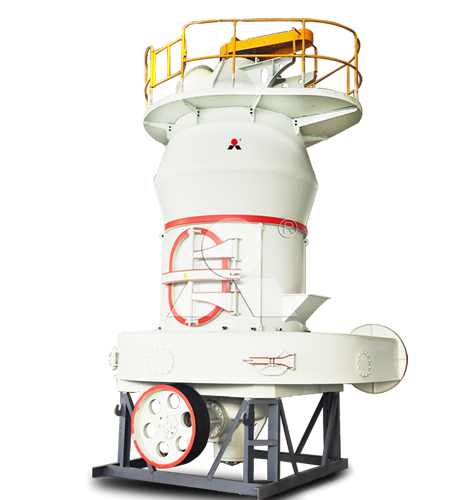
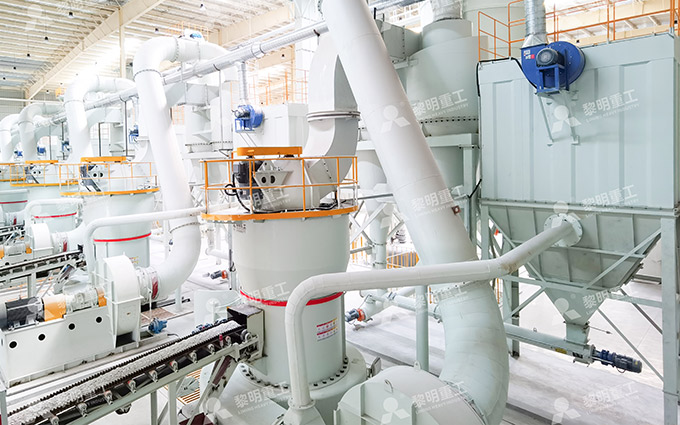
Ultrafine grinding is handled by mills designed for high surface area generation—typically vertical ultrafine roller mills, stirred media mills, or specialized micro powder mills—operating with small grinding media or fine roller gaps to achieve sub-10 µm D97 targets. LUM Ultrafine Vertical Roller Mill and MW Micro Powder Mill families are representative of this class: they are designed to work in the 325–3000 mesh range, with integrated or external dynamic classification to deliver repeatable fine cuts without coarse contamination.
Stage 3: High-Efficiency Classification
Dynamic air classifiers with adjustable rotor speed and controlled air volume create precise cut points, allowing operators to tune the product PSD for different advanced material grades without changing hardware. In some flowsheets, a standalone high-performance air classifier is installed after the ultrafine mill; the mill then runs slightly coarser, and the classifier trims the PSD to a tight band, improving energy-use efficiency and reducing over-grinding of fines.
Stage 4: Collection, Conveying, and Storage
Fine calcite powder is collected via cyclones and pulse-jet baghouse filters, then conveyed pneumatically to silos; dense-phase conveying at low velocity is often preferred to minimize particle breakage and maintain the engineered PSD as the powder moves through the plant. For advanced material customers, segregation of different grades in dedicated silos, with controlled loading systems, is critical to avoid cross-contamination between products targeted at different D97 or whiteness specifications.
Choosing the Right Mill Type for Ultra-Fine Calcite
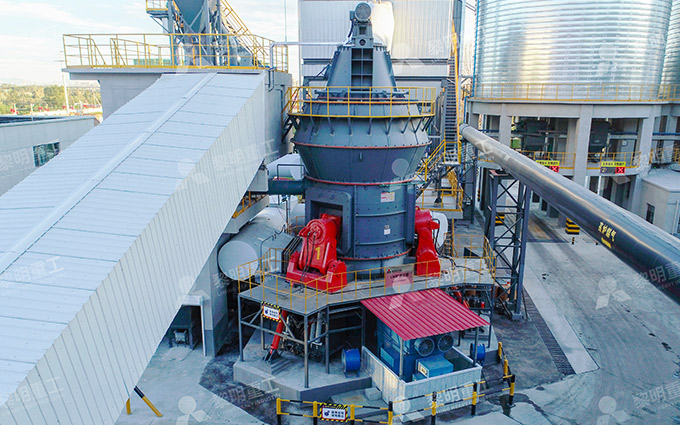
LUM Ultrafine Vertical Roller Mill or MW Micro Powder Mill is the appropriate choice when the specification requires calcite powders beyond typical filler grades, into the sub-10 µm D97 range; conventional Raymond Mill, MTW European Grinding Mill, or LM Vertical Roller Mill cannot consistently reach this fineness at acceptable energy consumption and PSD control. For plants needing both standard filler grades and advanced-material ultrafine powders, a dual-circuit design combining a mid-fineness mill (such as MTW) and an ultrafine mill (LUM or MW) can offer better flexibility than trying to span all requirements with a single machine.
_1761355701094.jpg)
Equipment Selection Logic
When selecting equipment for ultra-fine calcite production, engineers start with the target PSD and capacity, then match mill type and classifier system based on raw material hardness, abrasiveness, feed size, moisture, and downstream application constraints. Calcite itself is relatively soft (around Mohs 3), but associated minerals such as quartz can increase abrasiveness and drive wear part choices, especially in stirred media mills where media and liner selection strongly affects operating cost.
Required fineness: If the plant must achieve D97 ≤10 µm with a narrow PSD, an ultrafine mill (LUM or MW) plus dynamic classifier becomes non-negotiable; if only 400–800 mesh is required, a Raymond or MTW mill is sufficient.
Capacity: High throughput at ultrafine settings favors vertical roller and large-scale micro powder mills; planetary mills and small lab-scale bead mills can produce sub-micron powders but are not suitable for industrial-scale tons per hour.
Moisture and drying: If feed moisture exceeds roughly 3–5% for ultrafine production, integrated drying capability in the mill (as offered by some vertical roller designs) or a separate drying stage is needed to keep fine particles from agglomerating and blinding the classifier.
Energy consumption: Fine grinding is inherently energy-intensive, and ultrafine grinding even more so; roller and stirred media mills are used because they deliver higher energy efficiency per unit of surface area generated compared with traditional ball mills.
LM, LUM, MW, MTW, and Raymond: Where They Fit
Raymond Mill and MTW European Grinding Mill are best suited to producing medium-fineness calcite powder (80–425 mesh), serving as either final product mills for filler applications or pre-grinding stages for ultrafine circuits. LM Vertical Roller Mill serves well as a combined crushing/drying/medium-fineness grinding stage where high throughput or elevated moisture must be managed, and can act as the feed preparation stage for a downstream ultrafine mill.
LUM Ultrafine Vertical Roller Mill and MW Micro Powder Mill are the mills that actually push calcite into the required ultra-fine range; in engineering practice, they are selected when customers specify product grades in the 1250–3000 mesh band with PSD constraints linked to rheology, optical behavior, or mechanical performance rather than just filler function. Liming Heavy Industry and other suppliers offer these mill families, and selection among them should be based on feed conditions, capacity, PSD target, and plant layout, not on brand names alone.
Practical Production Scenario and PSD Tuning
Consider a plant targeting two calcite products: a 1250 mesh grade with D97 around 10 µm for general advanced filler use, and a finer 2500 mesh grade with D97 around 5 µm for high-performance coatings. A practical approach is to use an MW Micro Powder Mill for both, with classifier settings adjusted between the two products, and perhaps a secondary, standalone air classifier for the finest grade to avoid over-grinding the bulk of the material. The plant would schedule campaigns: running coarser 1250 mesh for a period, then shifting classifier speed and airflow to produce the finer 2500 mesh product, with thorough silo purge between campaigns to maintain grade integrity.
_1761360948099.jpg)
Energy and Wear Considerations
Energy use in ultrafine grinding increases sharply as target fineness moves from tens of microns into single-digit microns, making mill selection and circuit design critical for operating cost control. Wear on grinding parts and classifiers is strongly influenced by the presence of harder gangue minerals in the calcite feed, and by the size of the grinding media or roller gaps; stirred bead mills using very small media can achieve extremely fine sizes but require careful media management and lining selection to keep wear from eroding the economic advantage.
Checklist for Designing an Ultra-Fine Calcite Line
When planning an ultra-fine calcite powder production line for advanced materials, the following checklist helps keep decisions grounded in engineering reality:
Define product PSD clearly: specify mesh, D50, D97, and permitted tails (very fine and coarse fractions).
Confirm raw ore composition: CaCO3 purity, associated minerals, hardness, and whiteness; test in small-scale grinding to observe PSD response.
Size crushing and pre-grinding: ensure feed to ultrafine mill is stable in size (10–30 mm) and moisture; consider LM or MTW stage if intermediate filler grades are also needed.
Select ultrafine mill type: choose LUM Ultrafine Vertical Roller Mill or MW Micro Powder Mill (or equivalent) based on capacity, plant layout, and integration needs.
Design classifier system: internal dynamic classifier plus optional external air classifier when very tight PSD or multiple grades are required from one line.
Plan dust collection and conveying: high-efficiency pulse-jet baghouse and dense-phase conveying to protect both product quality and workplace safety.
Budget for energy and wear: use pilot or test grinding data for kWh/t and wear part consumption rather than relying solely on catalog numbers.