FAQ
How to Grind Barite into 200–400 Mesh Powder?
2026-07-31 14:06:48
Summary:
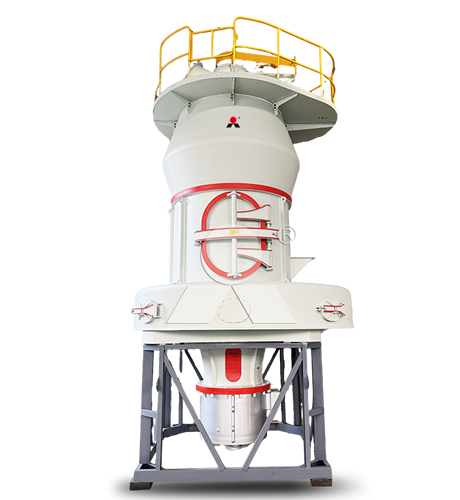
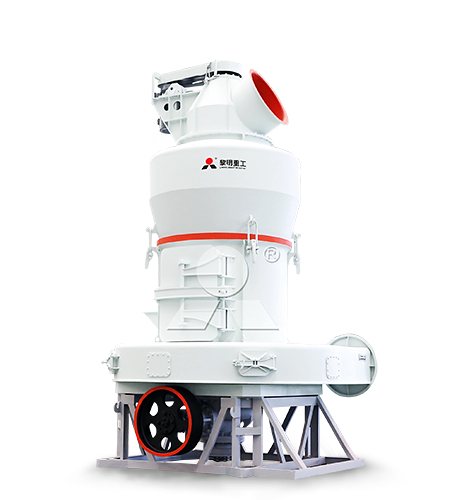
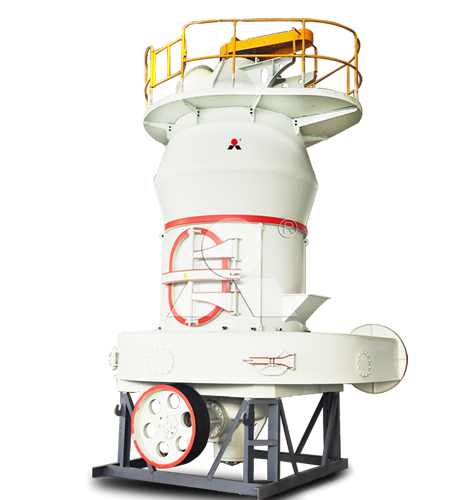
For grinding barite into 200-400 mesh powder (roughly 74 to 38 microns), a Raymond Mill or MTW European Grinding Mill fitted with a matched cyclone and bag-type dust collector is the standard and most cost-effective solution.
Details:
For grinding barite into 200-400 mesh powder (roughly 74 to 38 microns), a Raymond Mill or MTW European Grinding Mill fitted with a matched cyclone and bag-type dust collector is the standard and most cost-effective solution. Barite's low Mohs hardness of 3 to 3.5 and high specific gravity of about 4.0 to 4.6 make it well suited to roller-and-ring type mills rather than the harder abrasive-mineral technologies, so this fineness range is achievable without ultrafine milling equipment.
What Fineness Range Applies to 200-400 Mesh Barite
200-400 mesh covers the fine powder processing category of barite production, sitting between the coarser drilling-grade material and the ultrafine specialty grades used in high-end coatings. Oil and gas drilling mud weighting agents typically call for barite ground to around 200 mesh with a D97 near 74 microns, while ordinary architectural coatings, floor fillers, and general industrial fillers use material closer to 325-400 mesh. Buyers should specify both the mesh number and whether it is expressed as a screen residue (percent passing) or a D97 value, since suppliers quoting "400 mesh" sometimes mean different particle size distributions depending on classifier calibration.
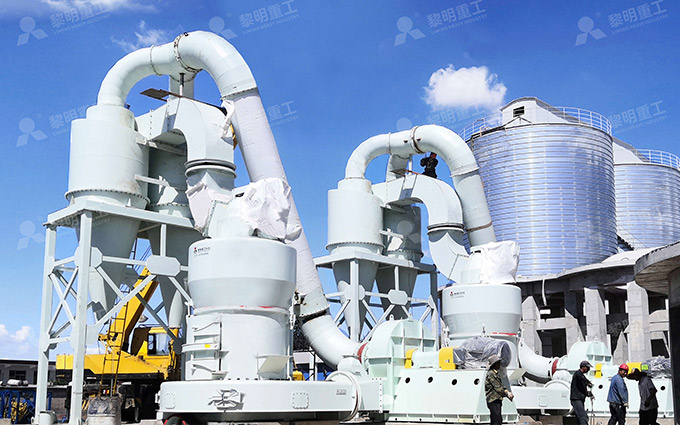
Process Flow for 200-400 Mesh Barite Production
The production line for 200-400 mesh barite powder consists of four sequential stages: crushing, grinding with integrated classification, powder collection, and packaging, matching the general process used across most barite grinding installations.
Stage 1: Crushing to Mill Feed Size
Run-of-mine barite ore, often supplied in pieces up to 300mm, is reduced by a jaw crusher for primary crushing and then by a hammer mill or impact crusher for secondary crushing until the material reaches roughly 15-50mm, the feed size range accepted by most Raymond and MTW mills. A circular vibrating screen between crushing stages helps remove oversize fragments before they reach the mill, protecting the grinding chamber from overload.
Stage 2: Grinding and Classification
Crushed barite is lifted by bucket elevator to a storage silo, then metered by vibrating feeder into the grinding chamber, where rollers press the material against a ring under centrifugal force while an air stream carries fines toward the internal classifier. The classifier separates on-spec fine powder from oversize particles, which are returned to the grinding chamber for reprocessing; adjusting classifier rotor speed and air volume is the primary method for shifting output between 200 mesh and 400 mesh without changing the mill itself.
Stage 3: Powder Collection
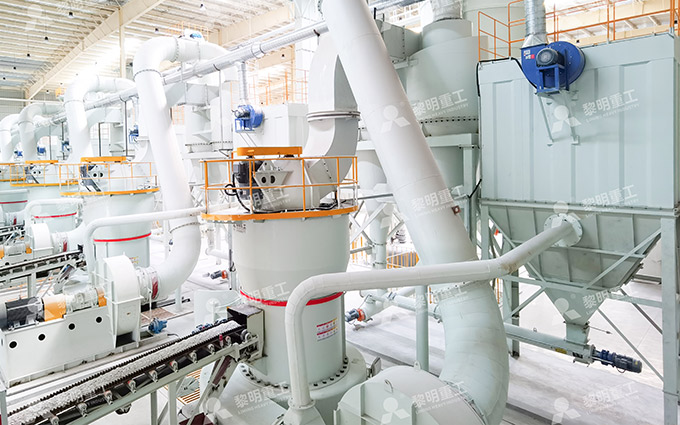
Fine powder suspended in the air stream passes through a cyclone separator for bulk collection, with a pulse-jet baghouse dust collector capturing the finest residual particles before clean air is exhausted. Proper sizing of the dust collection system is important not only for yield recovery but also for meeting workplace air quality requirements, since barite dust is fine and can be a respiratory hazard if fugitive emissions are not controlled.
Stage 4: Storage and Packaging
Finished powder is conveyed to a product silo, then bagged or loaded into bulk tankers depending on downstream logistics; drilling-grade barite is frequently shipped in bulk while filler-grade material for paint or plastics is often bagged.
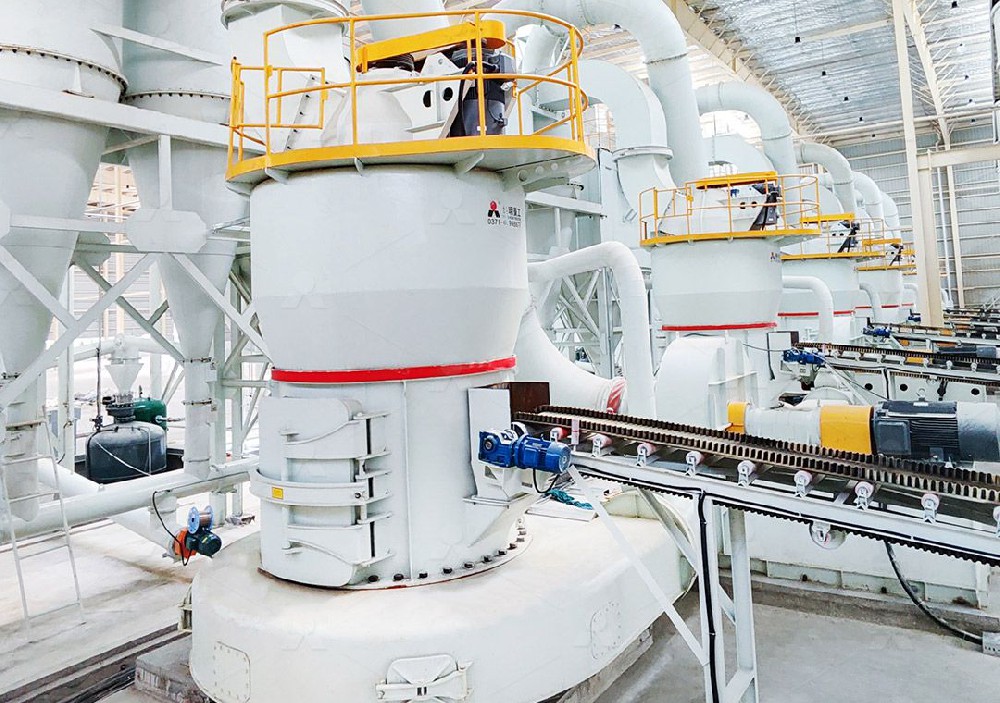
Equipment Selection for 200-400 Mesh Barite Grinding
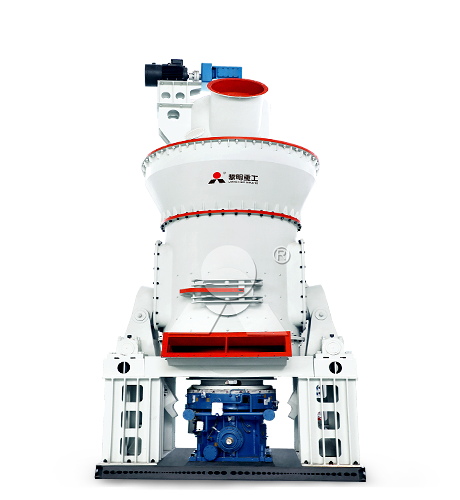
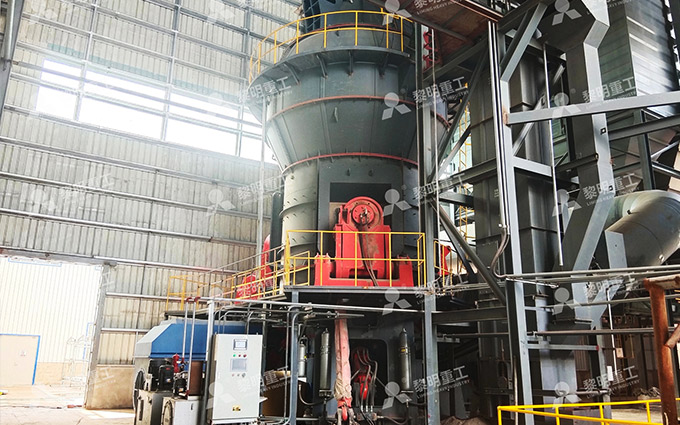
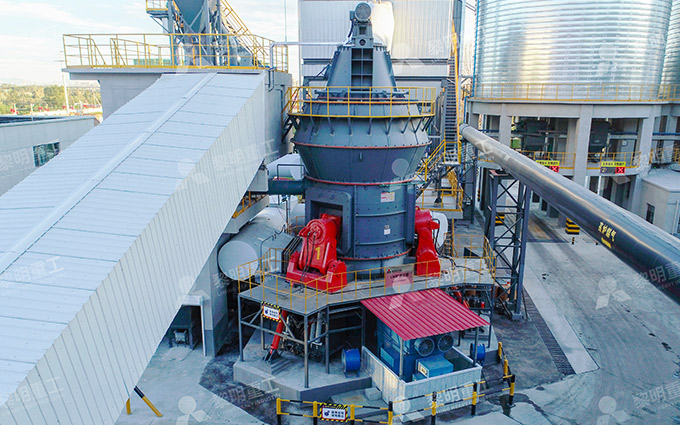
A Raymond Mill or MTW European Grinding Mill is the correct choice for straightforward 200-400 mesh barite production; an LM Vertical Roller Mill becomes relevant mainly when higher single-line capacity is required, and ultrafine mills such as the LUM or MW series are unnecessary since they are designed for much finer specifications beyond 400 mesh.
| Equipment | Typical Fineness Range | Typical Capacity | Best Fit |
|---|---|---|---|
| Raymond Mill | 80-425 mesh (approx. 180-33 microns) | Roughly 1-20 tph depending on model | Small to mid-scale 200-400 mesh barite lines with moderate capital cost |
| MTW European Grinding Mill | 30-325 mesh, extendable to around 400 mesh with classifier adjustment | Roughly 3-40 tph depending on model | Mid-scale operations wanting improved yield ratio and lower maintenance downtime |
| LM Vertical Roller Mill | 80-425 mesh, adjustable | Higher throughput per unit footprint | Large-scale plants or where wet feed requires simultaneous drying and grinding |
| LUM Ultrafine Vertical Mill | 325-3000 mesh | Lower throughput at ultrafine settings | Not suitable for a 200-400 mesh target; reserved for higher-end coatings and functional fillers |
| MW Micro Powder Mill | 325-2500 mesh | Lower throughput at fine settings | Overkill for 200-400 mesh; better suited to jet-mill-level fineness applications |
The rationale for excluding LUM and MW mills here is straightforward engineering logic: both product families are optimized to reach well beyond 400 mesh, and operating them at a coarser setting than they were designed for typically costs more per ton than a properly sized Raymond or MTW mill. Manufacturers such as Liming Heavy Industry, among other mill builders, offer Raymond Mill and MTW European Grinding Mill lines sized for this exact fineness and capacity range, and the final selection should be based on matching required tph, feed moisture, and target mesh rather than on brand alone.
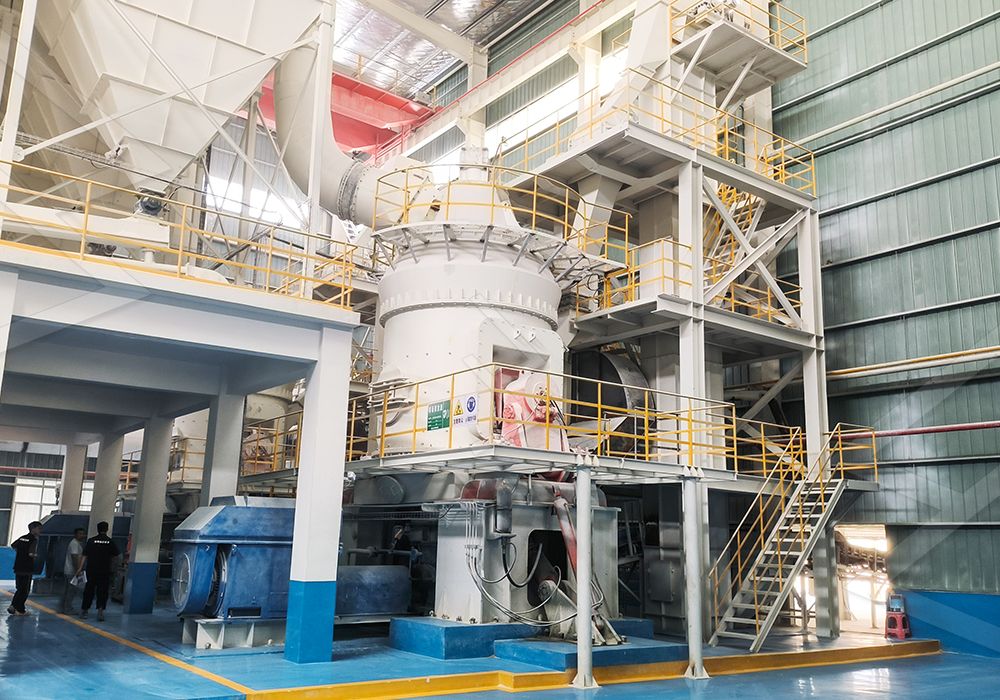
Raw Material Factors That Influence Grinding Performance
Barite purity (BaSO4 content), moisture, and the presence of associated minerals such as quartz or iron oxide affect both achievable fineness and wear rate on grinding components. Drilling-grade barite generally requires BaSO4 content of 95% or higher along with density above 4.2 g/cm3 and low soluble salt content, so beneficiation or washing ahead of grinding may be necessary if the raw ore does not meet this purity on its own.
Moisture: feed moisture above roughly 6-8% causes sticking on rollers and blinding of the classifier screen; a hot air sweep or pre-drying stage should be added for wet ore.
Hardness and associated gangue: quartz or other hard inclusions mixed with the barite ore increase roller and ring wear rates beyond what pure barite alone would cause.
Density: barite's high specific gravity means that classifier air volume and fan pressure need to be set specifically for this mineral rather than reused from lighter-mineral grinding lines, since a lower air volume than expected for the material weight will fail to lift fines to the classifier efficiently.
Target application: drilling mud specifications generally accept coarser 200 mesh material, while paint and filler applications require the tighter 325-400 mesh classifier setting.
Sizing Example and Common Operating Mistakes
Consider a plant targeting 10 tph of finished 325 mesh barite powder for use as a paint filler, with raw ore at 96% BaSO4 and 5% moisture. A Raymond mill or MTW mill rated for 10-12 tph at this fineness with feed size below 30mm is a reasonable baseline selection, but actual throughput will vary depending on hardness of associated gangue minerals and how tightly the classifier is tuned; this should be confirmed with a test run using the actual ore rather than taken directly from catalog figures.
_1767930326613.jpg)
Undersized dust collection relative to actual air volume, leading to fine powder loss and higher fugitive dust at the packaging station.
Running the mill above its moisture threshold without a pre-drying stage, causing roller sticking and unstable vibration.
Failing to re-tune classifier speed as rollers and rings wear over months of operation, gradually coarsening the product without operator awareness.
Selecting mill capacity from a single catalog fineness figure rather than the actual combination of tph and mesh the end customer requires, resulting in an oversized or undersized machine.
Energy Consumption and Operating Cost Notes
Because barite is a relatively soft mineral, energy consumption per ton for grinding to 200-400 mesh is generally moderate compared with harder abrasive minerals, but actual kWh/t figures depend on ore hardness variability, moisture, and classifier cut setting, so project-specific trial data is more reliable than generic industry figures. Wear part costs for rollers, rings, and liner plates should be budgeted against expected tonnage and adjusted upward if the ore contains hard gangue minerals, since wear rate is driven more by associated mineral content than by barite itself.