Calcium Carbonate Knowledge Hub
How Do You Grind Calcium Carbonate?
2026-09-04 17:31:46
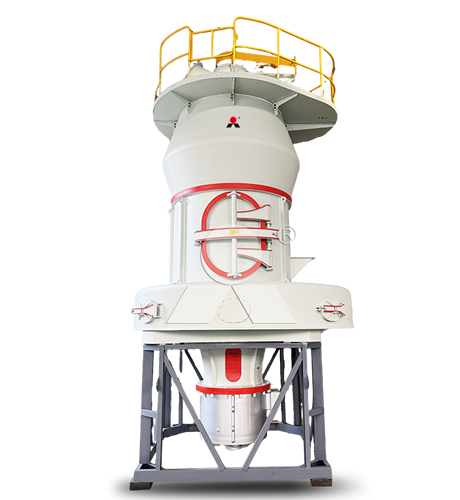
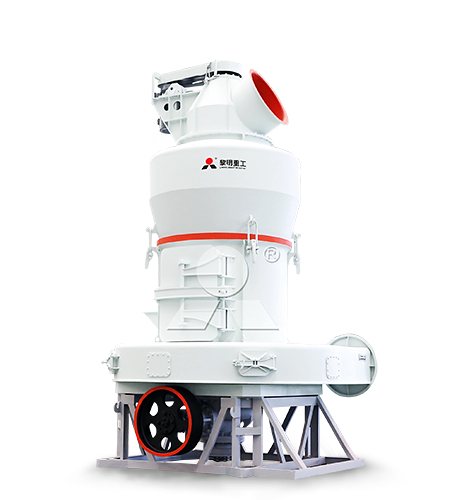
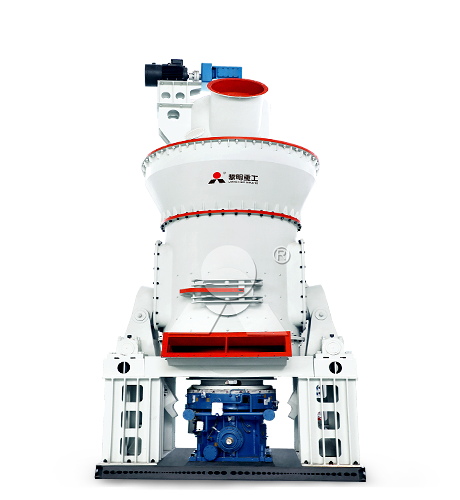
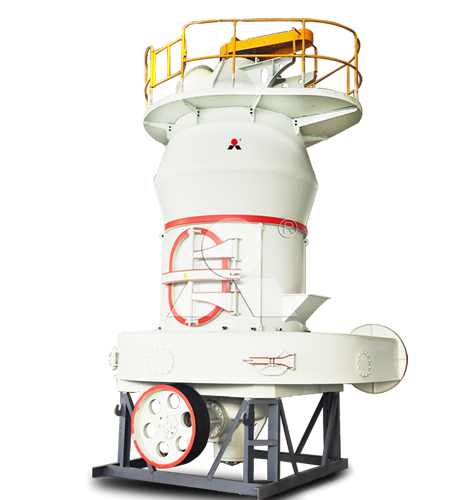
We are Liming Heavy Industry, a manufacturer of various types of industrial crushers, such as Raymond Mill, Trapezoidal Mill, Vertical Mill, Ultrafine Mill, Ball Mill, etc.
Our mills can process the following minerals:
limestone, quicklime, kaolin, talc, barite, bentonite, calcium carbonate, dolomite, coal, gypsum, clay, carbon black, slag, cement raw materials, cement clinker, etc.
If you need a mill to process stone or minerals into powder, please feel free to contact me (WhatsApp: +8615333807511). Thank you.
Calcium carbonate is ground by crushing natural calcite, limestone, marble, or chalk to a controlled feed size, milling it to the target powder range, and air-classifying the material so that particles meeting the specification are collected while coarse particles return for further grinding. For industrial GCC production, grinding is usually a closed-circuit dry process rather than a single pass through a mill.
The right grinding method depends on the required finished powder. Coarse grades for construction products may use a simpler pendulum or Raymond-type mill, while fine and ultrafine grades for PVC, PP, PE, masterbatch, rubber, sealants, adhesives, coatings, and paper commonly require a ball mill with air classifier, a ring-roller micro powder mill, or another high-efficiency grinding-and-classification system.
The Basic GCC Grinding Process
Ground calcium carbonate (GCC) is produced from natural mineral sources. The process physically reduces mineral particle size; it does not chemically change the calcium carbonate into a different material.
Select and inspect the raw material. Choose calcite, limestone, marble, or chalk with suitable CaCO3 content, whiteness, moisture, silica level, iron content, hardness, and consistency.
Crush the stone. Use primary and secondary crushing to reduce large rock to the feed size allowed by the grinding mill.
Screen and remove contaminants. Remove oversize material and tramp metal before the mill; sort or reject visibly unsuitable stone where premium quality is required.
Feed the mill continuously. Use a buffer silo and a controlled feeder to keep mill loading stable.
Grind to the target range. Use the selected mill to reduce the crushed calcium carbonate by compression, impact, attrition, or media grinding.
Air classify the powder. Separate fine particles that meet the target D50/D97 from coarse particles that need further grinding.
Return the coarse fraction. Send oversized particles back to the mill in a closed circuit.
Collect and store qualified powder. Use cyclones and pulse-jet bag filters to recover GCC, then send it to storage, coating, packing, or bulk loading.
Closed-circuit grinding is widely used because it removes particles that are already fine enough and returns oversize particles for additional size reduction. This helps control product top size, reduces unnecessary overgrinding, and improves grinding efficiency.
Choose a Mill by Target Fineness
There is no single best calcium carbonate mill. The equipment should be selected according to the target particle-size distribution, required tonnes per hour, raw-material moisture, hardness, abrasiveness, and whether the plant will make coated GCC.
| Grinding option | Typical GCC use | How it grinds | Key selection point |
|---|---|---|---|
| Jaw crusher + pendulum/Raymond mill | Coarse to medium-fine GCC | Compression and rolling in a dry grinding chamber | Suitable for many standard filler grades; less suitable for tight ultrafine PSD |
| Ball mill + air classifier | Fine and ultrafine GCC | Grinding media create impact and attrition; external classifier controls the cut | Flexible for multiple grades and larger continuous production |
| Ring-roller micro powder mill | Fine and ultrafine dry GCC | Rolling, compression, and grinding-ring action with air classification | Compact system; stable feed moisture and airflow are important |
| Vertical roller mill | Fine GCC at medium to high capacity | Grinding rollers apply pressure on a rotating table with internal classification | Can provide an integrated layout; verify actual output at the required D97 |
| Air classifier mill | Fine specialty GCC | Impact grinding combined with internal dynamic classification | Useful for some fine grades, but wear and heat must be managed |
| Stirred-media or jet mill | Very fine specialty GCC | High-intensity media attrition or gas-jet particle collision | Higher complexity and energy use must be justified by product value |
For a typical industrial line, a ball mill plus dynamic air classifier is widely used for fine and ultrafine GCC because the mill performs the grinding while the classifier controls which particles are released as product. For coarser products, a simpler roller or pendulum mill may be more economical.
Control Particle Size with Classification
Grinding alone produces a broad particle-size distribution. The air classifier controls the commercial quality of the final powder by separating fine GCC from coarse particles. The fine fraction becomes product; the coarse fraction returns to the mill.
For reliable industrial production, specify particle size with D-values rather than mesh alone:
| Parameter | Meaning | Why it matters |
|---|---|---|
| D10 | 10% of particles are below this size | Shows the fine portion of the GCC distribution |
| D50 | 50% of particles are below this size | Represents median particle size |
| D90 | 90% of particles are below this size | Shows the approach to the coarse end |
| D97 or D98 | 97% or 98% of particles are below the stated size | Controls the coarse tail that can affect downstream performance |
| Sieve residue | Oversized particles retained on an agreed screen | Provides a practical quality-control check for selected grades |
For example, a PVC filler specification may require D50 6–8 μm and D97 below 25 μm. The classifier is adjusted through wheel speed, airflow, and feed rate so that powder meeting the requirement exits the circuit while larger particles return for additional grinding.
Keep the Feed Dry and Consistent
Dry grinding performance depends heavily on feed condition. Wet or inconsistent material can cake in feeders, coat grinding surfaces, create unstable mill loading, reduce airflow, blind classifier components, and cause filter buildup.
Before grinding, control:
Maximum crushed-feed size.
Feed moisture and wet-season variation.
Feed rate and feeder accuracy.
CaCO3 content and mineral consistency.
Silica, quartz, clay, iron, and other impurities.
Tramp metal that can damage the mill or contaminate the powder.
Where moisture is too high for the selected dry mill, use covered storage, material blending, upstream drying, hot process air where suitable, or a different process route. The maximum acceptable moisture is mill-specific and should be confirmed through supplier testing with the actual material.
Grinding Conditions That Affect Output
In a calcium carbonate grinding circuit, output and product quality depend on the balance among grinding intensity, feed rate, classifier cut point, airflow, and wear condition. Changing only one setting may improve one result while creating a problem elsewhere.
| Operating variable | Effect on grinding | Risk if incorrectly controlled |
|---|---|---|
| Feed rate | Changes mill load and residence time | Overfeeding can increase coarse residue and reduce throughput stability |
| Classifier wheel speed | Controls the fine cut and product D97 | Too high can reduce yield and increase circulating load |
| Air volume | Transports powder and supports separation | Incorrect airflow can destabilize PSD and collection performance |
| Grinding media or roller condition | Determines grinding efficiency | Wear can lower output and shift particle-size distribution |
| Feed moisture | Affects material flow and agglomeration | High moisture can cause caking, buildup, and classifier blockage |
| Raw-material impurities | Influence hardness, abrasion, whiteness, and powder purity | Silica or iron can increase wear and reduce product value |
How to Grind for Different Applications
The target application determines how fine the calcium carbonate should be ground and whether it needs surface treatment. Finer is not always better: ultrafine powder costs more to produce and may not improve performance in every formulation.
| Application direction | Typical GCC focus | Grinding and processing priority |
|---|---|---|
| Putty, mortar, dry-mix, construction filler | Coarse to medium-fine uncoated GCC | High throughput, practical energy cost, stable bulk density |
| General PVC, rubber, paint, paper filler | Fine GCC with controlled coarse tail | Stable D50/D97, whiteness, dispersion, and low residue |
| PP/PE masterbatch and premium PVC | Fine or ultrafine GCC, commonly coated | Narrower PSD, low coarse particles, consistent surface treatment |
| Sealants and adhesives | Fine GCC with suitable rheology and surface properties | PSD consistency, flow behavior, moisture control, and coating compatibility |
| Specialty coatings | Fine or ultrafine high-whiteness GCC | Whiteness, PSD, low coarse residue, rheology, and surface smoothness |
For polymer applications, calcium carbonate is often surface treated after grinding and classification. Stearic acid is commonly used to improve compatibility with hydrophobic resin systems such as PVC, PP, PE, rubber, sealants, and adhesives. The treatment should be selected and validated for the actual powder surface area and customer formulation.
Powder Collection and Storage
After classification, qualified GCC is separated from the process air through cyclones and pulse-jet bag filters. The collection system is essential because it recovers product and stabilizes the airflow needed for accurate classification.
Use sealed rotary valves, properly designed ductwork, correctly sized fans, and effective filters. Monitor filter differential pressure, fan performance, air leakage, and product discharge. If a bag filter becomes overloaded or a duct leaks air, the classifier cut point can shift and the product may become too coarse or inconsistent.
Store finished powder in silos designed for its actual bulk density and flowability. Fine calcium carbonate can become aerated, bridge, or compact during storage. Coated and uncoated grades should be segregated to avoid cross-contamination.
Common Grinding Problems
Product is too coarse
Check classifier speed, air volume, feed rate, grinder wear, mill loading, filter pressure, and coarse-return flow. The problem may come from classification rather than insufficient grinding.
Output is lower than expected
Common causes include wet feed, harder-than-expected stone, excessive fineness demand, worn grinding parts, poor airflow, high circulating load, and restricted bag-filter discharge. Compare actual operating data with the supplier’s stated test conditions.
PSD varies between samples or shifts
Investigate raw-material variation, feed stability, classifier settings, fan performance, filter pressure drop, sampling method, and equipment wear. Use a consistent laboratory method for laser diffraction and define operating setpoints for each approved grade.
Dust leakage or poor housekeeping
Inspect enclosure seals, transfer points, ducts, bag-filter condition, rotary valves, silo vents, and cleaning practices. If the mineral contains silica impurities, review worker-exposure controls in addition to ordinary dust-control performance.
FAQ
Can calcium carbonate be ground dry?
Yes. Most GCC used in industrial fillers is made through dry crushing, grinding, air classification, collection, and packing. Dry processing is common for uncoated and coated GCC used in plastics, PVC, rubber, coatings, sealants, adhesives, paper, and construction products.
What is the best mill for grinding calcium carbonate?
It depends on the required particle-size distribution and capacity. A pendulum or Raymond mill may suit coarser grades; a ball mill with air classifier is commonly used for fine and ultrafine GCC; ring-roller and vertical roller systems may also fit fine-product production. Select the equipment through raw-material testing and a performance guarantee at the required D50/D97.
Why is an air classifier used after grinding?
Grinding produces particles of many sizes. The classifier removes the particles that meet the specification and returns coarse material for more grinding. This controls D97, reduces unnecessary overgrinding, and improves consistency and energy efficiency.
Can you grind limestone directly into calcium carbonate powder?
Yes, provided the limestone has suitable calcium carbonate content, whiteness, impurity levels, and moisture. It is crushed, ground, classified, and collected to make GCC. However, not all limestone is suitable for premium calcium carbonate grades because natural deposits can contain silica, clay, dolomite, iron, and other impurities.
Bottom Line
To grind calcium carbonate industrially, crush the mineral to a controlled feed size, mill it under stable conditions, use air classification to control D50 and D97, return coarse particles for regrinding, and collect the qualified GCC efficiently. The selected process should match the raw material and the final application rather than pursue the finest possible powder by default.
For dependable B2B production, control feed moisture, feed size, mineral purity, mill condition, classifier settings, process airflow, and finished-product testing. This is how a grinding circuit produces consistent calcium carbonate for PVC, plastics, rubber, sealants, adhesives, coatings, paper, and construction markets.