Calcium Carbonate Knowledge Hub
Is Calcium Carbonate the Same as Limestone?
2026-09-04 17:31:03
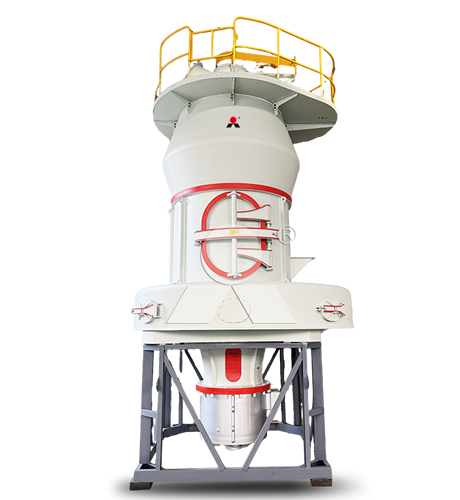
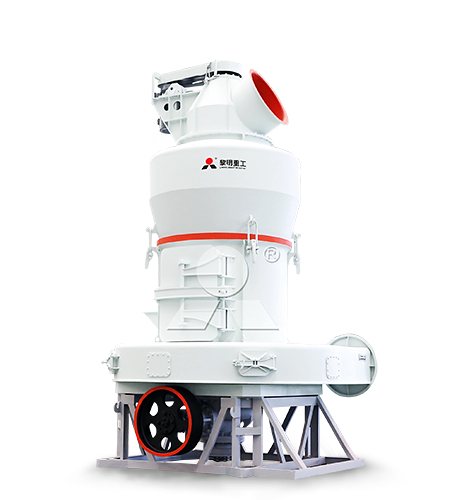
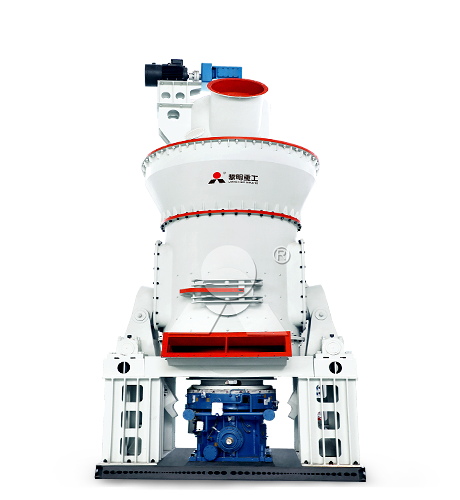
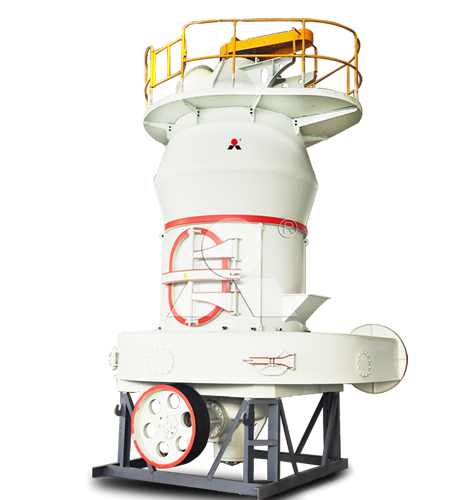
We are Liming Heavy Industry, a manufacturer of various types of industrial crushers, such as Raymond Mill, Trapezoidal Mill, Vertical Mill, Ultrafine Mill, Ball Mill, etc.
Our mills can process the following minerals:
limestone, quicklime, kaolin, talc, barite, bentonite, calcium carbonate, dolomite, coal, gypsum, clay, carbon black, slag, cement raw materials, cement clinker, etc.
If you need a mill to process stone or minerals into powder, please feel free to contact me (WhatsApp: +8615333807511). Thank you.
No. Calcium carbonate and limestone are closely related, but they are not exactly the same thing. Calcium carbonate is a chemical compound with the formula CaCO3, while limestone is a natural sedimentary rock composed mostly of calcium carbonate minerals—mainly calcite and sometimes aragonite.
In practical terms, limestone is one of the main natural sources used to produce calcium carbonate products. A calcium carbonate producer may quarry limestone, remove unsuitable material, crush and grind it, then sell the resulting powder as ground calcium carbonate (GCC). The final GCC grade can be much purer, finer, and more tightly controlled than the original limestone rock.
Calcium Carbonate vs. Limestone
| Feature | Calcium carbonate | Limestone |
|---|---|---|
| What it is | A chemical compound: CaCO3 | A natural sedimentary rock |
| Main form | Can occur as calcite, aragonite, or vaterite | Usually consists mainly of calcite and/or aragonite |
| Purity | Can refer to chemically pure CaCO3 or a commercial calcium carbonate product | Usually contains variable amounts of non-carbonate minerals and other impurities |
| Physical form | Mineral crystals, powder, precipitated particles, shells, or processed filler | Rock, quarried stone, crushed aggregate, or feedstock for processing |
| Industrial relationship | The desired mineral compound in many products | One important natural raw material source of calcium carbonate |
The U.S. Geological Survey defines limestone, in the minerals-industry sense, as rock composed mostly of calcium carbonate. That wording is important: limestone is mostly calcium carbonate, but natural limestone is not automatically pure calcium carbonate.
What Is Inside Limestone?
Most limestone contains calcite, which is the mineral form of calcium carbonate. Some limestone also contains aragonite, another crystal form of CaCO3. Depending on the geological deposit, limestone may also include dolomite, quartz, clay, chert, pyrite, iron-bearing minerals, organic matter, and other materials.
The exact composition determines whether a limestone deposit is suitable for premium GCC, lime production, cement, agricultural use, construction aggregate, or lower-cost filler applications.
| Common limestone component | Chemical or mineral identity | Effect on calcium carbonate processing |
|---|---|---|
| Calcite | Calcium carbonate, CaCO3 | The main desired mineral for GCC production |
| Aragonite | Calcium carbonate, CaCO3, with a different crystal structure | Still calcium carbonate, but may have different crystal and grinding characteristics |
| Dolomite | Calcium magnesium carbonate, CaMg(CO3)2 | Raises magnesium content and may limit use in high-purity GCC markets |
| Quartz or silica | Silicon dioxide, SiO2 | Increases abrasion, can lower purity, and requires dust-control attention |
| Clay and chert | Silicate-rich impurities | Can lower whiteness, affect grinding, and reduce premium filler value |
| Iron-bearing minerals | Various iron oxides or sulfides | Can reduce whiteness and create color variation |
State geological guidance notes that limestone is rarely pure calcite or pure dolomite. It commonly contains accessory materials including quartz, chert, clay, and pyrite. For this reason, industrial producers rely on chemical analysis, whiteness testing, impurity measurement, and grinding trials before selecting a limestone source for fine calcium carbonate production.
How Limestone Becomes GCC
Limestone can be processed into GCC when it has the required calcium carbonate content, color, and impurity profile. The production process does not create CaCO3; it physically reduces and classifies the naturally occurring mineral into a commercial powder grade.
Quarrying: Limestone is extracted and separated by quality or quarry bench.
Sorting and cleaning: Soil, weathered stone, dark minerals, metal, and visibly unsuitable material are removed.
Crushing: Large rock is reduced to a controlled feed size for the mill.
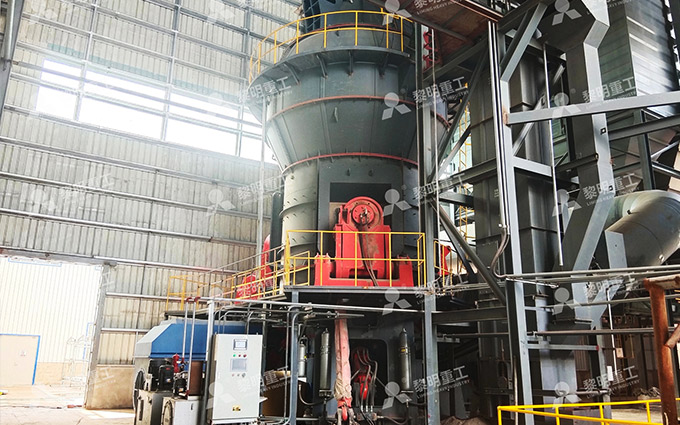
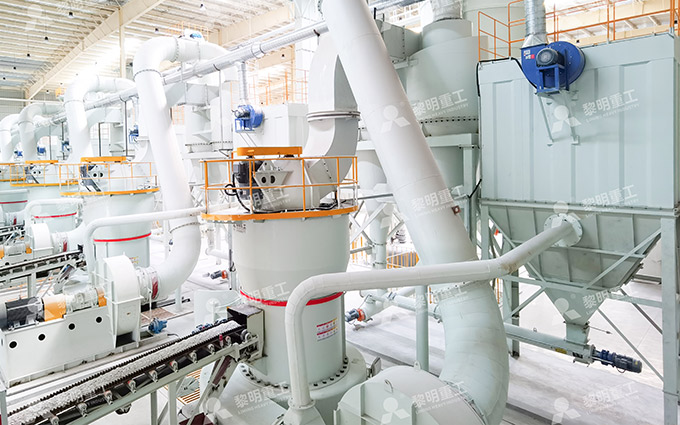
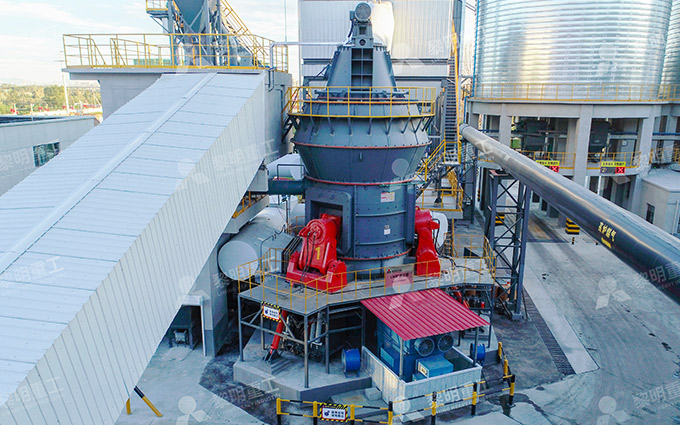
Grinding: The crushed limestone is milled to the required coarse, fine, or ultrafine GCC range.
Air classification: Fine product is separated from coarse particles that must return for more grinding.
Collection and storage: The qualified GCC is collected in cyclones and filters, then stored in silos.
Optional coating: Some GCC is surface treated, commonly for PVC, PP, PE, rubber, sealants, and adhesives.
For industrial filler applications, the resulting product is normally described as ground calcium carbonate rather than simply “limestone.” GCC production controls the powder’s D50, D97, coarse residue, whiteness, moisture, bulk density, and, when required, surface-treatment performance.
Why the Distinction Matters
Calling all limestone “calcium carbonate” can be misleading in procurement and product formulation. A limestone rock may be acceptable for aggregate, cement, or lime, but unsuitable for a high-whiteness PVC filler or ultrafine coating grade because of silica, magnesium, iron, clay, moisture, or color variation.
For example, a producer may receive two limestone samples:
Sample A: High calcite content, high whiteness, low silica, low iron, and stable mineral composition. It may be suitable for fine or ultrafine GCC in plastics, coatings, paper, or premium construction products.
Sample B: Lower calcium carbonate content, more dolomite, quartz, clay, and iron-bearing material. It may be suitable for aggregate, cement feed, lower-value filler, or applications with less demanding whiteness and purity requirements.
Both samples can reasonably be called limestone. They are not necessarily interchangeable as raw materials for GCC production.
Limestone, Calcite, Marble, and Chalk
Limestone is only one natural source of calcium carbonate. Calcite, marble, and chalk are also important industrial feedstocks, but they are different geological materials.
| Material | Geological description | Relationship to calcium carbonate | Common industrial use |
|---|---|---|---|
| Calcite | A mineral | One crystalline form of CaCO3 | High-quality GCC, fillers, optical and specialty uses |
| Limestone | A sedimentary rock | Mostly calcite and/or aragonite, often with impurities | GCC, cement, lime, aggregate, agriculture, construction |
| Marble | A metamorphic rock formed from limestone | Usually rich in recrystallized calcite | High-whiteness GCC, architectural stone, fillers |
| Chalk | A soft, fine-grained sedimentary rock | Mostly calcium carbonate, often from marine microfossils | Fillers, coatings, agriculture, paper-related applications |
Limestone and marble differ mainly in geological origin: limestone is sedimentary, whereas marble is metamorphic. Both may be used as GCC feedstock if their purity, whiteness, and mineral consistency match the target market.
Industrial Terminology
In industrial mineral markets, the words may be used differently depending on the product:
Limestone: Usually refers to the natural rock, quarry material, crushed stone, aggregate, cement feed, or lime feedstock.
Calcium carbonate: Refers to the chemical compound or a processed powder product.
GCC: Means mechanically ground natural calcium carbonate, usually made from calcite, marble, limestone, or chalk.
PCC: Means precipitated calcium carbonate, manufactured through a controlled chemical process.
Dolomitic limestone: Limestone containing significant dolomite, which contributes magnesium carbonate as well as calcium carbonate.
For purchasing, use a detailed specification rather than relying on terminology. State CaCO3 content, MgO or MgCO3 level, SiO2, Fe2O3, whiteness, moisture, D50, D97, residue, coating status, packaging, and the intended application.
FAQ
Is limestone pure calcium carbonate?
Not usually. Limestone is mostly calcium carbonate, but it can contain dolomite, quartz, clay, chert, pyrite, iron-bearing minerals, and other impurities. The composition varies widely by deposit.
Can all limestone be used to make GCC?
No. Almost any suitable limestone can be crushed or ground, but not every deposit is suitable for high-value GCC. Fine GCC for PVC, masterbatch, coatings, paper, sealants, or adhesives may require high whiteness, high CaCO3 content, low silica, low iron, low moisture, and stable mineral quality.
Is calcite the same as limestone?
No. Calcite is a mineral with the chemical composition CaCO3. Limestone is a rock composed mainly of calcite, aragonite, or both, often with additional minerals and impurities.
Is marble the same as limestone?
No. Marble forms when limestone undergoes metamorphism under heat and pressure. Both are commonly rich in calcium carbonate, but marble has recrystallized mineral grains and a different geological history.
Why do calcium carbonate suppliers use limestone as a raw material?
Limestone is abundant, naturally rich in calcium carbonate, and can be processed into GCC through crushing, grinding, classification, and optional surface treatment. A high-quality limestone deposit can provide a cost-effective raw material for many industrial filler grades.
Bottom Line
Calcium carbonate is the chemical compound CaCO3; limestone is a natural rock made mostly of calcium carbonate minerals. Therefore, limestone is often a source of calcium carbonate, but the two terms are not interchangeable.
For GCC production, the important issue is not simply whether the raw material is called limestone. It is whether the deposit has the required CaCO3 content, whiteness, low impurity level, moisture, grindability, and consistency to produce a calcium carbonate grade that performs reliably in the intended industrial application.