Calcium Carbonate Knowledge Hub
Is Calcium Carbonate Natural?
2026-09-04 17:30:30
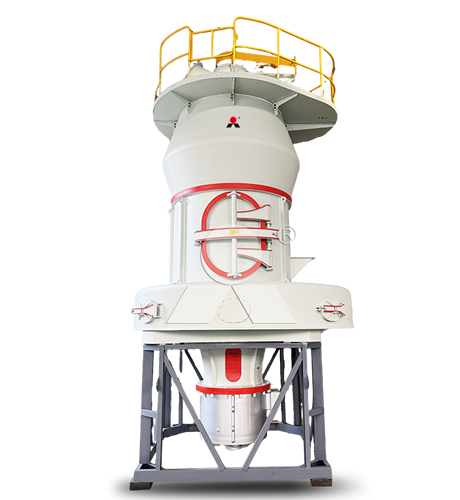
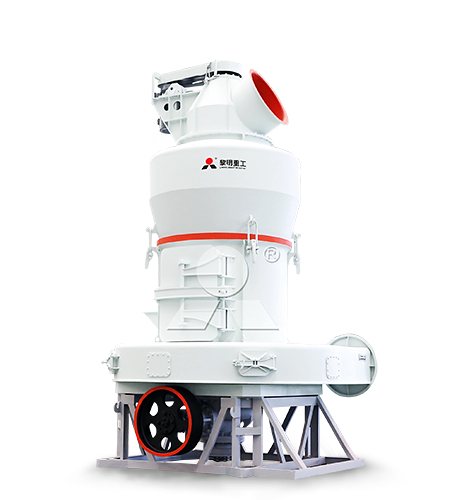
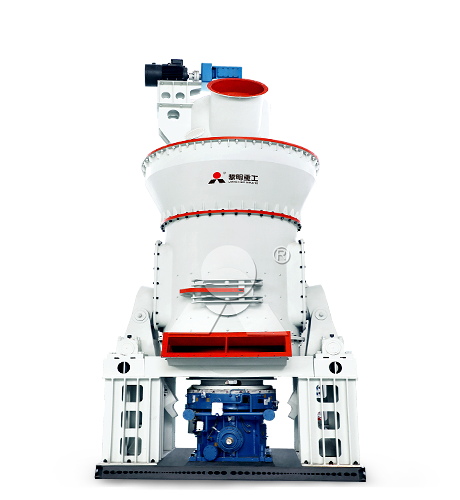
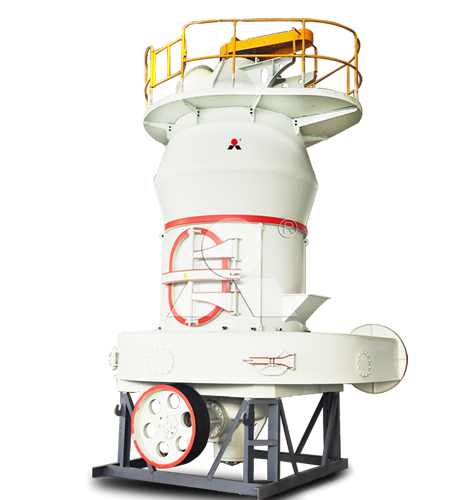
We are Liming Heavy Industry, a manufacturer of various types of industrial crushers, such as Raymond Mill, Trapezoidal Mill, Vertical Mill, Ultrafine Mill, Ball Mill, etc.
Our mills can process the following minerals:
limestone, quicklime, kaolin, talc, barite, bentonite, calcium carbonate, dolomite, coal, gypsum, clay, carbon black, slag, cement raw materials, cement clinker, etc.
If you need a mill to process stone or minerals into powder, please feel free to contact me (WhatsApp: +8615333807511). Thank you.
Yes. Calcium carbonate is a naturally occurring compound found in rocks, minerals, shells, corals, eggshells, and many geological deposits. In industry, natural calcium carbonate is commonly mined from limestone, marble, chalk, or calcite deposits and processed into ground calcium carbonate (GCC).
However, not all commercial calcium carbonate is mined and ground. Precipitated calcium carbonate (PCC) is manufactured through a controlled chemical process, usually starting with natural limestone or another calcium source. Both GCC and PCC are calcium carbonate, but their production routes and particle properties differ.
Natural Sources of Calcium Carbonate
Calcium carbonate has the chemical formula CaCO3. It occurs widely in the Earth’s crust and in biological materials. The most common natural mineral forms are calcite and aragonite; vaterite is another calcium carbonate polymorph but is less stable and less common in natural deposits.
| Natural source | How calcium carbonate occurs | Industrial relevance |
|---|---|---|
| Calcite | A common crystalline mineral form of CaCO3 | High-quality source for fine and ultrafine GCC |
| Limestone | A sedimentary rock composed mainly of calcium carbonate minerals | Major source for GCC, lime, cement, construction materials, and fillers |
| Marble | Metamorphosed limestone, often rich in calcite | Frequently used for high-whiteness GCC grades |
| Chalk | A soft, fine-grained calcium carbonate rock, often derived from marine organisms | Used in fillers, coatings, agriculture, and selected industrial applications |
| Shells and corals | Biological structures built largely from calcite or aragonite | Natural examples of biomineralized calcium carbonate |
| Cave deposits | Calcite deposited from mineral-rich water as stalactites and stalagmites | Demonstrates natural precipitation of calcium carbonate |
Calcium carbonate is a major constituent of limestone, marble, chalk, eggshells, bivalve shells, and corals. In natural marine environments, calcite and aragonite are the two principal calcium carbonate mineral forms.
Natural GCC vs. Manufactured PCC
The key difference is the production route. GCC retains the mineral origin of the quarried rock and is produced mainly by mechanical size reduction. PCC is produced through chemical conversion and controlled precipitation.
| Feature | Ground calcium carbonate (GCC) | Precipitated calcium carbonate (PCC) |
|---|---|---|
| Starting material | Natural calcite, limestone, marble, chalk, or similar mineral | Usually natural limestone or another calcium source processed chemically |
| Main production method | Crushing, grinding, classification, optional surface treatment | Calcination, hydration, carbonation, precipitation, separation, and drying |
| Particle shape | Typically irregular, reflecting mechanical grinding of mineral particles | Can be engineered into more controlled crystal morphologies |
| Particle-size control | Controlled through grinding and air classification | Controlled through chemical reaction and precipitation conditions |
| Typical industrial use | PVC, PP, PE, masterbatch, rubber, paints, sealants, adhesives, paper, construction products | Paper, plastics, paints, pharmaceuticals, food, and specialty formulations |
Industry commonly refers to naturally sourced, mechanically ground calcium carbonate as GCC, while the chemically manufactured form is called PCC. PCC is not “unnatural” in the sense of having a different chemical identity; it is still CaCO3. Its particles are created or controlled through a precipitation process rather than simply ground from rock.
How Natural Calcium Carbonate Becomes GCC
Natural calcium carbonate used in industrial fillers is normally extracted from a quarry or mine, selected for quality, and processed in a GCC plant. The goal is to make a stable powder grade with the particle size, whiteness, purity, moisture, and surface properties required by customers.
Mining or quarrying: Calcite, limestone, marble, or chalk is extracted and segregated by quality.
Cleaning and sorting: Soil, weathered rock, dark minerals, metal, and unsuitable material are removed where needed.
Crushing: Large stone is reduced to a suitable feed size for the grinding circuit.
Grinding: The mineral is milled to coarse, fine, or ultrafine GCC.
Air classification: Fine product is separated from coarse particles that need more grinding.
Collection and storage: Cyclones and bag filters recover the powder before silo storage and packing.
Optional coating: Some GCC is surface treated, often with stearic acid, for compatibility with polymer systems.
The mineral is natural, but the final commercial GCC grade is engineered through physical processing. Its performance depends on the original deposit and on how accurately the producer controls particle-size distribution, coarse residue, whiteness, moisture, impurity content, and surface treatment.
Why “Natural” Does Not Mean All Grades Are the Same
Natural calcium carbonate varies considerably between deposits. Two products may both be labeled “natural calcium carbonate” but behave differently in a PVC compound, coating, rubber formula, or sealant because their mineral source and processing history differ.
Key differences can include:
CaCO3 content and overall chemical purity.
Whiteness, brightness, and color consistency.
Silica, quartz, clay, dolomite, iron-bearing minerals, and other impurities.
Hardness, abrasiveness, and grindability.
Particle-size distribution, including D50 and D97.
Particle shape and specific surface area.
Moisture and powder-flow behavior.
Whether the powder is uncoated or surface treated.
For example, high-whiteness marble-derived GCC may be preferred for certain coatings, premium PVC, paper, or masterbatch applications. A lower-cost limestone-derived GCC may be suitable for construction filler, putty, dry-mix products, or applications with less demanding color requirements. The best choice depends on the exact formulation and performance target.
Does Surface Treatment Make GCC Non-Natural?
No. A coated GCC product still consists primarily of natural ground calcium carbonate. Surface treatment changes the particle surface to improve compatibility with the intended formulation; it does not turn the calcium carbonate core into PCC or a different mineral.
For example, stearic acid is commonly used to coat GCC for hydrophobic polymer applications such as PVC, PP, PE, rubber, sealants, and adhesives. The coating can make the powder more compatible with organic resins, reduce agglomeration, and improve dispersion. The product is still normally sold as coated ground calcium carbonate.
From a procurement and formulation perspective, buyers should distinguish among:
Natural uncoated GCC.
Natural GCC with a surface treatment.
Chemically precipitated calcium carbonate, or PCC.
Each can be appropriate depending on the required particle shape, fineness, whiteness, rheology, dispersion, filler loading, opacity, cost, and regulatory requirements.
FAQ
Is calcium carbonate a natural mineral?
Yes. Calcium carbonate occurs naturally as minerals including calcite and aragonite, and it is widely present in limestone, marble, chalk, shells, corals, and cave deposits.
Is GCC natural calcium carbonate?
Yes. GCC is ground calcium carbonate produced by mechanically processing naturally occurring mineral sources such as calcite, limestone, marble, or chalk.
Is PCC natural or synthetic?
PCC is generally described as manufactured, synthetic, or precipitated calcium carbonate because its particles are produced through a controlled chemical precipitation process. Its chemical composition is still calcium carbonate, and it is often made from natural limestone-derived calcium sources.
Is calcium carbonate from shells the same as calcium carbonate from limestone?
Both are primarily CaCO3, but their mineral form, purity, crystal structure, trace components, and processing history may differ. Shell material often contains biological organic matter and may be mainly aragonite or calcite, while limestone and marble are geological materials whose properties vary by deposit.
Bottom Line
Calcium carbonate is naturally occurring. It is found in minerals, rocks, shells, corals, eggshells, and other natural materials, with calcite and aragonite being the most important natural forms. GCC is the industrial name for calcium carbonate that is quarried from natural deposits and mechanically ground to a controlled powder grade.
PCC uses the same basic chemical compound but is produced through chemical precipitation. For industrial buyers, the practical issue is not only whether calcium carbonate is natural; it is whether the selected GCC or PCC grade has the required PSD, whiteness, purity, surface treatment, and performance for the intended PVC, plastic, rubber, coating, sealant, adhesive, paper, or construction application.