Calcium Carbonate Knowledge Hub
What Equipment Is Needed for GCC Production?
2026-09-04 17:29:40
We are Liming Heavy Industry, a manufacturer of various types of industrial crushers, such as Raymond Mill, Trapezoidal Mill, Vertical Mill, Ultrafine Mill, Ball Mill, etc.
Our mills can process the following minerals:
limestone, quicklime, kaolin, talc, barite, bentonite, calcium carbonate, dolomite, coal, gypsum, clay, carbon black, slag, cement raw materials, cement clinker, etc.
If you need a mill to process stone or minerals into powder, please feel free to contact me (WhatsApp: +8615333807511). Thank you.
Ground calcium carbonate (GCC) production requires a connected system for raw-material preparation, crushing, grinding, air classification, powder collection, storage, and packing. If the plant will supply coated GCC for PVC, PP, PE, masterbatch, rubber, sealants, or adhesives, it also needs surface-treatment equipment for accurate additive dosing, mixing, cooling, and coated-powder handling.
The exact equipment list depends on the feedstock, target D50/D97, required output, moisture level, and end-use market. A simple line for coarse construction-grade GCC needs less equipment than a high-capacity plant producing ultrafine, narrow-PSD, stearic-acid-coated calcium carbonate for polymers.
Core GCC Equipment List
A typical dry GCC production line includes the following equipment groups:
| Process step | Equipment needed | Main purpose |
|---|---|---|
| Raw material receiving | Receiving hopper, grizzly, apron feeder, belt feeder, conveyors | Accept and move calcite, limestone, marble, or chalk into the plant |
| Crushing | Jaw crusher, impact crusher, hammer crusher, cone crusher, vibrating screen | Reduce large stone to a stable feed size for the grinding mill |
| Contamination removal | Magnetic separator, metal detector, hand sorting or optical sorting where justified | Protect the mill and reduce metal or low-whiteness contamination |
| Feed buffering | Day bin, feed hopper, weigh feeder, screw feeder, rotary valve | Provide a steady, measurable feed rate to the grinding circuit |
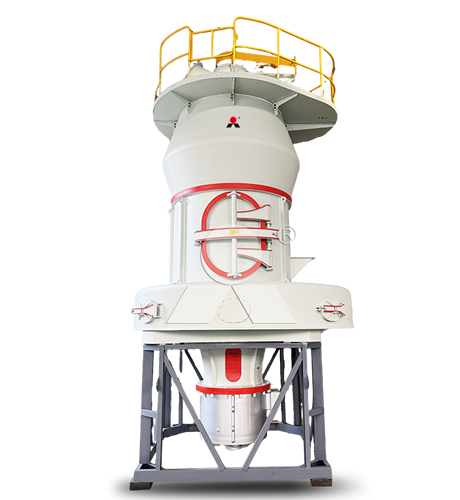
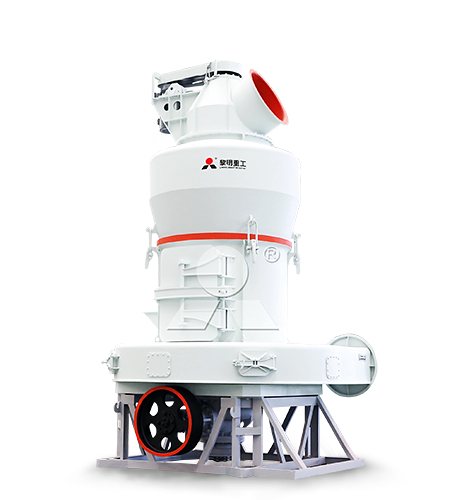
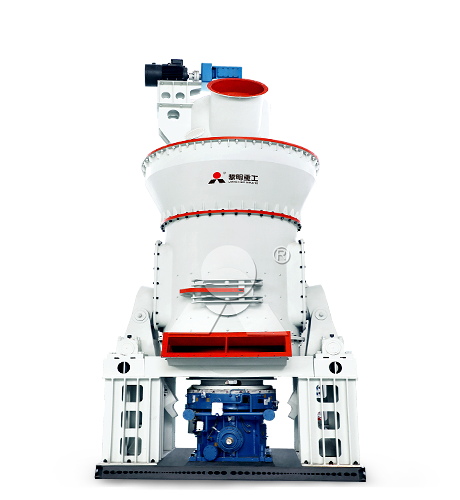
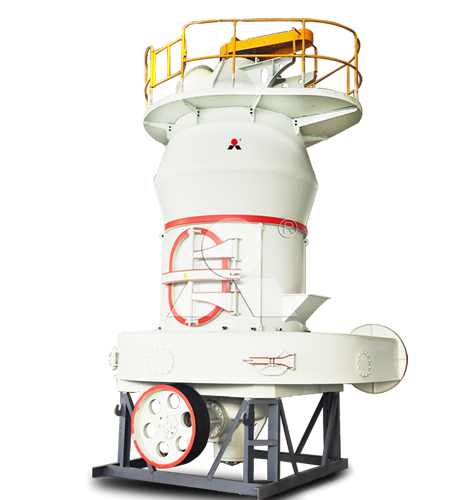
| Grinding | Raymond mill, pendulum mill, ball mill, ring-roller mill, vertical roller mill, ACM, or stirred mill | Reduce calcium carbonate to the required powder range |
| Classification | Dynamic air classifier, turbine classifier, multi-wheel classifier, coarse-return conveyor | Separate qualified fine powder from oversize particles |
| Air handling and collection | Induced-draft fan, cyclone collector, pulse-jet bag filter, ducts, rotary airlocks | Move process air, recover powder, stabilize classification, and control dust |
| Optional drying | Flash dryer, hot-air generator, heated-air system, insulation and temperature controls | Reduce feed moisture when dry grinding requires it |
| Optional coating | Stearic-acid tank, melting unit, dosing system, coating mixer, cooler, coated-powder collector | Produce surface-treated GCC for polymer and rubber applications |
| Product storage | Finished-product silos, bin vents, level sensors, flow aids, discharge valves | Store powder by grade before packing or bulk dispatch |
| Packing and dispatch | Valve-bag packer, open-mouth bagger, FIBC filler, bulk tanker loader, pallet system | Deliver finished GCC in the required commercial format |
| Automation and QC | PLC/DCS, VFDs, weigh scales, sampling equipment, laser PSD analyzer, whiteness meter, moisture analyzer | Maintain repeatable production and verify customer specifications |
Supplier descriptions of a typical dry GCC line follow the same core route: crushing, grinding, high-efficiency air classification, powder collection, and automatic packaging. Equipment lists from calcium carbonate production-line providers also commonly include crushers, dryers where necessary, grinding mills, classifiers, coating machines, and packing machines.
Raw-Material Preparation Equipment
GCC starts with natural calcite, marble, limestone, or chalk. The purpose of raw-material preparation is to provide clean, consistent, suitably sized feed for the mill. This step is often underestimated, but inconsistent feed can reduce grinding efficiency and create large PSD, whiteness, and capacity variations.
Receiving and conveying
At minimum, use a receiving hopper and a controlled feeder. Larger plants may use stockpiles, loaders, apron feeders, reclaim systems, belt conveyors, and transfer chutes. The system should allow segregation of different quarry benches or mineral grades because a low-whiteness or high-silica batch can affect a large amount of finished product.
Crushing and screening
Large stone must be reduced before milling. A jaw crusher is commonly used for primary crushing; an impact crusher, hammer crusher, cone crusher, or secondary jaw crusher may be used for secondary reduction. Vibrating screens control top size and return oversize material for further crushing.
The required final crushed size depends on the mill. A common fine-GCC process uses crushed feed in the approximate 5–10 mm range before entering an air classifier mill or other ultrafine grinding system. The supplier should specify the permitted maximum feed size for the selected mill, then the crushing circuit should be designed to meet it reliably.
Magnetic separation
Install magnetic separators or metal detectors ahead of the mill to remove tramp metal from quarry material, conveyors, or maintenance activities. This protects grinding equipment and helps prevent metal contamination in high-whiteness or premium polymer grades.
Grinding Equipment
The grinding mill is selected primarily by target PSD and net finished-product capacity. It should never be chosen from a maximum catalog capacity alone, because output changes substantially with fineness, feed moisture, hardness, abrasiveness, and classifier settings.
| Mill type | Typical GCC use | Potential advantages | Important limitation |
|---|---|---|---|
| Raymond or pendulum mill | Coarse to medium-fine GCC | Common dry-grinding option for standard filler grades | Usually less suitable for narrow ultrafine PSD requirements |
| Ball mill | Fine and ultrafine GCC, generally with external classifier | Flexible product adjustment and scalable continuous production | Requires correct media, classifier, fan, and circulating-load design |
| Ring-roller micro powder mill | Fine and ultrafine dry GCC | Compact integrated grinding and classification arrangement | Performance is sensitive to moisture, feed consistency, airflow, and wear |
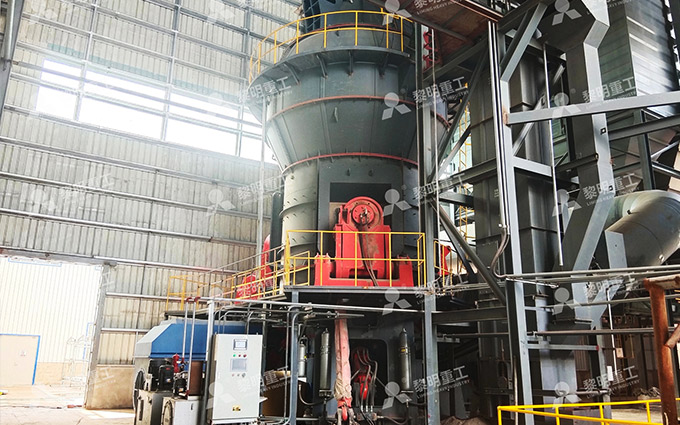
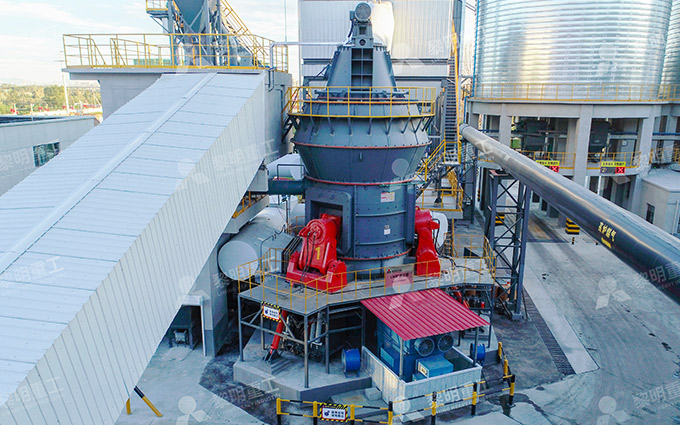
| Vertical roller mill | Fine GCC at medium to high capacity | Integrated vertical layout; some designs can handle limited drying duty | Verify output at required D97, not only at a coarser reference grade |
| Air classifier mill | Fine specialty GCC at smaller to medium capacities | Impact grinding and dynamic classification combined in one unit | Wear, heat, and rotor/classifier loading require careful control |
| Stirred-media mill | Very fine or specialty GCC | Can support extremely fine particle-size targets | Media wear, wet processing, dewatering, and drying may increase complexity |
For dry GCC production, ball mills, ring-roller mills, and Raymond mills are commonly selected according to target fineness and capacity, while high-efficiency air classifiers separate qualified fine powder and return coarse particles for further grinding.
Air Classification Equipment
Grinding creates a range of particle sizes. The air classifier determines which particles are accepted as saleable GCC and which particles must return to the mill. For fine and ultrafine products, classifier selection is often as important as the choice of grinding mill.
A typical dynamic classifier includes a rotor or classifier wheel, classification chamber, air inlet, fine-product outlet, coarse-product discharge, drive system, and variable-frequency control. Increasing classifier-wheel speed generally creates a finer cut; reducing it allows a coarser product. The final setting must be verified through PSD testing, especially D50 and D97.
For larger throughput or finer products, the line may need a high-efficiency turbine classifier, multi-wheel classifier, multiple classifier units, or parallel grinding-classification trains. The classifier should be sized for the total internal circulation, not only the net finished-product rate.
Why the classifier needs a coarse-return system
In a closed circuit, coarse particles rejected by the classifier must return to the mill. This requires appropriate conveyors, elevators, pipes, airlocks, or mechanical return systems. If the return system is undersized or unstable, the classifier can overload and product D97 may become too coarse.
Powder Collection and Dust-Control Equipment
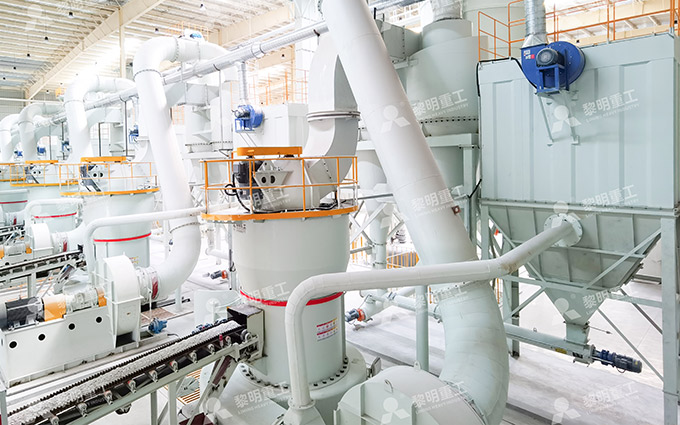
Fine GCC must be recovered efficiently from process air. Collection equipment normally includes one or more cyclones, a pulse-jet bag filter, an induced-draft fan, ductwork, airlocks, and discharge conveyors. This section protects product yield, process stability, operator safety, and housekeeping.
A cyclone may recover a substantial fraction of the coarser powder, while the bag filter captures finer particles and prevents dust from leaving with exhaust air. The induced-draft fan maintains the airflow required by the classifier and pneumatic transfer system. A change in filter differential pressure, fan speed, duct leakage, or airlock sealing can alter the classifier cut point and destabilize powder quality.
For a fine GCC plant, specify:
Required process-air volume and fan static pressure.
Expected classifier feed rate and circulating load.
Cyclone duty and collection arrangement.
Bag-filter area, media type, air-to-cloth ratio, and cleaning system.
Compressed-air requirement for pulse cleaning.
Filter differential-pressure alarms and maintenance access.
Rotary-valve capacity and air-sealing performance.
Dust-emission requirements and local environmental obligations.
Coating Equipment for Treated GCC
Coating equipment is needed when GCC will be used in hydrophobic polymer systems, including PVC, PP, PE, masterbatch, rubber, sealants, and many adhesives. Surface modification can improve compatibility with polymers, reduce agglomeration, improve powder flow, and support higher filler loading in selected formulations.
A coated-GCC section commonly contains:
Low-moisture GCC feed hopper and metering system.
Stearic-acid or other modifier storage tank.
Heating or melting equipment for the selected treatment agent.
Precision metering pump or dosing system.
High-speed coating mixer or intensive mixer.
Temperature-control and cooling equipment.
Coated-powder collector and sealed conveying system.
Separate product silo and packing equipment for coated grades.
Coated GCC generally requires more careful powder conditioning than uncoated GCC. Finer grades have greater surface area, so they need accurate additive dosing and uniform mixing. The coating system should be sized for the planned coated-product output, rather than added as a small downstream unit after the grinding plant is already selected.
Product Storage and Packing Equipment
After collection, GCC needs storage and dispatch equipment that maintains powder quality. Fine calcium carbonate can be highly aerated and cohesive, so silos should be designed for the actual bulk density, flowability, and moisture sensitivity of each product grade.
| Equipment | Function | Design consideration |
|---|---|---|
| Finished-product silo | Stores qualified GCC before dispatch | Provide adequate capacity, vent filtration, level sensors, and grade segregation |
| Silo discharge equipment | Transfers powder to packing or bulk loading | May require flow aids, suitable cone design, and reliable valve control |
| Valve-bag packer | Fills powder into standard valve bags | Match bags per hour to production and dispatch schedule |
| Open-mouth bagging machine | Fills and closes open bags | Useful where bag format or liner requirements differ |
| FIBC or jumbo-bag filler | Fills 500–1,000 kg bulk bags | Control bulk density, filling accuracy, and safe handling |
| Bulk tanker loader | Loads powder directly into road tankers | Requires silo capacity, dust-free loading, and truck circulation space |
For high-output plants, packaging and dispatch can become the bottleneck. A grinding line may be capable of producing more powder than bagging, bulk loading, warehouse handling, or truck scheduling can clear. Size product silos and loading equipment around daily production, grade segregation, laboratory release time, and realistic customer dispatch patterns.
Control and Laboratory Equipment
A GCC production line needs process controls and quality-control instruments to maintain stable output. For simple coarse products, a basic PLC and routine samples may be sufficient. For fine, ultrafine, coated, or multi-grade GCC, more comprehensive automation and faster laboratory feedback are needed.
Important control equipment includes:
PLC or DCS control system.
Variable-frequency drives for feeders, classifier wheels, fans, and selected conveyors.
Load cells, belt scales, or loss-in-weight feeders.
Mill-load, vibration, temperature, bearing, and lubrication monitoring.
Bag-filter differential-pressure transmitters and cleaning controls.
Airflow, pressure, and silo-level sensors.
Emergency stops, interlocks, alarms, and fault-history monitoring.
Laser diffraction particle-size analyzer.
Whiteness or brightness meter.
Moisture analyzer, bulk-density equipment, sieve-residue tools, and coating-performance test equipment.
An integrated control system supports stable operation, consistent product quality, and remote monitoring or adjustment in modern GCC plants. The most important quality measurements are usually PSD, moisture, whiteness, coarse residue, bulk density, and—where relevant—surface-treatment performance.
Optional Equipment by Plant Type
| Plant objective | Additional equipment often needed | Reason |
|---|---|---|
| Wet or high-moisture feed | Flash dryer, hot-air generator, moisture-control instrumentation | Prevent caking and maintain dry-grinding efficiency |
| Premium high-whiteness GCC | Advanced sorting, magnetic separation, contamination-control measures | Protect whiteness and reduce off-spec material |
| Ultrafine GCC | High-efficiency or multi-wheel classifier, larger baghouse, advanced PSD laboratory | Control D97 and fine-product yield at higher circulating loads |
| Coated polymer-grade GCC | Modifier storage, melting, dosing, intensive mixing, cooling, separate silos | Provide consistent surface treatment and prevent cross-contamination |
| Bulk sales | Large silos, tanker-loading station, truck scale, dust-free loading equipment | Support efficient high-volume shipment |
| Bagged export products | Multiple packers, palletizer, stretch wrapper, warehouse equipment, container-loading area | Improve dispatch efficiency and packaging consistency |
How to Specify the Equipment Package
To receive a useful technical proposal, provide suppliers with a complete project brief. The most important inputs are the raw-material analysis, product specification, and capacity requirement.
Raw material type, chemistry, whiteness, moisture, hardness, abrasiveness, and feed size.
Representative mineral sample for grinding and classification trials.
Target D50 and D97/D98 for each GCC grade.
Maximum coarse residue, moisture, brightness, and impurity limits.
Required net finished-product output in tonnes per hour.
Annual product mix and operating hours.
Coated versus uncoated product volume.
Packaging and dispatch format.
Site location, power supply, climate, local regulations, and available footprint.
Required automation, laboratory, spare-parts, commissioning, and training scope.
Then ask for a full process flow diagram, material balance, air balance, equipment list, electrical load list, layout, utility requirements, spare-parts recommendation, performance guarantee, and clearly defined boundary of supply.
FAQ
What is the most important machine in a GCC plant?
The grinding mill is central, but no single machine determines plant success. For fine and ultrafine GCC, the air classifier is equally critical because it controls D97 and coarse residue. The fan, bag filter, feeder, conveying system, and finished-product handling equipment must also be properly matched.
Do all GCC plants need a crusher?
Most plants processing quarry stone need crushing equipment to reduce large rock to the mill’s permitted feed size. A crusher may not be required if the plant purchases already crushed, clean, correctly sized calcium carbonate feedstock.
Do I need an air classifier for calcium carbonate?
For fine and ultrafine GCC, yes. Grinding generates a wide range of particle sizes; an air classifier removes particles that meet the target fineness and returns coarse particles for further grinding. This improves D97 control, product yield, and energy efficiency.
Is a coating machine necessary?
It is necessary when producing coated GCC for applications that require improved compatibility with polymers, rubber, sealants, or adhesives. It may not be required for uncoated GCC used in selected construction, putty, paint, paper, or other mineral-filler applications.
Bottom Line
GCC production needs a complete equipment chain: raw-material receiving, crushing, screening, metal removal, controlled feeding, grinding, air classification, powder collection, storage, packing, controls, and laboratory testing. Coated GCC also requires a properly sized surface-modification section.
Select every component around the finished product—not only the mill. The required D50/D97, raw-material quality, moisture, capacity, coating requirement, dust-control standard, and packaging method determine the correct GCC equipment package and whether the plant can reliably produce saleable calcium carbonate.