Calcium Carbonate Knowledge Hub
How Much Does a Calcium Carbonate Production Line Cost?
2026-09-04 17:28:10
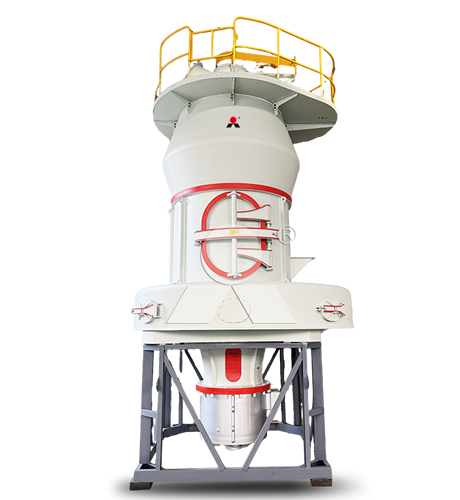
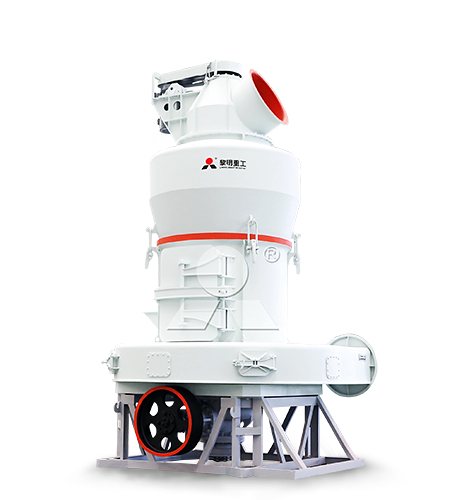
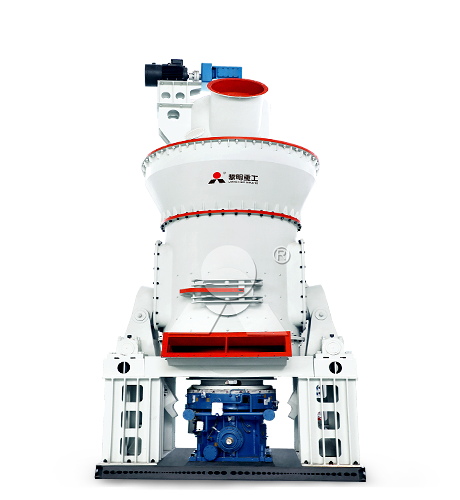
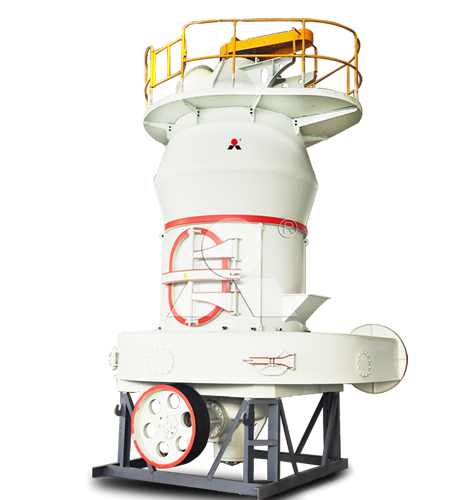
We are Liming Heavy Industry, a manufacturer of various types of industrial crushers, such as Raymond Mill, Trapezoidal Mill, Vertical Mill, Ultrafine Mill, Ball Mill, etc.
Our mills can process the following minerals:
limestone, quicklime, kaolin, talc, barite, bentonite, calcium carbonate, dolomite, coal, gypsum, clay, carbon black, slag, cement raw materials, cement clinker, etc.
If you need a mill to process stone or minerals into powder, please feel free to contact me (WhatsApp: +8615333807511). Thank you.
A calcium carbonate production line can cost from a relatively modest amount for a small, simple dry grinding unit to several million dollars for a fully engineered GCC plant with crushing, fine or ultrafine grinding, air classification, coating, silos, bagging, automation, and environmental controls. There is no reliable single price because the biggest cost drivers are capacity, target particle size, raw material, coating requirement, level of automation, location, civil works, utilities, and the boundary of supply.
For B2B buyers, the useful question is not “What is the price of a calcium carbonate mill?” It is “What is the total installed cost and cost per tonne of qualified product for the GCC grade we plan to sell?” A low-priced mill can become an expensive project if it cannot meet the required D50/D97, consumes excessive energy, has high wear costs, or requires major upgrades to classification, dust collection, storage, and packing.
What Is Included in the Cost?
A complete calcium carbonate production line includes far more than a grinding mill. Depending on the project scope, capital cost may include land, site preparation, buildings, raw-material handling, crushing, grinding, classification, dust collection, coating, product silos, packing, electrical systems, controls, installation, commissioning, laboratory equipment, spares, and working capital.
Industry project-cost references identify machinery—including crushers, grinding mills, air classifiers, dust collection systems, conveyors, and storage silos—as a major capital-expenditure category. They also note that total investment changes with plant capacity, technology choice, automation level, site location, and infrastructure requirements.
| Cost category | Typical items | Why it varies |
|---|---|---|
| Land and site development | Land purchase or lease, grading, drainage, roads, fencing, utilities connection | Location, site condition, local land value, quarry access, and truck traffic |
| Civil works and buildings | Foundations, steel structure, warehouse, control room, maintenance area, silo foundations | Mill size, building height, soil condition, seismic or wind requirements, local construction cost |
| Raw-material preparation | Hoppers, feeders, crushers, screens, magnetic separators, conveyors, stockpile equipment | Stone size, feed moisture, required plant capacity, and quarry-to-plant logistics |
| Grinding and classification | Ball mill, vertical roller mill, ring-roller mill, classifier, coarse-return system | Target D50/D97, tonnes per hour, mineral hardness, PSD control, and redundancy requirements |
| Air and dust collection | Fans, cyclones, baghouse, ducts, rotary valves, compressed-air system | Air volume, product fineness, environmental requirements, and dust characteristics |
| Coating section | Stearic-acid storage, melting, dosing, high-speed mixer, cooler, coated-product collection | Whether coated GCC is required and what percentage of output is coated |
| Product handling and packing | Silos, conveyors, bulk loading, bagging, FIBC filling, pallet handling | Bulk versus bagged sales mix, grade segregation, daily dispatch volume, and warehouse needs |
| Electrical, automation, and laboratory | Transformers, MCCs, PLC/DCS, VFDs, analyzers, laser PSD instrument, whiteness meter | Installed power, number of grades, desired process control, and quality requirements |
| Installation and commissioning | Erection, piping, wiring, insulation, testing, training, start-up support | Local labor cost, imported equipment, building complexity, and project-management scope |
| Working capital and contingency | Raw-material stock, bags, coating agent, spare parts, receivables, ramp-up losses | Sales terms, supply-chain lead times, inventory policy, and start-up risk |
Why Capacity and Fineness Change Cost
Capacity affects nearly every section of the plant: crusher size, mill size, classifier capacity, fan duty, filter area, silo volume, packing speed, transformer rating, building size, and truck-loading infrastructure. However, particle size often changes cost more than buyers expect.
A plant designed for 10 t/h of D97 45 μm GCC is not equivalent to a plant designed for 10 t/h of D97 10 μm or D97 5 μm GCC. Finer grades require more grinding energy, higher classifier precision, larger internal circulating load, more demanding dust collection, and potentially multiple grinding and classification trains.
| Plant/product profile | Relative capital intensity | Main reason |
|---|---|---|
| Coarse GCC for construction or putty | Lower | Simpler milling, less demanding classification, lower energy intensity |
| Fine GCC for general PVC, paint, rubber, or paper filler | Medium | Requires controlled grinding, air classification, collection, and more consistent quality control |
| Ultrafine GCC for plastics, masterbatch, coatings, sealants, or adhesives | Higher | Higher grinding duty, tighter D97 control, larger classifier and air-system demand |
| Coated ultrafine GCC | Highest among typical dry GCC lines | Adds additive storage, melting, dosing, intensive mixing, cooling, coated-product handling, and validation |
For this reason, request all quotes on the same basis: identical raw material, feed moisture, target D50/D97, throughput measured at the finished-product silo, coating status, packaging scope, and guaranteed energy or utility assumptions.
Indicative Cost Ranges
The following ranges are conceptual planning ranges, not quotations. They should be used only to establish whether a project needs a small-equipment budget, a mid-scale industrial budget, or a major EPC-style investment budget. Local civil costs, exchange rates, import duties, supplier origin, control level, electrical infrastructure, and product specifications can move actual costs substantially.
| Project type | Indicative net capacity | Typical product direction | Indicative equipment-only range* | Indicative installed-project range* |
|---|---|---|---|---|
| Small basic dry grinding unit | 1–3 t/h | Coarse or standard uncoated GCC | Approximately US$100,000–400,000 | Approximately US$300,000–1.2 million |
| Small fine-GCC plant | 3–10 t/h | Fine uncoated GCC with classifier and bag filter | Approximately US$400,000–1.5 million | Approximately US$1–4 million |
| Medium industrial GCC plant | 10–30 t/h | Fine GCC; optional basic coating and bagging | Approximately US$1–4 million | Approximately US$3–10 million |
| Large fine-GCC plant | 30–80 t/h | High-volume GCC with larger silos, bulk loading, and automation | Approximately US$3–10 million | Approximately US$8–25 million or more |
| Ultrafine or coated GCC project | Varies widely | D97 5–15 μm, premium polymer and masterbatch grades | Often above a comparable standard-GCC line | Can exceed US$10–30 million for large, high-specification projects |
*These are broad, non-binding planning estimates for dry GCC projects and should not be treated as supplier prices, investment advice, or a substitute for a site-specific feasibility study. They may exclude land, taxes, duties, financing, quarry development, major utility connections, and working capital.
Public supplier listings show that individual ball-mill-and-classifier packages may be advertised at far lower prices than the installed plant because they typically exclude much of the project scope: civil works, crushers, silos, electrics, ducting, filters, packing, coating, erection, freight, commissioning, and local compliance requirements. This is why a main-equipment price should never be interpreted as the full cost of a calcium carbonate production line.
Equipment-Only vs. Installed Cost
When comparing proposals, distinguish carefully between equipment-only cost and installed-project cost. Equipment-only quotations often cover the main mill and classifier but exclude several systems that are essential to producing saleable GCC.
| Quotation scope | Usually included | Often excluded or unclear |
|---|---|---|
| Main equipment package | Mill, classifier, basic fan, basic collector, control panel | Crushing, feed bins, conveyors, silos, packing, civil works, electrical infrastructure, erection |
| Mechanical supply package | Main process equipment plus selected conveyors, filters, and auxiliaries | Buildings, foundations, site utilities, installation labor, permits, warehouse, working capital |
| Turnkey or EPC-style plant | Broader process scope, engineering, procurement, erection support, commissioning | Land, taxes, financing, quarry rights, some local infrastructure, customer qualification costs |
Ask every supplier to define the battery limits of supply. For example, determine whether the quotation begins at the raw-stone receiving hopper or at mill feed, and whether it ends at a finished-product silo, a bagging line, or a bulk-tanker loading point.
Operating Cost per Tonne
Capital cost is only part of the investment decision. A plant that is inexpensive to build but expensive to operate can lose competitiveness over time. Public GCC cost reports identify raw material as the largest operating-cost component in many cases, with utilities also representing a major share; one 2026 project report estimates raw materials at 50–60% of operating cost and utilities at 25–30%, with remaining expenses including transport, packaging, wages, depreciation, taxes, and other costs.
Actual percentages vary greatly by quarry ownership, power price, product fineness, bagged versus bulk sales, freight distance, and labor cost. Still, the main operating-cost categories are consistent.
| Operating-cost item | What drives it | How to control it |
|---|---|---|
| Raw stone | Quarry cost, purchased-stone price, yield, transport, stockpile loss | Secure quality supply, reduce handling loss, segregate grades, optimize logistics |
| Electricity | Target fineness, mineral hardness, mill efficiency, classifier load, fan duty | Optimize PSD, reduce overgrinding, maintain classifier and filter performance |
| Wear parts | Silica contamination, mineral abrasiveness, mill type, operating load | Improve feed quality, monitor wear, plan preventive maintenance |
| Surface-treatment agent | Coated product volume, particle surface area, treatment level, additive price | Use accurate dosing and validate the minimum effective treatment level |
| Packaging | Bag/FIBC/bulk sales mix, bag material, palletization, warehouse handling | Increase bulk dispatch where commercially practical and automate repetitive handling |
| Labor and maintenance | Automation, shift pattern, equipment reliability, maintenance access | Use preventive maintenance, operator training, and adequate critical spares |
| Logistics | Distance to quarry and customers, load size, return freight, route quality | Choose site and dispatch model based on delivered-cost economics |
How to Request an Accurate Budget
An accurate budget requires a project brief. Send the following information to potential equipment suppliers and engineering partners:
Raw material type and laboratory analysis, including CaCO3, SiO2, Fe2O3, MgO, moisture, whiteness, hardness, and abrasiveness.
Representative raw-material sample for grinding and classification trials.
Required product grades with D10, D50, D97/D98, residue, whiteness, moisture, bulk density, and coating status.
Required net output in t/h for each grade and annual tonnes by grade.
Whether products will be uncoated, coated, or both.
Coating-agent specification and target end uses, where applicable.
Packaging and dispatch plan: bulk tanker, 25 kg bags, valve bags, FIBCs, or a mix.
Site location, available land, building limits, altitude, climate, and local regulations.
Available electricity, local power tariff, compressed-air availability, and fuel source if drying is required.
Expected scope: equipment only, mechanical package, installation support, or turnkey EPC.
Preferred automation level, laboratory scope, spare-parts package, and service support.
Then request a quotation with a defined performance guarantee. It should state net finished-product capacity, PSD test method, product quality, energy basis, raw-material assumptions, scope boundary, warranty, commissioning support, and acceptance-test procedure.
Cost-Reduction Priorities
Reducing project cost should not mean removing the classifier, undersizing the bag filter, or eliminating storage capacity. Those choices can create an operation that cannot meet product quality or run continuously. Better cost-reduction priorities are:
Use the simplest process that meets the highest-value confirmed product requirement.
Match the plant capacity to realistic sales volume and ramp-up timing.
Design shared raw-material handling and dust collection where it does not create cross-contamination.
Use modular expansion space instead of installing unnecessary capacity on day one.
Prioritize raw-material consistency to reduce energy use, wear, and off-spec losses.
Choose bulk dispatch when market conditions support it, reducing packaging and handling cost.
Compare kWh per tonne of qualified product, not only mill purchase price.
Include critical spares, maintenance access, and operator training from the beginning.
FAQ
What is the cheapest way to start calcium carbonate production?
The lowest-capital route is usually a small dry-grinding operation focused on coarser uncoated GCC grades, with simple raw-material preparation and bulk sales. However, it may have lower margins and limited access to premium PVC, masterbatch, coating, sealant, and adhesive markets. The right starting point depends on proven customer demand and available raw-material quality.
How much does a 10 TPH calcium carbonate plant cost?
A 10 TPH plant can range from a lower-cost standard-GCC system to a multi-million-dollar fine or coated GCC project. The main variables are D97 target, whether crushing and packing are included, raw-material moisture, coating requirement, automation level, site infrastructure, and whether the quotation is equipment-only or fully installed. As a rough planning category, a 3–10 TPH fine-GCC plant may require approximately US$1–4 million as an installed project, but site-specific quotations are essential.
Why are ultrafine GCC plants more expensive?
Ultrafine products require more grinding energy, tighter air classification, larger or multiple process circuits, more demanding powder collection, closer quality control, and often surface modification. Net throughput also declines as the required D97 becomes finer, so more equipment may be needed to produce the same saleable tonnage.
Does a coating system add significant cost?
Yes. A coating system adds stearic-acid or modifier storage, melting or conditioning, dosing, high-intensity mixing, cooling, dust collection, coated-product storage, controls, and testing. It also adds ongoing additive and energy cost. The investment can be justified if coated GCC provides access to higher-margin polymer, rubber, sealant, or adhesive applications.
Bottom Line
The cost of a calcium carbonate production line ranges widely because every meaningful project variable changes the equipment and installation scope. For a reliable budget, distinguish equipment-only price from total installed cost, specify net product capacity at the required D50/D97, and include raw-material preparation, classification, dust control, storage, packing, utilities, civil works, commissioning, and working capital.
For most GCC investments, the best decision is based on lifecycle economics: cost per tonne of qualified product, expected product margin, customer demand, raw-material quality, energy use, maintenance, and logistics. A detailed feasibility study and raw-material test program are the right next steps before treating any broad cost range as an investment budget.