Calcium Carbonate Knowledge Hub
What Machine Is Used to Grind Calcium Carbonate?
2026-09-04 17:32:28
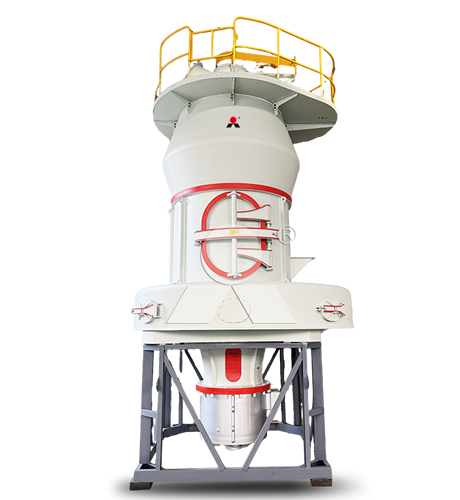
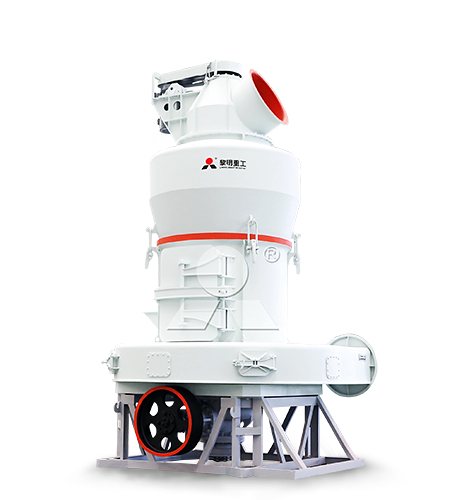
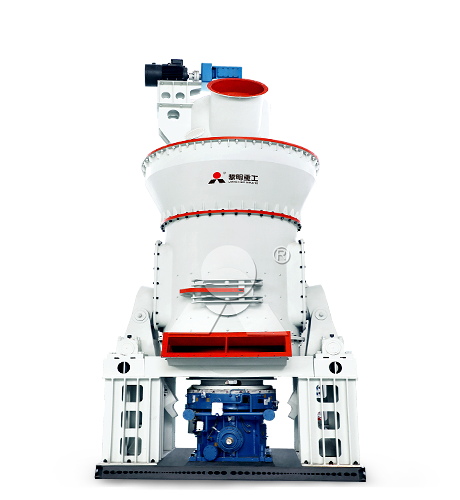
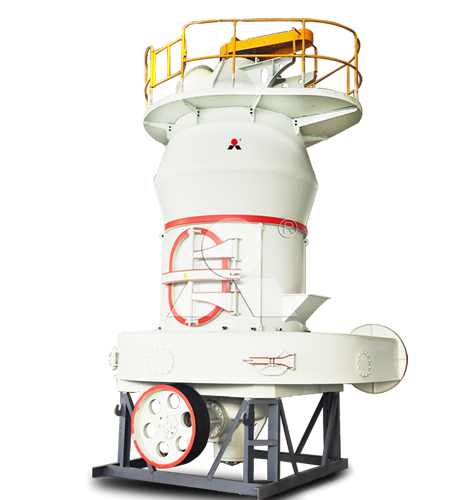
We are Liming Heavy Industry, a manufacturer of various types of industrial crushers, such as Raymond Mill, Trapezoidal Mill, Vertical Mill, Ultrafine Mill, Ball Mill, etc.
Our mills can process the following minerals:
limestone, quicklime, kaolin, talc, barite, bentonite, calcium carbonate, dolomite, coal, gypsum, clay, carbon black, slag, cement raw materials, cement clinker, etc.
If you need a mill to process stone or minerals into powder, please feel free to contact me (WhatsApp: +8615333807511). Thank you.
Several machines can grind calcium carbonate, but the most common industrial choices are Raymond or pendulum mills for coarser grades, ball mills with air classifiers for fine and ultrafine GCC, ring-roller micro powder mills for compact fine-powder production, and vertical roller mills for integrated higher-capacity systems. The best machine depends on the target particle-size distribution, especially D50 and D97, as well as required throughput, raw-material moisture, mineral hardness, and whether coated GCC is needed.
For fine calcium carbonate used in PVC, PP, PE, masterbatch, rubber, sealants, adhesives, coatings, paper, and similar markets, the grinding machine is usually only one part of the solution. A complete system also needs controlled feeding, air classification, powder collection, conveying, storage, and often surface-treatment equipment.
Main Machines Used for Calcium Carbonate Grinding
| Machine type | Typical calcium carbonate range | Best suited for | Main consideration |
|---|---|---|---|
| Raymond mill / pendulum roller mill | Coarse to medium-fine GCC, often about 80–400 mesh | Putty, dry-mix, construction filler, and standard industrial grades | Usually not the first choice for tight ultrafine PSD requirements |
| Ball mill + air classifier | Fine and ultrafine GCC, often about D97 5–45 μm | Flexible, continuous production for plastics, PVC, rubber, coatings, and fillers | Requires correct media, classifier, fan, filter, and circulation design |
| Ring-roller micro powder mill | Fine and ultrafine dry calcium carbonate | Small to medium capacity with flexible fine-grade production | Feed moisture, airflow, and wear condition strongly affect performance |
| Vertical roller mill | Fine GCC; some systems serve ultrafine grades | Integrated continuous lines, medium to high capacity, compact layouts | Confirm net output at the required D97, not only a coarse-grade capacity |
| Air classifier mill | Fine specialty calcium carbonate | Smaller to medium fine-powder lines | Impact grinding, rotor wear, and heat require control |
| Stirred-media mill | Very fine or specialty GCC | Products requiring very fine particle-size control | Media wear and wet-processing requirements may increase complexity |
| Jet mill | Very fine specialty powder | High-value, lower-volume ultrafine applications | High energy use must be justified by product margin |
Supplier equipment guidance commonly compares ring-roller mills, ball mills, and Raymond roller mills for calcite, marble, limestone, and chalk. It positions ring-roller mills for ultrafine, energy-efficient mineral grinding; ball mills for higher-output production; and Raymond mills for medium-fineness applications with lower initial investment.
Raymond Mill for Coarser GCC
A Raymond mill, also called a pendulum roller mill, grinds calcium carbonate by pressing rollers against a grinding ring. Material is lifted into the grinding zone, crushed and ground through compression and rolling, then carried to an internal classifier by air.
Raymond mills are often used for standard calcium carbonate grades where the required powder is relatively coarse or medium fine. A typical commercial reference range is about 80–400 mesh, although exact performance depends on the mill model, feed size, mineral hardness, and classifier setting.
This type of mill can be a practical choice for:
Wall putty and dry-mix construction products.
Mortar, filler, and lower-cost industrial applications.
Selected paint and rubber grades with moderate fineness requirements.
Producers prioritizing a relatively simple dry grinding system.
It is generally not the preferred choice when the product requires a very tight D97, low coarse residue, or ultrafine coated GCC for premium masterbatch, high-loading PVC, or specialty polymer applications.
Ball Mill With Air Classifier for Fine GCC
A ball mill with an external air classifier is one of the most widely used systems for fine and ultrafine calcium carbonate. The ball mill uses grinding media to reduce particle size through impact and attrition. The air classifier separates acceptable fine particles from oversize particles, which are returned to the mill in a closed circuit.
This arrangement is especially useful when the producer needs more than one product grade because the classifier can adjust the top cut without stopping the entire installation. A published ball-mill configuration for ultrafine calcium carbonate includes the ball mill, high-efficiency classifier, cyclone, fan, and bag filter; the classifier allows product granulometry to be adjusted while operating.
When to choose a ball mill and classifier
You need fine or ultrafine GCC with controlled D50 and D97.
You plan to produce several grades from one line.
You need medium to high continuous output.
You require stable coarse-tail control for PVC, PP, PE, rubber, coatings, sealants, or adhesives.
You want a separate classifier that can be optimized independently from the grinding mill.
The main design issue is system integration. The classifier must handle both fresh feed and recirculating coarse material, while the fan, cyclone, bag filter, ducts, and rotary valves must maintain stable airflow. Poor classification or unstable air balance can raise power consumption and still produce a product with excessive coarse particles.
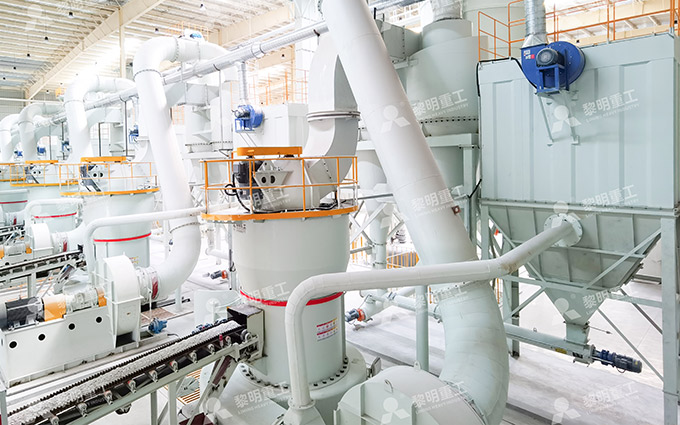
Ring-Roller Micro Powder Mill
A ring-roller micro powder mill is commonly used for fine and ultrafine dry calcium carbonate. It typically uses multiple rollers and grinding rings, with airflow transporting fine material to a classifier and coarse material returning for additional grinding.
This type of machine can be attractive when a producer needs a compact system for fine GCC and wants flexibility across a range of ultrafine grades. It is often considered for calcite, marble, limestone, and chalk where feed is dry and sufficiently small.
Choose a ring-roller system when:
The production target is fine or ultrafine GCC rather than coarse construction powder.
Required output is small to medium relative to a large ball-mill circuit.
Plant footprint and integrated equipment arrangement are important.
Frequent adjustment between fine grades is required.
Raw feed can be kept within the mill’s maximum size and moisture limits.
For stable performance, control feed moisture, feed rate, air volume, classifier settings, roller and ring wear, and bag-filter differential pressure. A ring-roller mill can produce fine powder efficiently, but wet feed or unstable airflow can cause caking, poor classification, and reduced output.
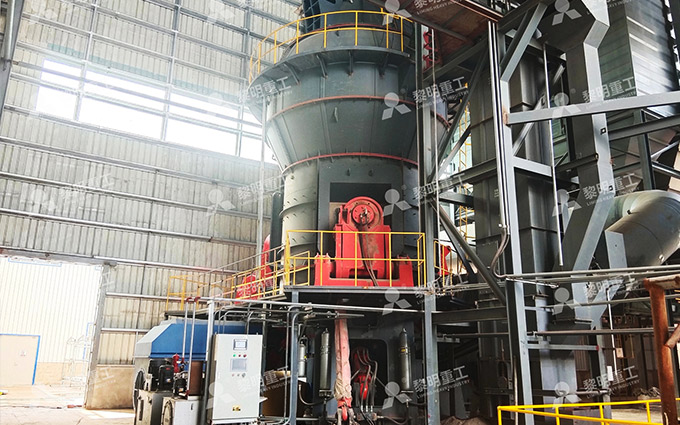
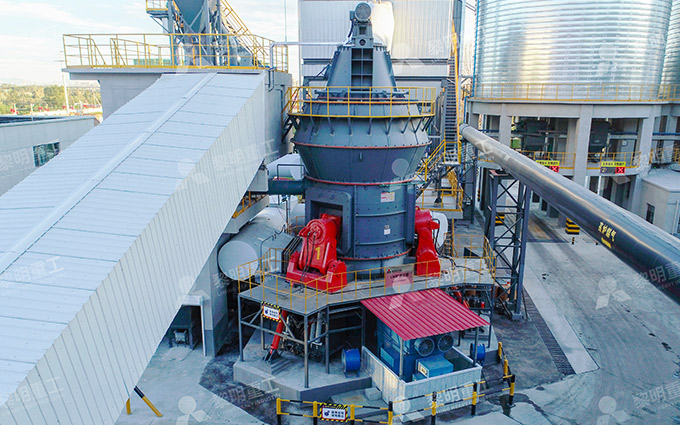
Vertical Roller Mill
A vertical roller mill grinds calcium carbonate between rollers and a rotating grinding table. Air carries ground material upward to an internal classifier; qualified fines leave the mill while coarse particles return to the grinding zone.
Vertical roller mills can be attractive for integrated, continuous GCC lines because grinding and classification are combined in a vertical layout. In some configurations, hot air can assist with limited feed drying. Modern vertical mill references describe products around D97 3–45 μm, depending on the model and full circuit configuration.
Consider a vertical roller mill when:
You require medium to high continuous production.
Available floor area is limited but vertical installation height is available.
You want grinding and classification integrated in one main process unit.
The feed has some moisture that may require controlled drying capability.
You can support the higher engineering, maintenance, and automation requirements of a larger system.
Do not assume a vertical mill will automatically provide lower operating cost or higher output for every grade. Compare suppliers using the same raw material, target D50/D97, net throughput, power basis, wear assumptions, product moisture, and collection-system scope.
Air Classifier Mill
An air classifier mill combines impact grinding and dynamic air classification in one machine. A high-speed rotor reduces particle size, while an internal classifier rejects particles above the selected cut point.
It is suitable for some fine calcium carbonate applications, particularly where a compact grinding-and-classification unit is preferred. However, for large-volume or very fine GCC production, evaluate whether its capacity, wear rate, heat generation, and product-quality control are competitive with a ball mill plus external classifier or another dedicated ultrafine circuit.
Stirred-Media and Jet Mills
Stirred-media mills and jet mills are specialty options for extremely fine calcium carbonate. A stirred mill uses small grinding media and high-intensity agitation. A jet mill uses high-velocity gas streams so particles collide and break without conventional grinding media.
These technologies may be suitable when a high-value application needs exceptional fineness or a narrow PSD. They are not automatically the best option for ordinary GCC because their energy consumption, compressed-air demand, media wear, dewatering requirements, or process complexity can be higher.
How to Choose the Right Machine
Select the grinding machine from the finished powder backward. The key is to match the machine to the actual commercial requirement rather than selecting the finest or largest machine by default.
| Selection factor | Questions to answer | Equipment implication |
|---|---|---|
| Target fineness | What are the required D50 and D97/D98? | Determines whether a simple roller mill, ball mill/classifier, ultrafine mill, or specialty circuit is needed |
| Net capacity | How many tonnes per hour of qualified product are required? | May require a larger mill, multi-wheel classifier, or parallel trains |
| Product mix | Will the plant make one grade or several grades? | Flexible classification and segregated storage become more important for multi-grade production |
| Raw material | What are hardness, moisture, silica, iron, whiteness, and feed size? | Influences wear protection, drying needs, mill type, and product suitability |
| Coating requirement | Is coated GCC required for polymers or rubber? | Adds a surface-treatment unit, additive dosing, cooling, and separate storage |
| Energy cost | What is the local electricity price and target kWh/t? | Changes lifecycle-cost comparison between grinding technologies |
| Plant layout | What floor space, installation height, and access are available? | Can favor compact roller systems, vertical mills, or modular parallel trains |
| Maintenance support | What skills, spares, lifting equipment, and downtime tolerance are available? | Affects suitability of complex high-capacity or specialty systems |
Do Not Choose by Mesh Alone
Mesh is a convenient sales label, but it is not enough for equipment selection. At fine sizes, mesh does not adequately describe particle-size distribution, especially the coarse tail that affects customer performance.
Specify finished calcium carbonate with:
D10, D50, and D97 or D98.
Maximum coarse residue using an agreed sieve and procedure.
Whiteness or brightness target.
Maximum moisture.
CaCO3 content and impurity limits.
Bulk density and flowability requirement.
Coated or uncoated status.
Net output measured at the finished-product silo.
For example, two calcium carbonate powders both sold as “1,250 mesh” can behave differently in PVC extrusion if one has a coarser D97, more oversized particles, higher moisture, or inconsistent stearic-acid coating.
Typical Equipment Around the Mill
A grinding machine alone does not create a reliable GCC production line. The complete system usually includes:
Receiving hopper and controlled feeder.
Jaw crusher and secondary crusher where quarry stone is used.
Vibrating screen and magnetic separator.
Feed bin, weigh feeder, screw feeder, or rotary valve.
Grinding mill and drive system.
Dynamic air classifier and coarse-return system.
Induced-draft fan, cyclone, bag filter, ducts, and airlocks.
Finished-product silo and conveying equipment.
Optional stearic-acid coating system.
Bagging machine, FIBC filler, or bulk tanker loading system.
PLC controls and quality-control instruments.
The classifier and dust-collection section are particularly important for fine GCC. A good mill cannot compensate for an undersized classifier, unstable fan, overloaded bag filter, leaking ductwork, or poorly designed coarse-return system.
FAQ
What is the most common machine for grinding calcium carbonate?
For fine and ultrafine industrial GCC, a ball mill with a high-efficiency air classifier is one of the most common arrangements. For coarser grades, a Raymond or pendulum mill is widely used. The correct choice depends on the required PSD and capacity.
Can a Raymond mill make ultrafine calcium carbonate?
A Raymond mill can produce selected fine grades, but it is generally more suitable for coarse to medium-fine powder. For demanding ultrafine GCC with tight D97 control, a ball mill plus classifier, ring-roller micro powder mill, vertical roller mill, or specialty ultrafine circuit is usually more appropriate.
What machine is used for 5 μm calcium carbonate?
Producing calcium carbonate near D97 5 μm generally requires an ultrafine grinding system with high-efficiency air classification. Possible options include a ball mill with a high-efficiency or multi-wheel classifier, a dedicated ultrafine vertical roller mill, a ring-roller micro powder mill, or a specialty stirred-media system. Verify net output through testing with the actual feedstock.
Do I need an air classifier with a calcium carbonate mill?
For fine and ultrafine GCC, yes. The classifier removes particles that have reached the required fineness and returns coarse material for further grinding. This improves D97 control, reduces overgrinding, and helps maintain stable product quality.
Bottom Line
The machine used to grind calcium carbonate depends on the required grade. Use a Raymond or pendulum mill for many coarser products; a ball mill plus air classifier for flexible fine and ultrafine GCC; a ring-roller mill for compact fine-powder production; and a vertical roller, stirred-media, or jet mill where the specific product and economics justify it.
Select the complete system using the actual raw material, target D50/D97, net output, moisture, purity, coating requirement, energy cost, and packing plan. The right answer is rarely just one machine—it is a matched grinding, classification, collection, and handling circuit that reliably produces saleable calcium carbonate.