Calcium Carbonate Knowledge Hub
How Fine Can Calcium Carbonate Be Ground?
2026-09-04 17:33:08
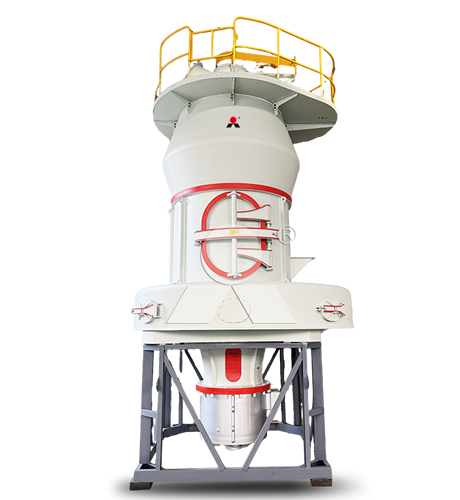
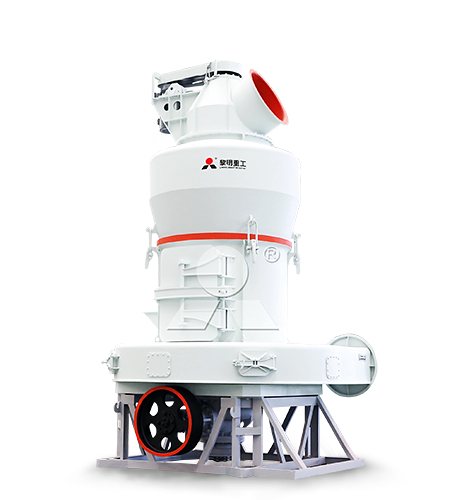
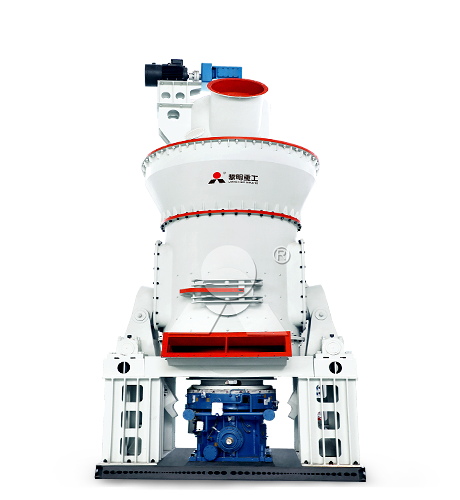
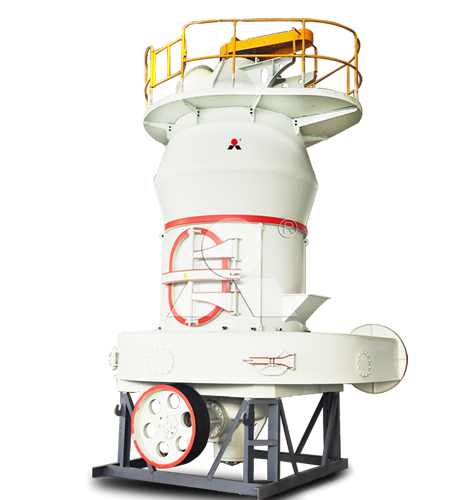
We are Liming Heavy Industry, a manufacturer of various types of industrial crushers, such as Raymond Mill, Trapezoidal Mill, Vertical Mill, Ultrafine Mill, Ball Mill, etc.
Our mills can process the following minerals:
limestone, quicklime, kaolin, talc, barite, bentonite, calcium carbonate, dolomite, coal, gypsum, clay, carbon black, slag, cement raw materials, cement clinker, etc.
If you need a mill to process stone or minerals into powder, please feel free to contact me (WhatsApp: +8615333807511). Thank you.
Calcium carbonate can be ground from coarse granular material down to a few microns. In commercial ground calcium carbonate (GCC) production, products commonly range from about D97 45–75 μm for standard filler grades to D97 5–10 μm for ultrafine grades; specialized dry or wet systems can produce products at or below approximately D97 2–5 μm when the application and economics justify it.
There is no single “finest calcium carbonate” because fineness must be defined by particle-size distribution (PSD), not just a mesh number. A powder described as 2 μm may refer to a median size, a top cut, or a nominal product name. For purchasing and plant design, specify D50 and D97 or D98, plus the measurement method and allowable coarse residue.
Commercial Fineness Ranges
Calcium carbonate is available across a wide size range because different industries need different particle properties. Coarser grades are often chosen for cost and bulk filling, while finer grades are selected for smoother surfaces, better dispersion, higher brightness, improved opacity, or more controlled rheology.
| Indicative GCC range | Approximate commercial description | Typical applications | Processing requirement |
|---|---|---|---|
| D97 75–150 μm | Coarse calcium carbonate | Agriculture, animal feed, selected construction and mineral uses | Crushing, screening, or basic grinding |
| D97 38–75 μm | Standard ground calcium carbonate | Putty, dry-mix materials, construction filler, selected rubber and industrial products | Conventional dry grinding |
| D97 18–38 μm | Fine GCC | General PVC, rubber, paint, paper filler, and standard plastics | Controlled grinding plus air classification |
| D97 10–18 μm | Fine-to-ultrafine GCC | PVC profiles, plastic compounds, PP/PE masterbatch, rubber, selected coatings | High-efficiency grinding and dynamic air classification |
| D97 5–10 μm | Ultrafine GCC | Premium PVC, masterbatch, coatings, sealants, adhesives, paper-related grades | Ultrafine milling with high-efficiency classification |
| D97 below 5 μm | Very fine or specialty ultrafine GCC | High-gloss coatings, breathable film, specialty polymers, selected paper coatings | Advanced grinding and classification; often higher cost per tonne |
Published industry guidance provides a similar market-oriented reference: approximately D97 38–18 μm for construction and industrial rubber, D97 18–10 μm for PVC profiles and plastic masterbatch, D97 10–5 μm for premium coatings and paper applications, and D97 ≤5 μm for applications such as breathable films and high-gloss polymers.
Use D50 and D97, Not Mesh Alone
Mesh is a rough screen-based description. It becomes less reliable as calcium carbonate becomes finer because particles have different shapes, powder distributions are broad, and ultrafine particles do not behave like simple spherical particles passing through a sieve opening.
For industrial GCC, use a laser-diffraction PSD specification:
| PSD value | What it means | Why it matters |
|---|---|---|
| D10 | 10% of particles are below this diameter | Shows the fine end of the distribution |
| D50 | 50% of particles are below this diameter | Represents median particle size |
| D90 | 90% of particles are below this diameter | Shows the approach to the coarse portion of the PSD |
| D97 or D98 | 97% or 98% of particles are below this diameter | Controls the coarse tail that can affect downstream performance |
| Specific surface area | Available particle surface per unit mass | Influences coating demand, viscosity, dispersion, and additive consumption |
For example, a specification such as D50 2.5–3.5 μm and D97 maximum 10 μm is much more useful than “2,000 mesh.” It tells the GCC producer and end user both the average particle size and the maximum coarse-particle behavior.
Fineness is generally defined through PSD parameters such as D50 and D97, with D97 serving as a top-cut value that shows the diameter below which 97% of the product lies. This is particularly important for fine and ultrafine calcium carbonate because a small coarse fraction can cause visible defects or processing problems.
How Fine Is Fine Enough?
The finest possible powder is not always the best product. Grinding calcium carbonate finer increases surface area and can improve certain formulation properties, but it also increases power use, wear, dust-handling difficulty, and often surface-treatment demand. The right fineness depends on the customer’s application.
| Application | Typical fineness direction | Why fineness matters |
|---|---|---|
| Putty, mortar, dry-mix products | Coarse to medium-fine | Focus is usually cost, bulk filling, workability, and stable powder flow |
| Rigid PVC pipe and profiles | Fine GCC | Controlled PSD supports dispersion, extrusion stability, surface finish, and mechanical balance |
| PP/PE masterbatch | Fine to ultrafine, frequently coated | Finer particles can improve dispersion and film or molded-product appearance |
| Rubber compounds | Fine GCC selected by formulation | PSD affects viscosity, filler loading, surface finish, and processing behavior |
| Sealants and adhesives | Fine GCC with controlled distribution | Influences rheology, thixotropy, extrusion, sag resistance, and smoothness |
| Paints and coatings | Fine or ultrafine high-whiteness GCC | Influences smoothness, opacity, gloss, sheen, rheology, and surface appearance |
| Paper coating | Very fine GCC or PCC, depending on the grade | Particle size can influence brightness, smoothness, coating coverage, and printability |
Ground calcium carbonate can be produced as coarse as roughly 1,300 μm for poultry-feed applications and as fine as about 2 μm for paper coatings. Those values illustrate the broad commercial range; they do not mean that every GCC plant can make every size economically or that each end use requires the finest possible powder.
What Limits Fineness?
In practice, calcium carbonate fineness is limited by the mineral, grinding technology, classification efficiency, target throughput, energy cost, product quality requirements, and downstream application value.
Raw material
Calcite, marble, limestone, and chalk vary in hardness, moisture, crystal structure, silica content, iron content, abrasiveness, whiteness, and grindability. A high-purity, high-whiteness calcite may be suited to premium ultrafine GCC, while a more impure or abrasive limestone may be economically better for standard filler grades.
Grinding technology
Different equipment has different practical operating ranges:
Raymond or pendulum mills: Common for coarse and medium-fine GCC.
Ball mills with air classifiers: Widely used for fine and ultrafine GCC, especially where multiple grades or larger output are needed.
Ring-roller and micro powder mills: Often used for fine and ultrafine dry calcium carbonate.
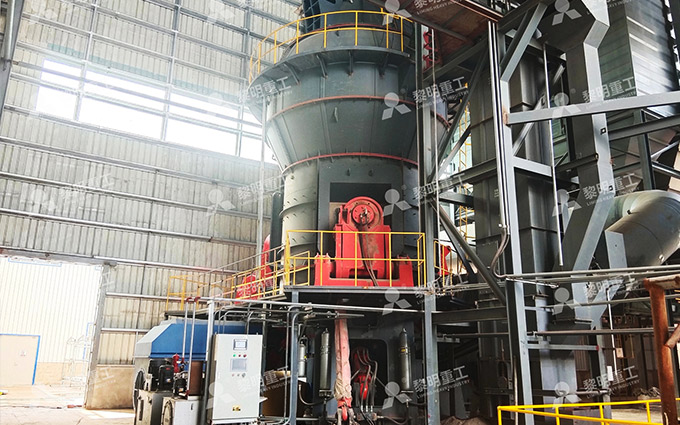
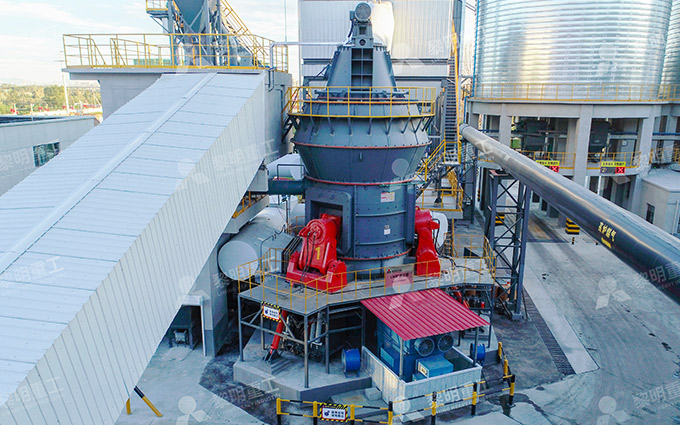
Vertical roller mills: Can combine grinding and classification in an integrated continuous circuit.
Stirred-media mills and jet mills: Can serve specialty very-fine products, but economics and complexity must be justified.
Classification efficiency
A grinding mill does not make one exact particle size. It produces a distribution. The air classifier removes particles that meet the required fineness and returns coarse particles to the mill for additional grinding. The classifier therefore controls the top cut, especially D97 or D98.
At D97 5–10 μm and below, classification becomes increasingly critical. An inefficient classifier can allow coarse particles into the product, return too much fine powder for unnecessary regrinding, increase kWh/t, and reduce net throughput.
Target capacity
As calcium carbonate is ground finer, net output usually falls. A plant that produces 10 t/h at D97 45 μm may not produce 10 t/h at D97 10 μm, and its output may decrease further at D97 5 μm. Therefore, specify equipment capacity at the required PSD rather than using a catalog maximum from a coarser product.
Surface treatment
Ultrafine GCC has more surface area. If it is used in PVC, PP, PE, masterbatch, rubber, sealants, or adhesives, it may require more carefully controlled surface treatment to achieve suitable compatibility with organic polymers. A finer product can require more coating-agent dosage, better mixing, and stricter moisture control.
How Ultrafine GCC Is Produced
Fine calcium carbonate is commonly produced in a closed-circuit grinding system. The process removes qualified particles as early as possible and returns only coarse material for additional grinding.
Crush and screen calcite, limestone, marble, or chalk to the mill’s required feed size.
Use controlled feeding to maintain stable mill load.
Grind material in a ball mill, ring-roller mill, vertical roller mill, or another selected system.
Use a dynamic air classifier to set the fine cut.
Return coarse particles to the mill.
Collect qualified powder through cyclones and pulse-jet bag filters.
Optionally coat the GCC, then store and package it.
For ultrafine products, the line needs accurate feed control, stable airflow, appropriate classifier-wheel speed, sufficient filter capacity, sealed conveying, and rapid PSD feedback from the laboratory. A small disturbance in feed moisture, fan performance, filter pressure, or classifier wear can shift the product distribution.
Practical Fineness Example
Consider two calcium carbonate products for different markets:
| Product | Example PSD target | Possible use | Production implication |
|---|---|---|---|
| Standard GCC | D50 about 15 μm; D97 below 45 μm | Putty, paint extender, general rubber, construction filler | Moderate grinding duty and simpler classification |
| Ultrafine coated GCC | D50 about 3 μm; D97 below 10 μm | PVC, PP/PE masterbatch, premium coatings, sealants | Higher grinding and classifier demand, tighter QC, potential surface treatment |
The ultrafine grade is not automatically superior. It may improve performance in some high-value formulations, but it generally costs more to produce and may be unnecessary for products that perform well with a coarser, lower-cost filler.
FAQ
Can calcium carbonate be ground to 1 micron?
Calcium carbonate particles can be produced around or below 1 μm in specialized processes, particularly for selected PCC or very fine specialty mineral products. For commercial GCC, maintaining high output with a very tight distribution at that size is technically more demanding and typically more expensive than producing D97 5–10 μm grades.
Can calcium carbonate be ground to 5 microns?
Yes. D97 5 μm calcium carbonate is a common ultrafine target for specialized dry GCC circuits using high-efficiency grinding and air classification. It requires more energy, tighter classifier control, and usually lower net output than D97 15–45 μm products.
What does D97 10 μm mean?
D97 10 μm means that 97% of measured particles are smaller than 10 μm, using the agreed particle-size measurement method. It does not mean every particle is exactly 10 μm.
Is 2,000 mesh the same as 6.5 μm?
Not reliably. Mesh is based on screen openings, while fine GCC is usually evaluated by laser diffraction and has a distribution of particle sizes. Any mesh-to-micron conversion should be treated as an approximate reference only; use D50 and D97 for specification and equipment selection.
Bottom Line
Calcium carbonate can be ground from coarse granules to a few microns. In commercial GCC, D97 20–45 μm grades are common for general fillers, D97 5–10 μm grades are widely used for ultrafine applications, and specialty products can reach about 2 μm or below when the process and end use justify it.
For B2B purchasing and production planning, do not ask only how fine calcium carbonate can be ground. Define the required D50, D97, coarse residue, whiteness, moisture, surface treatment, and net output. Those values determine the right grinding technology, classifier, operating cost, and suitability for PVC, plastics, rubber, coatings, sealants, adhesives, paper, or construction applications.