Calcium Carbonate Knowledge Hub
PCC Particle Shape and Morphology
2026-09-04 16:13:36
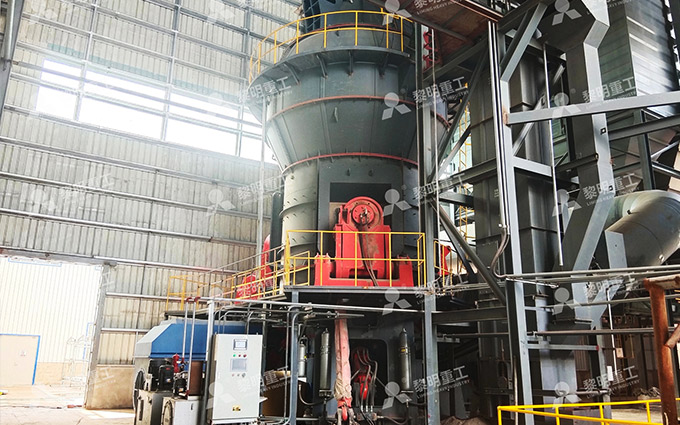
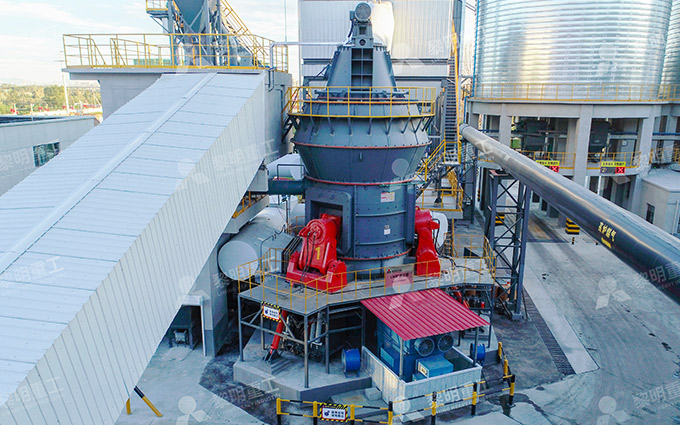
We are Liming Heavy Industry, a manufacturer of various types of industrial crushers, such as Raymond Mill, Trapezoidal Mill, Vertical Mill, Ultrafine Mill, Ball Mill, etc.
Our mills can process the following minerals:
limestone, quicklime, kaolin, talc, barite, bentonite, calcium carbonate, dolomite, coal, gypsum, clay, carbon black, slag, cement raw materials, cement clinker, etc.
If you need a mill to process stone or minerals into powder, please feel free to contact me (WhatsApp: +8615333807511). Thank you.
PCC particle shape and morphology describe the crystal form, geometry, aspect ratio, surface structure, and agglomeration behavior of precipitated calcium carbonate particles. These characteristics are central to PCC performance because two grades with the same chemical formula, CaCO3, and even similar particle size can behave very differently in paper, paint, coatings, plastics, PVC, rubber, adhesives, sealants, inks, pharmaceuticals, and cosmetics.
Unlike ground calcium carbonate (GCC), which inherits much of its particle form from the natural mineral and the grinding process, PCC is formed as new crystals during carbonation. By controlling reaction conditions, PCC producers can create rhombohedral, scalenohedral, prismatic, acicular, cubic-like, vaterite, or agglomerated structures. This ability to engineer particle morphology is one of PCC’s main industrial advantages.
PCC Morphology at a Glance
| Term | What It Means | Why It Matters |
|---|---|---|
| Crystal morphology | The geometric form and visible shape of an individual PCC crystal | Influences light scattering, packing, surface area, rheology, reinforcement, and optical performance |
| Polymorph | A crystal structure with the same chemical formula, CaCO3, but a different atomic arrangement | Calcite, aragonite, and vaterite have different properties and preferred formation conditions |
| Aspect ratio | The relationship between particle length, width, and thickness | Important for rheology, reinforcement, packing, and orientation in polymers or coatings |
| Primary particle | An individual PCC crystal formed during precipitation | Defines the basic crystal structure and surface area |
| Agglomerate | A cluster of primary particles attached together | Affects powder flow, dispersion, bulk density, coating smoothness, and measured PSD |
| Specific surface area | Total particle surface area per unit mass | Influences binder demand, oil absorption, surface treatment, viscosity, and reactivity |
What Is PCC Morphology?
PCC morphology refers to the physical structure of precipitated calcium carbonate particles. It includes more than “particle shape.” A complete morphology description may include:
Crystal form or polymorph, such as calcite, aragonite, or vaterite.
Visible particle shape, such as rhombohedral, scalenohedral, prismatic, needle-like, or spherical.
Primary crystal dimensions.
Particle aspect ratio.
Surface texture and surface roughness.
Specific surface area.
Degree of agglomeration.
Particle-size distribution, including D10, D50, D90, and D97.
Bulk density and packing behavior.
These variables affect how PCC interacts with water, polymers, resins, pigments, binders, rubber, fibers, and other components in a formulation. A scalenohedral PCC may be chosen for paper opacity and bulk, while a fine surface-treated PCC may be selected to modify rheology in silicone sealant, PVC plastisol, adhesive, or ink systems.
Why PCC Shape Matters
PCC has the same basic chemistry regardless of morphology: calcium carbonate, CaCO3. However, particle shape changes how that chemistry performs in a finished product.
| Morphology Effect | Potential Industrial Impact |
|---|---|
| Light scattering | Can influence whiteness, opacity, brightness, hiding behavior, and printability in paper and coatings |
| Particle packing | Can influence bulk density, porosity, filler loading, coating structure, and formulation volume |
| Surface area | Can affect oil absorption, binder demand, dispersion, surface treatment, viscosity, and reactivity |
| Aspect ratio | Can influence reinforcement, orientation, rheology, stiffness, and mechanical behavior in polymers and rubber |
| Particle interaction | Can influence agglomeration, powder flow, slurry viscosity, sedimentation, and storage stability |
| Surface smoothness | Can influence coating gloss, paper smoothness, ink transfer, plastic-film appearance, and sealant texture |
| Crystal phase | Can affect stability, density, solubility, mechanical behavior, and reaction to process conditions |
For this reason, a PCC technical data sheet should not be evaluated only by CaCO3 assay or D50. The morphology, surface area, particle-size distribution, surface treatment, and real application performance should all be reviewed.
Main PCC Crystal Forms
Calcium carbonate can occur in several crystal structures, known as polymorphs. The three main anhydrous polymorphs are calcite, aragonite, and vaterite. They all have the formula CaCO3, but their atoms are arranged differently.
| Polymorph | Crystal System | General Stability | Common PCC Morphology Direction |
|---|---|---|---|
| Calcite | Trigonal | Generally the most stable form under normal conditions | Rhombohedral, scalenohedral, prismatic, and related calcite forms |
| Aragonite | Orthorhombic | Less stable than calcite under ordinary surface conditions | Needle-like, acicular, or elongated particles |
| Vaterite | Often described as hexagonal or pseudo-hexagonal in practical materials discussions | Metastable and less common in conventional bulk PCC | Spherical, flower-like, or porous agglomerated structures |
Calcite commonly has a rhombohedral crystal structure, while aragonite has an orthorhombic structure. These structural differences help explain why calcite-based PCC and aragonite-based PCC can show different particle shapes and physical behavior.
Rhombohedral PCC
Rhombohedral PCC is one of the most common calcite-based PCC forms. Its particles are typically block-like and rhomb-shaped, reflecting the underlying calcite crystal structure.
Rhombohedral PCC can be produced in different sizes, from very fine particles to larger micron-scale crystals, depending on the carbonation process. It is often used where controlled particle size, high whiteness, good dispersion, and balanced filler properties are required.
Potential Characteristics
Relatively compact crystal shape.
Common calcite-based morphology.
Can provide controlled whiteness and particle-size distribution.
Often suitable for paper, coatings, plastics, rubber, and general functional fillers.
May provide different packing behavior than elongated or needle-like PCC.
Research on PCC production has shown that low calcium hydroxide concentrations can favor rhombohedral calcite crystals with particle sizes below 100 nm under specified reaction conditions. Actual morphology and size depend on the full process design, not concentration alone.
Scalenohedral PCC
Scalenohedral PCC is another calcite-based morphology. Its particles are elongated, pointed, or tooth-like compared with the more compact rhombohedral form. Scalenohedral crystals can create an open particle structure that affects light scattering, bulk, packing, and paper performance.
Scalenohedral PCC is especially important in papermaking. Its shape can support whiteness, opacity, and bulk when used as a filler or coating pigment. A commercial PCC producer describes fine scalenohedral PCC with controlled particle size and narrow PSD as suitable for increasing whiteness and opacity in paper, as well as for selected paint formulations.
Potential Characteristics
Elongated, pointed, or tooth-like crystal form.
Potentially high light-scattering efficiency in suitable paper and coating systems.
Can contribute to paper bulk and opacity.
May require different dispersant and retention strategies than compact PCC.
Particle length, width, aspect ratio, and agglomeration should be evaluated together.
Prismatic PCC
Prismatic PCC has particles with prism-like geometry. It can be produced under controlled carbonation conditions and may be selected when a specific balance of particle size, shape, surface area, and packing behavior is needed.
Prismatic particles may be useful in coatings, plastics, paper, and specialty formulations, but the exact benefit depends on the complete formulation. A prismatic PCC cannot be considered better or worse than rhombohedral or scalenohedral PCC without considering the target application.
Carbonation studies have shown that changes in CO2 flow rate can shift calcite morphology, including the formation of prismatic calcite under specific experimental conditions.
Acicular and Needle-Like PCC
Acicular PCC describes elongated, needle-like particles. This morphology is often associated with aragonite, although elongated or needle-like calcium carbonate structures can also arise under specialized precipitation conditions.
Needle-like morphology creates a higher aspect ratio than block-like particles. In polymers, rubber, adhesives, and sealants, high-aspect-ratio particles can influence rheology, stiffness, reinforcement, orientation, and dimensional behavior.
Potential Characteristics
Longer particle length relative to width.
Can influence rheology more strongly than compact particles at the same mass loading.
May support reinforcement or stiffness in selected polymer and rubber compounds.
Can increase viscosity or make dispersion more demanding if the aspect ratio is high.
Requires careful control to avoid particle breakage or unwanted agglomeration during drying and compounding.
Needle-like crystals are among the PCC morphologies reported in carbonation-route reviews, along with rhombohedral, scalenohedral, flower-like, and other forms.
Cubic and Pseudo-Cubic PCC
Cubic or pseudo-cubic PCC refers to block-like engineered particles that appear more cube-shaped than conventional rhombohedral calcite. These structures may be produced through specific process conditions, additives, or crystal-growth control.
The practical interest in cubic-like PCC is usually related to packing behavior, surface area, bulk density, dispersion, and controlled rheology. As with all PCC types, the real value is established through application trials rather than visual shape alone.
Vaterite PCC
Vaterite PCC is a metastable form of calcium carbonate. It often appears as spherical, porous, flower-like, or clustered particles rather than the more regular calcite crystal shapes.
Vaterite can be attractive for specialty applications because of its potentially high surface area and unusual structure. However, it is less stable than calcite and can transform under certain conditions. Product developers should evaluate phase stability, storage conditions, formulation pH, moisture, temperature, and long-term performance before selecting vaterite-rich PCC.
Controlled carbonation research has reported vaterite and chain-like agglomerated PCC morphologies alongside scalenohedral and rhombohedral forms, demonstrating the range of structures possible when reaction conditions are adjusted.
Flower-Like, Clustered, and Agglomerated PCC
Not all PCC products appear as separate individual crystals. Fine primary particles can grow together or attach into larger clusters. These can be described as flower-like, rosette-like, chain-like, grape-like, cluster scalenohedral, or agglomerated structures.
Agglomeration can be intentionally used to create bulk, porosity, or specific rheology. It can also be undesirable when it produces oversized particles, poor powder flow, rough coating surfaces, weak dispersion, or inconsistent product performance.
| Structure Type | Potential Benefit | Potential Risk |
|---|---|---|
| Controlled cluster | Can create useful bulk, porosity, light scattering, or rheology | May require specialized dispersion and formulation control |
| Soft agglomerate | Can be broken during mixing or dispersion | May change measured PSD depending on test method and mixing energy |
| Hard agglomerate | May provide a structured particle form in selected products | Can cause roughness, gloss loss, coating defects, and poor film or sealant appearance |
| Uncontrolled agglomeration | Usually no intended benefit | Causes inconsistent flow, dispersion, packing, and batch-to-batch quality |
How PCC Morphology Is Controlled
PCC morphology is controlled during carbonation, when calcium carbonate nucleates and crystals grow. The producer manages chemical conditions, gas-liquid mass transfer, mixing, temperature, pH, slurry concentration, residence time, and sometimes additives.
Calcium Hydroxide Slurry Concentration
The concentration of lime milk affects viscosity, supersaturation, particle collisions, crystal nucleation, and growth. Changes in solids concentration can shift the resulting particle shape and size.
Carbon Dioxide Flow Rate
CO2 flow rate influences how quickly carbon dioxide enters the slurry and how local supersaturation develops. This can change nucleation rate, crystal growth, particle size, and morphology.
Carbon Dioxide Bubble Size
Smaller bubbles provide greater gas-liquid contact area. This can improve carbon dioxide transfer and create a more uniform precipitation environment. Gas distributor design, agitation, pressure, and reactor geometry all matter.
Temperature
Temperature affects calcium hydroxide solubility, carbon dioxide solubility, reaction rate, crystal growth, and polymorph stability. A temperature change can alter both particle size and crystal form.
pH and Carbonation Endpoint
pH is a major process-control signal during carbonation. It indicates the progression of the reaction and helps control the chemical environment in which crystals form. The endpoint must be managed to minimize residual calcium hydroxide and prevent undesirable morphology changes.
Mixing and Hydrodynamics
Mixing controls CO2 dispersion, concentration gradients, crystal collisions, and agglomeration. Poor mixing can create a broad PSD, uneven morphology, localized over-carbonation, or unwanted clusters.
Additives and Crystal-Growth Modifiers
Additives can influence nucleation, growth direction, polymorph selection, surface energy, and agglomeration. These may include dispersants, seed crystals, organic acids, polymers, salts, surfactants, or other specialty modifiers.
However, additives must be selected carefully. They can affect purity, regulatory suitability, surface treatment, downstream rheology, and product cost. Some controlled-morphology PCC processes can produce distinct forms without crystal-growth modifiers by adjusting temperature, slurry solids, CO2 injection rate, agitation, and other operating parameters.
How Morphology Is Measured
Particle morphology cannot be fully described by a single particle-size number. PCC producers and users may combine several analytical techniques.
| Method | What It Shows | Typical Use |
|---|---|---|
| Scanning electron microscopy, SEM | Surface shape, primary crystal geometry, agglomerates, and visible defects | Routine morphology verification and product development |
| Transmission electron microscopy, TEM | Very fine primary particles and nanostructure | Nano PCC and research-grade characterization |
| X-ray diffraction, XRD | Crystal phase and polymorph identification | Distinguishing calcite, aragonite, vaterite, and mixed-phase PCC |
| Laser diffraction | Volume-based particle-size distribution | Routine D10, D50, D90, and D97 quality control |
| BET surface-area analysis | Specific surface area | Estimating surface-related formulation effects |
| Bulk-density testing | Packing behavior and powder structure | Storage, dosing, transportation, and formulation-volume assessment |
| Image analysis | Particle length, width, aspect ratio, and shape distribution | Applications where anisotropic particle geometry is critical |
For example, a PCC producer may use XRD to confirm calcite phase, SEM to verify scalenohedral morphology, laser diffraction to control D50 and D97, BET to monitor surface area, and an application trial to confirm paper opacity or sealant rheology.
PCC Morphology by Application
| Application | Important Morphology Characteristics | Why They Matter |
|---|---|---|
| Paper filler | Scalenohedral or other light-scattering morphology, controlled PSD, stable slurry behavior | Supports opacity, whiteness, bulk, retention, drainage, and printability |
| Paper coating | Fine particles, low coarse tail, smooth morphology, controlled dispersion | Helps achieve smoothness, printability, gloss, and coating uniformity |
| Paint and coatings | Particle shape, surface area, PSD, whiteness, and oil absorption | Influences opacity, gloss, rheology, film structure, sanding, and viscosity |
| Rigid PVC and plastics | Fine, often coated PCC with controlled morphology and low agglomeration | Influences dispersion, stiffness, surface appearance, extrusion, and mechanical balance |
| Plastic film and sheet | Fine morphology with strict coarse-particle and agglomerate control | Helps minimize visible defects, weak points, and poor surface appearance |
| Rubber | Size, aspect ratio, surface treatment, and dispersion | Influences viscosity, hardness, reinforcement, processing, and surface finish |
| Adhesives and sealants | Fine or ultrafine controlled morphology, tailored surface treatment, acceptable surface area | Controls rheology, viscosity, extrusion, sag resistance, texture, and storage stability |
| Printing inks | Fine particles, smooth morphology, minimal hard agglomerates | Supports ink flow, gloss, print quality, and equipment protection |
| Pharmaceuticals and cosmetics | Controlled particle shape, narrow PSD, purity, and low agglomeration | Supports texture, compressibility, sensory feel, dosage consistency, and compliance |
How to Specify PCC Morphology
Terms such as “rhombohedral PCC,” “scalenohedral PCC,” or “nano PCC” are useful starting points, but they are not complete purchase specifications. A buyer should define the target morphology together with measurable quality parameters.
| Specification Item | What to Define |
|---|---|
| Crystal phase | Calcite, aragonite, vaterite, or permitted mixed-phase percentage; confirm by XRD if needed |
| Particle morphology | Rhombohedral, scalenohedral, prismatic, acicular, or another agreed morphology reference |
| Primary particle dimensions | Target length, width, thickness, or aspect ratio where morphology is critical |
| PSD | D10, D50, D90/D97, maximum coarse-tail limit, and test method |
| Specific surface area | BET target or acceptable range |
| Bulk density | Loose and tapped bulk density where packing and dosing matter |
| Agglomerate control | Maximum residue, microscopy acceptance criterion, or dispersion requirement |
| Surface treatment | Modifier type and treatment level for polymer, rubber, adhesive, or sealant use |
| Application validation | Target paper opacity, paint gloss, PVC torque, sealant viscosity, or other end-use performance criterion |
For high-value applications, require an agreed microscopy reference image or a morphology classification standard. This reduces ambiguity when different suppliers use the same commercial term for particles with different shapes or agglomeration states.
Common Morphology Problems
| Problem | Possible Cause | Potential Impact |
|---|---|---|
| Wrong crystal shape | Changes in temperature, CO2 flow, slurry concentration, pH, additives, or mixing | Changes in opacity, viscosity, packing, surface area, or mechanical performance |
| Broad or mixed morphology | Unstable process conditions, inconsistent raw materials, poor hydrodynamics, contamination | Batch-to-batch variation and unpredictable formulation behavior |
| Hard agglomerates | Poor dispersion, unsuitable drying, moisture, excessive surface energy, inadequate deagglomeration | Coating defects, roughness, gloss loss, poor extrusion, sealant texture problems |
| Excessive surface area | Very fine particle formation, porous clusters, excessive nucleation, unintended morphology | High viscosity, high binder demand, poor powder flow, difficult handling |
| Unstable vaterite phase | Inadequate stabilization, moisture, temperature, pH, storage conditions | Phase transformation and long-term performance variation |
| Poor polymer compatibility | Wrong morphology, insufficient or incompatible surface treatment, high moisture | Poor dispersion, agglomeration, weak mechanical properties, unstable processing |
Frequently Asked Questions
What is PCC particle morphology?
PCC particle morphology is the shape, crystal form, aspect ratio, surface structure, and agglomeration behavior of precipitated calcium carbonate particles. Common forms include rhombohedral, scalenohedral, prismatic, acicular, vaterite, and clustered structures.
Why is PCC particle shape important?
Particle shape affects light scattering, opacity, whiteness, packing, bulk density, surface area, rheology, reinforcement, dispersion, and final-product surface quality. The best morphology depends on the application.
What is scalenohedral PCC used for?
Scalenohedral PCC is commonly used as a filler or coating pigment in paper because its shape can support whiteness, opacity, bulk, and printability. It may also be used in selected paint formulations.
What is rhombohedral PCC?
Rhombohedral PCC is a calcite-based precipitated calcium carbonate with block-like rhomb-shaped crystals. It is a common morphology used in paper, coatings, plastics, rubber, and general functional filler applications.
What is acicular PCC?
Acicular PCC has elongated, needle-like particles. Its higher aspect ratio can influence rheology, stiffness, reinforcement, and dispersion in selected plastics, rubber, adhesives, and sealants.
Can PCC morphology be controlled?
Yes. PCC morphology can be controlled by adjusting carbonation conditions, including calcium hydroxide concentration, CO2 flow rate, bubble size, temperature, pH, mixing, residence time, additives, and process-water quality.
Conclusion
PCC particle shape and morphology are major reasons why precipitated calcium carbonate can provide higher functional value than a simple mineral filler. By controlling carbonation and finishing conditions, producers can create rhombohedral, scalenohedral, prismatic, acicular, vaterite, or structured PCC particles with different optical, rheological, mechanical, and processing properties.
The correct PCC morphology depends on the end use. Paper may benefit from light-scattering scalenohedral particles; coatings may need smooth, fine, low-agglomerate particles; polymers and rubber may require surface-treated particles with controlled aspect ratio; and sealants may need high-surface-area PCC for tailored rheology. Effective selection requires morphology, PSD, surface area, bulk density, surface treatment, and real application testing—not just the product name.