Calcium Carbonate Knowledge Hub
PCC Particle Size Guide
2026-09-04 16:12:44
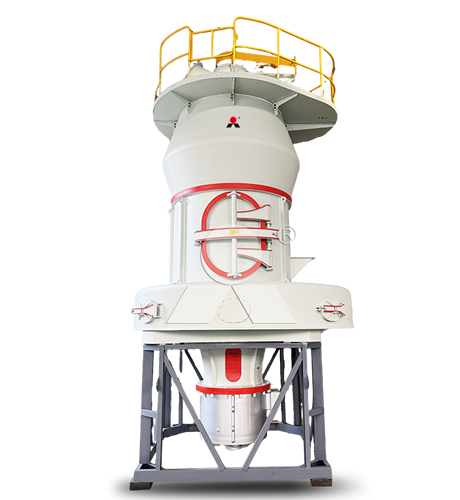
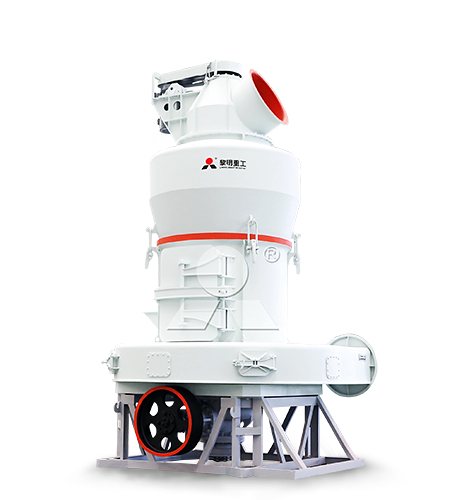
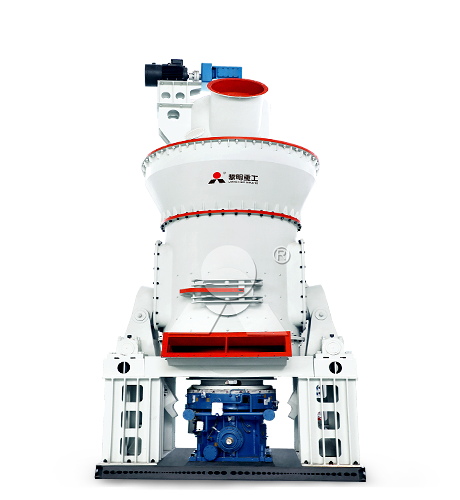
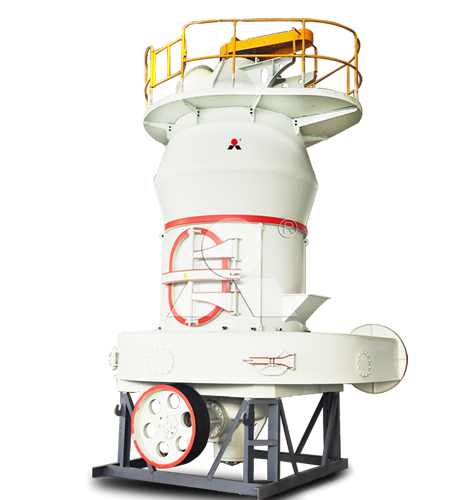
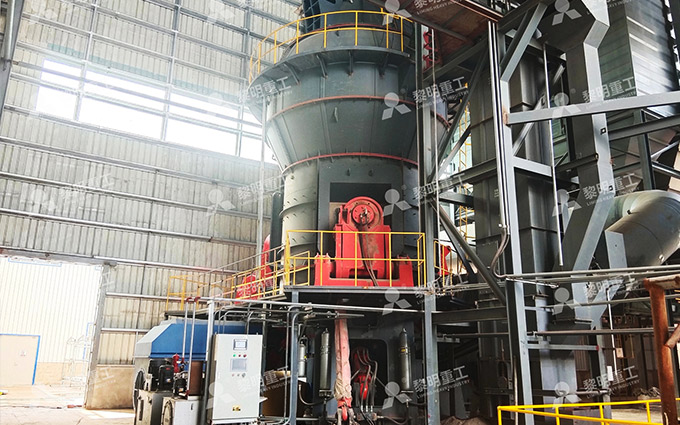
We are Liming Heavy Industry, a manufacturer of various types of industrial crushers, such as Raymond Mill, Trapezoidal Mill, Vertical Mill, Ultrafine Mill, Ball Mill, etc.
Our mills can process the following minerals:
limestone, quicklime, kaolin, talc, barite, bentonite, calcium carbonate, dolomite, coal, gypsum, clay, carbon black, slag, cement raw materials, cement clinker, etc.
If you need a mill to process stone or minerals into powder, please feel free to contact me (WhatsApp: +8615333807511). Thank you.
PCC particle size is one of the most important specifications for precipitated calcium carbonate. It affects opacity, whiteness, brightness, surface smoothness, viscosity, dispersion, bulk density, reinforcement, printability, coating performance, extrusion behavior, and final-product appearance.
Unlike ground calcium carbonate (GCC), which is made by mechanically grinding natural carbonate rock, precipitated calcium carbonate (PCC) is formed as new crystals during a controlled carbonation reaction. This gives PCC producers greater ability to adjust particle size, particle-size distribution, crystal shape, surface area, and agglomeration behavior. However, “fine PCC” or “ultrafine PCC” is not a complete specification. Buyers should define measurable values such as D10, D50, D90, D97, particle morphology, specific surface area, test method, and dispersion procedure.
PCC Particle Size at a Glance
| Term | Meaning | Why It Matters |
|---|---|---|
| Primary particle size | The size of an individual PCC crystal or particle before agglomeration | Influences surface area, light scattering, morphology, and potential functional performance |
| Secondary particle size | The size of an agglomerate made from multiple primary PCC particles | Influences powder flow, dispersion, coating smoothness, and processing behavior |
| Particle-size distribution, PSD | The full distribution of particle sizes in a sample | More informative than a single average particle-size value |
| D10 | 10% of measured particle volume is smaller than this diameter | Describes the fine end of the distribution |
| D50 | 50% of measured particle volume is smaller than this diameter | Median particle size; useful for comparing grades |
| D90 | 90% of measured particle volume is smaller than this diameter | Shows the upper part of the distribution |
| D97 | 97% of measured particle volume is smaller than this diameter | Tracks the coarse tail and helps control oversized particles |
| Specific surface area | Total surface area per unit mass | Relevant to binder demand, oil absorption, rheology, and surface treatment |
Why PCC Particle Size Matters
PCC particle size affects how the mineral behaves in a formulation and how it changes the appearance or performance of the finished product. A smaller particle is not automatically better. Finer PCC can improve smoothness and light scattering, but it can also increase surface area, viscosity, binder demand, agglomeration risk, and cost.
| Particle-Size Effect | Potential Benefit | Potential Trade-Off |
|---|---|---|
| Finer particles | Can improve smoothness, surface coverage, opacity, light scattering, and dispersion in a well-designed system | Can increase surface area, viscosity, oil absorption, and binder or dispersant demand |
| Lower coarse-particle content | Can reduce surface defects, improve gloss, and support smoother films or sheets | Requires tighter precipitation, classification, drying, and deagglomeration control |
| Narrower PSD | Can improve consistency, packing behavior, and repeatability | May require more specialized process control and increase production cost |
| Broader PSD | Can improve packing in some formulations and reduce void space | May increase the risk of coarse-particle defects or inconsistent surface quality |
| Higher surface area | Can improve interaction with binders, resins, and other formulation components | Can increase moisture sensitivity, agglomeration risk, and formulation complexity |
PCC particle size should always be evaluated together with crystal morphology. A 1 μm scalenohedral PCC and a 1 μm rhombohedral PCC may have different surface area, aspect ratio, packing behavior, rheology, and light-scattering performance.
How PCC Particle Size Is Reported
The most useful PCC size specification describes the full particle-size distribution rather than only one number. For many industrial products, values are reported in micrometers, written as μm or µm.
D10, D50, D90, and D97
D-values are cumulative percentile points on the particle-size distribution curve. When reported on a volume basis:
D10: 10% of the measured particle volume is smaller than the stated diameter.
D50: 50% of the measured particle volume is smaller than the stated diameter; this is the median size.
D90: 90% of the measured particle volume is smaller than the stated diameter.
D97: 97% of the measured particle volume is smaller than the stated diameter; this is commonly used to monitor the coarse tail.
Laser diffraction produces volume-based particle-size distributions from which values such as D97 can be calculated; D97 is particularly useful for tracking coarse particles in a fine-powder distribution.
For example, if a PCC grade has D50 = 1.5 μm and D97 = 5 μm, this means the median measured particle volume is below 1.5 μm and 97% of the measured particle volume is below 5 μm. It does not mean every particle is exactly 1.5 μm or that all particles are below 5 μm.
Why D97 Is Important
D50 is useful for comparing the general fineness of PCC grades, but it cannot show whether the product has a problematic coarse tail. A powder with an acceptable D50 may still contain a small number of large particles that affect paint smoothness, paper coating quality, plastic-film appearance, gloss, extrusion, or sealant texture.
For premium coating, film, ink, and sealant applications, D90 or D97 is often as important as D50. A good specification sets both a median-size target and a maximum coarse-particle limit.
Primary Particles vs Agglomerates
PCC often forms as small primary crystals that can attach to each other and form agglomerates. An electron microscope may show very fine primary particles, while laser diffraction may report a larger size because the sample contains agglomerates or because the dispersion procedure does not fully separate them.
This distinction is important when comparing suppliers. Two PCC products can have similar primary crystal size but different laser-diffraction PSD because one powder disperses more easily than the other.
Typical PCC Particle-Size Ranges
PCC can be engineered across a wide range, from nanometer-scale particles to several micrometers or larger agglomerated structures. There is no universal particle-size classification, and the actual grade should always be defined by measured PSD and morphology.
| PCC Category | General Particle-Size Description | Typical Considerations |
|---|---|---|
| Nano PCC | Primary particles often discussed in nanometer scale, generally below 1 μm | High surface area; requires careful agglomeration control, surface treatment, and handling |
| Ultrafine PCC | Very fine micron or submicron PCC; commercial definitions vary | Used where smoothness, surface area, rheology, or high-performance dispersion matters |
| Fine PCC | Often in the low-micron range | Common for paper, coatings, plastics, rubber, adhesives, and sealants |
| Standard PCC | Micron-scale particles or agglomerates with application-specific morphology | Used in general paper, plastic, rubber, coating, and filler applications |
| Coarse or structured PCC | Larger particles or engineered agglomerates | Selected when bulk, porosity, rheology, or packing behavior is more important than ultra-smooth surface finish |
Research on calcium carbonate precipitation demonstrates that product size can range from nanometers to several micrometers depending on synthesis conditions and additives. One study reported particles around 1–3 μm without additives, approximately 0.3–1 μm under modified conditions, and 30–250 nm after sodium-silicate-assisted synthesis.
PCC Particle Size vs Crystal Morphology
Particle size alone does not fully define PCC performance. PCC can form in different crystal shapes, including rhombohedral, scalenohedral, prismatic, acicular, and cubic-like structures. These morphologies may have different aspect ratios, surface areas, packing behavior, and interaction with binders or polymer matrices.
| PCC Morphology | General Shape | Particle-Size Consideration | Potential Use Direction |
|---|---|---|---|
| Rhombohedral | Block-like, rhomb-shaped crystals | Can be produced in fine to moderate particle sizes | Paper, coatings, plastics, general functional fillers |
| Scalenohedral | Elongated, pointed, tooth-like crystals | Size and aspect ratio both influence light scattering and packing | Paper filler, paper coating, opacity and bulk-focused products |
| Prismatic | Prism-shaped particles | PSD and particle shape should be assessed together | Selected fillers, coatings, and specialty formulations |
| Acicular | Needle-like or elongated particles | Aspect ratio can be as important as nominal diameter | Selected plastics, rubber, reinforcement, and rheology-control uses |
| Cubic or pseudo-cubic | Block-like engineered particles | May offer different packing and dispersion behavior | Specialty fillers, coatings, and controlled-rheology applications |
For elongated PCC, a laser-diffraction result is an equivalent spherical diameter. It is useful for quality control, but it does not fully describe particle length, width, thickness, or aspect ratio. When morphology is critical, use microscopy and image analysis in addition to PSD measurements.
How PCC Particle Size Is Controlled
PCC size is controlled mainly during the carbonation stage, when calcium carbonate crystals nucleate and grow. Unlike GCC, where fineness is controlled primarily by grinding and classification, PCC properties are influenced by reaction chemistry and hydrodynamics.
Carbon Dioxide Flow Rate
CO2 flow rate affects the rate at which carbonation occurs. Changes in CO2 delivery can influence supersaturation, nucleation rate, crystal growth, and particle-size distribution.
Carbon Dioxide Bubble Size
Smaller gas bubbles increase gas-liquid contact area and can improve CO2 transfer into the calcium hydroxide slurry. Bubble size can therefore influence reaction uniformity, local supersaturation, and particle formation.
Slurry Solids Content
The concentration of calcium hydroxide in the slurry affects viscosity, mixing, particle collision frequency, gas dispersion, and crystal growth. Very high solids can make mixing more difficult, while very low solids can reduce production efficiency.
Temperature
Temperature affects calcium hydroxide solubility, carbon dioxide solubility, reaction rate, crystal growth, and morphology. PCC producers control temperature to achieve the intended grade rather than treating it as a fixed value for all products.
Mixing Intensity
Mixing controls the distribution of CO2 bubbles and the uniformity of the precipitation environment. Poor mixing can create broad PSD, uneven crystal growth, large agglomerates, or inconsistent product quality.
pH and Carbonation Endpoint
The pH profile indicates the progress of carbonation. It is used with other measurements to control reaction completion and prevent residual calcium hydroxide or unwanted particle growth.
Additives and Crystal Modifiers
Selected additives, dispersants, seed crystals, and crystal-growth modifiers can alter nucleation, crystal shape, primary-particle size, and agglomeration. Research on wet carbonation identifies CO2 flow rate, bubble size, CO2 concentration, temperature, and additives as factors that affect PCC particle-size distribution.
Drying and Deagglomeration
Even when the precipitation stage produces the correct primary crystals, filtration and drying can create agglomerates. Deagglomeration, milling, screening, air classification, and surface treatment may be used to meet final PSD and flow requirements.
How PCC Particle Size Is Measured
No single method fully describes PCC particle size. The appropriate method depends on whether the goal is to measure primary crystals, agglomerates, particle-size distribution in a liquid, powder dispersion, or morphology.
| Method | What It Measures | Strengths | Key Limitation |
|---|---|---|---|
| Laser diffraction | Volume-based particle-size distribution, including D10, D50, D90, and D97 | Fast, widely used, suitable for routine quality control | Reports equivalent spherical diameter and is sensitive to dispersion method |
| Dynamic light scattering | Very fine particles and dispersions, often nano- or submicron range | Useful for small particles in stable dispersions | Highly sensitive to agglomeration and sample preparation |
| Scanning electron microscopy, SEM | Particle shape, primary crystal size, agglomeration, and morphology | Provides direct visual evidence of particle structure | Examines a limited sample area and requires careful preparation |
| Transmission electron microscopy, TEM | Very fine primary particles and nanostructures | High-resolution particle imaging | Specialized, time-consuming, and not typically used for routine bulk QC |
| Sedimentation analysis | Size distribution based on settling behavior | Can be useful for fine mineral dispersions | Depends on density assumptions, dispersion, and particle shape |
| BET surface-area analysis | Specific surface area rather than direct PSD | Useful companion measurement for fine PCC | Cannot replace D10/D50/D97 particle-size data |
Laser diffraction is widely used for industrial calcium carbonate quality control because it produces a volume-based PSD and values such as D10, D50, D90, and D97. The reported result depends on proper dispersion, optical-model settings, and agreed test conditions.
Why Sample Preparation Matters
PCC powders can agglomerate because fine particles have high surface energy. If the sample is not properly dispersed before measurement, a particle-size analyzer may measure agglomerates rather than the intended individual particle population.
A meaningful PCC PSD test should define:
Whether the sample is measured dry or wet.
The dispersing liquid used for wet analysis.
Dispersant type and dosage.
Ultrasonic energy and duration, if used.
Stirring speed and circulation conditions.
Instrument model and measurement range.
Optical model and refractive-index settings.
Number of repeat measurements.
Acceptance criteria for D10, D50, D90, D97, and residue.
Two suppliers can report different particle sizes for a similar PCC because they use different dispersion procedures or measurement conditions. A purchasing specification should therefore define both the target values and the test method.
PCC Particle Size by Application
The best PCC particle size depends on the application. These examples describe selection logic rather than universal grade specifications.
| Application | Particle-Size Priority | Why It Matters |
|---|---|---|
| Paper filler | Controlled low-micron PSD with morphology suited to retention, opacity, bulk, and drainage | Balances optical performance with paper strength and paper-machine runnability |
| Paper coating | Fine PSD with low coarse tail and stable slurry dispersion | Supports smooth coating layers, printability, gloss, and surface uniformity |
| Architectural paint | Fine and well-dispersed PCC selected for target sheen and rheology | Influences whiteness, opacity, smoothness, viscosity, and film structure |
| High-gloss coatings and inks | Very low coarse-particle content, controlled D90/D97, strong dispersion | Helps avoid roughness, gloss loss, streaks, and surface defects |
| Rigid PVC | Fine, often surface-treated PCC with controlled PSD | Supports dispersion, surface appearance, stiffness, and extrusion consistency |
| Plastic film and sheet | Fine grade with a tightly controlled coarse tail | Helps reduce visible particles, weak points, and surface imperfections |
| Rubber | Particle size and morphology selected for the desired balance of processing and mechanical properties | Influences hardness, viscosity, reinforcement, and surface quality |
| Sealants and adhesives | Fine PCC with controlled surface area, moisture, and dispersion | Controls viscosity, extrusion, sag resistance, bead appearance, and storage stability |
| Pharmaceuticals and cosmetics | Defined size range with tight quality, purity, and agglomeration control | Supports texture, dosage-form behavior, sensory feel, and regulated product consistency |
How to Write a PCC Particle-Size Specification
A strong specification should state the required application performance and the particle measurements used to control it. Avoid terms such as “fine,” “ultrafine,” “nano,” or “high mesh” without numerical limits.
| Specification Item | What to Define |
|---|---|
| Particle-size method | Laser diffraction, sedimentation, microscopy, or another agreed method |
| Measurement basis | Volume-based, number-based, or another defined reporting basis |
| D10 | Minimum or target fine-end value if needed for the application |
| D50 | Median particle-size target and tolerance |
| D90 or D97 | Maximum coarse-tail limit |
| Residue | Maximum retained amount on an agreed sieve, where relevant |
| Particle morphology | Required crystal shape, aspect ratio, microscopy standard, or visual reference |
| Specific surface area | BET target or acceptable range where surface area influences formulation behavior |
| Dispersion procedure | Dispersant, medium, ultrasonication, mixing, and sample-preparation method |
| Application test | Required validation in the actual paper, paint, plastic, rubber, adhesive, sealant, or cosmetic system |
For example, a practical specification may state:
PCC grade for water-based coating: laser diffraction, volume basis; D50 within the agreed range; D97 below the agreed maximum; low oversize residue; specified morphology; defined BET surface area; stable viscosity after the agreed dispersion procedure; no visible coarse particles in the finished coating drawdown.
The exact numerical values should come from formulation trials and product-performance requirements, not from a generic industry template.
Common PCC Particle-Size Problems
| Problem | Possible Cause | Potential Effect |
|---|---|---|
| D50 is too large | Low nucleation rate, excess crystal growth, weak mixing, insufficient CO2 transfer, process variation | Rough surface, lower gloss, poor opacity balance, visible particles, unstable performance |
| D50 is too small | Excess nucleation, high supersaturation, inappropriate additive level, aggressive process conditions | High surface area, excess viscosity, higher binder demand, difficult filtration or drying |
| High D97 or coarse tail | Agglomeration, poor deagglomeration, uneven carbonation, contamination, ineffective classification | Coating roughness, film defects, poor printability, extrusion defects, sealant texture problems |
| Broad PSD | Unstable process conditions, poor mixing, fluctuating lime slurry, inconsistent CO2 flow | Inconsistent packing, rheology, optical performance, and batch-to-batch behavior |
| Poor powder dispersion | Moisture, inadequate surface treatment, hard agglomerates, unsuitable dispersant, inadequate mixing | Incorrect measured PSD, visible defects, poor compound consistency, reduced mechanical or optical performance |
| Unexpected morphology | Changes in temperature, pH, additive dosage, impurities, CO2 conditions, or residence time | Changes in surface area, bulk density, light scattering, viscosity, and performance |
Frequently Asked Questions
What is PCC particle size?
PCC particle size describes the dimensions of precipitated calcium carbonate crystals and their agglomerates. It is commonly reported using particle-size-distribution values such as D10, D50, D90, and D97, usually in micrometers.
What does D50 mean for PCC?
D50 is the median particle diameter. On a volume-based particle-size distribution, 50% of the measured particle volume is smaller than the D50 value and 50% is larger.
Why is D97 important for PCC?
D97 shows the coarse tail of the particle-size distribution. It helps control oversized particles that can cause roughness, gloss loss, coating defects, poor printability, extrusion issues, or sealant texture problems.
Is smaller PCC always better?
No. Smaller PCC can improve smoothness and light scattering, but it can also increase surface area, viscosity, binder demand, oil absorption, agglomeration risk, and production cost. The best size depends on the application.
How is PCC particle size controlled?
PCC particle size is mainly controlled during carbonation through CO2 flow, bubble size, slurry concentration, temperature, pH, mixing, residence time, additives, and finishing steps such as drying and deagglomeration.
Can laser diffraction measure PCC particle size?
Yes. Laser diffraction is widely used to measure PCC particle-size distribution and report D10, D50, D90, and D97. The test requires a controlled dispersion procedure because PCC can agglomerate.
Conclusion
PCC particle size is not one number—it is a combination of primary crystal size, agglomeration state, full particle-size distribution, crystal morphology, and specific surface area. D50 indicates median fineness, while D90 and D97 help control the coarse tail that often determines final surface quality.
To choose the right PCC, match its particle-size distribution and morphology to the application. Paper, coatings, PVC, plastics, rubber, adhesives, sealants, pharmaceuticals, and cosmetics each require different balances of fineness, surface area, dispersion, whiteness, rheology, and cost. A complete specification should define D10, D50, D90 or D97, test method, morphology, surface area, and actual end-use performance.