Barite Powder Processing
Barite Grinding Process: From Raw Barite to Finished Powder
2026-09-14 14:21:33
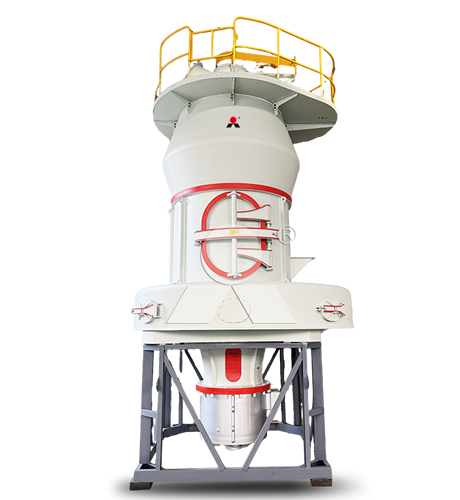
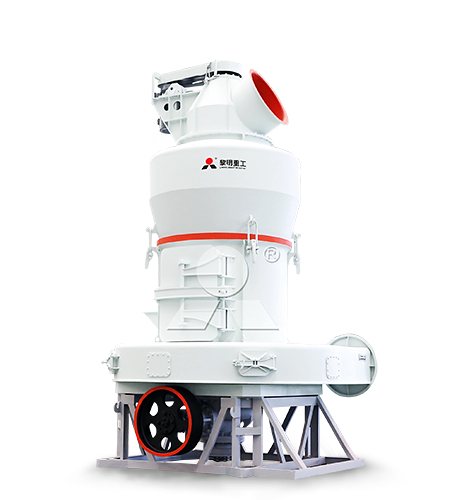
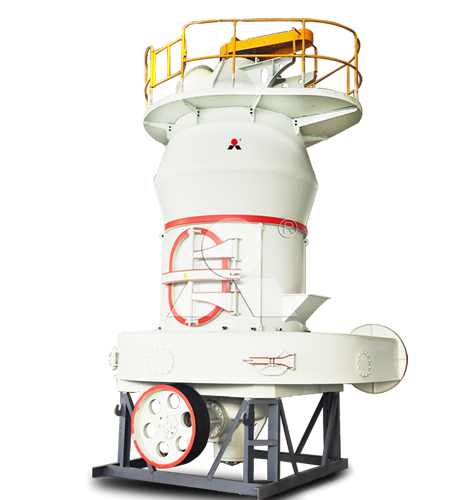
We are Liming Heavy Industry, a manufacturer of various types of industrial crushers, such as Raymond Mill, Trapezoidal Mill, Vertical Mill, Ultrafine Mill, Ball Mill, etc.
Our mills can process the following minerals:
limestone, quicklime, kaolin, talc, barite, bentonite, calcium carbonate, dolomite, coal, gypsum, clay, carbon black, slag, cement raw materials, cement clinker, etc.
If you need a mill to process stone or minerals into powder, please feel free to contact me (WhatsApp: +8615333807511). Thank you.
Barite powder production is a controlled process that converts mined barium sulfate ore into a consistent mineral product for drilling fluids, coatings, plastics, rubber, paints, chemicals, glass, and other industrial applications. The objective is not simply to reduce particle size: a well-designed barite grinding line must protect powder whiteness and purity, maintain the specified fineness, control moisture, minimize dust, and provide stable output for downstream users.
Because barite is dense, abrasive, and often associated with clay, quartz, calcite, iron-bearing impurities, or moisture, the process should begin with a clear understanding of the raw ore. Ore grade, moisture content, feed size, required mesh, production capacity, and the final application all influence equipment configuration and operating parameters.
1. Raw Barite Preparation
The production route starts at the raw-material storage area. Run-of-mine barite may arrive as large blocks, mixed-size stones, or material containing soil and unwanted inclusions. Before grinding, the material should be inspected for excessive moisture, metal debris, oversized rocks, and impurities that could affect product quality or equipment reliability.
For applications requiring high whiteness or a tightly controlled chemical composition, beneficiation or sorting may be completed before the grinding stage. This can include washing, screening, gravity separation, magnetic separation, or hand sorting, depending on the characteristics of the deposit and the quality target of the finished powder.
A covered stockpile or enclosed storage area helps reduce contamination from dust, rainwater, and foreign materials. Stable raw-material storage also allows the plant to blend ore from different batches and maintain more consistent feed quality.
2. Crushing to Mill Feed Size
Large barite rocks cannot enter a fine grinding mill directly. They must first be reduced to a controlled feed size through crushing and screening. The exact target depends on the selected mill model and project configuration, but crushed barite is commonly prepared as small, uniform particles before it reaches the grinding section.
A typical crushing circuit includes a feeder, primary crusher, secondary crushing equipment when required, belt conveyors, and a vibrating screen. Material that meets the required size moves to the mill feed bin; oversized particles return for further crushing.
Uniform feed size is important for several reasons:
It reduces sudden impact loads inside the mill.
It helps maintain stable grinding pressure and airflow.
It improves classification efficiency.
It lowers unnecessary wear on grinding components.
It supports more consistent final powder fineness.
Metal detectors and iron-removal devices are often installed before the mill feed system. Removing tramp iron protects grinding parts and reduces the risk of mechanical damage.
3. Feeding and Material Buffering
After crushing, barite is transferred to a storage hopper or buffer silo. This section separates the intermittent operation of the crushing stage from the continuous operation of the grinding system. The buffer silo allows the mill to receive a steady material flow even if the upstream crushing equipment pauses temporarily.
A bucket elevator, belt conveyor, screw conveyor, or pneumatic conveying system may transport crushed barite to the feed bin. From there, a controlled feeder sends material into the mill at a stable rate.
Consistent feeding is one of the foundations of reliable powder production. If the feed fluctuates sharply, the mill may experience unstable pressure, changes in circulating load, uneven product fineness, higher vibration, or reduced output. Automated feeding control can coordinate the feed rate with mill current, differential pressure, classifier speed, and product requirements.
4. Drying During Grinding
Barite moisture should be evaluated before selecting the process route. Dry material can usually enter the grinding circuit directly after crushing. When the feed contains surface moisture, clay-bound moisture, or moisture acquired during storage and transport, hot air may be introduced into the system.
Drying inside the grinding circuit avoids the need for a separate drying stage in many projects. The air stream carries heat through the mill while also transporting fine particles to the classifier. This combined arrangement can simplify the process flow and reduce material handling steps.
However, drying temperature must be controlled according to the actual feed condition. The purpose is to reduce moisture sufficiently for stable grinding, classification, collection, and storage—not to apply unnecessary heat. Excessive moisture can cause material buildup in chutes, poor powder flow, blockage in conveying equipment, and unstable operation of the dust-collection system.
5. Barite Grinding with LM Vertical Mill
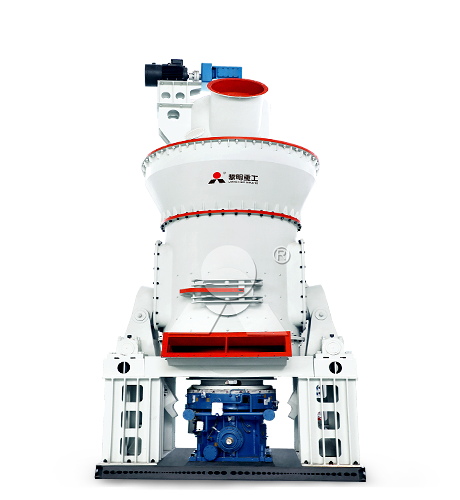
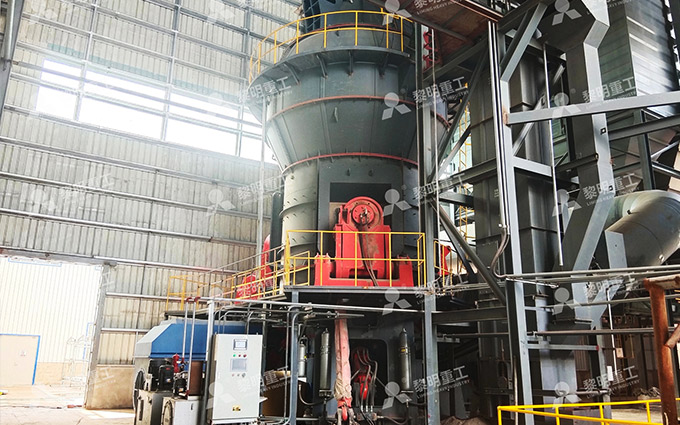
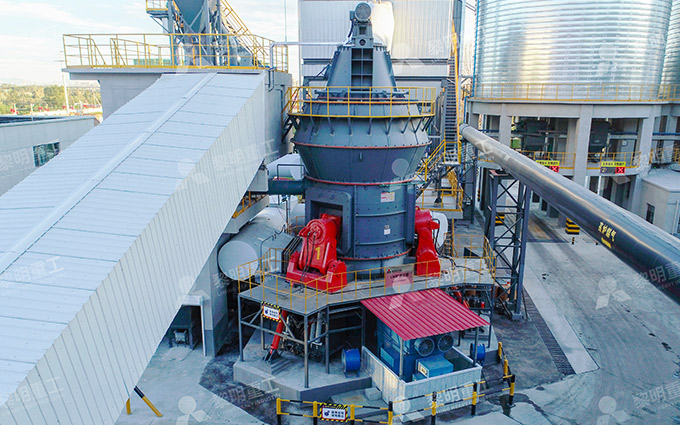
For large-capacity barite powder plants, the LM Vertical Mill provides an integrated route for drying, grinding, classification, and pneumatic conveying. The mill processes material on a rotating grinding table, where rollers apply pressure to the barite bed. The material is progressively reduced as it moves outward across the table.
The air stream lifts fine particles from the grinding zone toward the internal powder separator. Particles that already meet the fineness requirement leave with the airflow, while coarse particles are returned to the grinding area for further processing. This internal circulation supports continuous production and helps maintain a stable particle-size distribution.
The LM Vertical Mill is particularly suitable when a project requires higher throughput, continuous operation, and a compact process layout. Its integrated design can reduce the number of separate units required for drying, grinding, powder selection, and material conveying. Liming Heavy Industry lists the LM Vertical Roller Mill for applications including non-metallic mineral processing and notes a capacity range of 10–400 t/h, with the final configuration depending on material properties and production requirements.
For barite processing, the operating team should pay close attention to feed particle size, feed moisture, grinding pressure, airflow volume, separator settings, vibration, and wear condition of rollers and liners. These variables work together to determine output, energy use, and final powder quality.
6. Barite Grinding with MTW European Trapezium Mill
The MTW European Trapezium Grinding Mill is a practical solution for many medium-scale barite powder projects, especially where flexibility, controlled fineness, and a mature closed-circuit grinding arrangement are important. It is suitable for barite feed that has been crushed to the specified size and delivered evenly into the grinding chamber.
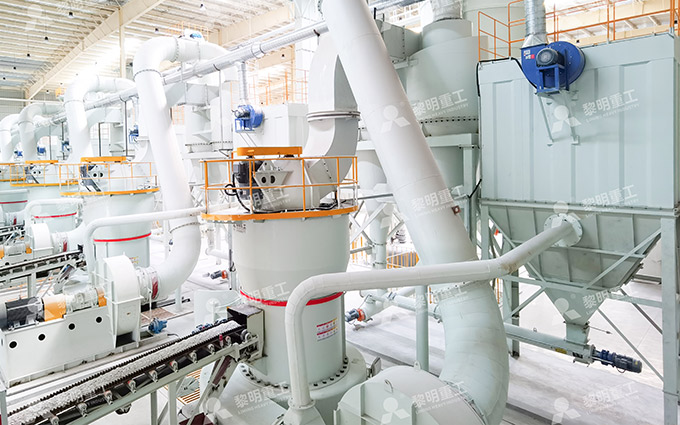
Inside the MTW mill, grinding rollers and the grinding ring reduce the barite through compression and friction. The resulting powder is carried upward by airflow to the classifier. Fine particles that meet the target specification move onward to the collection system, while coarse particles return to the grinding zone.
This closed-circuit process is valuable in barite powder production because it avoids sending oversized particles directly to finished-product storage. In a typical MTW-based barite line, crushed ore is elevated to the mill, hot air can be introduced for simultaneous drying, qualified fine powder is collected by a pulse dust collector, and coarse particles are returned for regrinding.
MTW European Trapezium Mill is well suited to conventional fine barite powder specifications commonly required in industrial markets. Liming Heavy Industry identifies MTW as an appropriate choice for barite fine-powder processing, alongside the LM Vertical Mill.
7. Classification: Controlling the Final Fineness
Grinding alone does not guarantee that the finished powder meets the required specification. Classification determines which particles are accepted as product and which particles must return to the mill. This stage has a direct influence on the powder’s mesh range, particle-size distribution, fluidity, and downstream performance.
For example, drilling-fluid barite may be produced to a specified particle-size range, while coating, rubber, plastic, or chemical applications may require a different fineness profile. A plant should therefore be designed around the final powder standard rather than around a single nominal mesh value.
In an air-classification system, the separator balances centrifugal force against airflow. Fine particles are carried away with the air stream, while larger or heavier particles fall back for additional grinding. Adjusting classifier speed and airflow allows the operator to fine-tune the cut size.
A properly adjusted classifier helps achieve:
Stable finished-product fineness.
Lower coarse-particle content.
More efficient use of grinding energy.
Reduced overgrinding of already qualified powder.
More consistent performance in downstream mixing or formulation processes.
8. Powder Collection and Dust Control
After classification, qualified barite powder is separated from the conveying air. The main collection equipment may include cyclone collectors and pulse dust collectors. The cyclone removes a large share of the powder from the air stream, while the pulse dust collector captures remaining fine particles before clean air is discharged or recirculated.
Efficient powder collection affects both product recovery and plant cleanliness. Barite powder is valuable product, not waste; poor collection directly reduces yield. A well-matched dust-collection system also helps maintain negative pressure within the grinding circuit, limiting dust leakage at transfer points and supporting a cleaner working environment.
Collected powder is typically discharged through rotary valves, screw conveyors, air slides, or enclosed conveying systems. The conveying method should be selected according to plant capacity, powder flowability, storage layout, and packaging requirements.
9. Finished Powder Storage and Packaging
Once collected, finished barite powder is transferred to one or more product silos. Separate silos can be used for different mesh grades, production batches, or customer specifications. Storage silos should be designed to avoid powder bridging, moisture absorption, segregation, and contamination.
From the silo, the powder can be supplied through automatic bagging equipment, valve-bag packing machines, jumbo-bag stations, bulk tanker loading systems, or customized delivery arrangements. Packaging selection depends on the target market:
Small bags are suitable for distributors and smaller end users.
Jumbo bags are commonly used for industrial bulk supply.
Bulk tanker loading is appropriate for high-volume customers with dedicated receiving systems.
Before shipment, routine quality checks should confirm that the powder meets the agreed specifications for fineness, moisture, whiteness where relevant, specific gravity, chemical composition, and bulk density.
10. Typical Barite Grinding Flow
A complete barite powder production line generally follows this route:
Raw barite receiving → impurity removal or beneficiation when required → crushing → screening → buffer storage → controlled feeding → drying and grinding → air classification → powder collection → finished-product silo → packaging or bulk loading.
The central principle is simple: only particles that meet the required fineness are collected as finished powder. Coarse material remains in circulation and returns to the grinding zone until it reaches the required size. This closed-loop approach supports stable quality and improves overall material utilization.
11. Selecting the Right Grinding Route
The choice between an LM Vertical Mill and an MTW European Trapezium Mill should be based on the actual project rather than on a single factor such as target mesh.
| Project consideration | LM Vertical Mill | MTW European Trapezium Mill |
|---|---|---|
| Production scale | Suitable for larger, continuous production lines | Suitable for many medium-scale and flexible production lines |
| Process integration | Integrates drying, grinding, classification, and conveying | Uses a mature grinding, classification, and collection arrangement |
| Feed preparation | Requires controlled feed size and stable feeding | Requires crushed barite fed evenly into the grinding chamber |
| Product control | Internal separator supports continuous particle-size control | Classifier and closed circulation support controlled final fineness |
| Typical application | High-capacity barite powder projects | Conventional fine barite powder production with flexible capacity requirements |
The final configuration should be determined after evaluating the barite’s hardness, moisture, feed size, required powder specification, annual operating hours, site conditions, available utilities, and planned production capacity.
12. Building a Stable Barite Powder Plant
A successful barite grinding plant is built around process balance. Crushing capacity must match mill feed demand. The mill must match the required output and fineness. Classification must reject coarse particles effectively. Collection equipment must recover powder efficiently. Storage and packaging must preserve the quality achieved during grinding.
When these sections are properly matched, raw barite can be converted into a reliable finished powder with stable fineness, controlled moisture, and consistent handling characteristics. Whether the project uses an LM Vertical Mill for high-capacity integrated production or an MTW European Trapezium Mill for flexible fine-powder processing, the key is to design the entire flow around the actual material and the needs of the final customer.