Barite Powder Processing
How to Build a Barite Powder Grinding Plant for Industrial Applications
2026-09-14 14:29:08
We are Liming Heavy Industry, a manufacturer of various types of industrial crushers, such as Raymond Mill, Trapezoidal Mill, Vertical Mill, Ultrafine Mill, Ball Mill, etc.
Our mills can process the following minerals:
limestone, quicklime, kaolin, talc, barite, bentonite, calcium carbonate, dolomite, coal, gypsum, clay, carbon black, slag, cement raw materials, cement clinker, etc.
If you need a mill to process stone or minerals into powder, please feel free to contact me (WhatsApp: +8615333807511). Thank you.
Building a barite powder grinding plant starts with the finished product and the customer’s application. The plant should be designed to convert available barite ore into a consistent powder with the required fineness, particle-size distribution, moisture, purity, and delivery format.
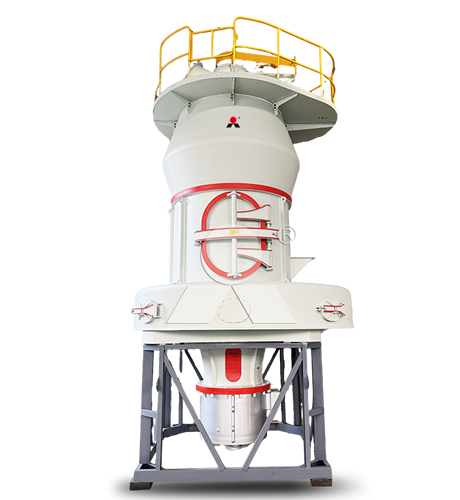
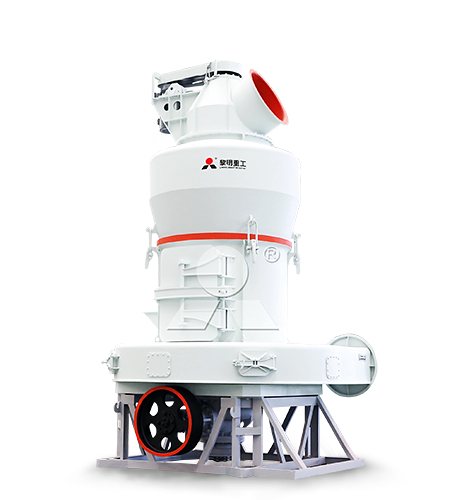
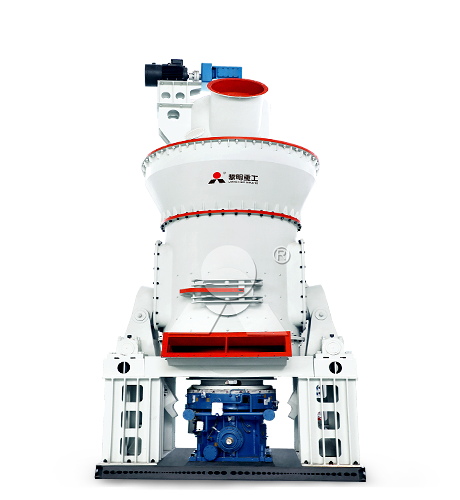
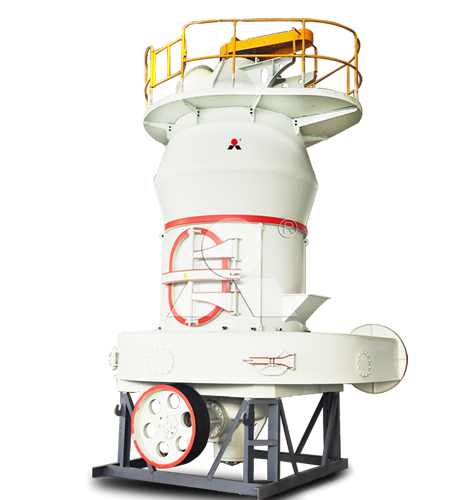
For conventional industrial barite powder at medium capacity, an MTW European Grinding Mill provides a practical and flexible process route. For large-scale production requiring integrated drying, grinding, classification, and conveying, an LM Vertical Mill is the more suitable central system. The final configuration should always be based on representative raw-barite testing and the required sustained output.
Define the Product First
Before selecting equipment or preparing the site, define the finished powder in technical terms. “Barite powder” can mean very different products depending on whether it will be used in drilling fluids, coatings, plastics, rubber, paints, chemicals, glass, ceramics, or general mineral-filler applications.
The project specification should include:
Target powder fineness in mesh or microns.
Required particle-size distribution and maximum sieve residue.
Required barium sulfate content and specific gravity.
Whiteness and iron-content limits when appearance matters.
Maximum moisture in the finished product.
Required production capacity in tonnes per hour and tonnes per year.
Daily operating schedule and planned maintenance periods.
Packaging format, including bags, jumbo bags, or bulk delivery.
A coating or plastics customer may require a fine, uniform powder with good dispersibility and consistent whiteness. A drilling-fluid producer may focus more strongly on density, particle-size distribution, and batch consistency. A general industrial-filler customer may prioritize stable 200-mesh or 325-mesh powder at a competitive production cost.
The grinding system should be selected around these requirements. Producing powder that is finer than necessary can reduce output, increase energy consumption, and create a product that does not match the intended application.
Evaluate Raw Barite and Site Conditions
The raw material determines the true difficulty of the project. Before confirming a plant configuration, test representative barite samples from the actual mine, stockpile, or supplier.
| Raw-Material Item | Why It Matters |
|---|---|
| Barium sulfate content | Indicates mineral quality and helps determine suitability for the final application |
| Specific gravity | Important for drilling-fluid and density-sensitive industrial applications |
| Hardness and grindability | Affects mill capacity, power demand, wear rate, and selection of grinding components |
| Abrasiveness | Influences wear-part life for rollers, grinding rings, liners, classifiers, ducts, and valves |
| Moisture | Determines whether a hot-air drying system is required |
| Feed size | Defines the size and configuration of the crushing and screening section |
| Clay and impurities | May affect powder flow, whiteness, moisture handling, and final product quality |
| Iron-bearing material and metal debris | May require magnetic separation and metal detection before grinding |
Site conditions also affect the plant design. Confirm the available land area, building height, road access, power supply, heat source, local climate, water availability where washing is needed, and finished-product transport method. These factors influence equipment layout, installation cost, storage design, and the required level of weather protection.
Choose the Grinding System
The central equipment choice is usually between the MTW European Grinding Mill and the LM Vertical Mill. Both can produce fine barite powder, but they are designed for different operating conditions.
| Selection Factor | MTW European Grinding Mill | LM Vertical Mill |
|---|---|---|
| Best plant scale | Medium-scale, flexible barite powder production | Large-scale, continuous barite powder production |
| Typical finished product | Conventional fine barite powder, commonly including 200-mesh and 325-mesh grades | High-volume standard fine barite powder with integrated process control |
| Core arrangement | Roller-and-ring grinding with air classification and powder collection | Integrated drying, grinding, classification, and pneumatic conveying |
| Moisture control | Hot air can be introduced when feed moisture requires drying | Well suited to integrated hot-air drying for higher-capacity projects |
| Production flexibility | Suitable for standard grade changes and phased capacity development | Suitable for centralized, long-hour operation with high sustained output |
| Best business fit | Regional industrial-powder suppliers and moderate-capacity projects | Large-volume producers supplying multiple major customers |
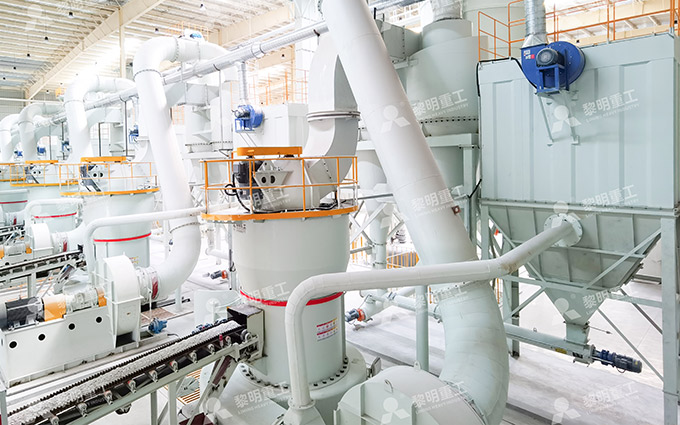
Liming Heavy Industry identifies the MTW European Type Mill as a suitable solution for barite powder in the 80–325 mesh range, particularly for conventional drilling-mud and industrial powder production. For a smaller line around 6 t/h producing 200–325 mesh barite, MTW is generally the more proportionate configuration.
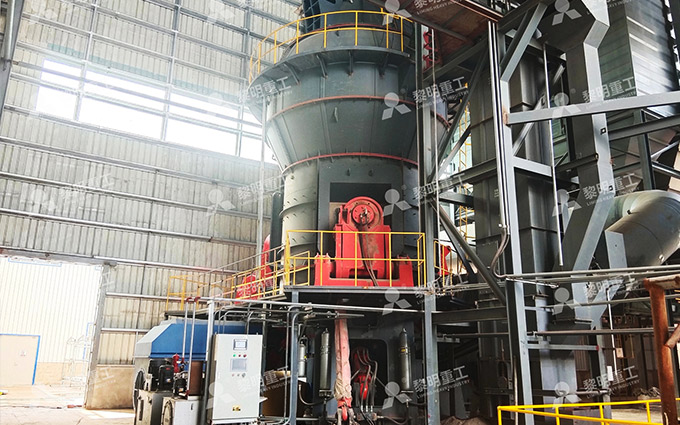
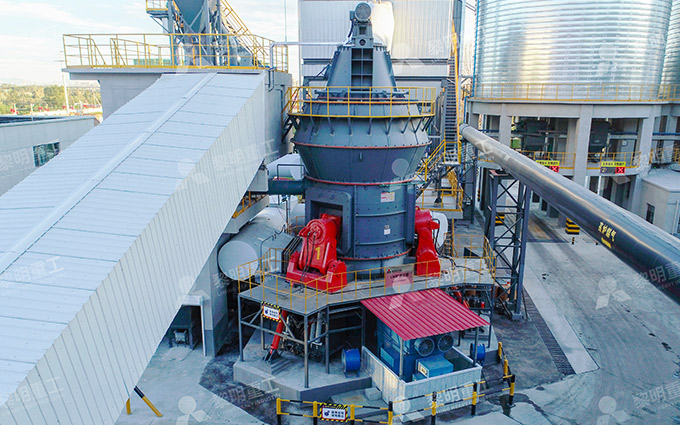
The LM Vertical Mill is the stronger choice when higher capacity, integrated moisture removal, long operating hours, and centralized process control are required. It combines drying, grinding, classification, and conveying in one process route, which can reduce intermediate material transfers in a large powder-processing plant.
Build the Complete Process Line
A reliable barite powder plant is built as a complete material-flow system. Every section must be matched to the same sustained qualified-powder output.
The typical production route is:
Raw barite receiving → storage → crushing → screening → mill-feed silo → controlled feeding → drying when required → grinding → air classification → powder collection → finished-product storage → packaging or bulk loading.
Raw Material Receiving and Storage
Set up a receiving hopper and storage area that match how barite will arrive at the plant. If the ore is delivered by truck, provide adequate unloading access and a covered stockpile where moisture control is important. Separate stockpiles are useful when several ore grades or sources must be kept apart.
The storage area should protect the feed from rain, ground contamination, and mixing with foreign materials. Excess moisture can increase drying demand and make material handling less stable.
Crushing and Screening
Raw barite blocks must be reduced to a controlled size before entering the grinding mill. A typical crushing section includes a vibrating feeder, jaw crusher, secondary crusher where needed, vibrating screen, belt conveyors, and transfer chutes.
The screen ensures that only material within the mill’s acceptable feed-size range moves to the feed silo. Oversized material returns to the crusher. Stable feed size improves mill output, reduces vibration, helps maintain product fineness, and limits unnecessary wear.
Feed Storage and Controlled Feeding
A buffer silo stores crushed barite and provides a stable material supply to the mill. This separates intermittent crushing operations from continuous grinding operations.
A variable-speed feeder, electromagnetic feeder, rotary valve, or other metering device should maintain a consistent feed rate. Feeding should be coordinated with mill load, airflow, classifier settings, and the actual powder specification.
Install a magnetic separator or metal detector before the grinding mill when the feed may contain tramp metal from mining, crushing, or conveying. This protects rollers, grinding rings, grinding tables, and other components from avoidable damage.
Drying System
When raw barite contains elevated moisture, add a hot-air system. The system may include a hot-air furnace, burner, fuel-handling arrangement, ducts, temperature controls, insulation, fans, and safety devices.
The drying system should be sized according to actual feed moisture and target finished-product moisture. Insufficient drying may cause material buildup and weak classification. Excessive drying capacity can increase fuel use and create unnecessary airflow load.
For large-scale plants, the LM Vertical Mill can combine hot-air drying with grinding and classification. For MTW European Grinding Mill lines, hot air can also be introduced into the air circuit when moisture reduction is needed.
Grinding and Classification
The grinding stage produces a range of particle sizes. The classifier separates qualified barite powder from particles that remain too coarse. Coarse particles are returned for additional grinding, while fine particles continue to the collection section.
Classifier settings and airflow volume are critical because they determine the final product. Higher classification intensity generally produces a finer powder but may reduce output and increase energy use. The correct setting is the one that meets the customer’s product specification with stable production.
For a plant supplying more than one barite grade, record the operating settings for each product. This includes feed rate, airflow, classifier speed, grinding pressure where applicable, drying temperature, and finished-product test results. A documented operating window helps reduce changeover time and improves consistency between batches.
Powder Collection and Dust Control
After classification, qualified powder is separated from the airflow by a cyclone collector and pulse dust collector. The cyclone removes the main product fraction, while the pulse collector captures remaining fine powder and helps maintain stable system pressure.
Efficient powder collection improves product recovery and reduces dust loss. It also supports clean working conditions at the grinding plant. Design the collection system around the actual airflow volume, powder fineness, and required production rate.
Inspect pulse-cleaning performance, filter condition, hopper discharge, duct leakage, and fan load regularly. A poorly maintained dust collector increases system resistance, reduces airflow, and may lower grinding output.
Finished Powder Storage and Dispatch
Collected barite powder is conveyed to finished-product silos. Use separate silos when producing several grades, when batch traceability is required, or when product quality must be protected before shipment.
The dispatch system should match the customer’s preferred delivery method:
| Delivery Format | Recommended Equipment | Typical Use |
|---|---|---|
| 25 kg or 50 kg bags | Automatic or semi-automatic valve-bag packing machine | Distribution, container shipments, and smaller industrial customers |
| Jumbo bags | Big-bag filling station with weighing and dust extraction | Industrial users handling powder in bulk |
| Bulk delivery | Bulk-loading spout, weighing system, and enclosed loading route | Large-volume customers with tankers or dedicated receiving systems |
Ensure that packing capacity matches grinding output. If the packing station is too slow, the mill may need to stop despite having sufficient grinding capacity. Finished-product silos provide useful buffer storage, but they should not be used as a substitute for correctly sized dispatch equipment.
Plan Utilities and Installation
Process equipment cannot operate without properly designed utilities and site infrastructure. These requirements should be included from the beginning of the project.
Electrical transformer and distribution system sized for the mill, fans, crushers, conveyors, dust collectors, packing equipment, lighting, and auxiliary equipment.
Fuel or energy supply for the hot-air system where drying is required.
Compressed-air system for pulse dust collectors, valves, and instruments.
Foundations designed for crushers, grinding equipment, fans, silos, and vibrating machinery.
Steel structure or workshop building with sufficient height for elevators, silos, ducts, and maintenance access.
Road access for raw-material trucks, finished-product loading, and delivery of large equipment components.
Dust-control points at crushing, transfer, packing, and bulk-loading sections.
Drainage and covered storage to protect raw barite and finished powder from moisture.
For larger projects, the process layout should also reserve space for future equipment additions, such as another finished-product silo, extra packing line, expanded raw-material storage, or a second grinding line.
Control Quality During Operation
A barite powder plant should use routine quality checks to ensure that raw ore and finished powder remain within the intended operating range. The frequency of testing depends on the product application, raw-material consistency, and customer requirements.
| Control Point | Recommended Check | Purpose |
|---|---|---|
| Raw barite | Specific gravity, chemical analysis, moisture, hardness, and impurity level | Confirms that the feed is suitable for the intended product |
| Crushed feed | Particle-size distribution and metal contamination check | Protects the mill and maintains stable grinding conditions |
| Grinding operation | Feed rate, mill load, vibration, airflow, temperature, and classifier setting | Maintains stable output and product consistency |
| Finished powder | Fineness, sieve residue, particle-size distribution, moisture, whiteness, and density where required | Confirms compliance with customer specifications |
| Powder collection | Dust collector pressure, filter-cleaning performance, fan load, and powder discharge | Maintains recovery efficiency and stable airflow |
| Finished-product dispatch | Bag weight, silo identification, batch traceability, and loading cleanliness | Protects product quality through final delivery |
The goal is consistent qualified powder, not maximum short-term mill throughput. A plant that produces slightly less material but maintains stable fineness, moisture, and particle-size distribution is usually more valuable than a line that repeatedly produces off-specification powder.
Recommended Development Path
A practical barite grinding plant can be developed in the following order:
Define the finished-powder application, quality standard, capacity, and delivery format.
Collect representative barite samples and complete material testing.
Confirm feed size, moisture, impurity content, specific gravity, and grindability.
Select MTW European Grinding Mill for conventional medium-scale production or LM Vertical Mill for high-capacity integrated production.
Match the crushing, feeding, drying, classification, collection, storage, and packing equipment to the mill’s sustained output.
Design electrical supply, hot-air supply, compressed air, foundations, workshop layout, and dust-control measures.
Plan finished-product storage and dispatch according to customer packaging and transport requirements.
Establish operating procedures and quality-control checks before commercial production begins.
A successful barite grinding plant is built around the intended industrial application. With properly tested raw material, a correctly sized MTW European Grinding Mill or LM Vertical Mill, matched supporting equipment, and systematic process control, the plant can produce consistent barite powder for dependable industrial supply.