Concrete SCM Grinding Plant Solutions
How to Size the Capacity of an SCM Grinding Plant
2026-11-15 11:00:46
Size an SCM grinding plant around the annual quantity of qualified finished powder you need to sell, the realistic hours available for production, and the output the system can sustain at the specified feed conditions and product fineness. Do not select a mill by dividing annual demand by every hour in the calendar or by choosing a model with a matching catalogue capacity.
The required capacity must also account for drying, separation losses, maintenance, product changes, and downstream handling. Liming Heavy Industry notes that actual grinding output varies with material hardness, feed size, finished fineness, and moisture, making material-specific assessment essential during model selection.
Start with Saleable Product, Not Incoming Feed
Before discussing tonnes per hour, define exactly what the plant must produce. An annual target of 300,000 tonnes could mean dry qualified powder, delivered material containing an agreed moisture level, or incoming wet feed. These are different quantities and can lead to very different equipment selections.
A useful capacity statement identifies:
The material being processed and its source.
The annual quantity of qualified finished product.
The applicable product specification and test methods.
Target fineness, coarse residue, and finished moisture.
The expected operating schedule.
The feed conditions under which output must be achieved.
For example, “300,000 tonnes per year of qualified GGBS at an agreed fineness and moisture” is a workable starting point. “A 300,000-tonne slag plant” leaves important design conditions unresolved.
A Worked Capacity Example
Consider a proposed plant required to supply 300,000 tonnes of qualified powder annually. The following figures are illustrative planning assumptions, not equipment guarantees or recommended values for every project.
| Planning item | Illustrative assumption |
|---|---|
| Annual qualified-product requirement | 300,000 tonnes. |
| Scheduled operating days | 330 days per year. |
| Scheduled hours per operating day | 24 hours. |
| Scheduled annual hours | 7,920 hours. |
| Assumed productive availability within those hours | 90%. |
| Annual productive hours | 7,128 hours. |
| Required average qualified output during productive operation | Approximately 42.1 tonnes per hour. |
Under these assumptions, a system delivering only 38 tonnes per hour would not meet the annual requirement. A verified output above 42.1 tonnes per hour would provide some production headroom, but the appropriate margin depends on the risks already covered by the planning assumptions.
For comparison, a system sustaining 45 tonnes per hour for the assumed productive hours would produce approximately 320,800 tonnes annually. That is a planning result, not a reason to select a particular mill model without feed testing and a defined performance basis.
Avoid counting the same downtime twice
In this example, the 35 days outside the operating calendar are already excluded. The additional availability allowance applies only within the remaining scheduled hours. If a detailed maintenance schedule has already removed particular shutdowns, do not deduct them again through a broad availability factor.
Likewise, distinguish downtime from reduced operating rate. A plant may be running but producing below its intended output because of wet feed, wear, insufficient heat, or a tighter fineness requirement. Either model those conditions separately or include them transparently in the assumed sustainable output.
Build the Capacity Case Around the Actual Material
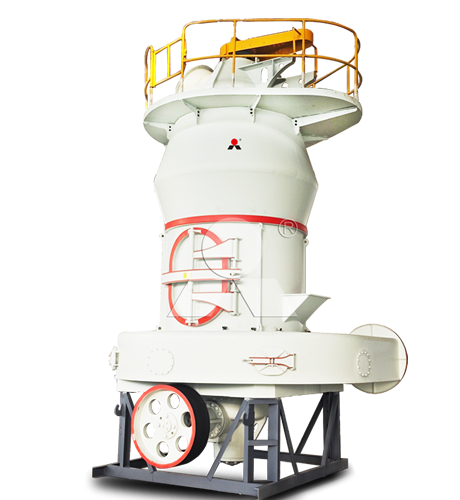
A catalogue throughput range describes equipment across different duties; it is not an unconditional production guarantee. Liming Heavy Industry’s LM range covers several mineral and industrial applications, while its slag-specific configuration addresses a more defined processing duty. The selected model must be assessed against the project material and finished product.
| Material or product condition | Capacity question to resolve |
|---|---|
| Moist granulated blast-furnace slag | Can the system provide sufficient drying and grinding capacity at the same time? |
| Steel slag | What remains after pretreatment and metal recovery, and how does that prepared fraction grind? |
| Harvested fly ash | How much feed becomes qualified product after moisture removal and beneficiation? |
| Calcined clay | What grinding duty remains after calcination, and what fineness provides acceptable performance? |
| Natural pozzolan | How do deposit variability, moisture, and grindability affect sustainable output? |
| Limestone filler | What capacity is achievable at the required sieve grading and customer fineness? |
Limestone filler may be produced within the same broader mineral-powder business, but it should not automatically be classified or qualified as an SCM. Keep the product specification and performance requirements distinct when sizing a multi-product plant.
Moisture Creates a Separate Capacity Limit
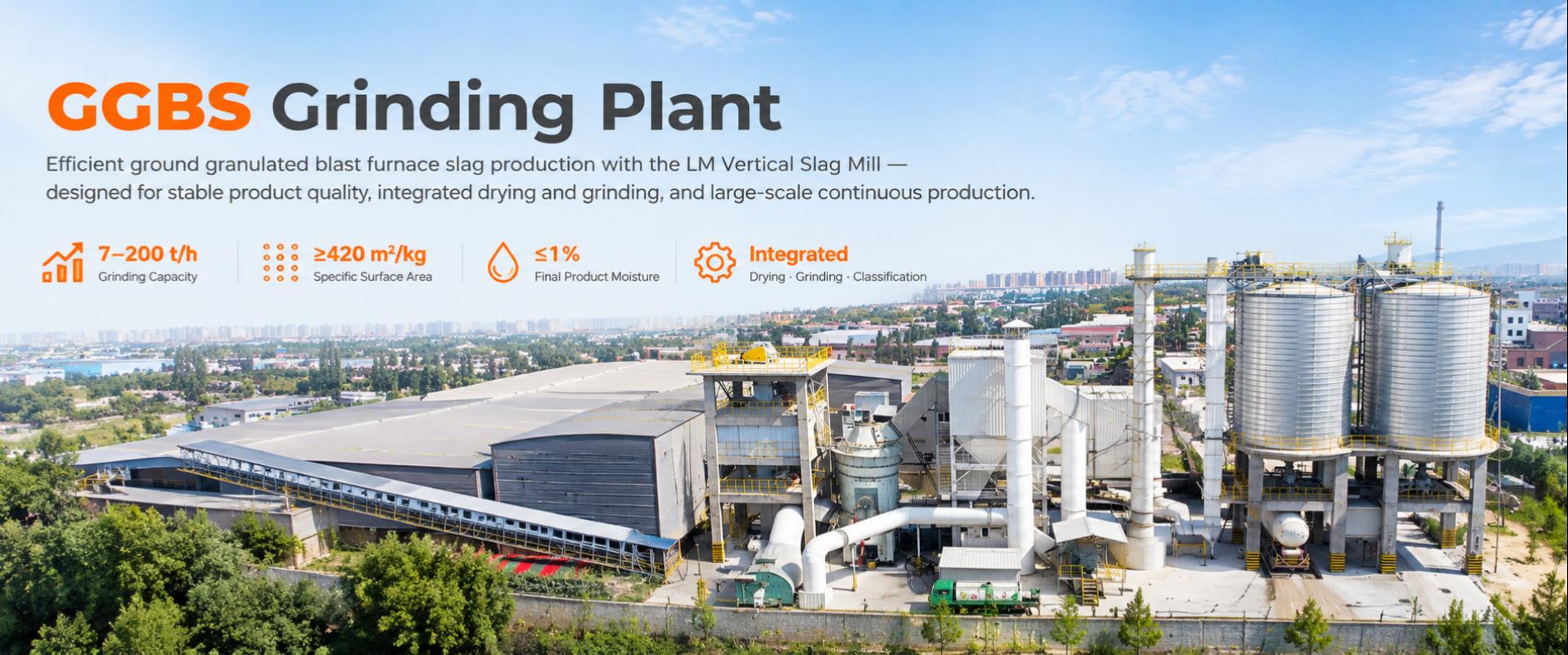
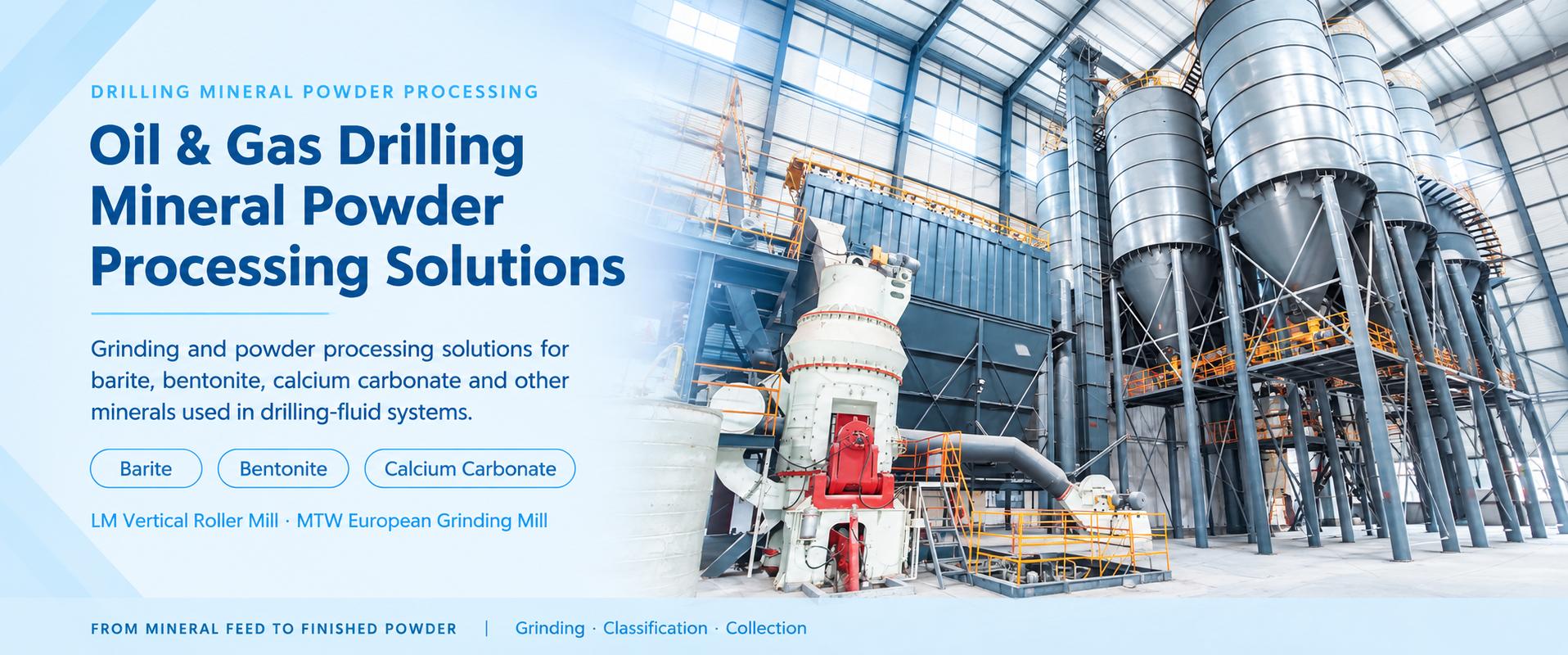
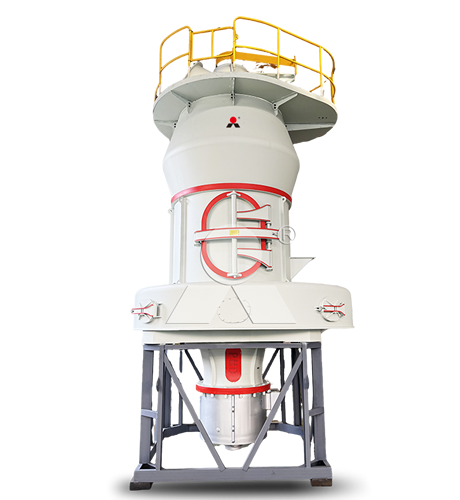
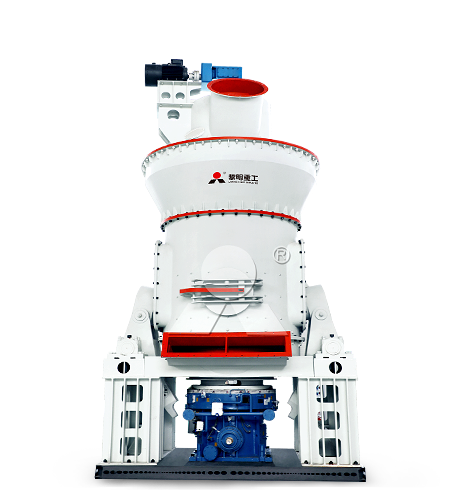
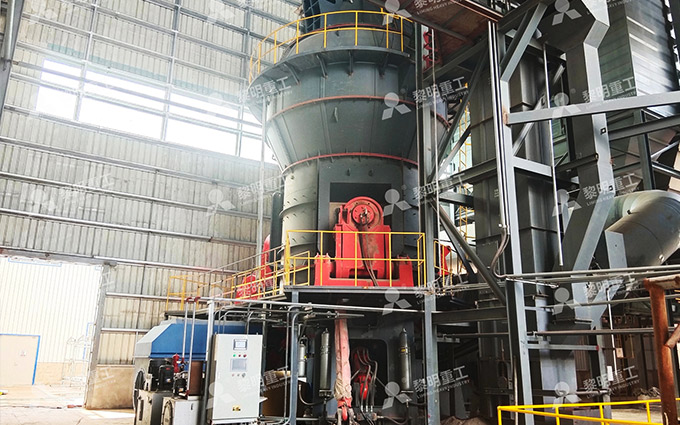
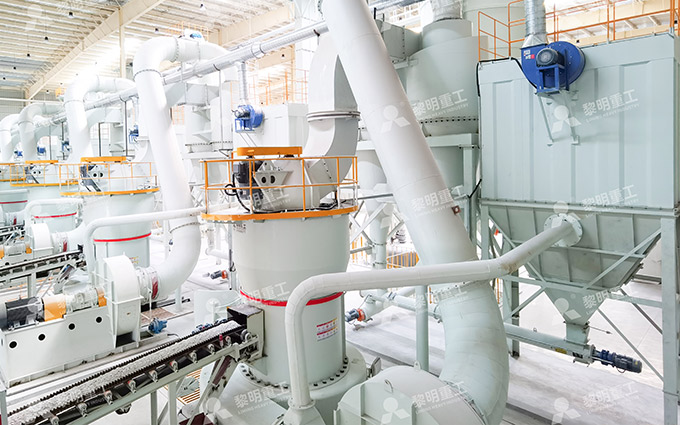
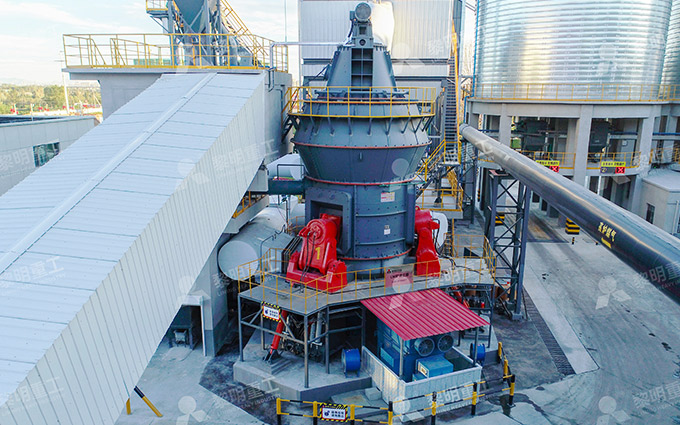
An integrated drying mill can combine operations, but it cannot evaporate unlimited water. Liming Heavy Industry’s LM Vertical Slag Mill integrates drying, grinding, classification, and conveying, so its project assessment must consider the drying duty alongside the grinding duty.
Use three clearly identified quantities in the material balance:
Wet feed entering the process.
Dry solids contained in that feed.
Finished product leaving at the agreed moisture content.
As an illustration, producing 50 tonnes per hour of dry solids from feed containing 10% moisture on a wet basis requires approximately 55.6 tonnes per hour of wet feed. If essentially all incoming water is removed, the drying system must evaporate approximately 5.6 tonnes of water per hour.
At 15% incoming moisture, the same dry-solids output requires approximately 58.8 tonnes per hour of wet feed and evaporation of approximately 8.8 tonnes of water per hour. These simplified figures exclude solids losses and assume negligible residual product moisture.
The grinding duty has not increased in proportion to the wet-feed rate, but the evaporation duty has increased substantially. This is why a system that meets output during a dry period may become heat-limited when wetter feed arrives.
Define how wet-season material will be handled
Evaluate the expected moisture range, available hot-gas conditions, and storage arrangements. Possible project responses include covered feed storage, drainage or pre-drying where appropriate, a higher drying capability, or an agreed reduction in output during exceptional conditions. The correct choice depends on the cost and frequency of those conditions.
Product Fineness Must Be Part of the Capacity Guarantee
Capacity without a finished-product requirement is incomplete. Harder feed and finer products can reduce grinding throughput, and Liming Heavy Industry explicitly identifies these variables as reasons to calculate capacity from the actual material rather than nameplate information.
Define the relevant product measurements before comparing proposals:
Blaine specific surface where applicable.
Residue on the specified sieve.
Particle-size distribution where required.
Finished moisture.
Applicable activity or other performance requirements.
Do not accept a high hourly output measured at a coarser product as proof that the same rate is available at your target. Equally, avoid specifying unnecessarily high fineness before trials establish that it creates useful performance.
Account for Yield Without Confusing It with Recirculation
Some projects convert almost all acceptable dry feed into product. Others remove metal, carbon-rich material, debris, or unsuitable mineral fractions. In those cases, upstream equipment must process more dry feed than the finished-product output.
For an illustrative dry-solids yield of 90%, producing 45 tonnes per hour of qualified product requires 50 tonnes per hour of dry feed. The remaining 5 tonnes per hour needs an identified destination.
Internal circulation is different. Material returned by a classifier remains inside the grinding process until it is accepted or deliberately discharged. It affects equipment loading, but it is not automatically a permanent product loss.
Keep separate records for:
Water removed.
Recovered metal or other useful byproducts.
Permanent reject streams.
Recoverable off-specification product.
Internal grinding-circuit returns.
This distinction is especially important when translating excavation or receiving capacity into saleable powder capacity.
Size the Whole Plant Around the Production Duty
The mill cannot sustain output if another part of the plant repeatedly restricts it. An LM system integrates several core operations, but receiving, preparation, collection, storage, and dispatch still need compatible capacities.
| Plant section | Sizing basis |
|---|---|
| Receiving and raw-material handling | Delivery pattern, unloading windows, wet-feed quantity, and storage strategy. |
| Crushing and pretreatment | Required prepared-feed output, treatment yield, and operating schedule. |
| Feed storage and metering | Stable supply to the grinding circuit and protection against upstream interruptions. |
| Drying and hot-gas system | Evaporation duty at defined moisture and output conditions. |
| Grinding and classification | Prepared-feed properties and specified finished-powder quality. |
| Fans and collection equipment | Process gas conditions, dust loading, pressure requirements, and collection duty. |
| Finished-product conveying | Required discharge rate and transfer arrangement. |
| Storage and loading | Production pattern, product segregation, customer collection, and dispatch peaks. |
Not every section needs the same instantaneous capacity. A crusher running one shift may need a higher hourly rate than a mill running continuously, with a buffer store between them. Similarly, truck loading may need to exceed mill output because dispatch occurs during limited hours.
For Multiple Products, Budget Hours as Well as Tonnes
A shared mill producing several SCM grades should be sized from the time needed for each duty. Do not combine all annual tonnage and apply one average catalogue rate.
For example, a planning schedule might require 200,000 tonnes of one product at 50 tonnes per hour and 60,000 tonnes of a finer product at 30 tonnes per hour. Those duties require 4,000 and 2,000 productive hours respectively—6,000 hours before allowing for changeovers, startup, and other losses.
The remaining schedule must accommodate:
Cleaning and product transitions.
Stabilization after operating changes.
Quality checks and any product held pending release.
Maintenance and unplanned interruptions.
Seasonal shifts in product demand.
Where demand is seasonal, annual capacity alone is insufficient. Check whether production and available storage can satisfy the highest-demand period without relying on unrealistic dispatch or inventory assumptions.
One Larger Line or Two Smaller Lines?
A single larger line may simplify the plant arrangement. Two lines may offer more scheduling flexibility, allow separate products, or preserve partial production during maintenance. Neither arrangement is automatically more economical.
Evaluate both against the project’s minimum and maximum operating rates, product range, maintenance plan, and consequences of a complete shutdown. Redundancy also needs to be real: two mills sharing one critical hot-gas source, collection bottleneck, or discharge system may still share a major failure point.
Useful operating flexibility should be confirmed with the equipment supplier. Do not assume that a large mill can run efficiently and stably at any fraction of its design output.
Selecting a Liming Heavy Industry System
For a dedicated GGBS project, evaluate the Liming Heavy Industry LM Vertical Slag Mill. Its integrated drying, grinding, classification, and conveying arrangement provides a relevant basis for assessing moist granulated slag duties. For other suitable mineral-powder applications, assess the appropriate LM Vertical Roller Mill configuration against representative feed tests and the required product.
Before selecting a model, provide a capacity design brief containing:
Annual qualified-product demand and expected demand growth.
Monthly production and dispatch requirements.
Scheduled operating hours and clearly defined downtime allowances.
Representative feed samples and material test results.
Normal and limiting feed moisture, size, and composition.
Finished-product quality requirements.
Pretreatment yield and expected reject streams.
Available heat, electrical supply, and site constraints.
Storage, conveying, and loading arrangements.
The required performance-test and acceptance procedure.
Turn the Capacity Claim into a Testable Commitment
The final proposal should state the guaranteed or agreed output at defined feed and product conditions. It should also identify the equipment scope, utility requirements, measurement boundaries, sampling procedures, test duration, and treatment of material that fails the product specification.
Keep the production margin transparent. A general allowance should not hide unresolved moisture limits, uncertain grindability, or an undefined product target. Resolve those issues through representative testing and documented assumptions wherever practical.
A correctly sized SCM grinding plant is not simply one with enough nominal tonnes per hour. It is a coordinated system capable of delivering the required annual quantity of qualified powder, with realistic operating hours and a clear understanding of the conditions that limit production.