Concrete SCM Grinding Plant Solutions
What Are Supplementary Cementitious Materials (SCMs) for Concrete?
2026-11-15 10:24:30
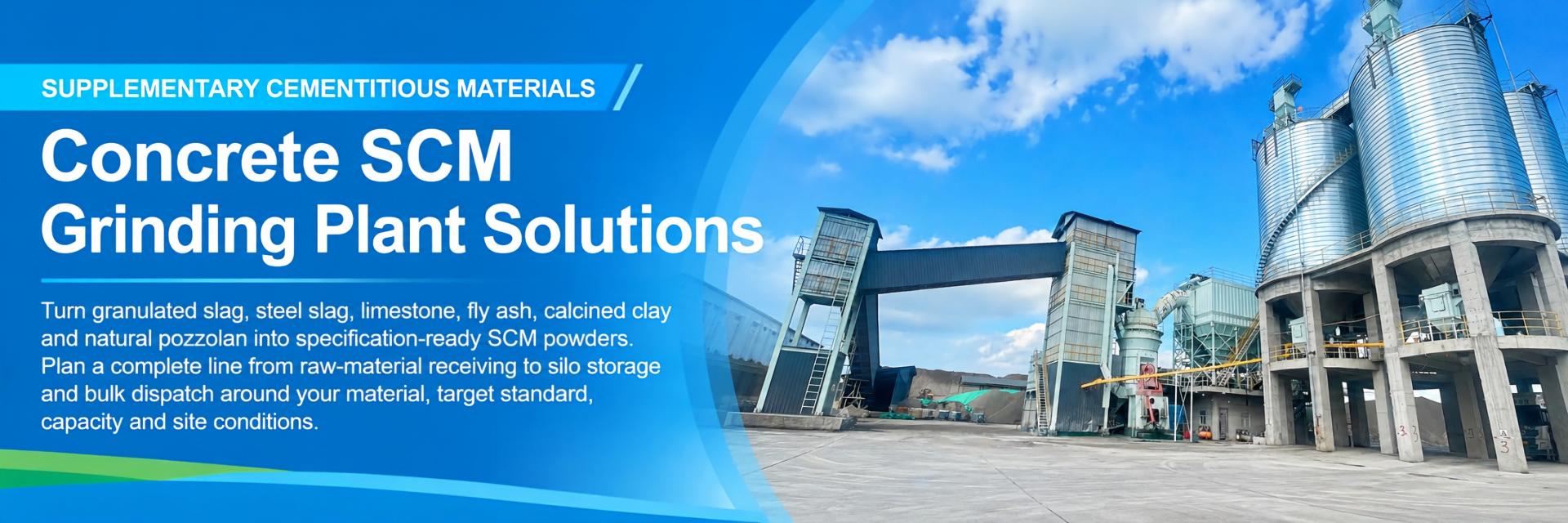
Supplementary cementitious materials, or SCMs, are materials used with Portland cement that contribute to concrete performance through pozzolanic reactions, hydraulic reactions, or both. Common examples include fly ash, ground granulated blast-furnace slag, silica fume, calcined clay, and natural pozzolans. They can be incorporated into blended cement during manufacturing or added separately at a concrete batching plant.
For concrete producers, SCMs offer a way to adjust strength development, heat generation, workability, and durability while reducing the amount of Portland cement required. For powder producers, they represent a different challenge: converting a suitable raw material into a consistent, tested product. Fine grinding can help develop performance, but fineness alone does not make a powder an effective SCM.
How SCMs Work Inside Concrete
When Portland cement reacts with water, it forms binding products that hold concrete together. Different SCMs contribute to this hardened structure in different ways.
Hydraulic materials react with water to form cementitious products. Ground granulated blast-furnace slag has latent hydraulic properties and develops its binding contribution in the activated environment of a cement-based mixture.
Pozzolanic materials react with calcium hydroxide released during cement hydration, forming additional binding products. Examples include silica fume, many natural pozzolans, and low-calcium fly ash.
Some materials exhibit both types of activity. Certain high-calcium fly ashes have hydraulic as well as pozzolanic properties.
These reactions help explain why SCMs are more than simple substitutes by weight. Their contribution depends on chemistry, reactive mineral phases, particle characteristics, dosage, and curing conditions. Two powders with similar fineness can behave very differently in the same concrete mixture.
The Main Types of Supplementary Cementitious Materials
| Material | Origin and characteristics | Potential contribution to concrete | Practical consideration |
|---|---|---|---|
| Fly ash | Fine material collected from coal combustion; composition and reactivity vary between supplies. | Can improve workability, support later-age strength, and reduce heat generation in suitable mixtures. | Check consistency, unburned carbon, fineness, and effects on air entrainment and early strength. |
| Ground granulated blast-furnace slag | Rapidly cooled blast-furnace slag processed into a fine cementitious powder, also called slag cement, GGBS, or GGBFS. | Can support later-age strength, lower permeability, and reduced heat generation. | Raw slag quality, grinding fineness, and curing temperature influence performance. |
| Silica fume | An extremely fine, silica-rich byproduct of silicon and ferrosilicon alloy production. | Useful in high-strength and low-permeability concrete. | Often increases water demand and requires suitable admixtures and careful dispersion. |
| Calcined clay and metakaolin | Clay materials thermally treated to develop pozzolanic reactivity; suitability depends on mineralogy and processing. | Can support strength development and improve resistance to the movement of water and aggressive substances. | Calcination quality and increased water or admixture demand need attention. |
| Natural pozzolans | Suitable volcanic ash, tuff, pumicite, and other naturally occurring reactive materials. | Can contribute to long-term strength and durability. | Deposits vary considerably; drying, grinding, and performance testing may be necessary. |
The benefits in this comparison are potential outcomes, not automatic properties of every supply. Material qualification and concrete trials are necessary before assigning a product to a particular application.
Is Every Fine Mineral Powder an SCM?
No. A powder does not become a supplementary cementitious material simply because it is finely ground or used to replace part of the cement.
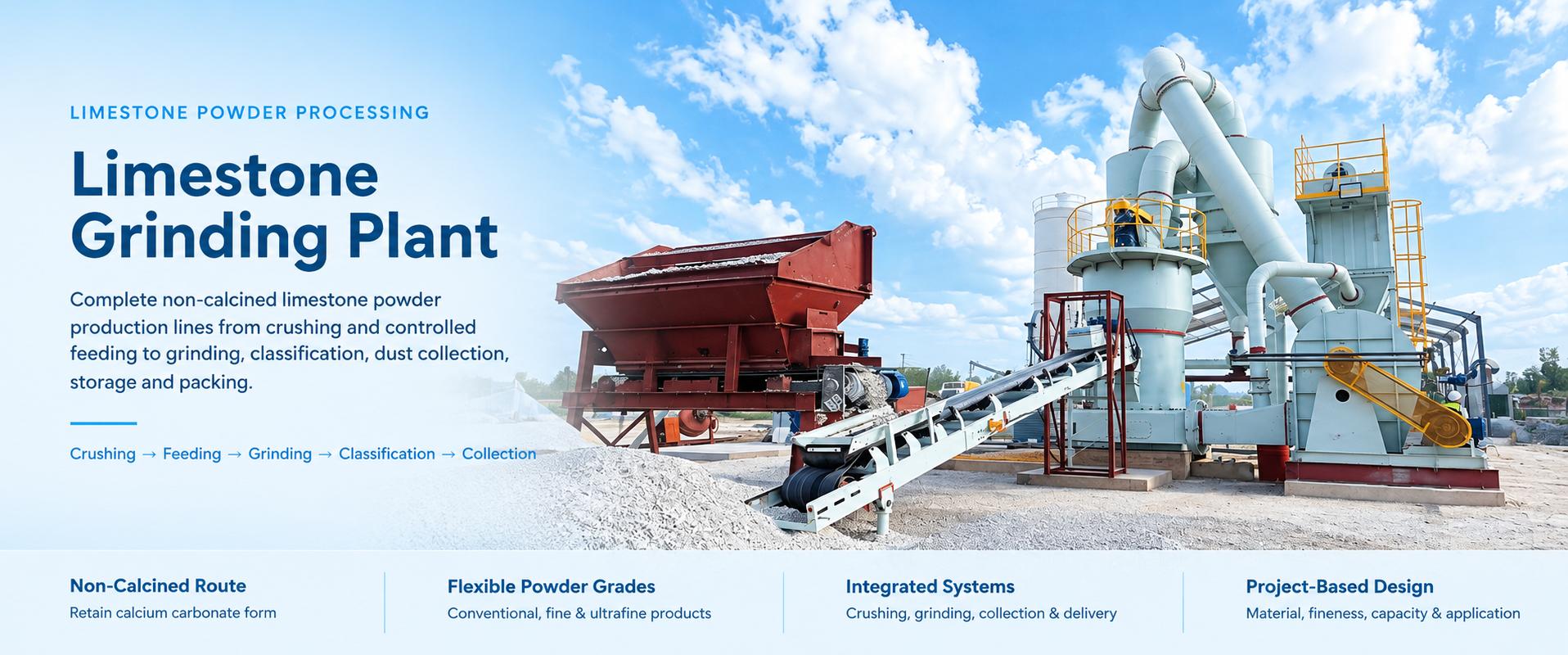
Limestone powder illustrates the distinction. It can contribute through particle packing, nucleation effects, and interactions within certain cement systems, but it is generally treated as a mineral filler rather than a conventional hydraulic or pozzolanic SCM. In limestone–calcined clay systems, limestone and reactive clay can make complementary contributions; they do not perform identical roles.
This distinction matters when evaluating a new powder resource. The first question should be whether the material has suitable chemistry and reactivity. The next question is how processing can deliver a consistent product. A high fineness result cannot replace evidence of cementitious performance.
Why Concrete Producers Use SCMs—and What They Must Control
Strength development over time
Some SCM mixtures develop strength more slowly at early ages, particularly in cool conditions, while continuing to gain strength later. Other highly reactive materials can contribute differently. A concrete producer must therefore consider stripping time, handling strength, construction schedules, and later-age requirements rather than relying only on a single strength result.
Heat generation in large concrete placements
Suitable fly ash and slag mixtures can reduce heat generation compared with comparable mixtures relying more heavily on Portland cement. This can help manage thermal conditions in thick sections. However, silica fume should not be assumed to behave the same way: it can accelerate early cement hydration and increase early heat release.
Durability in demanding environments
Appropriate SCM selection can reduce permeability and improve resistance to specific deterioration mechanisms, including alkali–silica reaction and certain sulfate exposures. The result depends on the material, replacement level, concrete proportions, and curing. An SCM that performs well for one exposure should not automatically be accepted for every other exposure.
Workability and admixture demand
Fly ash often improves workability, while silica fume and some calcined clays can increase water demand. The practical response is not simply to add more water. Trial mixtures should establish suitable admixture type and dosage while maintaining the required water content, placement characteristics, and strength.
Reduced Portland cement consumption
Using an SCM as a partial replacement reduces the Portland cement required in a mixture and can reduce its associated carbon footprint. The actual benefit depends on the replacement achieved and the processing, drying, calcination, and transport needed to supply the SCM. A material that works well locally may not offer the same overall advantage when supplied through a more demanding production and delivery route.
From Raw Material to Concrete-Ready Powder
SCM production is not one universal grinding process. The treatment must match the material.
Granulated blast-furnace slag: drying and controlled grinding
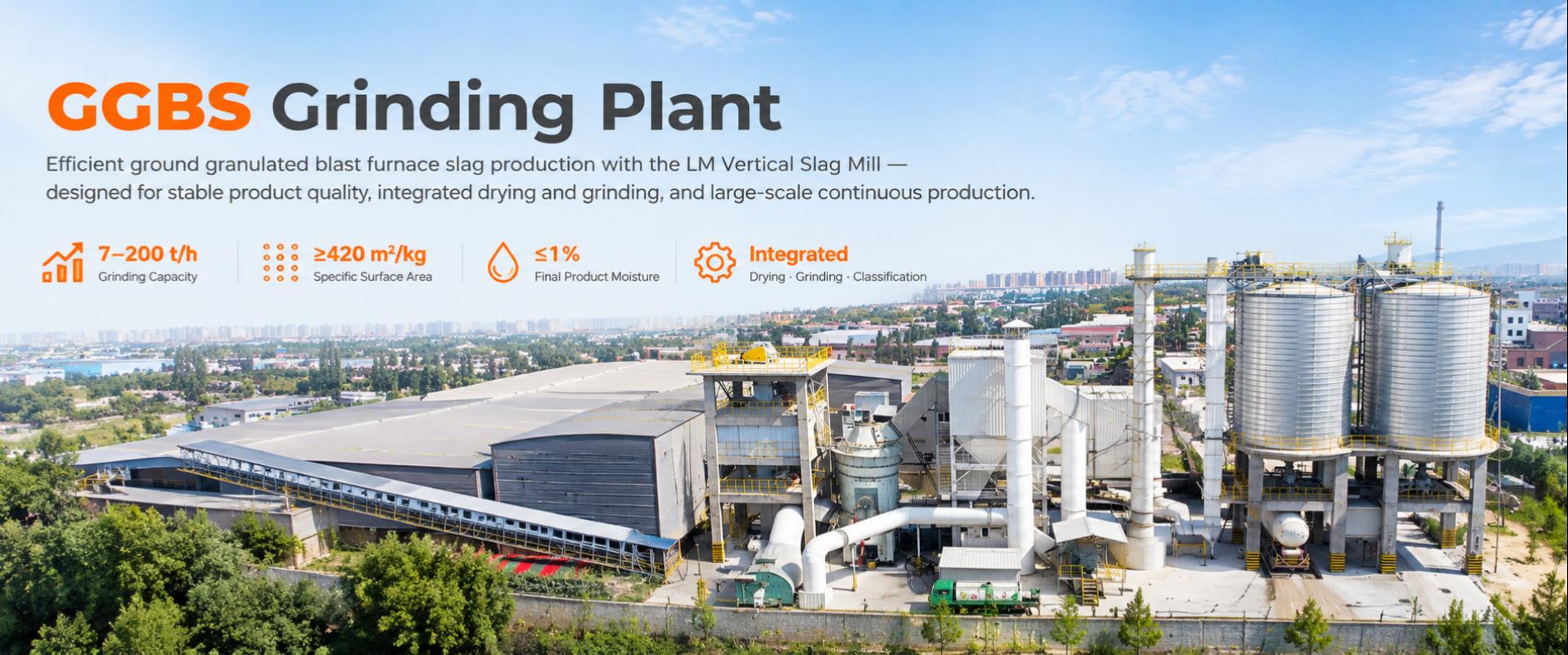
Producing slag cement requires suitable granulated blast-furnace slag and controlled processing into fine powder. A practical line must account for incoming moisture, stable feeding, grinding, classification, collection, and finished-product storage. Grinding equipment should be selected against the required product quality and the actual characteristics of the feed.
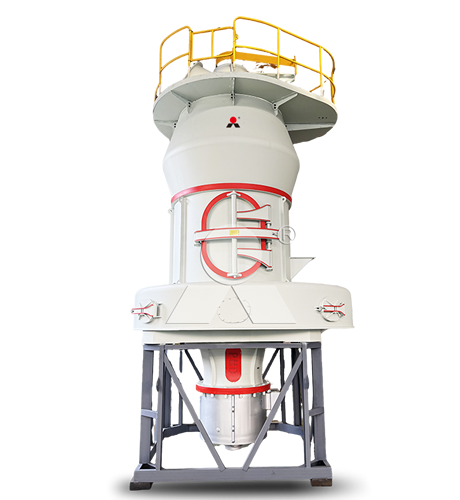
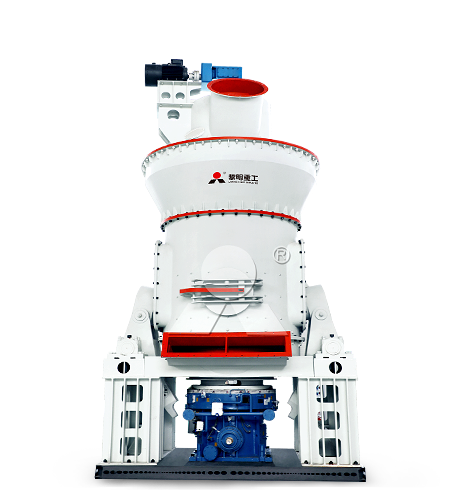
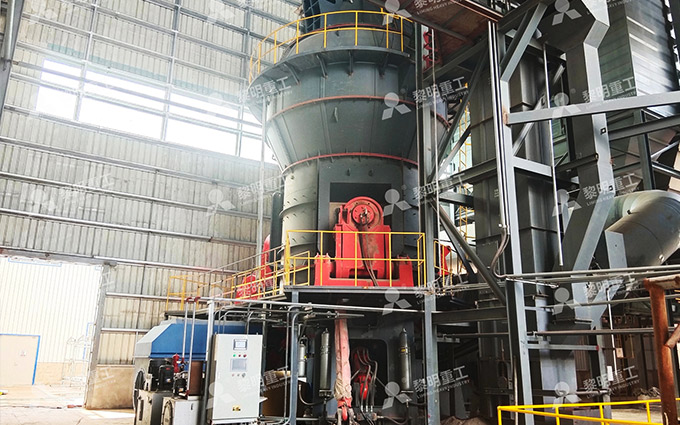
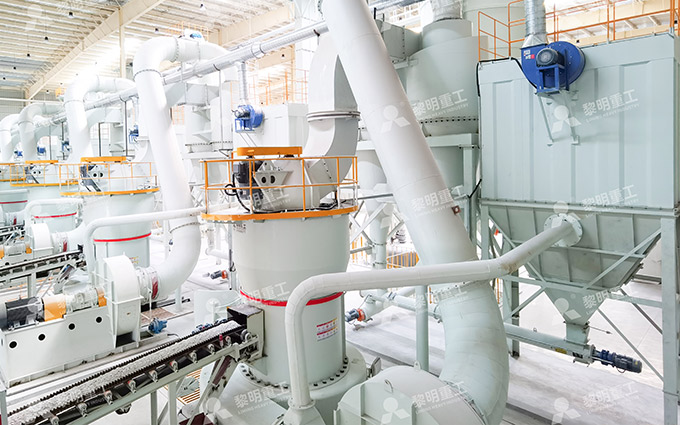
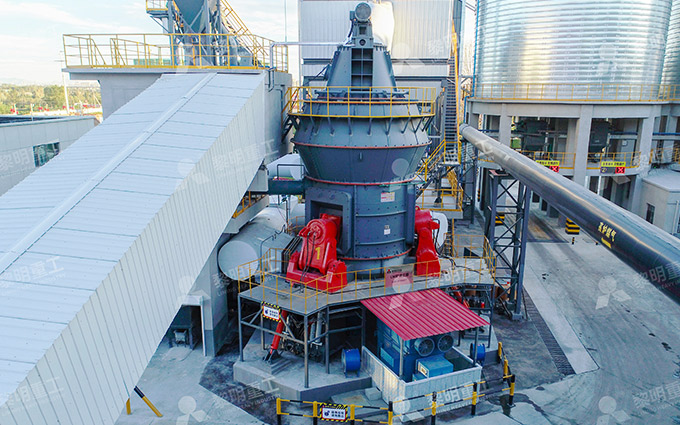
For this application, the Liming Heavy Industry LM Vertical Slag Mill is a suitable option to evaluate. It integrates drying, grinding, classification, and conveying, allowing wet granulated slag to be processed within a coordinated system. Model selection should be based on tested grindability, feed moisture, required output, target fineness, and available hot-air conditions—not capacity alone.
Natural pozzolans: processing according to the deposit
Some natural pozzolans require drying and grinding before use, while others need additional thermal treatment. Because geological deposits vary, a production decision should begin with representative sampling and performance testing rather than an assumption that all volcanic or siliceous materials will behave alike.
Calcined clay: thermal treatment before final product control
Calcined clay depends on suitable clay mineralogy and controlled thermal treatment to develop reactivity. Grinding controls particle characteristics, but it does not replace calcination. The production route must address both activation and the resulting powder’s effect on concrete workability.
Fly ash and silica fume: do not assume grinding is necessary
These materials are already generated as fine particles. Their suitability depends on product characteristics and concrete performance, not on whether they have passed through a mill. Silica fume, in particular, is inherently extremely fine; its use places emphasis on handling, dispersion, and mixture control rather than conventional mineral grinding.
What Should Be Tested Before Supplying an SCM?
A useful qualification program connects powder measurements with actual concrete behavior. Depending on the material and applicable specification, it should address:
Chemical composition and potentially harmful constituents.
Mineralogy and the presence of reactive phases.
Fineness, particle-size distribution, and consistency between production batches.
Moisture and loss on ignition, where relevant.
Reactivity or strength activity using an appropriate test method.
Water demand, setting behavior, and admixture compatibility.
Concrete strength at the ages required by the project.
Durability performance appropriate to the intended exposure.
Fineness is an important production-control measure, but it is only an indirect indicator of reactivity. Chemical composition can be more decisive. A reliable product therefore needs both controlled powder properties and evidence that it performs as intended in cementitious mixtures.
How Much Cement Can an SCM Replace?
There is no single replacement percentage suitable for every SCM or concrete application. The acceptable level depends on the material, cement compatibility, strength schedule, exposure conditions, curing, and governing project requirements. Requirements for concrete exposed to freezing, frequent wetting, and deicing chemicals can differ from those for other applications.
For a new supply, replacement levels should be established through a trial program. Testing several candidate mixtures makes it possible to compare workability, setting, early strength, later-age strength, and the durability properties that matter to the customer. The objective is a dependable concrete mixture, not the highest replacement percentage on paper.
Planning an SCM Powder Production Project
Before specifying a grinding line, define the raw material and the finished product together. For a slag powder project, the information needed to evaluate a Liming Heavy Industry LM Vertical Slag Mill includes:
The raw material type and available test results.
Expected feed size, moisture range, and grindability.
Required hourly output and annual production target.
Target fineness and the product specification to be met.
Available heat supply and site utility conditions.
Storage, collection, and finished-powder conveying requirements.
These inputs help match mill capacity, drying duty, and classification requirements to the actual project. For an SCM producer, the most useful production target is not simply “finer powder,” but a consistently qualified material that concrete customers can use with predictable results.