GGBS Grinding Plant
GGBS Production Process: From Blast Furnace Slag to GGBS
2026-09-10 10:56:10
Ground granulated blast-furnace slag (GGBS), also known as ground granulated blast-furnace slag powder, is produced by processing molten slag from ironmaking into a finely ground mineral material. The production route matters because the cooling history, moisture condition, grinding performance, and final particle-size distribution all influence the consistency and reactivity of the finished GGBS.
A reliable GGBS plant therefore begins well before the grinding stage. It starts at the blast furnace, where iron ore, coke, and fluxes are smelted at high temperature. Alongside molten iron, a separate molten slag phase forms and floats above the metal because of its lower density. This slag contains calcium-, silicon-, aluminum-, and magnesium-bearing compounds that can become valuable cementitious material when they are cooled and processed correctly.
1. Molten Slag Generation at the Blast Furnace
During ironmaking, the blast furnace produces two primary liquid streams: hot metal and molten slag. The slag collects impurities and flux-derived compounds, separating them from the iron. Once tapped from the furnace, the molten slag must be handled quickly.
The decisive factor is cooling speed. If molten slag cools slowly in air, it tends to form a more crystalline material that is commonly used as aggregate or for other applications. For GGBS production, the objective is different: the molten slag needs to be transformed into a glassy granulated material with strong latent hydraulic properties.
2. Rapid Quenching and Granulation
Fresh molten slag is rapidly quenched, typically with high-pressure water. The sudden temperature drop breaks the liquid slag into sand-like granules and limits crystal formation. This produces granulated blast-furnace slag with a predominantly glassy internal structure—the essential raw material for GGBS.
Rapid granulation is not merely a cooling operation. It determines whether the slag retains the characteristics needed for use in cementitious systems. Slow cooling can result in relatively inactive crystalline material, while controlled quenching helps preserve the reactive glassy phase desired for GGBS.
3. Dewatering, Storage, and Raw-Material Control
Water-granulated slag leaves the granulation system with considerable moisture. Before it enters the grinding circuit, the material is normally dewatered and stored under conditions that help maintain stable feed quality.
At this stage, plant operators commonly monitor several practical factors:
Moisture variation in incoming granulated slag
Particle-size range and the presence of oversized foreign material
Consistency of slag supply from the steelworks
Storage capacity and material flow between the slag yard and the mill
Potential contamination from metal, refractory fragments, or other residues
Stable raw-material management supports stable mill operation. Large swings in moisture or feed rate can affect drying demand, grinding pressure, airflow, and final-product fineness.
4. Drying and Fine Grinding
The granulated slag is dried and ground into a controlled fine powder. Grinding is the central stage in GGBS production because it creates the specific surface area and particle-size distribution needed for downstream cement and concrete applications.
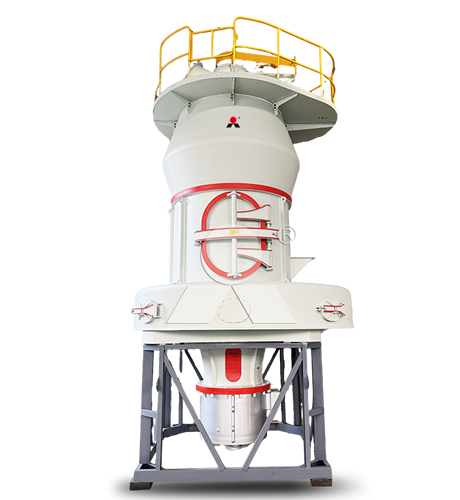
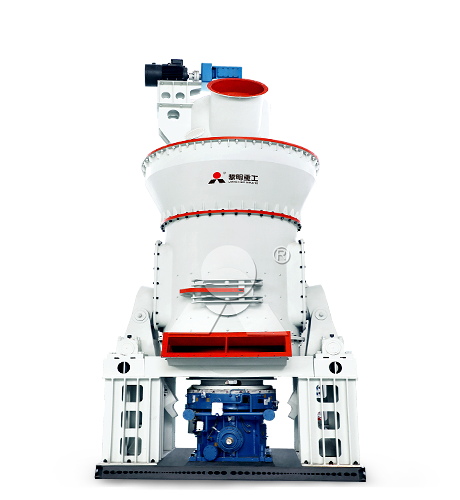
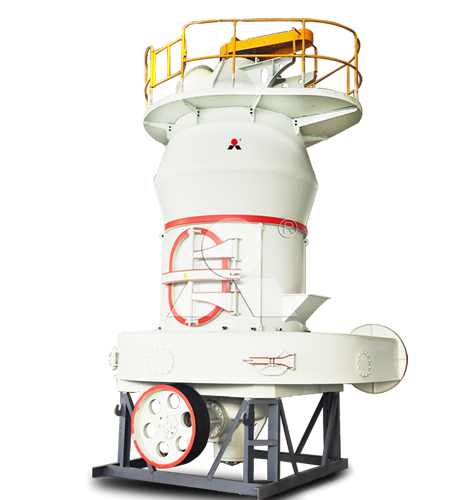
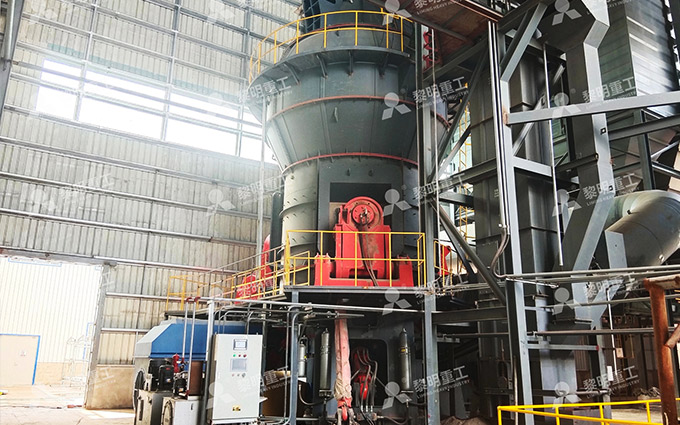
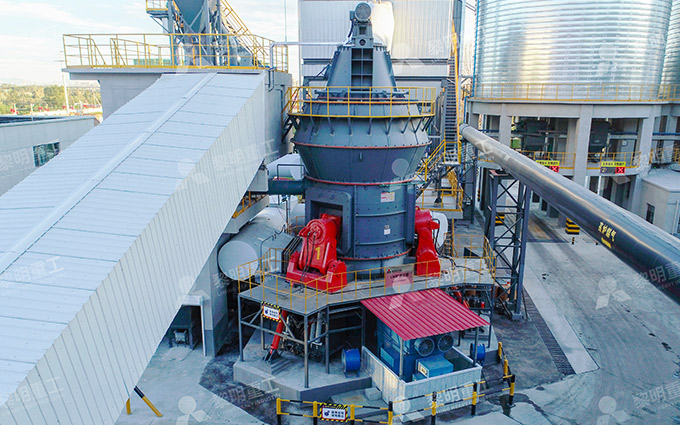
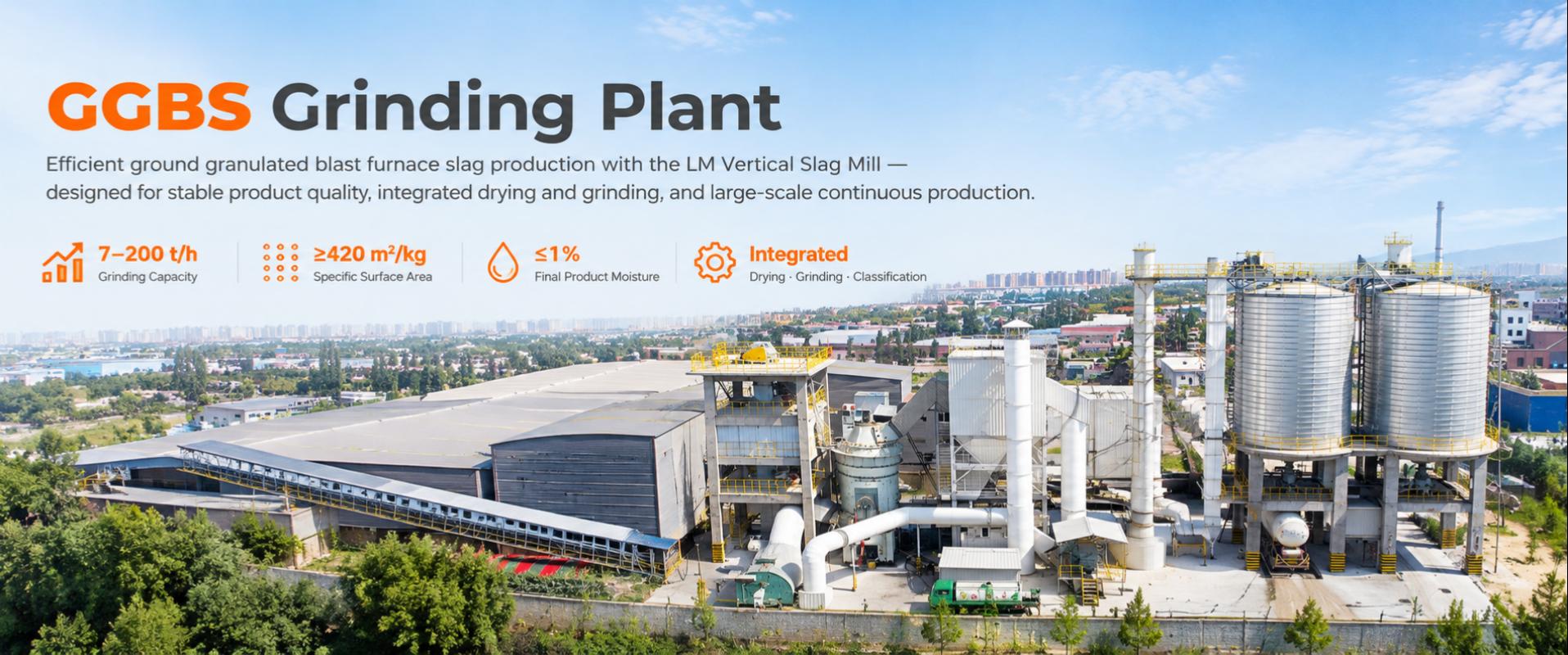
For an integrated GGBS production line, the LM Vertical Slag Mill from Liming Heavy Industry is a suitable choice. It combines drying, grinding, classification, and pneumatic conveying within one compact system. Hot air introduced into the mill removes moisture from the slag, while grinding rollers apply pressure to the material bed on the rotating grinding table. The internal classifier separates fine particles from coarse particles, returning oversized material for further grinding.
This integrated arrangement helps simplify the process route:
Granulated slag feeding → drying in the mill → bed grinding → dynamic classification → fine-powder collection → finished GGBS storage
The LM Vertical Slag Mill is designed for slag and industrial-residue applications, with a stated capacity range of 7–200 t/h and suitability for fine slag powder above 420 m²/kg, depending on raw material, product target, and plant configuration.
5. Classification and Product Fineness
Grinding alone is not enough. The material must also be classified so that the finished GGBS reaches a consistent fineness range. Fine particles are carried by the airflow to the collection system, while coarse particles are separated and returned to the grinding zone.
Controlled fineness affects particle packing, hydration behavior, and performance in blended cement or concrete. In many applications, GGBS is ground to a specific surface area broadly comparable to or higher than that of Portland cement; a typical range cited for GGBS is approximately 450–550 m²/kg. The appropriate target should be selected according to the intended binder system, local standards, and customer requirements.
Rather than pursuing the highest possible fineness in every case, an efficient operation balances product performance with power consumption, mill throughput, wear rate, and the requirements of the end user.
6. Powder Collection and Finished GGBS Handling
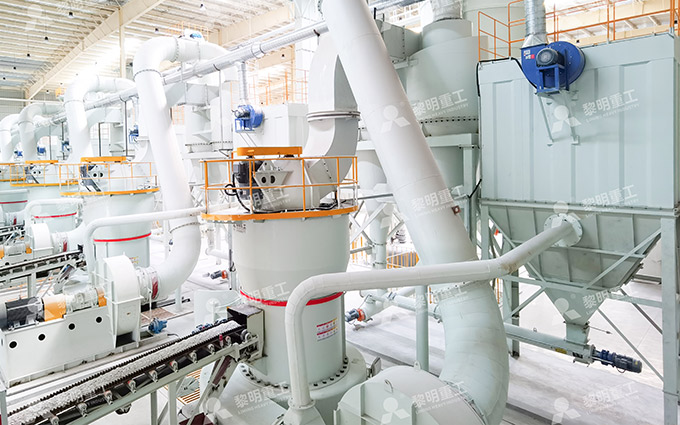
After classification, qualified GGBS powder is collected through a high-efficiency dust-collection system and transferred to finished-product silos. The product is then stored in dry, sealed conditions before being dispatched in bulk tankers or packed formats.
Good finished-product handling is important because GGBS is a fine powder. A well-designed storage and conveying system should minimize moisture pickup, dust leakage, segregation, and interruptions during loading. Typical downstream equipment includes product silos, air slides or screw conveyors, bulk loading stations, packing equipment, and weighing systems.
7. Quality Assurance Throughout the Line
Quality control should run through the entire production process rather than being limited to final-silo testing. A practical control program may include raw-slag chemical analysis, moisture checks, mill feed monitoring, product fineness testing, specific surface-area measurement, particle-size analysis, and strength-activity testing in accordance with applicable local standards.
Key operating parameters of an LM Vertical Slag Mill—such as feed rate, grinding pressure, table speed, separator speed, airflow, outlet temperature, and differential pressure—can be coordinated to maintain stable output. Its hydraulic system regulates roller pressure, while the integrated grinding and classification arrangement enables coarse material to return automatically for another grinding cycle.
From Steel By-Product to High-Value Mineral Powder
The GGBS production process converts a blast-furnace by-product into a consistent, finely ground material for modern cementitious applications. Its essential stages are straightforward—generate molten slag, quench it rapidly, dewater it, dry and grind it, classify it, collect it, and store it—but dependable results depend on careful control at every stage.
For producers planning a dedicated slag-powder line, an LM Vertical Slag Mill provides an integrated route for drying wet granulated slag, grinding it efficiently, and controlling the final powder quality in a single system.