Mineral Grinding for Paints & Coatings
Mesh vs Micron: Understanding Mineral Powder Fineness
2026-10-23 13:47:19

Mesh describes a sieve designation or mesh count, while micron describes an actual length. In mineral powder production, both terms are used to discuss fineness, but they do not provide the same information. A mesh description needs a stated sieve standard and passing requirement; a micron value needs an explanation of what was measured.
For calcium carbonate, talc, kaolin, and other fillers used in paints and coatings, neither “1250 mesh” nor “5 microns” is a complete product specification on its own. Reliable selection requires a defined particle-size distribution, appropriate coarse-residue limits, and an agreed testing procedure.
The Basic Difference
Mesh refers to a screen or sieve designation
In woven-wire mesh terminology, mesh count generally describes the number of openings per linear inch. Higher mesh counts generally correspond to smaller openings, but the actual opening also depends on wire diameter.
Standard test sieves avoid this uncertainty by specifying nominal aperture sizes. When a supplier describes a powder using mesh, ask which sieve standard applies and what proportion of the sample must pass.
Micron is a unit of length
A micron, also called a micrometer, is one thousandth of a millimeter. It can describe a sieve opening, an individual particle dimension, or a percentile in a measured particle-size distribution.
The unit alone does not identify the meaning. A 5-micron median particle size is very different from a requirement that no particle exceed 5 microns.
Common Sieve Designations and Their Openings
The following nominal openings follow ASTM E11 sieve designations. They describe sieve apertures, not the median size of a powder passing through them.
| ASTM sieve designation | Nominal opening | What the value describes |
|---|---|---|
| No. 200 | 75 microns | The nominal sieve aperture |
| No. 230 | 63 microns | The nominal sieve aperture |
| No. 270 | 53 microns | The nominal sieve aperture |
| No. 325 | 45 microns | The nominal sieve aperture |
| No. 400 | 38 microns | The nominal sieve aperture |
A requirement such as “99% passing a 45-micron sieve by mass” describes the amount passing under the specified test conditions. It does not mean that the powder has a median size of 45 microns. Much of the material may be substantially finer, and the permitted retained fraction remains above the test threshold.
This is why a mesh-to-micron table should be treated as a sieve-reference table, not as a universal conversion between powder grades.
Why Ultrafine Mesh Labels Need Clarification
Descriptions such as “800 mesh,” “1250 mesh,” and “2500 mesh” appear frequently in commercial mineral-powder discussions. Depending on the supplier, these may be nominal fineness labels rather than results from a stated standard sieve test.
Do not assume that the same label always represents the same median size, coarse-end limit, or testing method. Ask the supplier to translate the description into a measurable acceptance specification.
Is the label based on sieving or another measurement method?
If sieving is used, what aperture and standard apply?
What proportion must pass, and is that proportion measured by mass?
If laser diffraction is used, which percentile does the micron value represent?
What separate control applies to isolated coarse particles?
Without these details, two powders carrying the same commercial mesh description may perform differently in the same coating.
A Micron Value Becomes Useful When Its Meaning Is Defined
For fine coating fillers, particle-size reports commonly include distribution percentiles. On a volume-based report:
D10
The diameter below which 10% of the measured particle volume falls.
D50
The median diameter, below which 50% of the measured particle volume falls.
D90
The diameter below which 90% of the measured particle volume falls.
D97
The diameter below which 97% of the measured particle volume falls.
D50 is not an arithmetic average, and D97 is not an absolute maximum. Also, volume-based percentages must not be read as percentages of the number of particles.
A complete distribution curve provides more information than any one percentile. It helps reveal whether two powders with a similar median contain different proportions of fine or coarse material.
Three Specifications That Sound Similar but Are Not
| Description | What it tells you | What remains unknown |
|---|---|---|
| “325-mesh powder” | A commercial or sieve-related fineness description | The applicable standard, passing percentage, distribution, and test procedure |
| “D50 of 5 microns” | The median size on the stated measurement basis | The fine fraction, coarse tail, and isolated oversize content |
| “D97 of 20 microns” | A high-percentile size on the stated measurement basis | The median, distribution shape, and largest particles present |
None of these descriptions alone establishes whether the powder is suitable for a smooth topcoat, a matte wall paint, or a protective primer. They describe different aspects of fineness and must be interpreted alongside the application.
Why Sieve Results and Laser Diffraction May Differ
Sieving separates material according to its ability to pass through physical openings. Laser diffraction estimates a size distribution from the way dispersed particles scatter light. Because the methods measure different responses, their results should not be expected to match automatically.
Particle shape is particularly important. An elongated or plate-like particle may pass through a sieve in a favorable orientation, while laser diffraction reports a model-based equivalent diameter. Talc and kaolin therefore require special care when comparing measurements. Differences in dispersion can also alter the reported result.
Soft agglomerates create another complication
A cluster of fine particles may be measured as a larger object if it remains intact during testing. More effective dispersion may separate the cluster and produce a finer result without any additional grinding.
Before comparing laboratories or changing a production setting, align sample preparation, dispersion medium, mixing or ultrasonic treatment, and instrument procedure. Otherwise, an apparent fineness change may come from the test rather than the powder.
What Fineness Means for Paint and Coating Fillers
For a smooth coating, controlling the coarse end may be more important than reducing the median size further. Occasional hard particles or persistent agglomerates can cause visible defects even when most of the filler is sufficiently fine.
At the other end of the distribution, additional fine material creates more surface to wet and stabilize. Depending on the formulation, this can affect dispersant demand, viscosity, and application behavior. Finer powder is therefore not automatically easier to use.
Mineral identity still matters. A calcium carbonate, talc, and kaolin with similar reported sizes are not interchangeable because their shape, surface characteristics, and composition differ.
Specify Fineness Before Selecting a Grinding Mill
When discussing a mineral grinding project with Liming Heavy Industry, provide the commercial mesh description if it is familiar to the customer, but add the measurable requirements behind it.
A useful grinding brief includes:
The mineral, feed condition, and representative raw-material sample.
Target particle-size distribution in microns.
The measurement basis and laboratory procedure.
A separate coarse-residue requirement where needed.
Required output at that complete specification.
An approved reference filler and intended coating application.
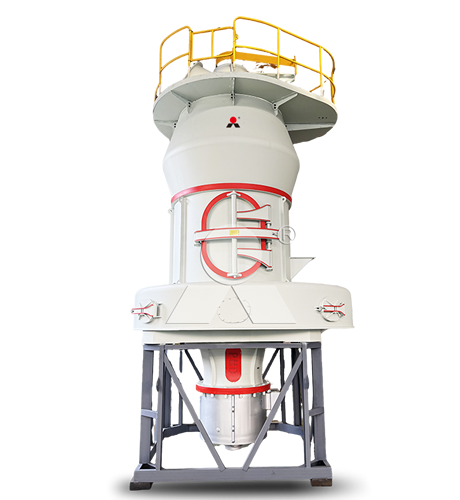
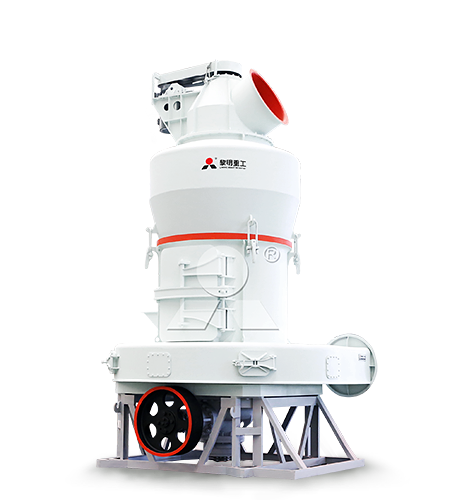
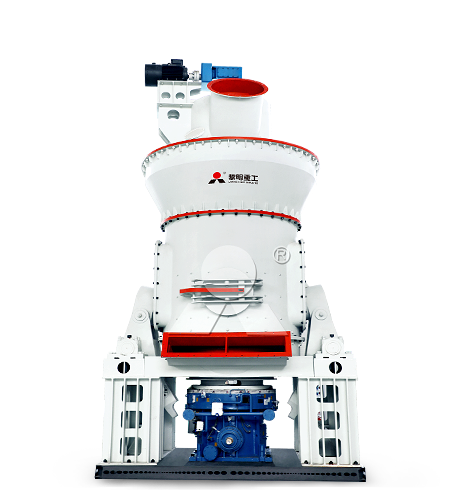
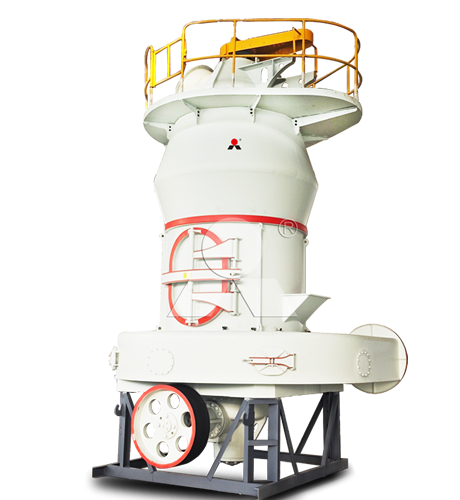
This information allows Liming Heavy Industry to evaluate the appropriate MTW European Grinding Mill, LM Vertical Mill, LUM Ultrafine Vertical Mill, or MW Micro Powder Mill configuration against a defined task. Selection should follow representative testing rather than an assumed conversion from a mesh label.
A Better Way to Write the Purchase Requirement
Instead of requesting only “1250-mesh calcium carbonate,” describe a coating-grade powder with agreed D50 and D97 ranges, a defined residue limit, a finished-moisture requirement, and a specified test procedure. Add color and application-performance requirements where they are critical.
The essential distinction is definition: mesh needs an aperture standard and passing criterion, while a micron value needs a measurement method and distribution meaning. Once those details are clear, powder comparisons, mill trials, and production acceptance become far more reliable.