Mineral Grinding for Paints & Coatings
How Particle-Size Distribution Affects Mineral Fillers
2026-10-23 13:34:41
Two mineral fillers can have the same median particle size and still produce different paint viscosity, surface finish, and storage behavior. The difference often lies in their particle-size distribution: how much fine, intermediate, and coarse material each powder contains.
For paints and coatings, the objective is not always the finest powder or the narrowest distribution. It is a controlled distribution that suits the binder system, pigment loading, application method, and required dry-film properties. Understanding the whole distribution helps explain why an apparently equivalent replacement powder may require formulation changes.
One Median Size, Two Different Powders
Consider two hypothetical calcium carbonate powders with the following volume-based laser diffraction results:
| Particle-size parameter | Powder A | Powder B |
|---|---|---|
| D10 | 1 micrometer | 0.5 micrometers |
| D50 | 5 micrometers | 5 micrometers |
| D90 | 12 micrometers | 22 micrometers |
Both powders could be described as having a median size of 5 micrometers. However, Powder B has a broader distribution between these measured percentiles, extending further into both the fine and coarse regions. That difference could affect wetting demand, particle packing, and film smoothness.
The figures alone do not prove which powder will perform better. They show why approving a replacement solely on D50 is insufficient. The full distribution curve, mineral characteristics, and coating trials are needed to establish suitability.
Reading D10, D50, D90, and D97 Correctly
For a volume-based distribution, these values describe the particle diameter below which a stated proportion of the measured particle volume lies:
D10 identifies the diameter below which 10% of the measured volume falls.
D50 is the median: half of the measured volume lies below this diameter and half above it.
D90 identifies the diameter below which 90% of the measured volume falls.
D97 identifies the diameter below which 97% of the measured volume falls.
Laser diffraction normally reports volume-based results. These percentages must not be interpreted as percentages of the number of particles. A small number of relatively large particles can represent a substantial share of the measured volume.
D97 is also not the maximum particle size. Material remains above that percentile, and isolated oversize particles may require a separate residue test or microscopic examination. Where visible specks or thin-film defects are critical, a high-percentile result should be supported by an agreed oversize-control procedure.
Where the Distribution Changes Coating Performance
Viscosity: the fine fraction and packing work together
Reducing particle size generally increases surface area per unit mass for particles of similar shape and density. More surface must be wetted and stabilized, which can increase dispersant demand and strengthen particle interactions.
At the same time, a suitably designed broader distribution may allow smaller particles to occupy spaces between larger ones. This can improve packing and, in some formulations, reduce viscosity at a given solids loading. Consequently, a broader distribution is not automatically undesirable, and a narrower distribution is not automatically easier to formulate. Particle size, distribution width, and particle interactions must be considered together.
The practical question is whether the selected powder delivers the required application viscosity without excessive dispersant, poor leveling, or unstable rheology. Check viscosity under the shear conditions relevant to storage, mixing, brushing, rolling, or spraying rather than relying on one measurement.
Gloss and smoothness: the coarse end becomes visible
Gloss depends partly on the microscopic smoothness of the coating surface. Fine, well-dispersed particles with a controlled distribution can support a smoother finish, while larger particles or agglomerates may disrupt the surface and reduce gloss. The influence becomes particularly important when particle dimensions are significant relative to the dry-film thickness.
For a smooth topcoat, controlling occasional coarse material may be more valuable than reducing the median size further. Conversely, a matte coating may use a deliberately selected particle structure or distribution to achieve its finish. Random oversize contamination is not equivalent to a controlled matting effect.
Hiding: smaller does not always mean more opaque
Mineral fillers influence optical performance through their size, refractive properties, arrangement, and interaction with other pigments. In titanium dioxide-containing paints, filler selection can change pigment spacing and the structure of the dried film.
However, a finer filler does not automatically provide better hiding, and equal-weight substitution does not guarantee equal performance. Compare dry-film hiding at controlled film thickness and allow for changes in formulation volume, binder demand, and sheen.
Storage: particle size is only part of the settling problem
Under otherwise comparable conditions, larger dispersed particles tend to settle more readily than smaller ones. Actual paint behavior also depends on particle density, shape, interactions, and the coating's low-shear rheology.
A controlled distribution can help stabilize production consistency, but it cannot compensate for an unsuitable suspension system. Storage evaluation should examine sediment formation, ease of redispersion, viscosity drift, and appearance after aging.
Why the Same Distribution Does Not Make Different Minerals Equivalent
Particle-size data become most useful when interpreted alongside mineral identity and morphology. Calcium carbonate, talc, kaolin, and barite can have similar reported median sizes but behave differently in the same paint.
| Mineral filler | What particle-size data should be considered alongside | Practical implication |
|---|---|---|
| Calcium carbonate | Particle shape, purity, surface treatment, and oil absorption | Similar median sizes may still produce different viscosity and finish |
| Talc | Platelet dimensions, aspect ratio, mineral composition, and wetting behavior | A reported diameter does not fully describe the plate-like structure |
| Kaolin | Hydrous or calcined condition, morphology, aggregation, and surface characteristics | Grinding to a similar distribution does not make the grades interchangeable |
| Barite | Density, purity, particle shape, and dispersion | Storage behavior cannot be predicted from size alone |
For plate-like or irregular particles, laser diffraction provides a model-based equivalent diameter rather than a complete description of length, width, and thickness. Microscopy can add useful information when shape is central to the filler's function.
Do Not Confuse Coarse Particles with Poor Dispersion
A coarse feature in a particle-size result may represent an individual mineral particle, a soft agglomerate, or foreign material. Each requires a different response.
A genuinely oversize mineral particle may require improved classification or additional grinding.
A soft agglomerate may require better wetting, a different dispersion procedure, or gentler deagglomeration.
Foreign material requires investigation of raw-material quality, equipment wear, handling, or contamination.
Blindly increasing grinding intensity can waste energy if the real problem is dispersion or contamination. Compare measurements obtained under an agreed preparation procedure and inspect suspect material where necessary.
A grind gauge can help identify coarse particles or agglomerates in dispersed paint, but it does not replace a full particle-size distribution measurement. The methods answer different questions and are often most useful together.
How Grinding and Classification Shape the Powder
Grinding generates smaller particles; classification determines which particles leave as finished product and which return for further processing. The final distribution reflects both operations.
Increasing grinding intensity may reduce coarse material while also creating an unwanted fine fraction. Changing classifier settings can alter the coarse end, but it may also increase internal circulation and reduce saleable output. Airflow, feed rate, feed moisture, and equipment condition can further influence stability.
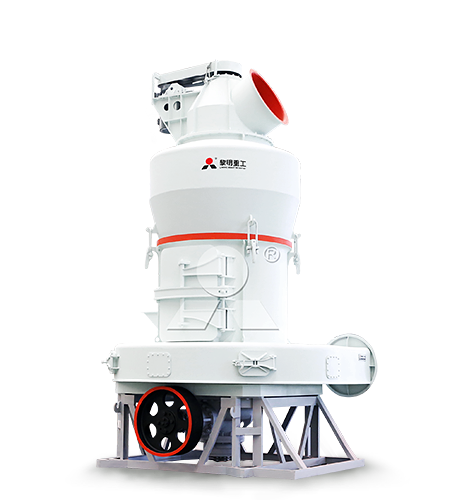
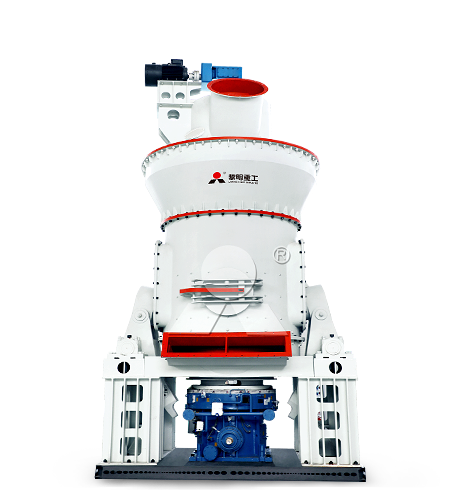
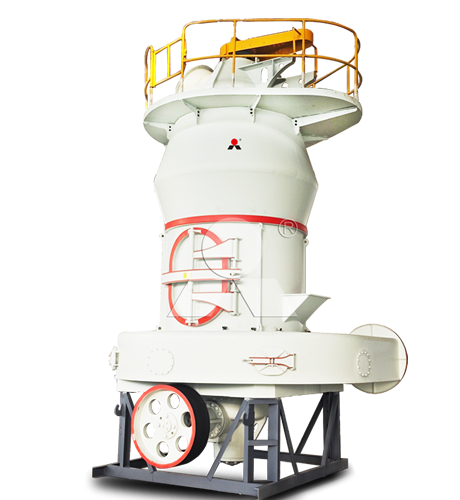
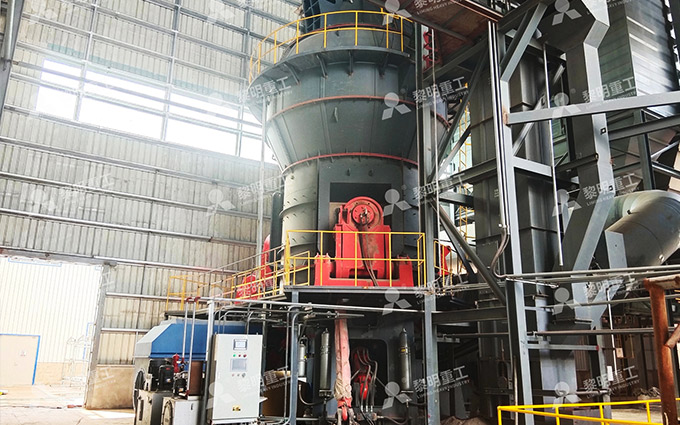
When evaluating a Liming Heavy Industry grinding system, define the distribution required by the coating rather than specifying only a mesh label. Ask for trials that establish:
The complete distribution curve and agreed percentile values.
Coarse residue and any application-critical oversize limit.
Stable output of powder that meets those requirements.
Repeatability across representative feed variations.
Power consumption and wear requirements at the accepted product specification.
The best operating point is not necessarily the setting that produces the lowest D50. It is the setting that consistently produces an acceptable filler at the required output.
A More Useful Filler Acceptance Standard
A robust specification combines distribution limits, a reproducible test method, and application evidence. Use an approved production sample as a reference, then define measurable acceptance criteria around it.
State the measurement basis and method, including whether the distribution is volume-based.
Set limits for the median and relevant fine and coarse percentiles.
Add a separate residue requirement where isolated coarse particles could cause defects.
Standardize sampling, dispersion medium, preparation conditions, and instrument procedure.
Include mineral-specific properties such as morphology, color, moisture, density, or oil absorption.
Verify performance in representative coatings before approving a new grade or processing condition.
Tracking these results over time is as important as checking a single batch. A gradual shift in the fine fraction or coarse tail can reveal changes in feed quality, classifier performance, or operating conditions before customers report a coating problem.
For a new mineral-powder line or an upgrade, provide Liming Heavy Industry with the required distribution, a representative raw-material sample, the target output, and an approved filler where available. This connects process design to the property that matters most: consistency in the customer's finished coating.