Barite Powder Processing
Barite Grinding Plant: Equipment, Process and Configuration
2026-09-14 14:24:20
We are Liming Heavy Industry, a manufacturer of various types of industrial crushers, such as Raymond Mill, Trapezoidal Mill, Vertical Mill, Ultrafine Mill, Ball Mill, etc.
Our mills can process the following minerals:
limestone, quicklime, kaolin, talc, barite, bentonite, calcium carbonate, dolomite, coal, gypsum, clay, carbon black, slag, cement raw materials, cement clinker, etc.
If you need a mill to process stone or minerals into powder, please feel free to contact me (WhatsApp: +8615333807511). Thank you.
A barite grinding plant converts crushed barite ore into controlled fine powder for drilling fluids, coatings, plastics, rubber, chemicals, glass, and other industrial applications. A complete plant is not only a grinding mill: it is a coordinated system covering raw-material preparation, crushing, feeding, drying where necessary, grinding, classification, powder collection, storage, and packing.
For barite fine-powder production, the main grinding equipment should be selected according to output, feed moisture, target fineness, and operating mode. The MTW European Trapezium Mill is suited to flexible conventional fine-powder lines, while the LM Vertical Mill is more appropriate for larger, integrated, continuous-production plants. Liming Heavy Industry lists both systems as suitable equipment for barite powder processing.
Complete Plant Process
A typical barite grinding plant follows the process below:
Raw barite receiving → storage and inspection → crushing → screening → mill feed storage → controlled feeding → drying and grinding → air classification → powder collection → finished-powder storage → bagging or bulk loading.
The exact arrangement changes according to the condition of the raw barite and the required final powder grade. Dry, clean, consistently sized barite can follow a relatively simple process. Material with high moisture, clay, large size variation, or unwanted inclusions needs more preparation before it reaches the grinding mill.
1. Raw Material Receiving and Storage
Raw barite may be supplied as mined blocks, crushed stone, or mixed-size material. At this point, the plant should inspect the ore for excessive moisture, oversized material, clay, metal debris, and visible impurities. A consistent supply of raw ore is essential because changes in hardness, moisture, or feed size can affect mill output and final powder quality.
Covered storage is recommended where rain or high ambient humidity could increase material moisture. Separate stockpiles may also be used when barite from different mines, grades, or chemical compositions must be managed independently.
For drilling-fluid applications, raw barite quality should be checked before processing because grinding cannot compensate for inadequate mineral density or unsuitable chemical composition. Barite used as a drilling-fluid weighting agent is valued for its high density and relative chemical inertness.
2. Crushing and Screening
Large barite blocks must be reduced to a stable mill-feed size. The crushing section commonly includes a vibrating feeder, jaw crusher, secondary crusher when needed, belt conveyors, and vibrating screen.
Barite is generally brittle, so a crushing circuit can efficiently reduce large ore into smaller particles suitable for the grinding section. The screen separates material that already meets the required feed size from oversized particles. Oversize returns to the crusher, while qualified material moves to the mill-feed silo.
In many barite processing flows, raw ore is reduced to a size range suitable for the selected grinding mill before it is elevated to the feed silo. A typical industry arrangement includes crushing, screening, controlled feeding, grinding, classification, collection, and packing in sequence.
The crushing system should be sized to supply the mill continuously. A grinding mill cannot maintain stable output if the crushing section creates irregular feed size or insufficient material flow.
3. Mill Feed Storage and Controlled Feeding
After screening, crushed barite enters a buffer hopper or mill-feed silo. This storage section decouples the intermittent crushing process from the continuous grinding process. It allows the mill to receive a stable material flow even when upstream equipment is temporarily stopped for inspection or adjustment.
A bucket elevator, belt conveyor, screw conveyor, or other enclosed conveying system transfers barite to the feed bin. A controlled feeder then meters material into the mill. The feeder should be synchronized with mill load, grinding pressure, separator operation, and airflow.
Uniform feeding is critical. Overfeeding can increase mill vibration, overload the internal circulation, and reduce powder fineness. Underfeeding can lower output and waste available grinding capacity. A stable feed rate helps the mill operate closer to its intended production range.
Before barite enters the grinding system, magnetic separation or metal detection should be considered. Removing tramp iron and metal fragments protects grinding rollers, grinding rings, liners, and other components from unexpected damage.
4. Drying When Moisture Is High
Moisture directly affects material flow, grinding behavior, classification efficiency, and powder collection. Dry barite can normally enter the mill directly after crushing. If the ore contains excess moisture, a hot-air system should be included in the process configuration.
For a vertical-mill configuration, drying can be integrated with grinding and classification. Hot air passes through the grinding zone, reduces material moisture, and transports fine particles toward the separator. This can simplify the plant layout by avoiding a separate drying step in suitable projects.
For an MTW European Trapezium Mill line, hot air can also be introduced when feed drying is required. The drying system should be matched to the raw-material moisture, desired final moisture, local fuel availability, and ambient conditions.
Excessively wet feed can cause buildup in hoppers, chutes, conveyors, and grinding chambers. It may also reduce classifier efficiency and cause powder to adhere to collection or storage equipment. The objective is to provide stable feed conditions, not simply to use higher drying temperature.
Core Grinding Equipment
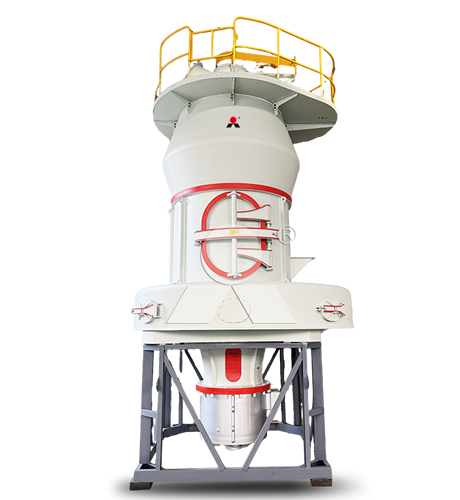
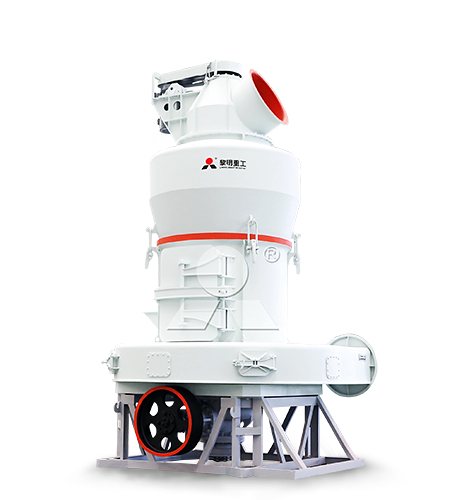
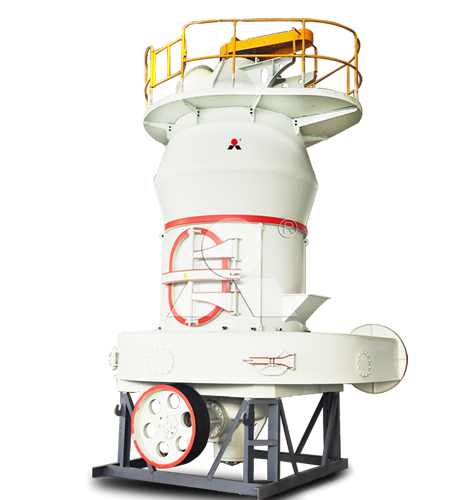
MTW European Trapezium Mill
The MTW European Trapezium Mill is suitable for barite plants producing conventional fine-powder grades. It is particularly practical for medium-scale production and for projects requiring flexible operation across common barite fineness ranges.
In the MTW process, crushed barite is fed evenly into the grinding chamber. Grinding rollers press the material against the grinding ring, reducing it through compression and friction. The powder is lifted by airflow to the classifier. Qualified particles enter the collection system, while coarse particles fall back to the grinding chamber for further grinding.
This closed-circuit arrangement ensures that only material meeting the specified fineness moves into finished-powder storage. Liming Heavy Industry describes MTW as an upgraded European-type grinding system with features including integral bevel-gear transmission, internal thin-oil lubrication, and curved air-duct design for fine processing of non-metallic minerals.
An MTW European Trapezium Mill is a suitable configuration when the plant requires:
Conventional fine barite powder, generally within the 20–400 mesh range.
Common commercial grades such as 200 mesh, 325 mesh, or similar specifications.
Medium-scale production with flexible operating hours.
A practical line combining grinding, classification, dust collection, storage, and packing.
Reliable supply for drilling-fluid, filler, coating, rubber, plastic, or chemical customers.
Liming Heavy Industry identifies 12–325 mesh as the finished-product range for its MTW European Trapezium Grinding Mill in relevant mineral-grinding applications. Actual barite fineness and output should be confirmed according to the raw-material test report and the complete system configuration.
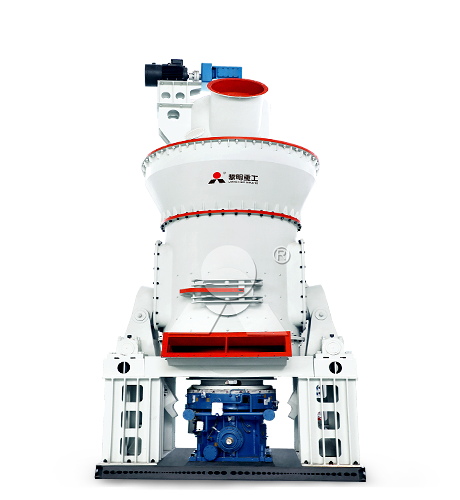
LM Vertical Mill
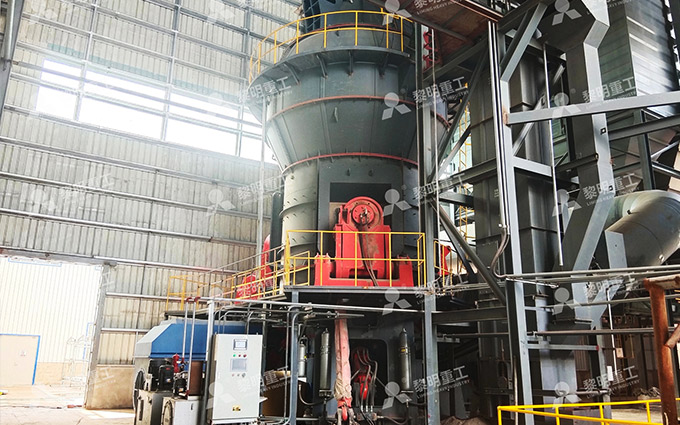
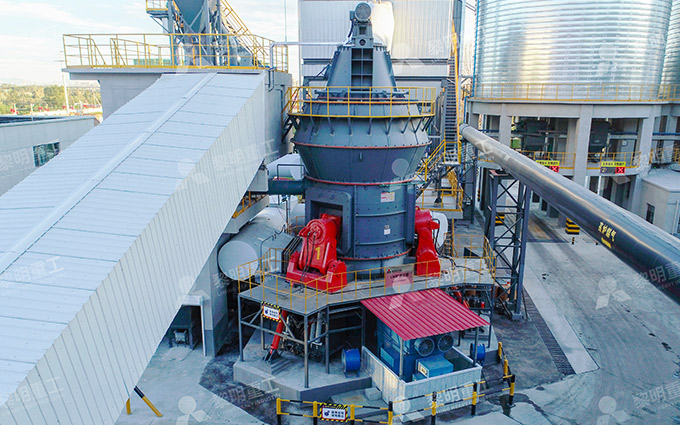
The LM Vertical Mill is designed for barite powder plants that require high capacity, integrated operation, and continuous production. It combines grinding, drying, powder selection, and pneumatic conveying in one system.
Crushed barite is fed onto the rotating grinding table. Grinding rollers apply pressure to the material bed, reducing the particles as they move outward across the table. Airflow carries fine powder upward to the internal separator. Qualified powder proceeds to the collection system, while coarse material returns to the grinding zone.
The integrated design can reduce the number of separate process units and material-transfer points in a high-capacity barite plant. It is particularly valuable where site layout is limited, feed moisture requires drying, or the plant must operate for extended periods with stable output.
The LM Vertical Mill is suitable when the project requires:
Large-scale barite powder production.
High hourly output and long continuous operating periods.
Integrated drying, grinding, classification, and conveying.
Stable fine-powder production under centrally controlled operation.
A compact process arrangement for a large powder-processing facility.
Future production expansion within a centralized plant layout.
Liming Heavy Industry describes its LM Vertical Roller Mill as an integrated system for drying, grinding, powder selection, and conveying. This configuration should be selected when the complete production requirement—not only the target mesh—justifies a high-capacity integrated grinding route.
Classification and Powder Collection
Grinding creates a mixture of particle sizes. Classification separates powder that meets the required fineness from particles that must be returned for additional grinding. This stage is essential for maintaining a stable finished product.
In both LM Vertical Mill and MTW European Trapezium Mill systems, fine material is carried by airflow to a classifier or separator. The separation setting determines the cut size. Qualified powder continues toward the collection system, while coarse material returns to the mill.
Classifier settings should be adjusted according to the required finished-product specification. Increasing the classification intensity generally produces finer powder but may reduce output or increase energy consumption if the setting becomes unnecessarily strict. The most effective operating point is the one that reaches the required particle-size distribution while maintaining stable production.
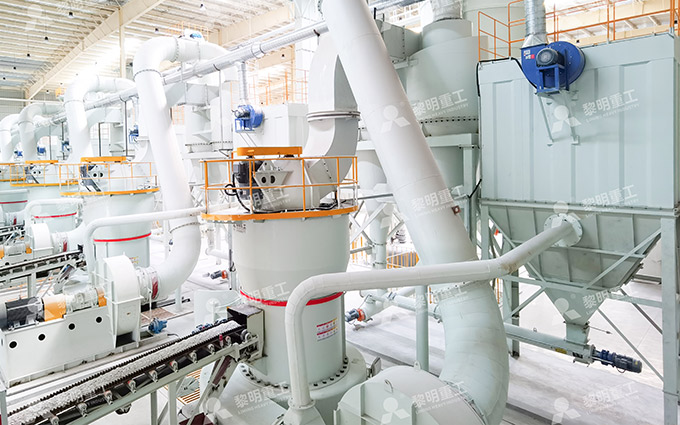
After classification, the air-and-powder stream enters the collection system. A typical arrangement includes a cyclone collector followed by a pulse dust collector. The cyclone separates the main powder fraction, while the dust collector captures residual fine particles from the airflow.
The dust-collection system performs several functions at once:
Recovers finished barite powder and reduces product loss.
Maintains controlled airflow and negative pressure in the grinding circuit.
Reduces dust release around the plant.
Protects fans and downstream equipment from excessive powder carryover.
Supports a cleaner packing and storage environment.
Standard barite processing flows use air classification to return unqualified material for regrinding, then use collection equipment to separate qualified powder from the conveying air before storage and packing.
Finished Powder Storage and Packing
Collected barite powder should move through enclosed conveying equipment to finished-product silos. Separate silos can be arranged for different mesh grades, applications, or production batches. Proper silo design is important because fine barite powder can compact, bridge, or absorb moisture if material flow is not considered during engineering.
The packing system should match the intended delivery format. Common options include:
| Delivery Method | Typical Use | Configuration Consideration |
|---|---|---|
| 25 kg or 50 kg bags | Distributors, smaller factories, and containerized shipments | Valve-bag packing machine, weighing system, bag sealing, and palletizing arrangement |
| Jumbo bags | Industrial users requiring bulk handling | Big-bag filling station, weighing platform, dust extraction, and forklift access |
| Bulk tanker loading | Large drilling-fluid or industrial customers | Bulk-loading spout, weighing arrangement, enclosed transfer route, and tanker access |
Automatic or semi-automatic packing systems can be selected according to output volume, labor availability, bag type, and shipping plan. Barite powder plants commonly use 25 kg, 50 kg, and one-ton bag formats, with bulk loading added for high-volume supply.
Recommended Plant Configurations
Configuration A: Flexible MTW Barite Powder Line
This configuration is suitable for conventional fine-powder production, particularly where the plant needs to serve several industrial customers with standard barite grades.
Raw barite storage → vibrating feeder → jaw crusher → vibrating screen → mill-feed silo → electromagnetic or variable-speed feeder → MTW European Trapezium Mill → classifier → cyclone collector → pulse dust collector → finished-powder silo → bagging or jumbo-bag system.
If material moisture is high, add a suitable hot-air source and drying-air circuit. If the raw barite contains metal fragments or iron contamination, add a magnetic separator before the mill feed stage.
Configuration B: Large-Capacity LM Vertical Mill Plant
This configuration is suitable for continuous, high-output barite powder production, especially where drying, grinding, classification, and conveying should operate as an integrated system.
Raw barite storage → crushing and screening → mill-feed silo → controlled feeding system → LM Vertical Mill with hot-air circuit → internal separator → cyclone collector → pulse dust collector → finished-powder silo → automatic packing or bulk-loading system.
The LM Vertical Mill route is particularly effective when the plant needs integrated moisture control and a compact layout. Crushing capacity, hot-air supply, fan capacity, dust collection, storage volume, and packing throughput must all be designed to match the mill’s sustainable output.
Configuration Checklist
Before finalizing a barite grinding plant, confirm the following technical information:
Raw barite chemical composition and specific gravity.
Hardness, abrasiveness, moisture, clay content, and impurity level.
Maximum feed size after crushing.
Finished-powder mesh, micron size, and particle-size distribution.
Required output in tonnes per hour and tonnes per year.
Daily operating hours and planned production schedule.
Final application, such as drilling fluid, coating, plastic, rubber, chemical, or general filler.
Need for drying and available heat source.
Power supply, installation space, building height, and local climate conditions.
Required dust-control performance and site environmental conditions.
Finished-product storage volume and packaging method.
Plans for future production expansion.
A well-configured barite grinding plant creates a stable link between raw ore and finished powder. The crushing system prepares uniform feed, the grinding mill reduces material efficiently, the classifier controls fineness, the collection system recovers powder, and the storage and packing sections deliver a clean, usable product. For flexible conventional barite powder production, the MTW European Trapezium Mill provides a practical core solution. For large-scale integrated production, the LM Vertical Mill provides a stronger foundation for continuous barite powder manufacturing.