Barite Powder Processing
LM Vertical Grinding Mill for Barite Powder Production
2026-09-14 14:24:57
We are Liming Heavy Industry, a manufacturer of various types of industrial crushers, such as Raymond Mill, Trapezoidal Mill, Vertical Mill, Ultrafine Mill, Ball Mill, etc.
Our mills can process the following minerals:
limestone, quicklime, kaolin, talc, barite, bentonite, calcium carbonate, dolomite, coal, gypsum, clay, carbon black, slag, cement raw materials, cement clinker, etc.
If you need a mill to process stone or minerals into powder, please feel free to contact me (WhatsApp: +8615333807511). Thank you.
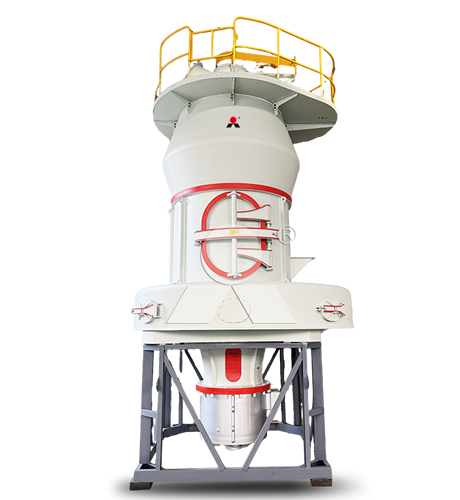
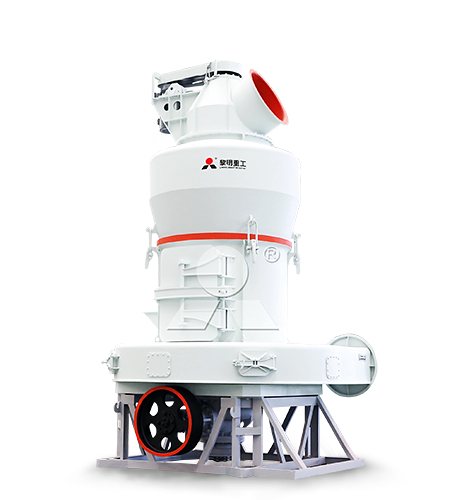
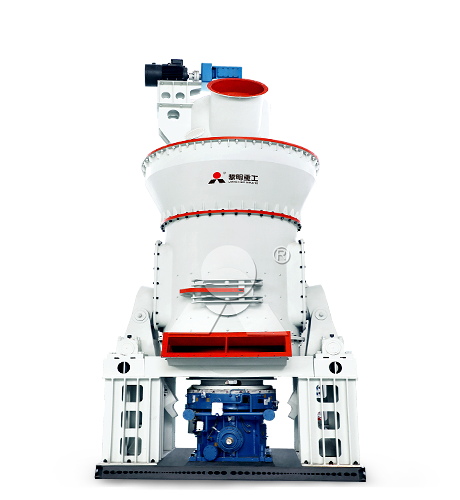
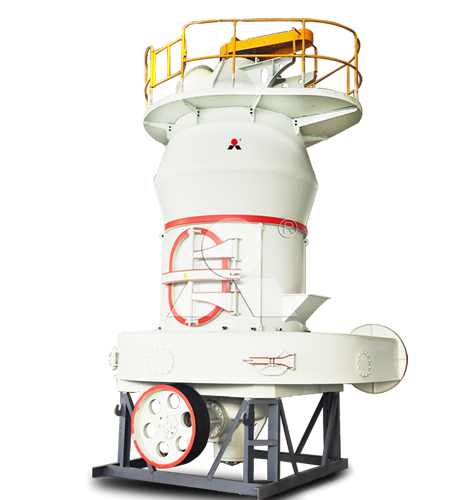
The LM Vertical Mill is designed for large-scale barite powder production where stable output, integrated drying, controlled fineness, and continuous operation are required. It combines crushing, grinding, classification, drying, and pneumatic conveying within one coordinated process, reducing intermediate material transfers and supporting a compact plant layout.
For barite producers supplying drilling-fluid material, industrial filler, coating, plastic, rubber, chemical, or other fine-powder markets, an LM Vertical Mill is particularly suitable when capacity demand is high or the raw ore contains moisture that must be removed during processing.
Why Use an LM Vertical Mill?
Barite is a dense mineral composed mainly of barium sulfate. It is widely used as a weighting material in drilling fluids and as a functional mineral filler in multiple industrial products. Producing a stable barite powder requires more than reducing the ore to a nominal mesh size: the grinding system must maintain a controlled particle-size distribution, handle changing feed conditions, collect powder efficiently, and prevent contamination during the full process.
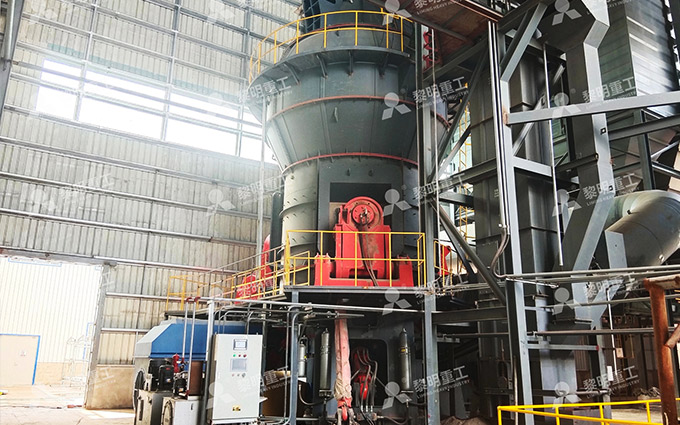
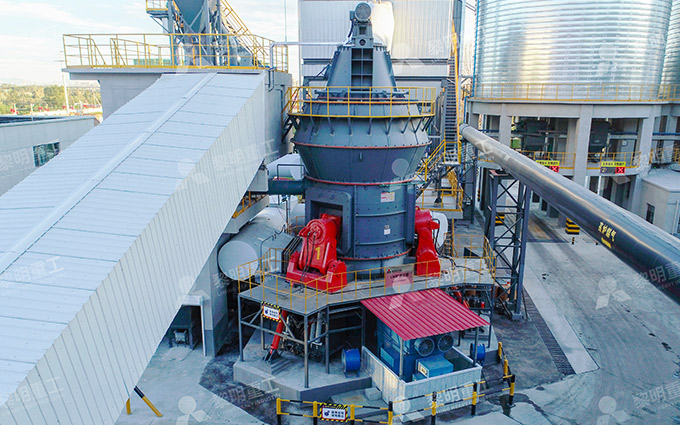
The LM Vertical Mill provides a “four-in-one” production route: drying, grinding, classification, and conveying occur in a single system. Crushed barite is fed onto the grinding table, reduced under roller pressure, lifted by airflow, separated by the classifier, and transported to the powder-collection section. Coarse particles return automatically to the grinding zone until they reach the required fineness.
This internal circulation helps keep oversized particles out of the finished-product silo and supports stable powder quality during continuous production.
Working Process
A complete LM Vertical Mill barite powder line normally follows this sequence:
Raw barite receiving → crushing and screening → mill-feed silo → controlled feeding → LM Vertical Mill → internal classification → powder collection → finished-product storage → bagging or bulk loading.
Raw Barite Preparation
Raw barite usually arrives as blocks or crushed stone. Before milling, the material should be checked for moisture, clay, oversized stones, metal fragments, and mineral impurities. When high purity, whiteness, or drilling-fluid quality is required, the barite may need washing, sorting, gravity separation, or magnetic separation before the grinding stage.
The crushing system reduces large barite ore to a stable feed size suitable for the mill. A vibrating feeder, crusher, screening unit, conveyor, and mill-feed silo are commonly used. Uniform feed size is important because oversized particles can increase vibration, reduce output, and accelerate wear on grinding components.
Controlled Feeding
Crushed barite is stored in a feed hopper or buffer silo and delivered to the LM Vertical Mill by a metering feeder. The feed rate should remain stable and should be coordinated with mill load, grinding pressure, separator settings, and airflow volume.
Consistent feeding improves the stability of the grinding bed on the rotating table. Sudden increases in feed can cause high differential pressure, increased vibration, excessive internal circulation, and unstable product fineness. An undersupplied mill cannot operate at its intended capacity.
Drying and Grinding
Inside the LM Vertical Mill, barite is distributed across a rotating grinding table. Hydraulic pressure pushes the grinding rollers against the material bed. The combined force of pressure, friction, and shear progressively reduces the barite particles.
When the feed contains moisture, hot air is introduced into the mill. The air stream removes moisture while carrying fine particles upward to the separator. This integrated drying route can eliminate the need for a separate dryer in suitable projects and helps maintain stable material flow through the grinding and collection sections.
Liming Heavy Industry states that an LM Vertical Roller Mill configuration can process barite feed containing up to 15% moisture when hot air is introduced into the mill chamber. The final design should still be determined through feed testing, moisture analysis, heat-balance calculation, and local fuel availability.
Internal Classification
After grinding, airflow carries the powder upward to the internal classifier. The classifier separates qualified fine particles from material that is still too coarse. Finished powder leaves with the air stream, while coarse particles fall back to the grinding table for further milling.
Classifier speed and airflow are the main controls for finished-powder fineness. According to Liming Heavy Industry, LM Vertical Mill product fineness can be adjusted through separator speed or airflow settings; the company lists applications covering standard fine mineral powder, including barite.
This arrangement allows the operator to adjust the process for different barite grades without changing the core grinding route. However, each target specification should be verified through laboratory testing and regular particle-size analysis.
Powder Collection
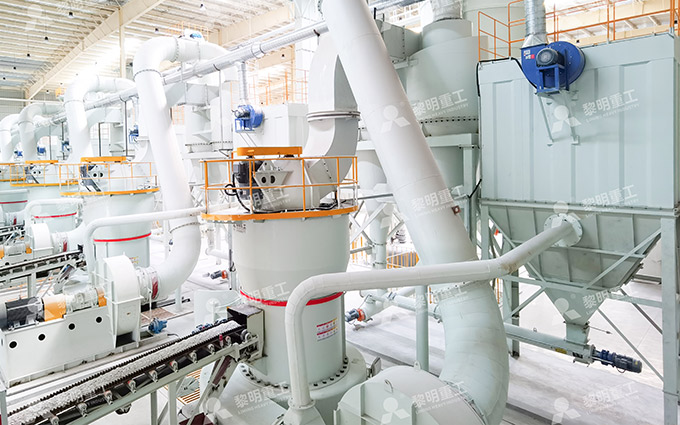
Qualified barite powder is carried from the classifier to the collection system. A cyclone collector separates the main powder fraction from the air stream, while a pulse dust collector captures remaining fine particles. The collected product is discharged through rotary valves or enclosed conveying equipment to the finished-powder silo.
Efficient collection is important for product recovery and process stability. It maintains the required airflow through the mill, reduces powder loss, and limits dust release at transfer points. The full grinding circuit normally operates under negative pressure to support enclosed material handling.
Suitable Barite Powder Grades
The LM Vertical Mill can be configured for standard fine barite powder production. Liming Heavy Industry lists a discharge-fineness range of 0.84–0.037 mm, or approximately 20–400 mesh, for its LM Vertical Mill, while also noting adjustable product fineness through classifier control.
| Finished Powder Requirement | Typical Application | Process Focus |
|---|---|---|
| 200 mesh barite powder | Drilling-fluid weighting material, general industrial use | Stable high output, controlled coarse-particle content, reliable collection |
| 325 mesh barite powder | Drilling fluids, coatings, plastics, rubber, and industrial filler | Accurate classification, controlled particle-size distribution, stable powder quality |
| Other standard fine-powder grades | Chemicals, glass, ceramics, filler compounds, and specialized formulations | Selection based on application-specific particle-size, moisture, purity, and capacity requirements |
For drilling-fluid applications, powder fineness must be evaluated as a complete particle-size distribution. Standard drilling-grade barite commonly requires controlled limits for both coarse particles and excessive ultrafine material. The mill should therefore be adjusted to meet the agreed product specification rather than operated solely to maximize fineness.
Liming Heavy Industry presents a 200-mesh barite powder grinding production line as an LM Vertical Mill application and also reports a barite project using one LM Vertical Roller Mill to produce 325-mesh powder.
Key Advantages in a Barite Plant
| Feature | Value for Barite Powder Production |
|---|---|
| Integrated process | Drying, grinding, classification, and conveying are completed in one coordinated system. |
| High-capacity operation | Suitable for centralized plants supplying substantial daily or annual powder volumes. |
| Moisture handling | Hot air can be introduced to process barite with elevated feed moisture. |
| Adjustable fineness | Separator and airflow control support different standard barite powder grades. |
| Closed internal circulation | Coarse particles return automatically for regrinding, helping maintain finished-product consistency. |
| Compact plant arrangement | Combining multiple process functions can reduce the number of transfer points and separate units. |
| Enclosed operation | Negative-pressure operation and dust collection support cleaner powder handling. |
LM Vertical Mill capacity must be selected according to the actual barite material and finished-product specification. Liming Heavy Industry lists an overall capacity range of 10–400 t/h for the LM Vertical Mill series, while one barite-focused source identifies approximately 20–50 t/h as a typical high-capacity range for industrial barite production. Actual output depends on feed size, moisture, hardness, grindingability, finished fineness, operating hours, and the supporting-system configuration.
Recommended Plant Configuration
A typical LM Vertical Mill barite powder production plant can be configured as follows:
Raw barite yard → vibrating feeder → primary crushing → screening → belt conveyor or bucket elevator → mill-feed silo → variable-speed feeder → LM Vertical Mill → hot-air system when required → internal classifier → cyclone collector → pulse dust collector → finished-powder silo → automatic bagging system, jumbo-bag station, or bulk tanker loading system.
The supporting systems should be sized around the mill’s sustainable output rather than its theoretical maximum. For example, a mill selected for high-capacity operation requires matching crushing capacity, enough feed-silo volume, sufficient hot-air supply, adequate fan capacity, correctly sized dust collectors, appropriate finished-product storage, and a packing system that does not become a bottleneck.
| Plant Section | Main Equipment | Configuration Purpose |
|---|---|---|
| Feed preparation | Vibrating feeder, crusher, screen, conveyor | Creates stable mill feed and removes oversized material |
| Metal removal | Magnetic separator or metal detector | Protects rollers, grinding table, and other mill components |
| Buffer storage | Mill-feed silo and controlled feeder | Maintains continuous, uniform feed to the LM Vertical Mill |
| Grinding and drying | LM Vertical Mill and hot-air circuit | Reduces particle size and moisture in an integrated operation |
| Classification | Internal separator | Controls product fineness and returns coarse particles for regrinding |
| Collection | Cyclone collector and pulse dust collector | Recovers powder and maintains stable airflow |
| Storage and dispatch | Finished-product silos, bagging machine, jumbo-bag station, bulk loader | Prepares powder for the required customer delivery format |
When LM Is the Right Choice
The LM Vertical Mill is the preferred choice when a barite project requires large-scale, continuous, integrated production rather than a small or intermittent powder operation.
It is particularly appropriate when:
The required capacity is high and the plant is expected to operate for long daily shifts.
The raw barite contains moisture that should be removed during the grinding process.
The project requires stable 200-mesh, 325-mesh, or other standard fine-powder grades.
The plant must maintain a controlled particle-size distribution for drilling-fluid or industrial-filler customers.
Space efficiency is important and the process should combine several functions in one production system.
The producer expects future expansion or intends to supply several large-volume customers.
Centralized control, enclosed powder handling, and systematic dust collection are important to the plant design.
For smaller or medium-scale projects producing standard fine barite powder with flexible operating requirements, the MTW European Trapezium Mill may be the more proportionate configuration. Liming Heavy Industry specifically identifies MTW as the usual solution for a 6 t/h barite powder line producing 200–325 mesh powder, while positioning the LM Vertical Mill for substantially larger production needs.
Project Data Needed for Configuration
Before determining the LM Vertical Mill model and supporting equipment, the following data should be confirmed:
Barite chemical composition and barium sulfate content.
Specific gravity, whiteness requirement, and impurity content.
Hardness, abrasiveness, and grindability of the ore.
Maximum feed size after crushing.
Raw-material moisture and target finished-powder moisture.
Required powder mesh, micron range, and particle-size distribution.
Required hourly output, annual capacity, and daily operating time.
Final application, including drilling fluid, coatings, plastics, rubber, chemicals, or general filler.
Available power supply, heat source, site area, building height, and transport arrangement.
Packaging format, including small bags, jumbo bags, or bulk tanker loading.
A correctly configured LM Vertical Mill line turns raw barite into reliable finished powder through a continuous route of drying, grinding, classification, collection, and dispatch. Its strongest value lies in high-capacity production where powder consistency, moisture control, compact layout, and stable long-term operation are required.