Barite Powder Processing
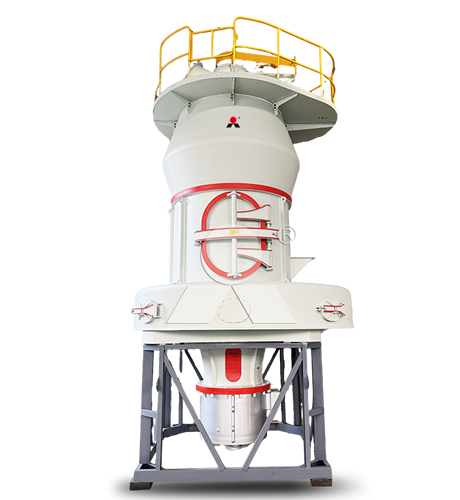
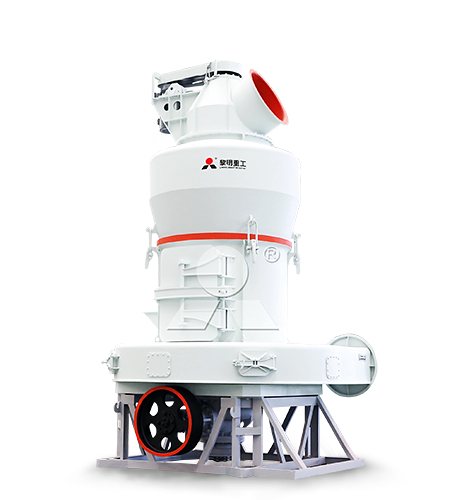
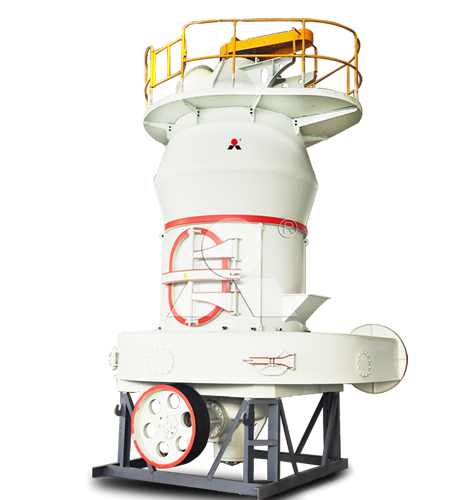
MTW European Grinding Mill for Barite Grinding
2026-09-14 14:25:32
We are Liming Heavy Industry, a manufacturer of various types of industrial crushers, such as Raymond Mill, Trapezoidal Mill, Vertical Mill, Ultrafine Mill, Ball Mill, etc.
Our mills can process the following minerals:
limestone, quicklime, kaolin, talc, barite, bentonite, calcium carbonate, dolomite, coal, gypsum, clay, carbon black, slag, cement raw materials, cement clinker, etc.
If you need a mill to process stone or minerals into powder, please feel free to contact me (WhatsApp: +8615333807511). Thank you.
The MTW European Grinding Mill is a practical solution for producing standard fine barite powder, especially for 200–325 mesh products used in drilling fluids, industrial fillers, coatings, plastics, rubber, and chemical applications. It combines grinding, air classification, powder collection, and enclosed conveying into a coordinated production system, helping producers achieve stable powder fineness and reliable output.
For medium-scale barite powder projects, the MTW European Grinding Mill provides a well-balanced route between production capacity, fineness control, plant layout, and operating flexibility. Liming Heavy Industry identifies MTW European Type Raymond Mill as the usual choice for a 6 t/h barite line producing 200–325 mesh powder, while larger continuous projects may favor an LM Vertical Mill.
How the MTW Mill Processes Barite
Barite grinding starts with properly prepared feed material. Raw barite ore is crushed, screened, and stored in a mill-feed silo before it enters the MTW European Grinding Mill. The feed should be uniform and within the allowable size range, because unstable or oversized material can reduce output, increase vibration, and affect finished-powder quality.
Inside the mill, a controlled feeder delivers crushed barite to the grinding chamber. Grinding rollers apply pressure to the material against the grinding ring. Through compression, friction, and repeated circulation, the barite is progressively reduced to fine powder.
An airflow system lifts the ground particles toward the classifier. The classifier separates material according to particle size:
Fine powder that meets the required specification travels with the airflow to the collection system.
Coarse particles return to the grinding chamber for further processing.
This closed-circuit operation is important because it prevents oversized particles from entering the finished-powder silo. Rather than relying on one pass through the mill, the system continuously returns unqualified material for regrinding until the target fineness is reached.
After classification, qualified powder enters the cyclone collector and pulse dust collector. The collected barite powder is discharged through rotary valves or enclosed conveying equipment into finished-product storage silos, then packed into bags, jumbo bags, or loaded in bulk.
Typical Process Flow
A standard MTW barite grinding line can be arranged as follows:
Raw barite storage → vibrating feeder → primary crushing → screening → mill-feed silo → variable-speed feeder → MTW European Grinding Mill → air classifier → cyclone collector → pulse dust collector → finished-powder silo → bagging or bulk loading.
Additional equipment can be included according to the raw material and final product requirements:
| Process Requirement | Recommended Additional Equipment | Purpose |
|---|---|---|
| Large raw barite blocks | Jaw crusher and secondary crushing stage | Produces a stable feed size suitable for the mill |
| High feed moisture | Hot-air supply system | Reduces moisture during grinding and improves powder flow |
| Metal fragments in feed | Magnetic separator or metal detector | Protects grinding rollers, grinding ring, and internal components |
| Several finished-powder grades | Multiple product silos or separate collection arrangement | Prevents mixing between powder specifications |
| High-volume industrial delivery | Jumbo-bag station or bulk tanker loader | Matches dispatch capacity to customer handling requirements |
Suitable Barite Powder Range
The MTW European Grinding Mill is mainly suited to conventional fine mineral powder rather than specialty ultrafine processing. Liming Heavy Industry lists the MTW 6X Intelligent European Grinding Mill with a discharge fineness of 1.6–0.045 mm, equivalent to approximately 10–325 mesh, and a capacity range of 6–50 t/h depending on material and configuration. The system is listed for non-metallic minerals including barite.
For barite projects, the most common production targets include:
| Finished Barite Grade | Typical Application | Production Focus |
|---|---|---|
| 200 mesh | Drilling-fluid weighting material and general industrial uses | Stable production rate, controlled oversize particles, efficient powder recovery |
| 325 mesh | Drilling fluids, coatings, plastics, rubber, chemical products, and filler applications | Uniform particle-size distribution, reliable classification, and clean powder collection |
| Other conventional fine grades | Glass, ceramics, chemical formulations, and customized filler products | Adjust classifier operation and grinding conditions according to the required product specification |
Liming Heavy Industry presents a 200-mesh barite powder grinding production line using the MTW European Grinding Mill. The final product should be evaluated by its complete particle-size distribution, not only by a nominal mesh value.
Why MTW Fits Barite Grinding
Barite is a dense, brittle mineral that needs stable grinding pressure, reliable classification, and efficient powder collection. An MTW European Grinding Mill is designed for non-metallic mineral processing and can be configured to produce common barite powder grades with a practical process layout.
| MTW System Feature | Value for Barite Powder Production |
|---|---|
| Roller-and-ring grinding structure | Provides continuous mechanical grinding for crushed barite feed |
| Air classification | Separates qualified powder and returns coarse particles for regrinding |
| Adjustable fineness | Supports production of different conventional barite powder grades through coordinated classifier and airflow adjustment |
| Closed powder circulation | Helps limit coarse particles in the finished product |
| Integrated dust collection | Recovers powder, supports stable airflow, and reduces dust loss |
| Flexible production scale | Suitable for many medium-capacity plants and regional powder suppliers |
| Barite applicability | Configured for barite as well as limestone, calcite, gypsum, dolomite, kaolin, and other non-metallic minerals |
MTW European Grinding Mill technology is used for a range of non-metallic minerals, including barite, and is designed to provide stable powder fineness and uniform product quality in industrial grinding applications.
Key Operating Controls
Stable barite powder production depends on more than selecting the correct mill model. Feed preparation, operating parameters, airflow, and the collection system must work together.
Feed Size and Feed Rate
Barite should be crushed and screened before it enters the mill. Consistent feed size reduces the risk of overloading and helps create a stable grinding zone. A variable-speed feeder should maintain a steady material flow according to the mill’s operating load.
Overfeeding can increase internal circulation, reduce airflow efficiency, and make the final powder coarser or less stable. Underfeeding reduces output and may prevent the mill from reaching its planned production capacity.
Moisture Control
Moisture should be measured before plant design is finalized. Barite with elevated water content can cause material buildup in hoppers, chutes, the grinding chamber, and powder conveyors. When necessary, hot air can be introduced into the MTW grinding system to reduce moisture during processing.
The drying system should be designed according to actual feed moisture, target product moisture, material flow rate, ambient climate, and available heat source. Excessive temperature is not a substitute for proper heat-balance design.
Classifier and Airflow Adjustment
The classifier is the main equipment section controlling finished-powder fineness. Higher classifier speed normally produces a finer cut, while lower speed allows more coarse particles to pass. Airflow must be coordinated with classifier speed, because air volume influences powder transport, separation efficiency, and circulation load.
For a 325-mesh barite product, the mill should be adjusted to meet the agreed particle-size distribution rather than simply being operated at the highest classifier speed. Excessive ultrafine powder may reduce output and may not benefit the final application.
Grinding Parts and Maintenance
Grinding rollers, rings, classifier components, and internal liners are subject to wear during barite processing. The wear rate depends on barite hardness, abrasiveness, impurities, operating hours, and feed condition. Regular inspection allows the plant to replace wear parts before product fineness or production capacity begins to decline.
Maintaining stable lubrication, airflow, feeding, grinding pressure, and dust-collection performance helps prevent unnecessary shutdowns and supports consistent powder quality.
Recommended MTW Plant Configurations
Standard 200–325 Mesh Barite Line
This arrangement is suitable for conventional drilling-fluid and industrial-filler powder production.
Barite storage → crusher → screen → feed silo → electromagnetic feeder → MTW European Grinding Mill → classifier → cyclone collector → pulse dust collector → product silo → automatic valve-bag packing machine.
This configuration is appropriate where raw barite is relatively dry, feed quality is consistent, and the producer supplies one or two standard powder grades.
Barite Line with Drying and Bulk Delivery
This arrangement is suitable for raw barite with higher moisture or for plants supplying larger industrial customers.
Covered raw-material storage → crushing and screening → magnetic separation → feed silo → controlled feeder → MTW European Grinding Mill with hot-air system → classifier → cyclone collector → pulse dust collector → multiple finished-powder silos → jumbo-bag filling station or bulk tanker loading system.
The separate storage silos allow the plant to manage different product grades or production batches. The drying-air system supports stable grinding and collection, while bulk dispatch equipment reduces handling time for high-volume deliveries.
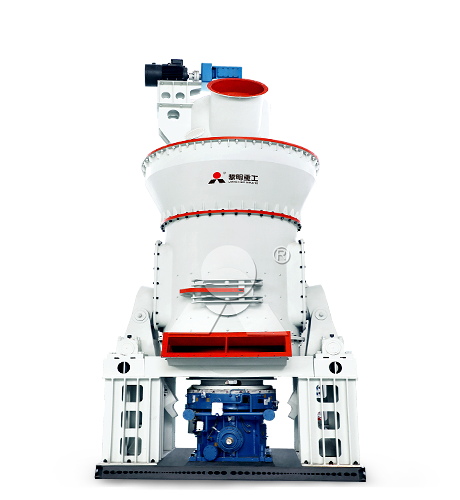
When to Choose MTW Instead of LM
Choose an MTW European Grinding Mill when the project focuses on conventional fine barite powder and does not require the very large, fully integrated production scale of an LM Vertical Mill.
| Project Condition | More Suitable Choice | Reason |
|---|---|---|
| 200–325 mesh barite powder with moderate capacity | MTW European Grinding Mill | Provides a practical grinding and classification route for standard fine-powder grades |
| Multiple conventional powder grades for regional supply | MTW European Grinding Mill | Allows flexible classifier adjustment and a modular plant arrangement |
| High-capacity, long-hour, centralized production | LM Vertical Mill | Combines drying, grinding, classification, and conveying in an integrated large-scale system |
| Moist feed with substantial drying requirement and high output | LM Vertical Mill | Provides a strong integrated route for simultaneous drying and continuous production |
For a project around 6 t/h producing 200–325 mesh barite powder, MTW European Type Raymond Mill is generally the more proportionate choice. The LM Vertical Mill becomes more suitable when output demand rises substantially or when integrated high-capacity production is the main requirement.
Information Needed for Final Configuration
Before selecting the MTW model and supporting equipment, confirm the following:
Barite chemical composition, barium sulfate content, and specific gravity.
Raw-material hardness, abrasiveness, moisture, clay content, and impurities.
Maximum feed size after crushing.
Required finished-powder mesh, micron range, and particle-size distribution.
Target output in tonnes per hour and annual production volume.
Final application, including drilling fluid, coating, plastic, rubber, chemical, or filler use.
Required powder moisture, whiteness, and contamination-control level.
Available power supply, installation space, plant height, heat source, and local climate.
Finished-product storage and delivery format, including bags, jumbo bags, or bulk loading.
Plans to add capacity or additional powder grades in the future.
The MTW European Grinding Mill provides a dependable foundation for conventional barite powder production. When matched with suitable crushing, controlled feeding, air classification, dust collection, storage, and packing equipment, it can produce stable 200–325 mesh barite powder for a wide range of industrial applications.