Barite Powder Processing
LM Vertical Mill vs MTW European Mill for Barite Grinding
2026-09-14 14:26:14
We are Liming Heavy Industry, a manufacturer of various types of industrial crushers, such as Raymond Mill, Trapezoidal Mill, Vertical Mill, Ultrafine Mill, Ball Mill, etc.
Our mills can process the following minerals:
limestone, quicklime, kaolin, talc, barite, bentonite, calcium carbonate, dolomite, coal, gypsum, clay, carbon black, slag, cement raw materials, cement clinker, etc.
If you need a mill to process stone or minerals into powder, please feel free to contact me (WhatsApp: +8615333807511). Thank you.
Both the LM Vertical Mill and the MTW European Mill can produce fine barite powder, but they serve different plant scales and operating priorities. Choose the MTW European Mill for flexible, medium-scale production of conventional barite grades; choose the LM Vertical Mill when the project requires higher output, continuous operation, integrated drying, and a compact large-plant process.
The most important decision factors are required output, raw-barite moisture, target fineness and particle-size distribution, operating hours, site layout, and future expansion plans. For a 6 t/h barite line producing 200–325 mesh powder, Liming Heavy Industry identifies the MTW European Type Mill as the usual choice; for substantially higher-capacity barite production, the LM Vertical Mill becomes the stronger option.
Quick Comparison
| Selection Factor | LM Vertical Mill | MTW European Mill |
|---|---|---|
| Best production scale | Large-scale, centralized, long-hour production | Medium-scale and flexible fine-powder production |
| Typical barite capacity | Suitable for high-output lines; commonly considered for approximately 20–50 t/h barite projects | Suitable for moderate-capacity production; MTW 6X is listed at 6–50 t/h depending on material and configuration |
| Typical finished fineness | 20–400 mesh, depending on mill model and separator settings | Approximately 10–325 mesh, depending on mill model and classifier settings |
| Core process | Integrated drying, grinding, classification, and pneumatic conveying | Grinding, air classification, powder collection, and conveying in a coordinated modular line |
| Moisture handling | Strong choice when hot-air drying must be integrated with high-capacity grinding | Can use hot air for moderate moisture control when properly configured |
| Plant layout | Compact integrated arrangement with fewer intermediate transfer points | Clear, practical layout with separate but matched grinding, collection, storage, and packing sections |
| Operation mode | Designed for stable, continuous operation and centralized control | Suitable for stable production with greater flexibility in output planning and standard grade changes |
| Best-fit barite products | High-volume 200–400 mesh barite powder for drilling-fluid and industrial markets | Conventional 200–325 mesh barite powder for drilling fluids, fillers, coatings, plastics, and rubber |
| Expansion potential | Well suited to major output growth and centralized production systems | Well suited to staged investment and regional-market production |
Liming Heavy Industry lists the LM Vertical Mill with a nominal fineness range of 0.84–0.037 mm, approximately 20–400 mesh, and an overall capacity range of 10–400 t/h depending on material and system design. Its MTW 6X European Grinding Mill is listed with a 6–50 t/h capacity range and a 1.6–0.045 mm discharge range, approximately 10–325 mesh. Actual output depends on barite hardness, feed size, moisture, target fineness, operating conditions, and supporting equipment.
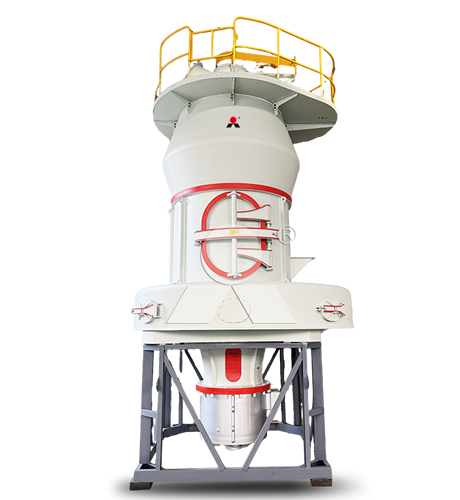
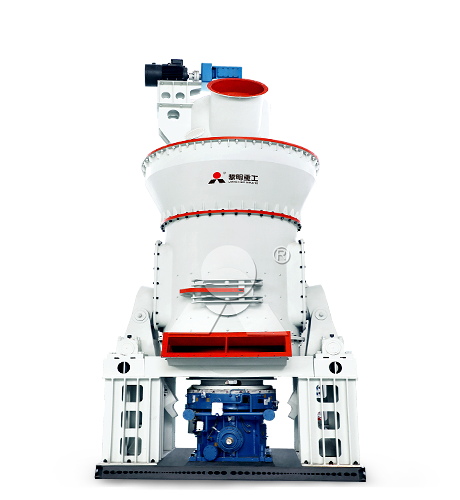
LM Vertical Mill
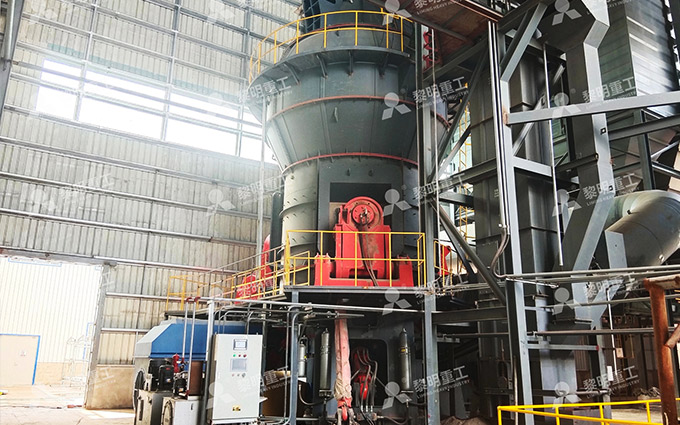
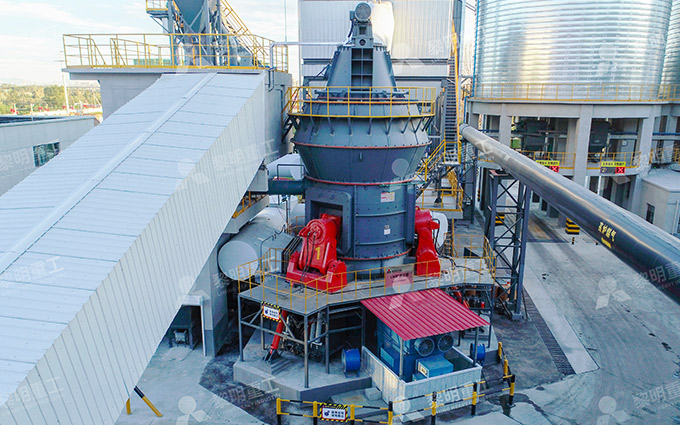
The LM Vertical Mill is intended for plants where barite powder production must be continuous, high-capacity, and closely integrated. It brings together drying, grinding, powder separation, and pneumatic conveying in one main system.
Crushed barite enters the mill and is distributed onto a rotating grinding table. Rollers apply pressure to the material bed, breaking the particles through compression and shear. Hot air can enter the mill when feed moisture needs to be reduced. The airflow carries fine particles upward to the internal separator, where qualified powder proceeds to collection and coarse particles return to the grinding table.
This internal circulation helps maintain a stable finished-powder specification. Instead of allowing all material to leave after one pass, only qualified particles are sent to the cyclone and pulse dust-collection system.
Where LM Performs Best
Large barite powder plants operating for long daily shifts or continuous production.
Projects requiring high and stable output, particularly in the approximately 20–50 t/h range or above.
Raw barite with moisture that must be removed during grinding.
Plants that need integrated drying, grinding, classification, and conveying.
Centralized facilities supplying several large drilling-fluid or industrial-powder customers.
Projects with limited available layout space but a need for substantial production capacity.
Plants planning future output expansion or additional barite powder grades.
Liming Heavy Industry describes the LM Vertical Mill as an integrated grinding system and reports barite production applications at both 200 mesh and 325 mesh. One listed barite project uses a single LM Vertical Roller Mill for 325-mesh powder production.
LM Configuration
A typical LM Vertical Mill barite line follows this arrangement:
Raw barite storage → crushing and screening → mill-feed silo → controlled feeder → LM Vertical Mill with hot-air circuit → internal separator → cyclone collector → pulse dust collector → finished-powder silos → bagging, jumbo-bag filling, or bulk tanker loading.
The design should ensure that crushing capacity, feed-silo capacity, hot-air supply, fans, dust collectors, finished-product storage, and dispatch equipment all match the mill’s sustainable production rate. A high-capacity vertical mill cannot perform efficiently if packaging, collection, or raw-material preparation becomes the bottleneck.
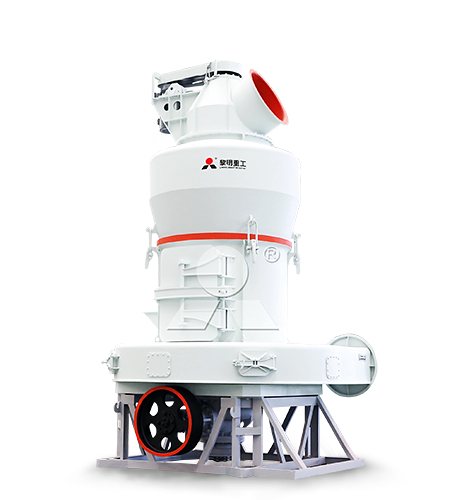
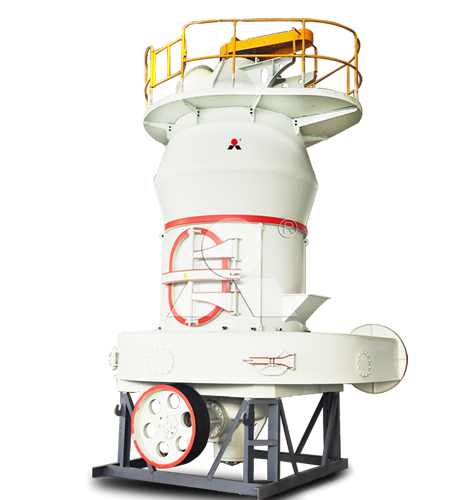
MTW European Mill
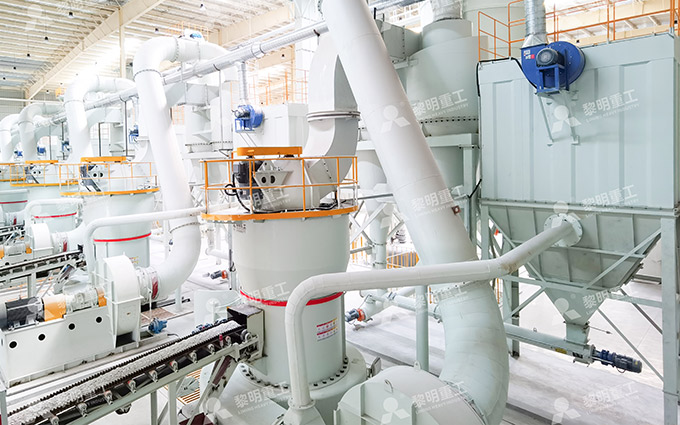
The MTW European Mill is a practical solution for conventional fine barite powder production, particularly for 200-mesh and 325-mesh products. It is appropriate for producers that need dependable particle-size control and moderate production capacity without requiring the fully integrated high-capacity arrangement of a vertical mill.
Crushed barite enters the MTW grinding chamber through a controlled feeding system. Grinding rollers press material against the grinding ring, reducing the barite through compression and friction. An airflow system lifts the powder to the classifier. Fine material moves forward to the collection system, while coarse particles return to the grinding chamber for further reduction.
The closed-circuit grinding route helps control product fineness and prevents oversized powder from entering finished-product storage. The finished powder is typically collected by cyclone and pulse dust-collection equipment, then conveyed to storage silos and packing stations.
Where MTW Performs Best
Medium-scale barite powder plants serving local or regional markets.
Standard 200–325 mesh barite production.
Projects requiring flexible production of more than one conventional powder grade.
Plants with moderate operating hours or phased capacity-growth plans.
Barite lines supplying drilling-fluid additives, coatings, plastics, rubber, chemical products, and general fillers.
Projects where a clear modular arrangement for grinding, collection, storage, and packing is preferred.
Projects around 6 t/h, where MTW is generally the proportionate equipment choice for 200–325 mesh barite powder.
Liming Heavy Industry identifies the MTW European Type Mill as the typical recommendation for a 6 t/h barite line producing 200–325 mesh powder. The MTW 6X series is listed with a capacity of 6–50 t/h and discharge fineness down to 0.045 mm, although final performance must be based on the specific barite material and plant configuration.
MTW Configuration
A standard MTW European Mill barite line can be arranged as follows:
Raw barite storage → vibrating feeder → jaw crusher → vibrating screen → feed silo → variable-speed feeder → MTW European Mill → classifier → cyclone collector → pulse dust collector → product silo → bagging machine, jumbo-bag station, or bulk loading system.
For moist material, a hot-air supply system can be added. For feed containing tramp iron or metallic debris, a magnetic separator or metal detector should be installed before the grinding chamber to protect rollers, grinding rings, and other internal components.
Fineness and Product Quality
Neither mill should be selected solely because it can reach a stated mesh. Finished barite powder must meet the requirements of the downstream application, including particle-size distribution, moisture, specific gravity, purity, and handling behavior.
For drilling-fluid barite, a controlled particle-size distribution is especially important. API-grade material is generally evaluated not only by nominal mesh but also by the proportion of coarse and ultrafine particles. The grinding system must therefore balance output with accurate classifier control rather than simply maximize fineness.
| Quality Control Point | LM Vertical Mill Approach | MTW European Mill Approach |
|---|---|---|
| Feed stability | Controlled feeding supports a stable grinding bed and internal circulation | Controlled feeding maintains stable roller-and-ring grinding conditions |
| Fineness adjustment | Separator speed, airflow, grinding pressure, and feed rate are coordinated | Classifier setting, airflow, grinding conditions, and feed rate are coordinated |
| Coarse-particle control | Internal separator returns coarse material to the grinding table | Classifier returns oversized particles to the grinding chamber |
| Moisture management | Hot air can be integrated directly into the main process | Hot air can be added to the grinding circuit as required |
| Powder recovery | Cyclone and pulse dust collection recover qualified fine powder | Cyclone and pulse dust collection recover qualified fine powder |
For both systems, regular particle-size testing is necessary. Operating adjustments should be based on test results for sieve residue, particle-size distribution, moisture, and final application performance—not only on mill current or instantaneous production rate.
Which One Should You Select?
Select the LM Vertical Mill if the project requires high-capacity, continuous barite powder production; integrated drying for moist feed; centralized control; compact process layout; and long-term expansion potential.
Select the MTW European Mill if the project requires practical and flexible production of conventional 200–325 mesh barite powder at moderate capacity, particularly where the plant serves regional drilling-fluid, coating, plastic, rubber, chemical, or filler markets.
A useful rule is to size the mill around the required sustained production rate rather than the theoretical maximum capacity. For example, a producer targeting 6 t/h of 200–325 mesh barite should normally use an MTW European Mill configuration. A producer targeting 20–50 t/h of fine barite powder, especially with moisture-control and continuous-operation requirements, should evaluate the LM Vertical Mill as the central grinding system.
Information Needed Before Selection
Before choosing the final equipment model and plant configuration, confirm the following project data:
Barite chemical composition, barium sulfate content, and specific gravity.
Raw-material hardness, abrasiveness, moisture, clay content, and impurity level.
Maximum feed size after crushing.
Required finished-powder mesh, micron range, and particle-size distribution.
Target output in tonnes per hour, daily operating hours, and annual production volume.
Final powder application and applicable customer specifications.
Need for hot-air drying and available heat source.
Available installation area, building height, power supply, and transport conditions.
Finished-product storage capacity and required delivery method.
Future expansion plans, including additional powder grades or higher output.
The right choice is not simply “LM or MTW.” It is the system that turns the available barite ore into the specified finished powder at the required sustained capacity. MTW provides an efficient route for conventional fine barite powder at moderate scale, while LM provides an integrated, high-capacity solution for larger and more continuous barite grinding plants.