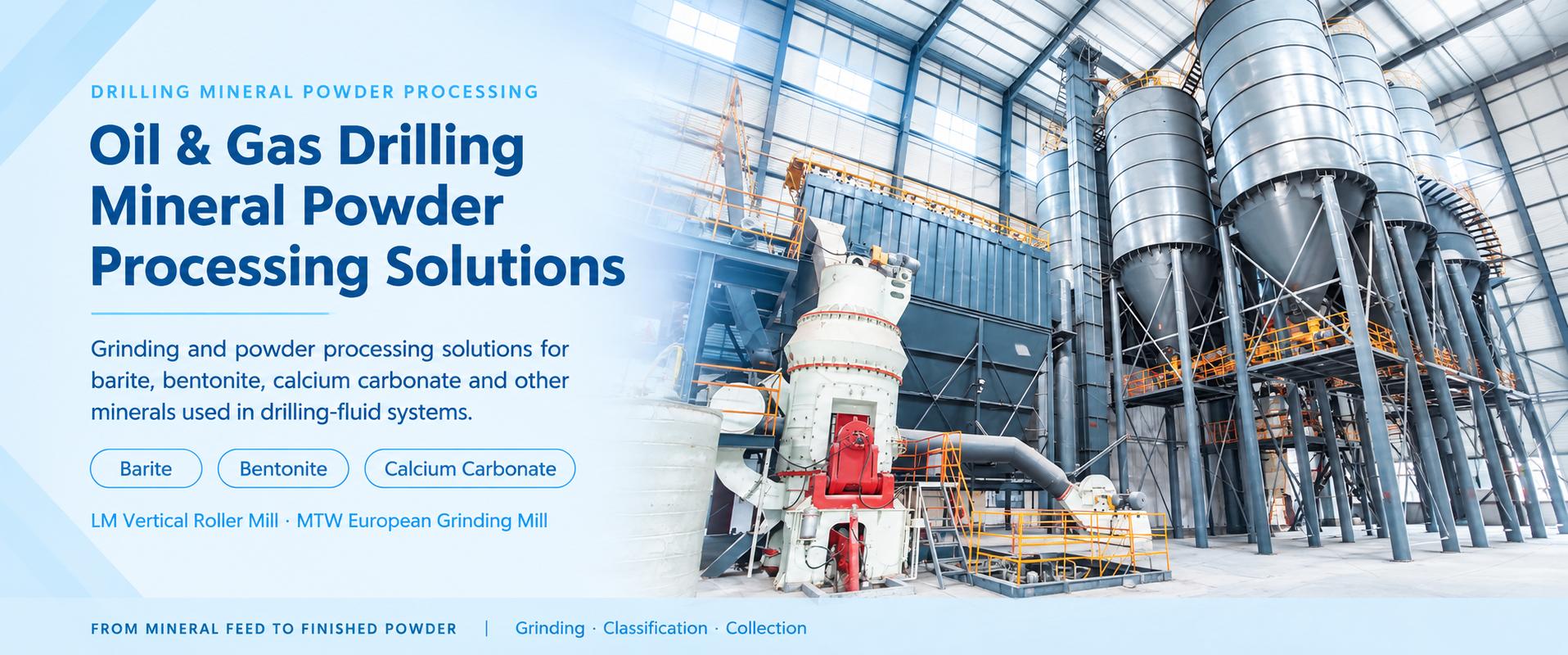
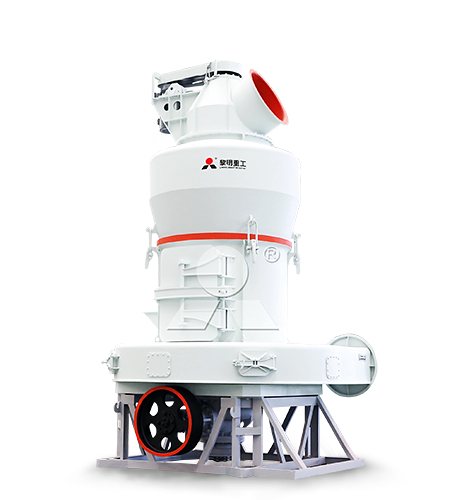
Cement Clinker Grinding Plant
Cement Grinding Plant Equipment Configuration
2026-09-10 08:16:26
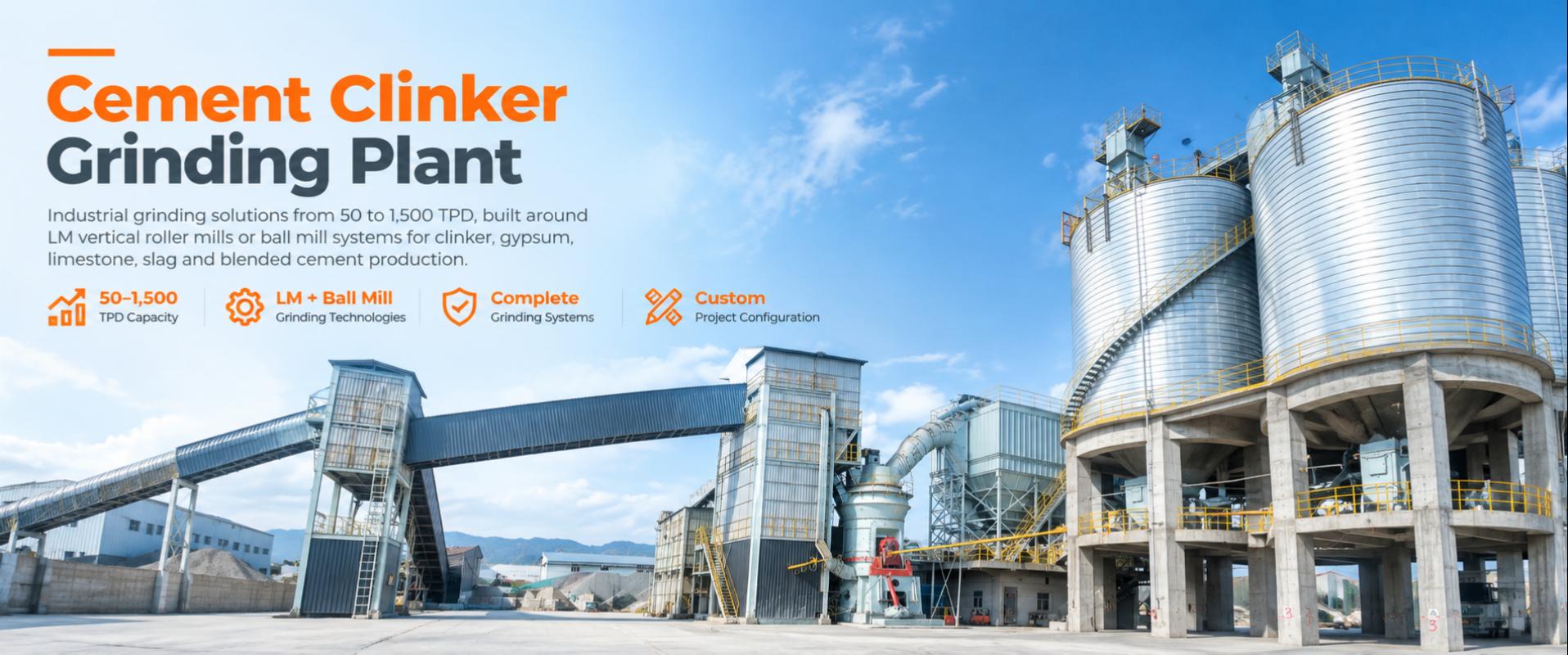
A cement grinding plant equipment configuration is the coordinated selection of machines and systems required to grind clinker with gypsum and suitable mineral additives into finished cement. The configuration must match the required production capacity, cement type, target fineness, clinker properties, additive moisture, plant layout, dispatch method, local power conditions, and long-term operating plan.
Liming Heavy Industry recommends two main grinding configurations for cement clinker and blended cement production: the LM Vertical Roller Mill system and the cement ball mill system. The LM Vertical Roller Mill integrates grinding and dynamic classification in one compact process arrangement, while the cement ball mill is commonly configured as a closed-circuit system with a separate high-efficiency separator. For integrated cement production projects, Liming Heavy Industry can also provide rotary kilns, calcining kilns, and related equipment for clinker production and industrial calcination.
Complete Plant Equipment List
A complete cement grinding plant includes much more than the main mill. The supporting equipment must maintain stable material flow, accurate dosing, controlled fineness, efficient dust collection, reliable storage, and continuous dispatch.
| System | Main Equipment | Main Function |
|---|---|---|
| Clinker receiving | Truck unloading hopper, rail unloading system, port unloading equipment, grizzly screen, belt conveyor, bag filter | Receives clinker and transfers it safely to storage |
| Clinker storage | Clinker silo, clinker dome, clinker hall, stockpile, reclaiming equipment, discharge gates | Maintains clinker inventory and provides stable feed to the grinding system |
| Gypsum storage | Gypsum shed, hopper, crusher where required, belt conveyor, screw conveyor, weighing feeder | Stores and prepares gypsum for controlled addition during cement grinding |
| Additive storage | Limestone bin, slag bin, fly ash silo, pozzolan storage, hoppers, conveyors, feeders | Stores mineral additions separately for blended cement production |
| Dosing system | Belt weigh feeder, screw weigh feeder, rotary feeder, loss-in-weight feeder, hopper, control instruments | Controls clinker, gypsum, and additive proportions according to the cement formulation |
| Main grinding system | LM Vertical Roller Mill or cement ball mill, main motor, gearbox, lubrication system, feed equipment | Reduces clinker and additives into fine cement powder |
| Classification system | Integrated dynamic classifier for LM Vertical Roller Mill or separate high-efficiency separator for ball mill | Separates qualified fine cement from coarse particles for return grinding |
| Process air system | Process fan, mill fan, ducts, dampers, hot gas system where required, air locks | Provides material transport, ventilation, drying support, and classification airflow |
| Dust collection | Bag filter, dust collector, filter fan, dust screw conveyor, rotary air lock, stack | Recovers fine cement and controls dust emissions |
| Material conveying | Belt conveyor, bucket elevator, screw conveyor, air slide, pneumatic conveying system, transfer chute | Moves materials between storage, dosing, grinding, separation, and cement silos |
| Finished cement storage | Cement silo, aeration system, level indicator, silo filter, discharge gate, blending system | Stores finished cement before packing or bulk dispatch |
| Packing and loading | Rotary packing machine, bag conveyor, truck loading station, bulk loading spout, weighbridge | Prepares bagged cement and bulk cement for customer delivery |
| Electrical and automation | Transformer, MCC, variable-frequency drive, PLC, control room, instruments, cables, sensors | Supplies power and controls the complete grinding plant |
LM Vertical Roller Mill Configuration
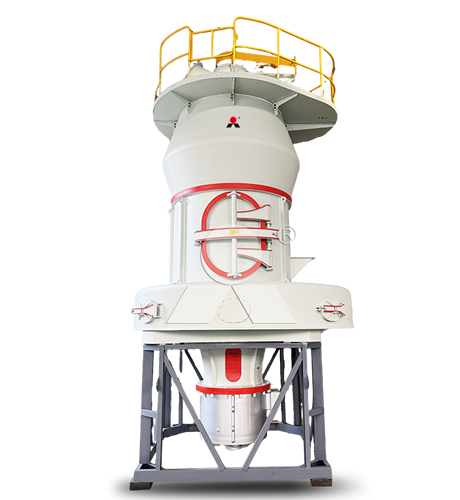
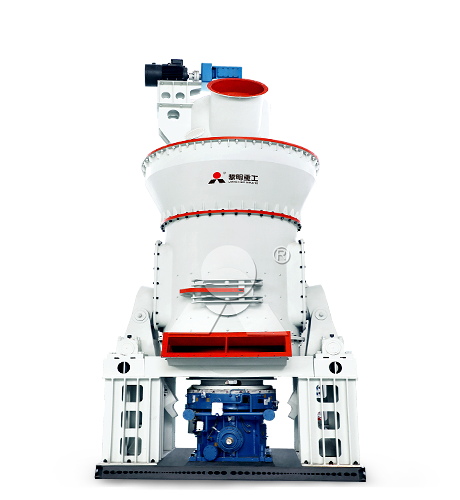
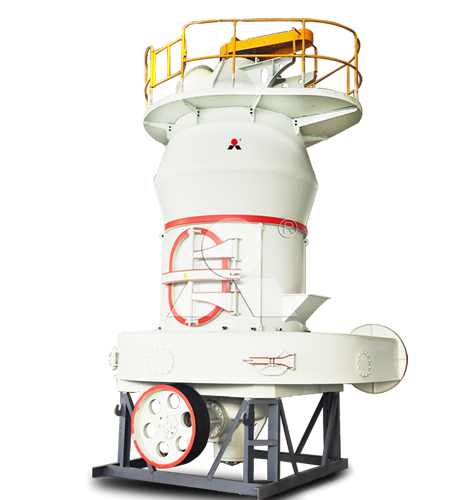
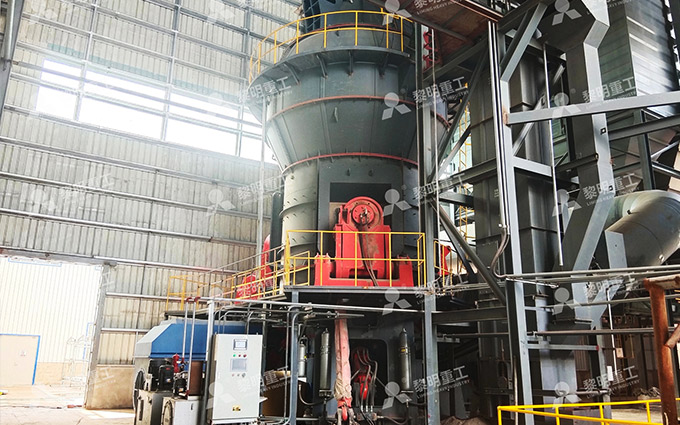
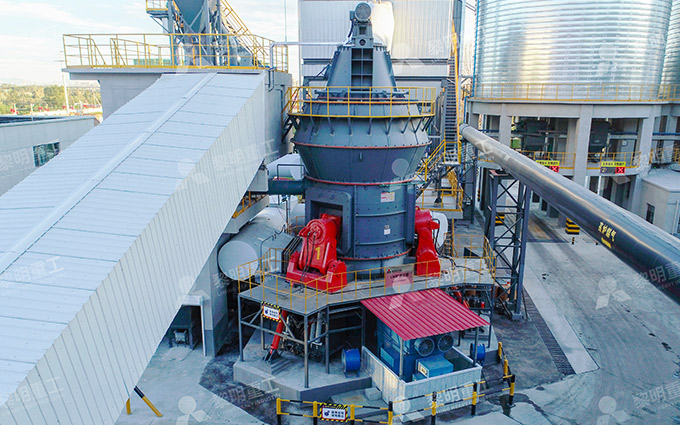
The LM Vertical Roller Mill is Liming Heavy Industry’s recommended integrated solution for cement clinker and blended cement grinding. In this system, clinker, gypsum, limestone, slag, fly ash, and other suitable additives are fed to the mill and ground between hydraulic loading rollers and a rotating grinding table.
Ground material is lifted by process air to the dynamic classifier installed in the upper part of the mill. Fine cement that meets the required fineness exits with the air stream and is collected by a bag filter. Coarse particles are rejected by the classifier and return internally to the grinding table for additional grinding.
This configuration combines grinding, classification, and material transport in one compact vertical system. Vertical roller mill process design can also support simultaneous drying and grinding when suitable hot gas is available, making it useful for projects that process moist slag, gypsum, limestone, or other mineral additives. In a typical vertical roller mill, clinker and gypsum are ground between the rotating table and hydraulically loaded rollers, then classified by an upper separator before the fine product is collected in dust-control equipment. [72][75]
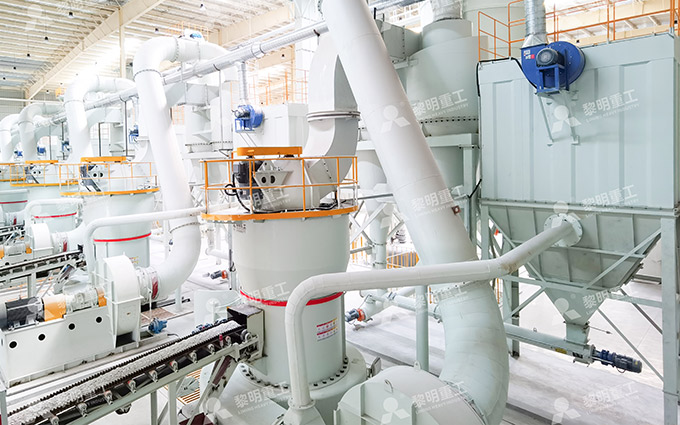
Typical LM Vertical Roller Mill System
Clinker, gypsum, and additive storage bins.
Belt weigh feeders or screw weigh feeders for accurate proportioning.
Mill feed belt conveyor, screw conveyor, or bucket elevator.
LM Vertical Roller Mill with grinding table, rollers, hydraulic system, main drive, gearbox, and lubrication system.
Integrated dynamic classifier for product fineness control.
Process fan and duct system for material transport and mill ventilation.
Hot gas inlet or gas-conditioning system where drying support is required.
Bag filter for finished-cement collection and dust control.
Air slides, bucket elevators, screw conveyors, or pneumatic conveying equipment for cement transfer.
Finished-cement silos, packing equipment, and bulk loading system.
PLC automation, instrumentation, motor control center, and central control room.
LM Vertical Roller Mill Advantages
Integrated grinding and dynamic classification in one main process unit.
Compact vertical arrangement that can reduce the required plant footprint.
No large steel grinding-media charge required for the main grinding process.
Suitable for clinker, gypsum, limestone, slag, fly ash, and other suitable cement additives.
Potential to combine drying and grinding when suitable hot gas is available.
Flexible finished-cement fineness adjustment through classifier and operating controls.
Suitable for new cement grinding plants, blended cement projects, and capacity expansion applications.
Cement Ball Mill Configuration
A cement ball mill is a proven grinding solution for clinker and gypsum grinding. It uses steel grinding media inside a horizontal rotating cylinder. As the cylinder rotates, the grinding balls are lifted by mill liners and then cascade onto the material, reducing particle size through impact, compression, and attrition.
For cement production, a ball mill is commonly configured as a closed-circuit system. The material discharged from the ball mill is transferred to a separate high-efficiency separator. Fine cement is collected as finished product, while coarse separator reject is returned to the ball mill for further grinding.
Closed-circuit grinding helps prevent unnecessary overgrinding by removing qualified fine particles from the circuit. Cement mill references note that ball mills are often operated with separation equipment because early-stage grinding is more efficient than producing ultra-fine particles, making it beneficial to separate fine material and return coarse fractions to the mill inlet. [68]
Typical Cement Ball Mill System
Clinker, gypsum, and additive storage bins with controlled discharge gates.
Belt weigh feeders, screw feeders, or other dosing equipment.
Feed conveyor, bucket elevator, and mill inlet system.
Cement ball mill with mill shell, grinding media, liners, diaphragms, inlet and outlet system.
Main drive system with motor, gearbox, pinion, girth gear, coupling, and lubrication equipment.
High-efficiency separator or dynamic separator for product classification.
Bucket elevator, air slide, conveyor, or pneumatic system for separator reject return.
Process fan, separator fan, ducts, dampers, and mill ventilation system.
Bag filter for cement recovery and dust collection.
Finished-cement conveying system and cement silos.
Rotary packing machine, bag conveyor, bulk loading spout, and dispatch equipment where required.
PLC-based automation, electrical controls, instrumentation, and central control room.
Cement Ball Mill Advantages
Proven and widely used technology for cement clinker grinding.
Suitable for clinker mixed with gypsum, limestone, slag, fly ash, and other suitable additives.
Compatible with high-efficiency separators in closed-circuit cement grinding systems.
Can be configured for different production capacities and cement fineness targets.
Practical for upgrading existing cement plants with compatible ball mill foundations, buildings, and conveying systems.
Suitable for operations with established experience in grinding-media, liner, diaphragm, and mechanical maintenance.
Configuration Comparison
| Configuration Factor | LM Vertical Roller Mill System | Cement Ball Mill System |
|---|---|---|
| Grinding principle | Compression and shearing between rollers and a rotating grinding table | Impact and attrition from steel grinding media |
| Classification | Integrated dynamic classifier inside the mill system | Separate high-efficiency separator in a closed-circuit arrangement |
| Grinding-media requirement | No large ball charge required for the main grinding process | Requires steel grinding balls and periodic media replenishment |
| Layout | Compact vertical configuration | Conventional horizontal mill with separator and external return circuit |
| Moisture handling | Can support drying and grinding with suitable hot gas | May require a drying compartment, hot gas system, or separate drying equipment for higher-moisture feed |
| Dust collection | Bag filter typically collects fine cement from mill gas stream | Bag filter typically collects fine cement from separator and mill ventilation gas stream |
| Coarse material return | Coarse material returns internally to the grinding table | Coarse separator reject returns externally by elevator, conveyor, or air slide |
| Maintenance focus | Grinding rollers, grinding table, classifier, hydraulic system, gearbox, and wear parts | Grinding media, liners, diaphragms, bearings, gears, drive system, and separator |
| Suitable applications | New plants, compact layouts, integrated process design, and suitable blended cement projects | Conventional grinding circuits, existing ball mill infrastructure, and modernization projects |
Material Receiving and Storage Configuration
Material receiving and storage equipment should be configured according to the delivery method, material properties, required inventory, site conditions, and desired production flexibility. Clinker may arrive by truck, railway, ship, port terminal, or conveyor from an integrated clinker production line.
Clinker can be stored in a silo, dome, clinker hall, covered warehouse, or covered stockpile. The selected storage system should protect clinker from excessive moisture and provide reliable discharge to the grinding plant. Storage capacity should maintain production during delivery interruptions, transport delays, and planned maintenance periods.
Gypsum, limestone, slag, fly ash, and other additives should be stored separately. Materials with different flow properties may require different storage arrangements. Fly ash is commonly stored in silos, while gypsum and limestone may be stored in covered sheds, hoppers, bins, or dedicated silos. Moist slag may require covered storage and a suitable handling arrangement to avoid blockage and material loss.
Dosing and Feeding Configuration
Accurate dosing equipment is required to control the cement formulation. The plant should measure clinker, gypsum, and additives before grinding. A typical dosing arrangement includes storage hoppers, flow-control gates, belt weigh feeders, screw feeders, rotary valves, conveyors, and control instruments.
For ordinary Portland cement, the configuration may focus mainly on clinker and gypsum. For blended cement products, additional storage bins and dosing lines may be required for limestone, slag, fly ash, pozzolan, or other suitable additives. The number of dosing systems should match the number of materials and cement grades planned for production.
Stable feeding is essential for mill performance. Feed fluctuations can increase mill vibration, reduce separator efficiency, create inconsistent cement fineness, increase power consumption, and reduce plant output. PLC-based feed control helps maintain accurate proportions and stable production.
Classification Configuration
Classification equipment controls the fineness of finished cement and is essential for closed-circuit grinding. Its function is to separate particles that meet the product requirement from particles that must be returned for further grinding.
In an LM Vertical Roller Mill, the classifier is integrated into the upper section of the mill. This creates a compact internal return process: coarse particles fall back to the grinding table, while fine cement exits with process gas.
In a cement ball mill system, the separator is installed as a separate machine. The separator receives the mill discharge, separates fine cement from coarse material, and sends coarse rejects back to the mill. A cement classifier performs dispersion, classification, and collection functions within the closed-circuit grinding process. [71]
Separator selection should consider feed rate, target fineness, cement type, circulating load, airflow, pressure drop, material moisture, and the desired balance between throughput and product quality.
Dust Collection and Process Air Configuration
Bag filters, fans, ducts, dampers, air locks, and dust-return equipment are required to control dust emissions and recover fine cement. Dust collection points typically include clinker unloading, gypsum crushing, additive handling, weigh feeder groups, mill feed, mill outlet, separator outlet, conveyors, bucket elevators, cement silos, packing machines, and bulk loading stations.
In an LM Vertical Roller Mill system, the process fan transports ground material from the grinding area to the classifier and then to the bag filter. The filter separates cement powder from the gas stream, and the collected product is sent to finished-cement storage.
In a ball mill system, ventilation and separator airflow must be balanced carefully. The process fan helps transport fine material, control mill temperature, support separator operation, and maintain negative pressure in the grinding circuit.
Dust collection equipment should be designed for gas volume, temperature, material moisture, dust concentration, filter area, pressure drop, fan capacity, and applicable emission requirements. An effective dust-control system reduces material loss, improves working conditions, protects equipment, and supports stable grinding performance.
Finished Cement Storage and Dispatch Configuration
Finished-cement silos should be configured according to grinding capacity, product range, dispatch method, and required storage duration. Plants that produce several cement types should normally provide separate silos to prevent product mixing and maintain quality control.
A typical silo configuration includes silo aeration equipment, level indicators, pressure-relief valves, silo filters, discharge gates, flow-control devices, air slides, screw conveyors, and loading equipment. Cement can be sent from silos to a packing machine for bagged cement or directly to bulk loading spouts for bulk cement delivery.
The packing and dispatch system must be matched with grinding output. A plant can lose production capacity if finished-cement silos become full because packing or truck loading cannot keep pace with the grinding line. The configuration should therefore consider peak dispatch demand, warehouse capacity, bag supply, truck circulation, weighbridge capacity, and bulk-cement loading requirements.
Electrical and Automation Configuration
The electrical system should be designed around the total installed load of the grinding plant. Major power consumers include the mill main drive, process fan, separator, bucket elevators, conveyors, feeders, compressors, packing machines, dust collectors, lighting, and utility systems.
A complete configuration may include transformers, switchgear, motor control centers, variable-frequency drives, PLC cabinets, central control room equipment, field instruments, sensors, cables, grounding, emergency power where required, and condition-monitoring systems.
Automation helps maintain stable production by monitoring feed rate, material ratio, motor power, mill vibration, grinding pressure, separator speed, airflow, temperature, differential pressure, bag filter condition, cement fineness, silo level, and alarms. Reliable automation can improve consistency, reduce operator workload, and support preventive maintenance.
Integrated Clinker Production Configuration
A cement grinding plant can operate as a stand-alone facility that receives purchased clinker, or it can be part of an integrated cement production line. In an integrated project, raw materials are prepared and thermally processed to produce clinker before the final grinding stage.
Liming Heavy Industry can provide rotary kilns and calcining kilns for suitable clinker production and industrial calcination applications. An integrated cement plant configuration can include raw-material crushing, raw meal grinding, raw meal homogenization, preheating, calcination, rotary kiln processing, clinker cooling, clinker storage, cement grinding, cement storage, packing, bulk loading, dust collection, and automation systems.
The kiln line and grinding line should be sized as one coordinated system. Rotary kiln output, clinker cooler capacity, clinker storage volume, LM Vertical Roller Mill or cement ball mill capacity, cement silo volume, and dispatch equipment must be matched to avoid bottlenecks and maintain stable operation.
Conclusion
A cement grinding plant equipment configuration should be designed as a complete production system rather than a single mill purchase. The configuration includes material receiving, storage, dosing, grinding, classification, process air, dust collection, conveying, cement silos, packing, loading, electrical systems, automation, and maintenance support.
Liming Heavy Industry provides LM Vertical Roller Mill solutions for integrated cement grinding and classification, as well as cement ball mill solutions for conventional closed-circuit clinker grinding. The LM Vertical Roller Mill is suitable for projects seeking a compact integrated process arrangement, while the cement ball mill remains a proven option for conventional grinding systems and sites with compatible existing infrastructure.
For integrated cement production projects, Liming Heavy Industry can also provide rotary kilns, calcining kilns, and supporting equipment for clinker production, cement grinding, finished-cement storage, packing, and dispatch.