Concrete SCM Grinding Plant Solutions
Calcined Clay and LC3: Calcination and Grinding Process Route
2026-11-15 10:52:12
Producing calcined clay for concrete requires two distinct operations: thermal activation to develop reactivity and grinding to control particle characteristics. Producing limestone calcined clay cement, or LC3, adds another requirement: proportioning and combining the activated clay with clinker, limestone, and a suitable sulfate source. Neither finer grinding nor a fixed blending recipe can compensate for poorly activated clay.
A practical production route begins with clay characterization, followed by feed preparation, controlled calcination, cooling, grinding, and product qualification. Whether grinding takes place before calcination, after calcination, or at both stages depends on the calciner technology and the condition of the raw material.
Calcined Clay Is an Ingredient; LC3 Is a Cement System
Calcined clay is a thermally activated material that can contribute pozzolanic activity in a cementitious mixture. LC3 is a multicomponent cement system that combines calcined clay and limestone with clinker and a sulfate-bearing component. Their roles are complementary: reactive clay contributes alumina and silica, while limestone participates in reactions that help form additional hydrate phases as well as providing physical filler effects.
A widely studied LC3-50 composition contains the following proportions by mass:
50% clinker.
30% calcined clay.
15% limestone.
5% gypsum.
This is a reference formulation, not a universal production recipe. The appropriate proportions depend on clay reactivity, clinker characteristics, limestone properties, sulfate demand, and required cement performance. In particular, the gypsum dosage must be optimized rather than automatically fixed at 5%.
The First Decision: Is the Clay Suitable?
Clay content alone does not establish suitability for LC3. The mineral species present, their proportions, and the associated minerals determine how the material responds to heating and how the resulting powder behaves in cement.
Kaolinitic clays are especially relevant because controlled heating converts kaolinite into reactive metakaolin. High-purity kaolin is not essential: research has demonstrated useful LC3 performance with lower-grade kaolinitic clays. However, performance remains source-specific, and a single kaolinite percentage should not be treated as a universal acceptance threshold.
| Raw-material characteristic | Why it matters to the process |
|---|---|
| Clay mineralogy and kaolinite content | Influence the activation conditions and achievable pozzolanic contribution. |
| Free moisture and plasticity | Affect excavation, feeding, drying duty, and preparation equipment. |
| Quartz and other accessory minerals | Change the proportion of reactive material and can affect grinding behavior. |
| Carbonate content | Can affect thermal processing, mass loss, and process emissions if decomposition occurs. |
| Variation across the deposit | Determines the need for selective extraction, blending, and feed-control measures. |
Laboratory mineralogical analysis and calcination trials should precede final equipment selection. Studies of low-grade clays show that mineral composition, calcination, grinding, and mixture proportions must be considered together when assessing LC3 performance.
Two Practical Process Routes
Route A: Rotary calcination with downstream grinding
A rotary-kiln route can be arranged around prepared clay that is dried and reduced to the size required by the kiln. The material passes through the thermal process, is cooled, and then receives the grinding or deagglomeration needed for its final use.
Selective extraction and raw-clay blending.
Breaking, crushing, and moisture conditioning as required.
Metered feeding to the rotary calcination system.
Controlled thermal activation.
Cooling and intermediate storage.
Grinding and classification.
Qualified calcined-clay storage or transfer to LC3 blending.
Rotary kilns are an established option for calcining clay. Feed preparation, residence time, temperature profile, and cooling must be designed as a coordinated process; an existing kiln is not automatically suitable without assessment of its operating conditions.
Route B: Fine-feed preparation and flash calcination
A flash-calcination route generally requires finely divided feed that can be dispersed in a hot-gas stream. Upstream drying and grinding therefore become particularly important. The activated product is subsequently separated from the gas, cooled, and checked to determine whether additional deagglomeration or grinding is necessary.
Raw-clay selection, blending, and controlled feeding.
Drying and grinding to the calciner feed specification.
Flash calcination under controlled thermal conditions.
Gas–solid separation and product cooling.
Finishing treatment where required.
Storage and qualification for blending or sale.
Flash systems and rotary kilns can both produce reactive calcined clay, but they do not have interchangeable feed requirements or operating conditions. The thermal system supplier’s feed specification must be established before sizing the preparation mill.
Calcination: Activate the Clay Without Overburning It
For kaolinitic clays, approximately 700–850°C is a commonly reported calcination range. Within an appropriate temperature–time regime, heating removes structural hydroxyl groups and transforms kaolinite into a more disordered, reactive material. The optimum condition depends on the clay and the equipment; the range is not an instruction to run every plant at one fixed temperature.
Insufficient treatment leaves reactivity undeveloped
If the particles do not receive adequate thermal exposure, activation can remain incomplete. A temperature reading at one location does not establish that the whole feed has been treated effectively. Feed size, moisture, dispersion, residence time, and temperature distribution must support the intended transformation.
Excessive treatment can reduce useful reactivity
Overheating can promote sintering and the formation of less reactive structures. More heat is therefore not automatically beneficial. Calcination trials should identify conditions that deliver sufficient activation without unnecessary fuel use or loss of product performance.
Cooling and storage protect process consistency
The calcined product must reach a temperature suitable for downstream handling and grinding. Heat recovery should be evaluated where the process arrangement permits it. Storage must keep different production conditions identifiable so that off-specification material is not unintentionally blended into qualified product.
Grinding Strategy Determines More Than Fineness
LC3 contains components with different grindabilities. A combined Blaine value can therefore conceal an unbalanced product in which clinker remains relatively coarse while clay or limestone accumulates in the finest fraction. The grinding route influences both cement performance and water demand.
Separate grinding and controlled blending
Separate grinding allows the fineness of individual components to be adjusted more independently. Clinker can be ground with the selected sulfate source, while calcined clay and limestone receive their own preparation before controlled blending.
This route offers flexibility when changing clay sources or optimizing component proportions. It also requires suitable storage, accurate dosing, and effective mixing. Separate grinding is not a quality guarantee unless the blending system can maintain the intended composition.
Intergrinding
Intergrinding processes the components together. It can be relevant when adapting an existing cement-grinding installation, but differences in grindability must be managed. Softer components may become excessively fine before the clinker reaches the desired size distribution. Successful intergrinding has been demonstrated, so it should be assessed through trials rather than dismissed categorically.
Hybrid arrangements
A hybrid route may pregrind selected components and introduce others later in the circuit. This can provide a practical compromise where fully separate grinding is not available. The arrangement should be evaluated by measuring the resulting distribution and cement behavior, not merely by confirming an overall fineness target.
Avoid Grinding the Clay Beyond Its Useful Range
Additional grinding can improve access to reactive surfaces, but excessive fine grinding can increase water demand more than it improves reactivity. Calcined-clay morphology and surface characteristics also influence admixture demand and workability retention.
For production trials, evaluate:
Particle-size distribution and coarse residue.
Specific surface measurements interpreted for the material.
Mill output and electrical consumption.
Water demand and setting behavior.
Strength development at relevant ages.
Admixture dosage and workability retention.
A powder that produces good mortar strength but requires excessive admixture or loses concrete workability rapidly may not be the best commercial product. Grinding conditions, sulfate balance, and admixture compatibility should be optimized together.
Where Liming Heavy Industry Grinding Equipment Fits
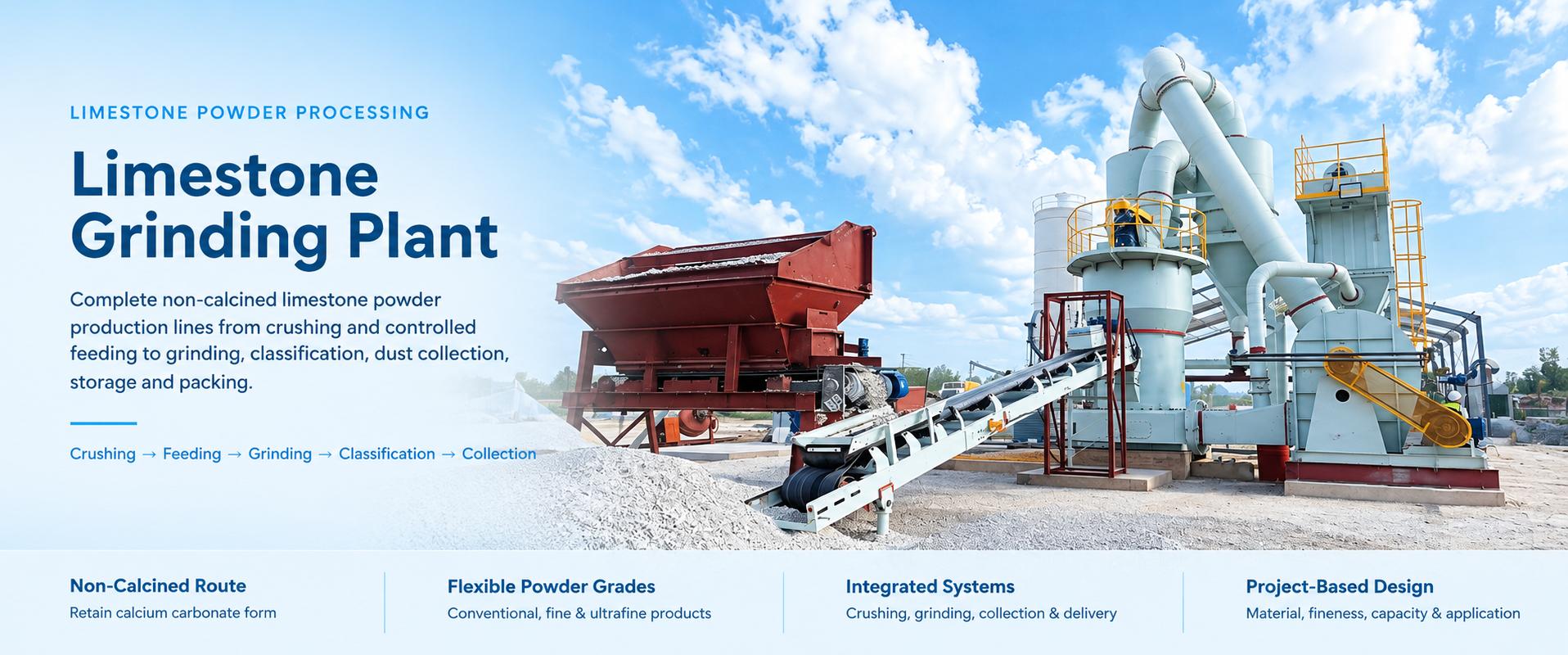
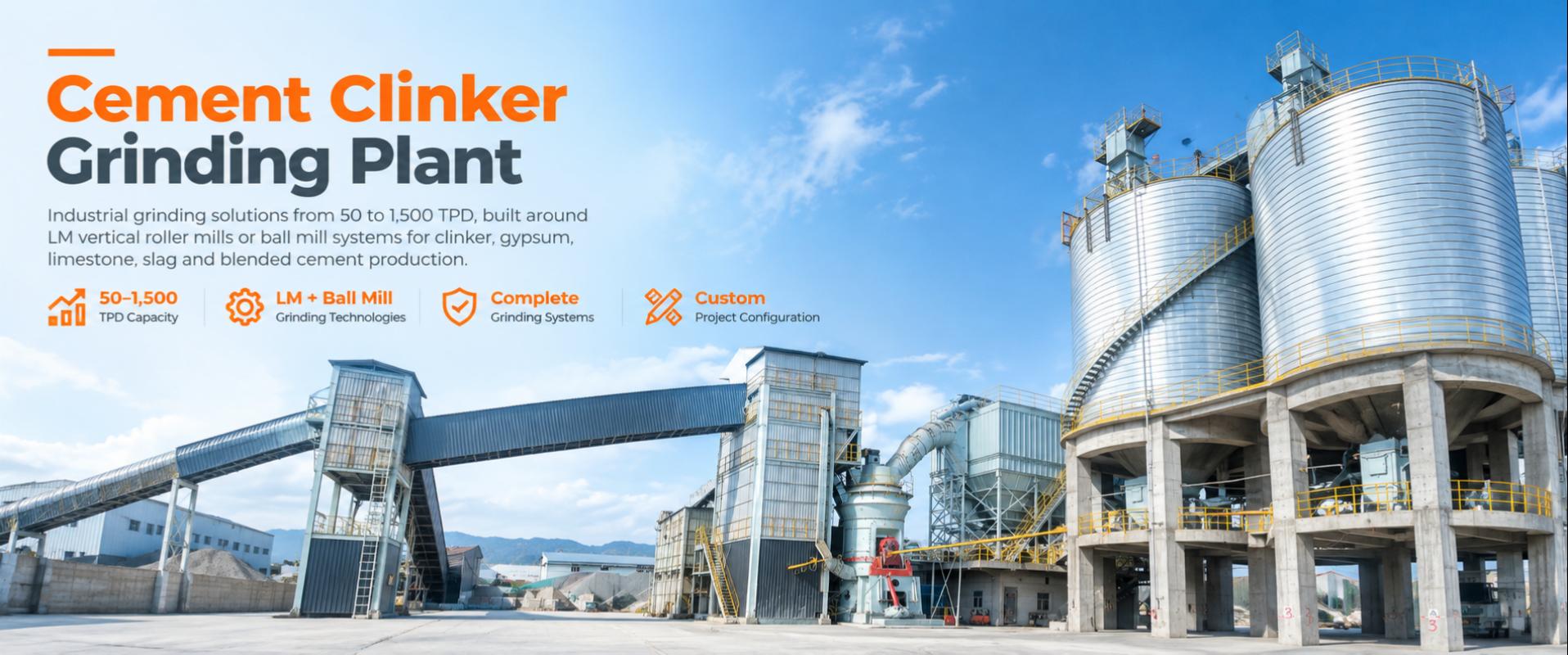
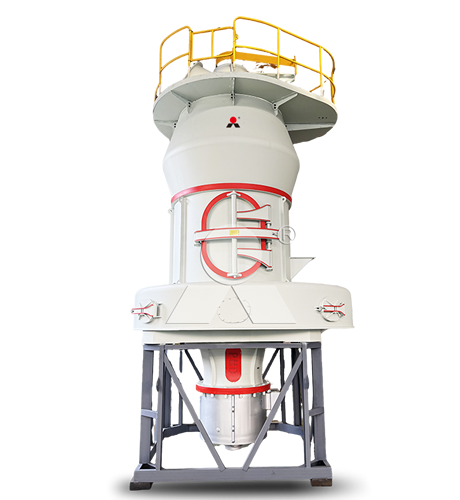
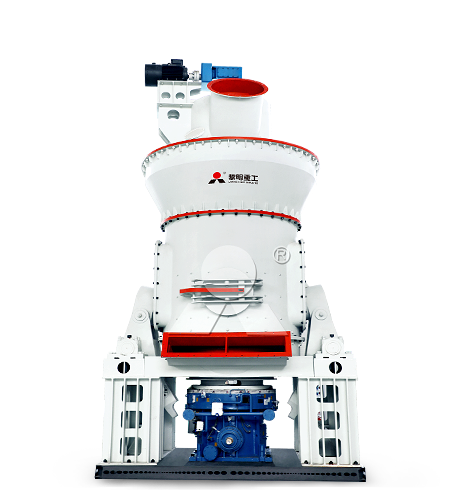
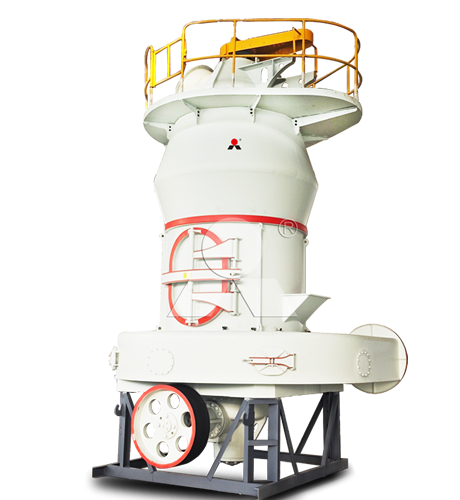
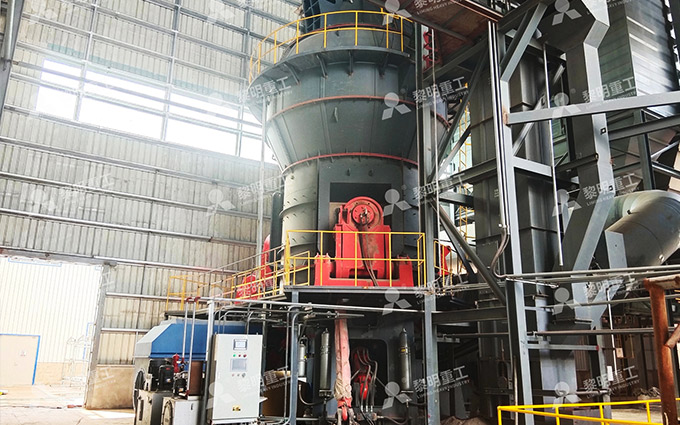
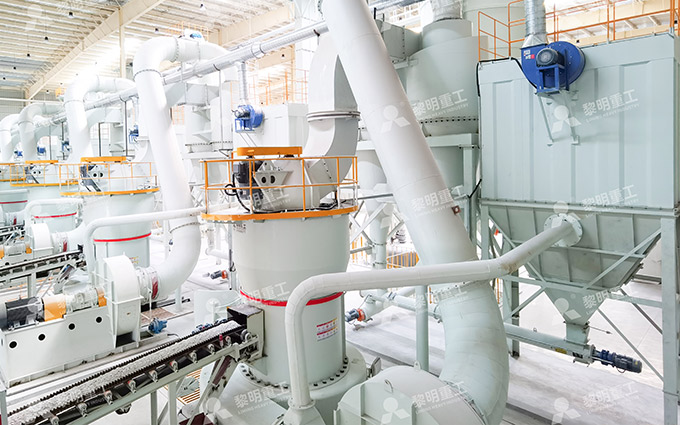
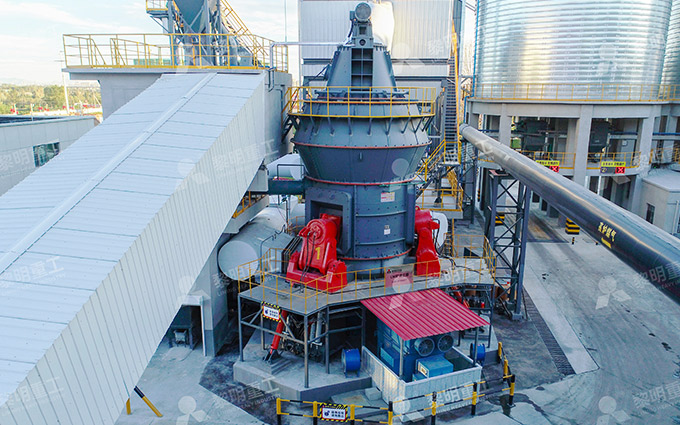
For the grinding portion of a project, evaluate the Liming Heavy Industry LM Vertical Roller Mill against the actual feed and product requirements. Its role must be defined clearly: preparation of raw clay for the selected calciner, finishing of cooled calcined clay, or another specified component-grinding duty.
A drying mill does not replace a calciner. Removing free water from clay and thermally activating its mineral structure are different operations. Likewise, suitability for raw clay preparation does not automatically establish the same capacity or operating behavior with calcined clay.
Before selecting an LM configuration, provide:
Representative raw-clay and, where available, calcined-clay samples.
Mineralogy, chemical analysis, and calcination-trial results.
Feed size, moisture range, and handling characteristics.
The selected calciner’s feed specification, if the mill is upstream.
Required output and finished-powder characteristics.
Expected feed temperature and available drying conditions.
The intended separate-grinding, intergrinding, or hybrid route.
These inputs allow grinding trials and system sizing to address the actual duty. They also prevent a capacity quoted for limestone or slag from being applied directly to a clay project without verification.
Control Sulfate Balance During LC3 Development
The sulfate source is a functional part of LC3, not simply the final ingredient added to reach a total blend weight. Reactive alumina from calcined clay changes early hydration behavior, and the appropriate sulfate supply depends on the clinker, clay reactivity, limestone fineness, and overall formulation.
Optimize sulfate dosage using setting, hydration, strength, and workability results. A formulation that behaves well with one clay source may need adjustment after a change in clay mineralogy or activation conditions. Copying the reference LC3-50 composition without checking sulfate balance can leave a technically promising material difficult to use.
Quality Checks Along the Production Route
| Stage | Priority checks | Decision supported |
|---|---|---|
| Raw-clay receiving | Mineralogy, chemistry, moisture, and source consistency. | Accept, segregate, blend, or reject the feed. |
| Calciner feed preparation | Feed size, moisture, flow behavior, and metered feed stability. | Confirm compatibility with the thermal system. |
| Calcination | Operating temperature profile, feed rate, residence conditions, and product activation. | Adjust thermal treatment and isolate unsuitable production. |
| Calcined-clay grinding | Distribution, residue, surface characteristics, output, and energy. | Select a useful fineness without unnecessary overgrinding. |
| LC3 proportioning | Component dosing, sulfate dosage, and blending consistency. | Maintain the qualified formulation. |
| Finished-product release | Applicable cement requirements, strength, setting, and relevant concrete performance. | Approve material for its intended market and application. |
Mineralogical and thermal analysis can help assess activation, but no single measurement fully predicts finished-cement performance. Product development must connect clay characteristics and processing conditions with the behavior of the complete LC3 blend.
Define the Product Before Fixing the Plant
A facility selling calcined clay as a separate ingredient has a different scope from one manufacturing finished LC3 cement. The former needs a qualified, consistent clay product; the latter must also control clinker quality, limestone preparation, sulfate optimization, component dosing, and cement conformity.
The practical sequence is to establish the resource, validate its thermal activation, select the grinding and blending route, and then confirm mortar and concrete performance. Equipment sizing follows those decisions. This approach keeps the plant focused on producing a dependable cementitious product rather than meeting an isolated temperature or fineness target.