Concrete SCM Grinding Plant Solutions
Limestone Filler for Concrete: ASTM C1797 Types and Production
2026-11-15 10:50:37
Limestone filler for concrete is a finely divided mineral material used to adjust particle packing, workability, and the balance of solids in a concrete mixture. ASTM C1797 covers ground calcium carbonate and other aggregate mineral fillers, classifying them as Type A, Type B, or Type C. These classifications distinguish material composition and physical requirements; they are not cement strength grades.
For a limestone powder producer, compliance requires more than achieving a particular mesh size. The raw stone must have suitable chemistry, clay and organic contamination must be controlled, and the finished powder must meet the applicable grading and performance requirements. Grinding determines particle characteristics, but it cannot correct an unsuitable mineral composition.
What Limestone Filler Does in Concrete
Properly selected limestone filler can improve the distribution of particle sizes within the concrete’s fine fraction. Its particles can occupy spaces between larger particles and influence the flow and stability of the mixture. Ground calcium carbonate also provides nucleation sites that can accelerate cement hydration. These effects depend on the amount used, particle-size distribution, and interaction with the other concrete ingredients.
Common applications include concrete mixtures that need improved cohesion, reduced segregation, or a carefully controlled powder content, including self-consolidating concrete. The result is mixture-specific: adding more limestone powder does not automatically improve flow or strength.
Separately added limestone filler is generally not treated as a supplementary cementitious material or included as cementitious material when determining the water-to-cementitious-material ratio. Limestone incorporated into a specified blended cement is a different product situation. A concrete producer should not assume that separately batched filler can be counted in the same way as the limestone component of a compliant Portland-limestone cement.
ASTM C1797 Types A, B, and C
Types A and B are ground products derived from quarried carbonate stone. Type A has more demanding carbonate-purity and particle-size requirements. Type C is typically a byproduct of quarried-stone crushing and may come from carbonate or noncarbonate aggregate sources. Type C is therefore not simply another name for limestone powder.
| Classification | Material description | Main production implications |
|---|---|---|
| Type A | Ground carbonate material with higher specified carbonate purity and finer grading. | Requires suitable stone selection, tighter clay control, and effective fine grinding and classification. |
| Type B | Ground carbonate material with different chemistry limits and a less demanding minimum grading than Type A. | Still requires controlled mineral composition and a consistent finished product. |
| Type C | Aggregate mineral filler, typically associated with crushed-stone production. | Requires qualification of the actual quarry fines; being a crushing byproduct does not establish suitability. |
The supplier must state the product type. A commercial description such as “concrete-grade limestone powder” does not identify which ASTM C1797 classification has been satisfied.
Selected chemical and physical requirements
The following figures summarize selected requirements in ASTM C1797-23. They are not presented as a complete specification or as confirmation of the latest edition. The purchase order should identify the edition required by the customer, and the laboratory should verify all applicable provisions against that edition.
| Property | Type A | Type B | Type C |
|---|---|---|---|
| Minimum calcium carbonate content, by mass | 92% | 70% | No specified limit |
| Minimum combined calcium carbonate and magnesium carbonate content, by mass | 95% | 90% | No specified limit |
| Maximum methylene blue value | 3 mg/g | 5 mg/g | 5 mg/g |
| Maximum total organic carbon, by mass | 0.5% | 0.5% | 0.5% |
| Minimum passing the 300-micrometre sieve | 100% | 100% | 100% |
| Minimum passing the 75-micrometre sieve | 95% | 70% | 65% |
| Minimum passing the 45-micrometre sieve | 90% | 65% | No specified limit |
| Minimum 28-day strength activity index | 75% of control | 75% of control | 75% of control |
| Maximum water requirement | 120% of control | 120% of control | 120% of control |
These requirements show why the classifications cannot be reduced to fineness alone. A powder may satisfy Type A grading but fail Type A chemistry or methylene blue requirements. Conversely, high-purity stone may still need additional grinding and classification before its powder meets the required grading.
Four Requirements That Deserve Particular Attention
1. Clay contamination can outweigh apparent fineness
The methylene blue test helps assess problematic clay-related characteristics. A fine-looking powder is not necessarily a clean powder: clay-bearing material can increase water demand and interfere with the intended behavior of the concrete mixture. ASTM C1797 therefore controls methylene blue value separately from particle grading.
For production planning, inspect quarry benches, weathered zones, clay seams, and stockpile handling. Do not assume that a classifier will remove clay reliably. Source selection and segregation should be investigated before investing in a treatment intended to correct contaminated feed.
2. A reported surface area is not a substitute for sieve compliance
ASTM C1797-23 requires fineness to be reported but does not impose one universal minimum specific surface area for all three types. Its particle-size requirements are stated separately. A Blaine result or a nominal mesh description does not demonstrate that every required sieve limit has been met.
The customer may also require a specific fineness range. The standard recognizes that changes in fineness can require adjustments to concrete proportions and provides for purchaser approval or notification as applicable. Consistency therefore matters even when successive products both satisfy the minimum grading limits.
3. Strength activity testing does not make limestone a pozzolan
The 28-day strength activity requirement in ASTM C1797 is intended to evaluate whether the filler has a detrimental effect under the specified test conditions. Passing it does not establish pozzolanic activity or authorize the material to be treated as cementitious in every concrete specification.
4. Moisture requirements have a handling context
ASTM C1797-23 lists a maximum moisture content of 1% by mass for material that can be pneumatically transferred. It permits the purchaser to waive this requirement for material that is not pneumatically transferred. This qualification matters when comparing a dry silo product with damp filler supplied through a different handling arrangement.
In either case, delivery condition must be agreed with the concrete producer. Moisture consistency affects handling and the correction of batch water; it should not be left undefined simply because the material passes its chemical tests.
From Quarry Stone to Controlled Concrete Filler
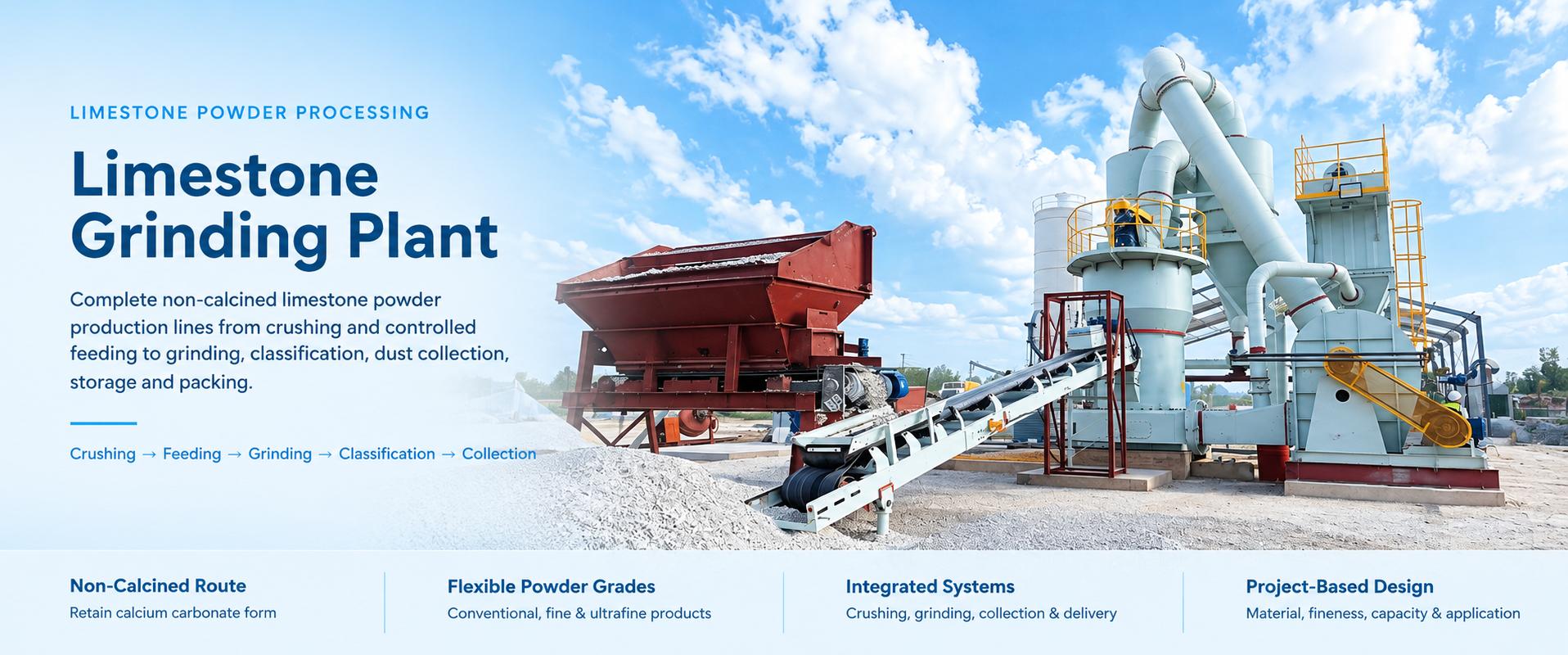
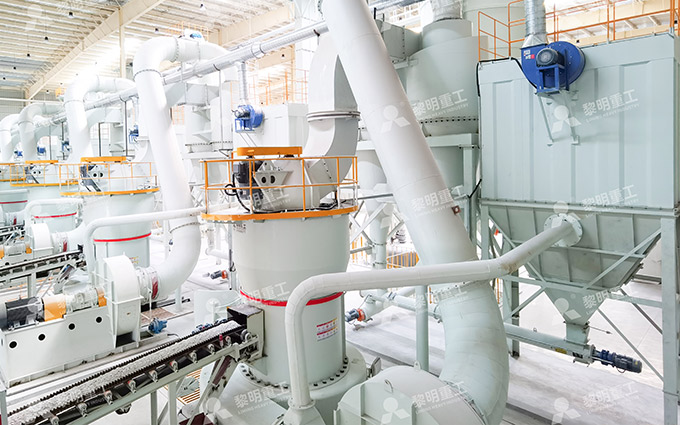
A typical dry production line consists of raw-material selection, crushing, controlled feeding, drying where required, grinding, classification, collection, and finished-product storage. Liming Heavy Industry uses this general sequence for limestone powder production, with coarse particles returned for further grinding and qualified powder collected from the process airflow.
Raw-material selection and stockpile control
Begin by testing representative stone from the proposed supply. Establish whether its carbonate composition can meet the intended Type A or Type B requirement and whether clay or organic contamination presents a risk.
Keep materially different supplies identifiable. Blending can help control normal variation only when the components are understood and the blend is verified. Grinding unsuitable stone more finely does not raise its carbonate purity.
Crushing and controlled feeding
Reduce the stone to the selected mill’s feed requirement and provide a stable, metered supply. Crusher capacity, storage, and feeder performance should support the intended grinding rate rather than create repeated interruptions. The acceptable feed size must be confirmed for the actual mill model.
Drying where the feed requires it
Assess both average and seasonal moisture. Where drying is necessary, define the available heat source and required outlet condition. An integrated drying mill can combine functions, but drying capacity still depends on incoming moisture, production rate, and hot-gas conditions.
Grinding and classification
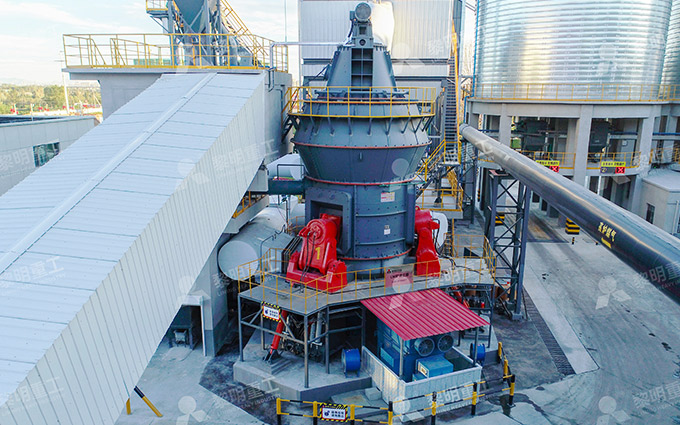
The mill reduces particle size while the classifier controls the finished powder and returns coarse material. The operating target should provide a practical margin against the required sieve limits without unnecessary overgrinding. Liming Heavy Industry offers both LM vertical roller mills and MTW European-type grinding mills for limestone processing.
Collection, conveying, and storage
Qualified powder must be separated from the process air and transferred to protected storage. Dust collection, conveying, and silo arrangements should be designed with the grinding system rather than added after its capacity has been fixed. Different product types or customer grades need appropriate identification and segregation.
Choosing a Liming Heavy Industry Mill
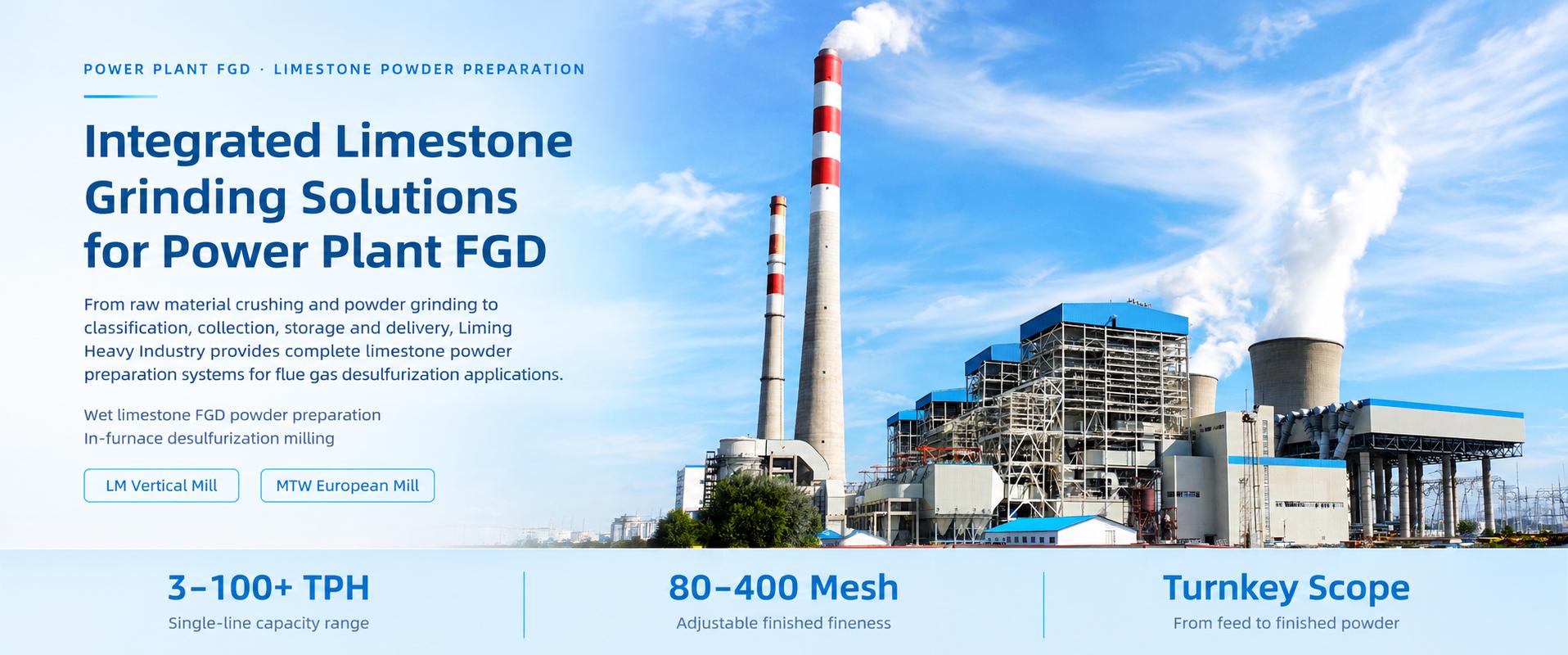
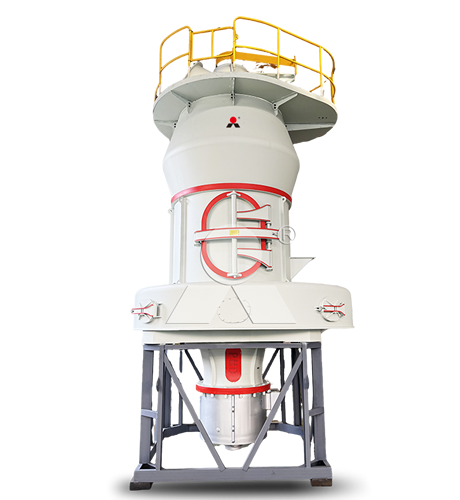
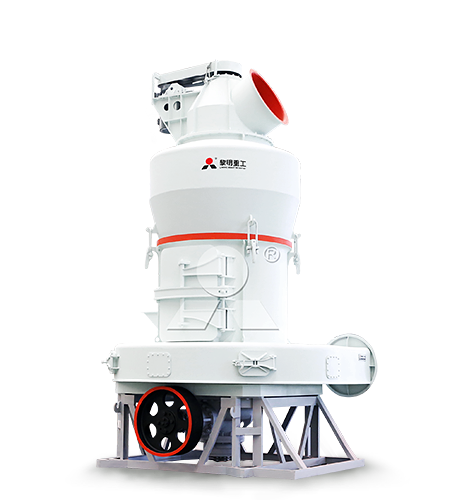
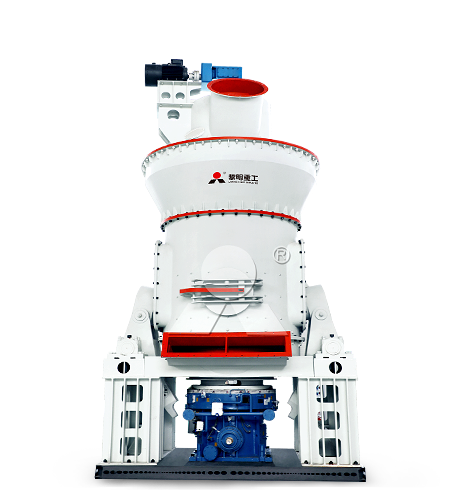
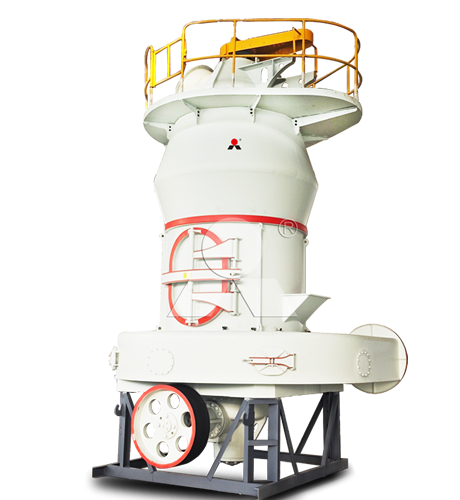
The equipment decision should follow raw-material testing and a defined product specification. For conventional limestone filler duties, evaluate the Liming Heavy Industry MTW European Grinding Mill. For larger continuous plants or projects needing integrated drying, evaluate the Liming Heavy Industry LM Vertical Roller Mill. Both require application-specific selection rather than a promise of ASTM compliance based on the machine name.
| Project condition | Equipment assessment | What to verify |
|---|---|---|
| Conventional fine limestone powder production | MTW European Grinding Mill. | Capacity at the specified sieve grading, feed condition, and operating schedule. |
| Large-scale, continuous limestone filler production | LM Vertical Roller Mill. | Integrated grinding, classification, drying duty, and downstream collection capacity. |
| A tighter customer grading than the standard minimum | Material trials and classifier assessment before final model selection. | Full particle-size distribution, achievable output, and energy consumption. |
| Feed that fails chemistry or contamination requirements | Resolve the raw-material problem before specifying the grinding system. | Whether source selection or validated treatment can produce an acceptable feed. |
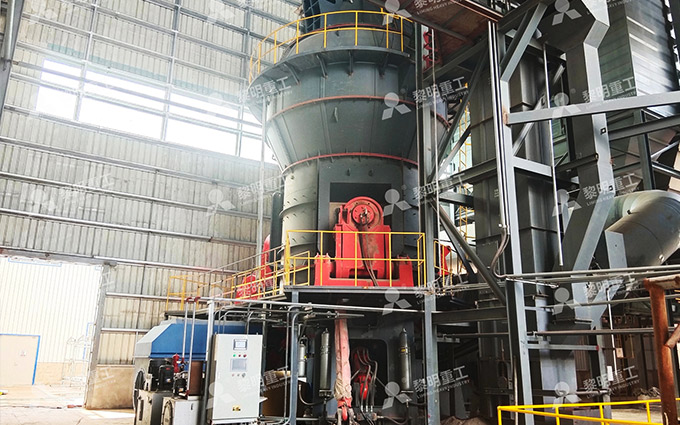
Liming Heavy Industry’s limestone systems combine feeding, grinding, classification, and powder collection. The proposed plant still needs a clear acceptance procedure linking operating conditions to the customer’s finished-product requirements.
Sulfate Exposure Requires a Separate Check
ASTM C1797 cautions against using ground-limestone-derived filler in concrete subject to sulfate exposure unless mitigation methods are used. Compliance with the filler specification is therefore not unconditional permission to use the material in every exposure environment.
Applicable concrete codes and project specifications may be more restrictive. Current ready-mixed concrete specification guidance identifies restrictions for carbonate-based fillers in sulfate exposure classes and distinguishes product qualification from permission to use the material in a particular member. Obtain the required engineering approval rather than assuming that a sulfate-resistant cement alone resolves the issue.
What Concrete Customers Should Receive with the Product
A useful product submission identifies the mineral origin, declared ASTM C1797 type, applicable edition, and representative test results. Where certification or lot-specific reports are required, include those provisions in the purchase order.
Calcium carbonate and combined carbonate results where applicable.
Methylene blue value and total organic carbon.
Required sieve results and reported fineness.
Moisture content and delivery condition.
Strength activity and water-requirement results.
Any purchaser-specified chloride result.
Identification of processing additions or other additions where requested.
ASTM C1797 includes provisions for sampling, identification, certification when specified, and a manufacturer’s statement on mineral origin and processing or other additions when requested. These records help the customer connect laboratory results with the product actually delivered.
Set the Product Specification Before the Grinding Target
A practical limestone filler project begins with three decisions: which ASTM C1797 type the raw material can satisfy, what additional properties the customer requires, and whether the intended concrete application permits its use.
For a Liming Heavy Industry plant assessment, provide representative stone samples, chemistry and contamination results, feed moisture and size, required output, and the complete finished-powder grading. These inputs make it possible to evaluate an MTW or LM grinding arrangement against a defined product—not merely a mesh number.
The production objective is a clean, consistent filler that concrete producers can proportion reliably. Higher fineness has value only when it supports that objective without creating unnecessary grinding cost or mixture-adjustment problems.