Concrete SCM Grinding Plant Solutions
Harvested Fly Ash Processing: Drying, Separation and Grinding
2026-11-15 10:46:02
Harvested fly ash can become a useful supplementary cementitious material for concrete, but the processing route must match the condition of the recovered deposit. Some sources need little more than screening, drying, and deagglomeration. Others require classification, carbon treatment, grinding, or a combination of these operations before they can meet the intended product specification. Grinding every tonne is not automatically the best approach.
The central task is to separate three different problems: excess moisture, unsuitable particles, and insufficient fineness. Each requires a different treatment. A dryer does not remove unburned carbon, a classifier does not guarantee carbon control, and a grinding mill does not turn every recovered ash into a qualified concrete ingredient.
Start with the Deposit, Not the Mill
Harvested fly ash is recovered from previously stored coal combustion residuals, typically in landfills or impoundments. Unlike freshly collected ash from a controlled collection stream, a stored deposit may contain layers formed during different operating periods, weathered material, agglomerates, cover soil, or mixtures of fly ash and bottom ash.
These differences affect both processing cost and achievable product yield. A deposit containing predominantly fly ash presents a different task from one containing substantial coarse bottom ash or other commingled materials.
Before selecting equipment, divide the resource into identifiable zones and establish a representative sampling program. Testing should describe variability across the deposit rather than rely on one convenient surface sample. Published assessments of harvested ash identify deposit variability and statistical sampling as important parts of evaluating suitability for concrete.
| Feed characteristic | What it can change in the process |
|---|---|
| Moisture and drainage behavior | Dewatering requirements, dryer duty, handling equipment, and achievable feed rate. |
| Coarse particles and bottom ash content | The need for screening, selective rejection, or grinding. |
| Agglomeration | Whether gentle breakup can recover usable particles without extensive grinding. |
| Carbon content and behavior | The need for carbon removal or treatment and the risk of inconsistent air entrainment. |
| Chemistry and pozzolanic performance | Whether the processed material can qualify for its intended use. |
| Debris and foreign material | Receiving, scalping, segregation, and disposal arrangements. |
Build a Route Around the Problems Actually Present
A preliminary dry-processing route may include excavation, drainage or dewatering where needed, coarse screening, controlled drying, deagglomeration, classification, selective grinding, and finished-product collection. Carbon treatment is included only where the material requires it, and its position depends on the selected technology. Commercial harvesting programs use customized combinations of these operations rather than one universal sequence.
Three simplified cases illustrate the difference:
A predominantly fine, low-carbon ash may need screening, drying, and deagglomeration, followed by qualification testing.
A low-carbon ash with excessive coarse material may benefit from classification, with grinding applied to a recoverable coarse fraction.
A high-carbon ash may need a dedicated carbon-control stage in addition to moisture and fineness correction.
These are starting points for trials, not fixed plant designs. The appropriate sequence depends on feed behavior, separation performance, product yield, and the requirements of the downstream equipment.
Drying: Remove Water Without Losing Control of the Feed
Reduce avoidable water before thermal treatment
Excavated impoundment ash may require drainage, mechanical dewatering, or managed air drying before entering a thermal process. Reducing free water upstream can lower the load on the dryer, but the practical method depends on site conditions, permitting, weather, and material handling. EPRI describes pre-drying of excavated impoundment ash before thermal drying as part of harvested-ash processing practice.
Do not size the thermal system only around the average moisture result. Record the likely operating range and identify how wet material will be managed when it falls outside the agreed feed conditions.
Choose the dryer around material behavior
Rotary dryers and fluidized-bed systems are among the thermal drying arrangements used for harvested ash. The selection must account for moisture, particle characteristics, agglomeration, feed variability, and the heat source. Where carbon treatment produces recoverable heat, the drying arrangement may be integrated with that process.
Drying should deliver a powder that meets the applicable moisture requirement and behaves consistently in downstream separation, storage, and batching. The maximum moisture allowed by a product specification is not necessarily the best operating target for every classifier or dry separator.
Keep drying separate from carbon burnout
Ordinary hot-air drying evaporates water. Thermal carbon treatment intentionally oxidizes residual carbon under controlled conditions. These are different duties, even when heat recovery links them within the same plant. An integrated drying mill should not be presented as a carbon-removal system unless the process has specifically been designed and validated for that purpose.
Separation: Screening, Classification, and Carbon Control Do Different Jobs
Screening removes debris and selected coarse material
Coarse screening can remove foreign material and oversized particles before they reach sensitive equipment. It can also help isolate bottom-ash-rich or carbon-rich coarse fractions where those components are physically separable.
However, screening is not a universal carbon-removal solution. Its effectiveness depends on whether carbon-rich particles are liberated and distinguishable by size or shape from the useful mineral ash. FHWA identifies these conditions as important limitations of screening-based beneficiation.
Air classification separates particles by aerodynamic behavior
Air classification can recover a finer product and divert coarse material for further treatment. Separation is influenced by particle size, density, and shape, so a classifier is not simply a precise sieve operating without mesh.
Some ashes show a useful reduction in carbon content after classification because coarse unburned carbon reports preferentially to the rejected fraction. Other ashes do not. Classification should therefore be evaluated by testing both product streams for fineness, carbon-related properties, and yield.
Carbon treatment must address concrete behavior
Residual carbon can adsorb air-entraining admixtures and make concrete air control more difficult. Dedicated treatment options include electrostatic separation and thermal processing. Other approaches can reduce the influence of carbon without physically removing it. The appropriate choice depends on the ash and the required concrete performance.
Loss on ignition is useful for routine control, but it should not be treated as a complete prediction of admixture demand. Qualification should include the behavior that matters to the customer, particularly where air-entrained concrete is intended.
When Grinding Adds Value—and When It Does Not
Grinding is justified when size reduction helps convert an otherwise suitable material into a qualified product. It may be needed to reduce coarse mineral particles, process a bottom-ash-containing fraction, or achieve the required fineness. EPRI specifically identifies grinding as a conditional step rather than a mandatory operation for every harvested ash source.
Break agglomerates before assuming the particles are too coarse
Weathered ash can contain clusters of fine particles. A coarse result may therefore represent agglomeration as well as genuinely large particles. Deagglomeration trials help establish whether relatively gentle treatment can release useful fines before a larger grinding duty is specified. Harvested-ash processing literature distinguishes deagglomeration from grinding for this reason.
Consider grinding only the fraction that needs it
Where a substantial proportion of the dried ash already meets the required physical properties, classification ahead of grinding is worth testing. It may allow suitable fines to bypass the mill while the coarse fraction receives further treatment.
The benefit must be demonstrated through a material balance. A coarse stream may contain useful mineral particles, carbon-rich material, or contaminants requiring rejection. Sending every coarse fraction to the mill can be as inappropriate as discarding it without testing.
Do not use grinding to solve a chemistry problem
Grinding does not remove excessive carbon, salts, or other unsuitable constituents. Nor does it establish compliance with chemical or performance requirements. A process that achieves the desired residue or Blaine value can still produce an unacceptable concrete ingredient. Harvested ash must be evaluated against the full applicable specification, not fineness alone.
Evaluating a Liming Heavy Industry Grinding System
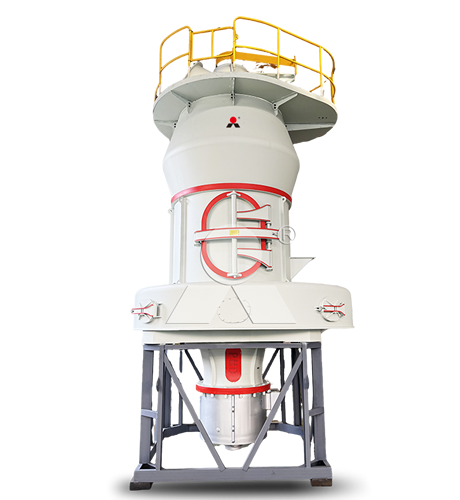
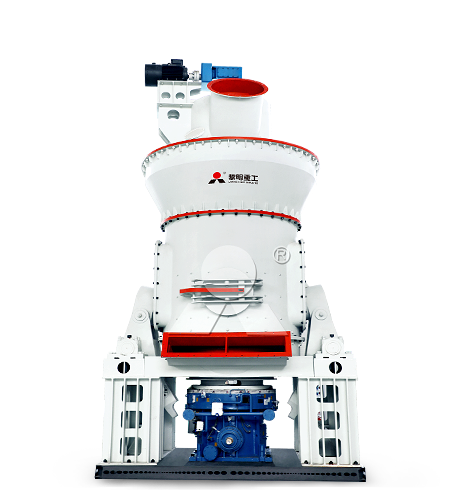
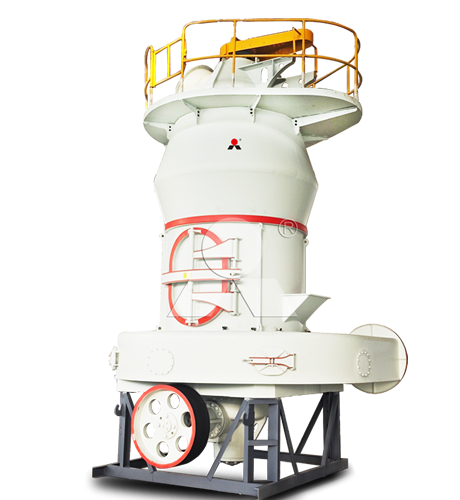
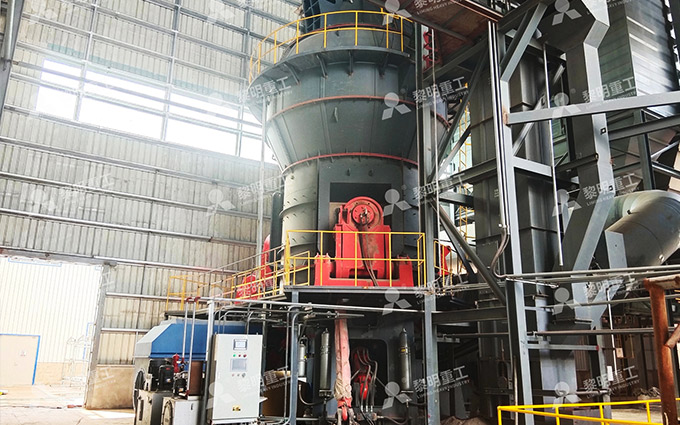
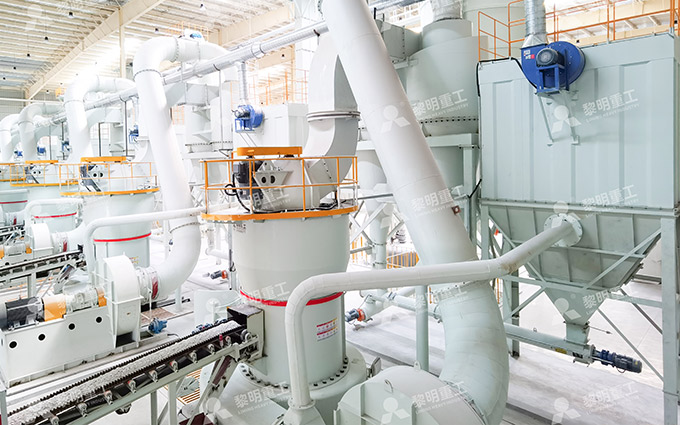
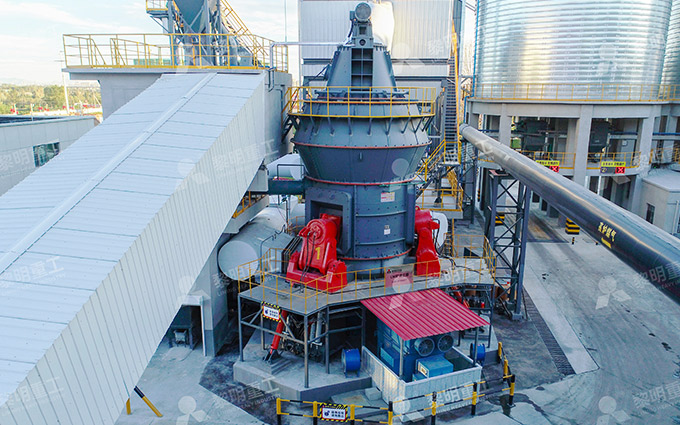
Where trials establish a genuine grinding requirement, the Liming Heavy Industry LM Vertical Roller Mill is a candidate for a material-specific assessment. Vertical grinding systems have been investigated for fly ash processing, including combined grinding, classification, and collection. However, the fine initial feed and its behavior inside the mill require attention during equipment selection.
The assessment should establish whether the recovered ash can form a stable grinding bed, how much material genuinely needs size reduction, and whether the proposed drying arrangement can handle the expected moisture range. Do not apply capacity figures from a limestone or slag installation directly to harvested ash.
Provide the following information for selection and trial planning:
Representative samples from the proposed feed zones.
Moisture range and expected delivery condition.
Particle-size distribution before and after deagglomeration.
Bottom ash, debris, and foreign-material content.
Chemical analysis and carbon-related test results.
Required output and annual operating schedule.
Finished-product requirements and qualification criteria.
The intended relationship between drying, classification, carbon treatment, and grinding.
A drying-and-grinding arrangement may suit a prepared feed, while very wet or poorly controlled material may need separate upstream treatment. The decision should follow a heat balance and processing trials, not an assumption that integrated equipment eliminates every pretreatment requirement.
Measure Saleable Yield, Not Just Dryer or Mill Throughput
A harvested-ash plant can process a high incoming tonnage while producing a much smaller quantity of acceptable powder. Water, debris, carbon-rich fractions, and unsuitable coarse material all affect the relationship between excavated material and finished product.
Prepare a material balance covering:
Excavated wet feed.
Water removed before and during thermal processing.
Screened debris and rejected material.
Carbon-rich or other separated fractions.
Internal returns and material sent to grinding.
Qualified finished powder.
Then compare electrical consumption, thermal input, and operating cost per tonne of qualified product. This avoids making a low-yield route appear attractive simply because one machine has a low energy figure.
Processing intensity also affects the environmental benefit of the recovered material. EPRI identifies drying, grinding, screening, and carbon treatment as meaningful contributors to the overall processing impact, making unnecessary treatment worth avoiding.
Quality Control from Excavation to Product Release
Qualification is not complete when one processed sample performs well. The operation needs a way to keep variable excavation material from becoming variable customer deliveries.
| Control point | Practical purpose |
|---|---|
| Excavation zone identification | Connect feed quality with its location and storage history. |
| Incoming moisture and coarse-content checks | Keep the process within its agreed operating envelope. |
| Dryer outlet monitoring | Verify suitable moisture for downstream treatment and storage. |
| Classifier and separator sampling | Track product quality, recovery yield, and losses into rejected streams. |
| Grinding-circuit checks | Control fineness without unnecessary processing. |
| Finished-product qualification | Verify the required chemical, physical, and performance properties. |
| Storage and release controls | Prevent unqualified material from mixing with approved product. |
For concrete use, the governing specification may include ASTM C618 with applicable ASTM C311/C311M testing, together with project-specific requirements. Identify the required edition and any provisions addressing harvested or processed material. Processing does not automatically establish compliance.
Concrete trials should use the intended cement and admixtures and evaluate the required strength ages, water demand, setting behavior, and air entrainment where relevant. Published experience shows that harvested ash can perform successfully, but the suitability of one deposit does not establish that of another.
A Practical Basis for Plant Design
The best harvested fly ash route applies each operation for a defined reason: drying controls moisture, separation manages specific fractions, carbon treatment addresses carbon-related behavior, and grinding corrects a demonstrated size-reduction need.
For a Liming Heavy Industry grinding assessment, begin with representative feed characterization and a clear finished-product requirement. This makes it possible to evaluate whether an LM Vertical Roller Mill belongs in the route, which fraction it should process, and what upstream preparation it needs. The result should be a plant designed around consistent, qualified output—not simply around processing the largest possible volume of recovered ash.