Concrete SCM Grinding Plant Solutions
Vertical Roller Mill vs Ball Mill for SCM Grinding
2026-11-15 10:38:49
For a new, continuous GGBS production line processing moist granulated blast-furnace slag, a vertical roller mill is generally the stronger starting point for equipment evaluation. It combines drying, grinding, and classification in a compact process and typically offers lower electrical consumption than a conventional ball mill circuit at comparable product requirements. A ball mill remains a technically viable option, particularly where an existing installation, established operating experience, or available drying equipment changes the project economics.
The comparison becomes less straightforward when “SCM” includes several different materials. Slag, natural pozzolans, fly ash, and calcined clay do not present identical grinding duties. The right decision starts with the actual feed and the required finished powder—not with the assumption that one mill arrangement is best for every supplementary cementitious material.
Two Different Ways to Produce Fine Powder
Vertical roller mill: compression within a material bed
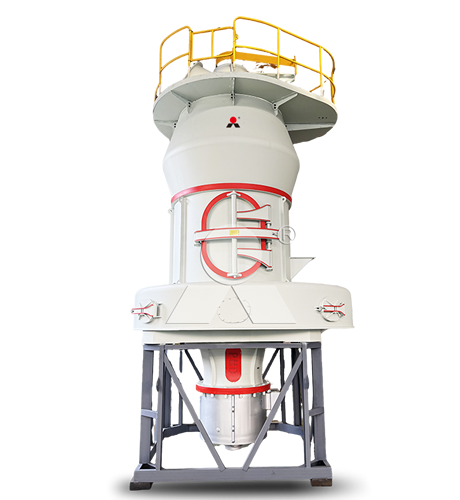
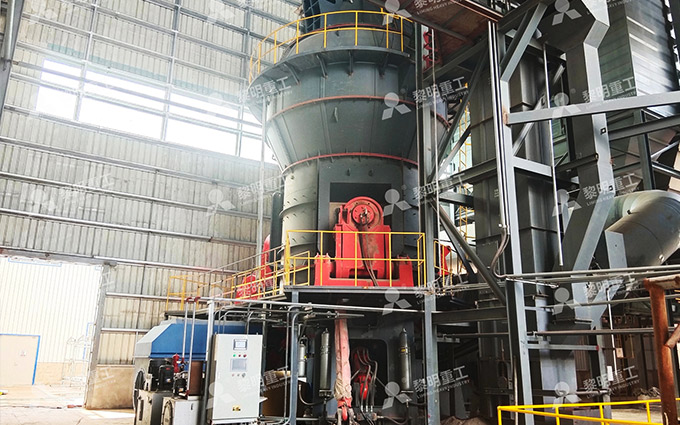
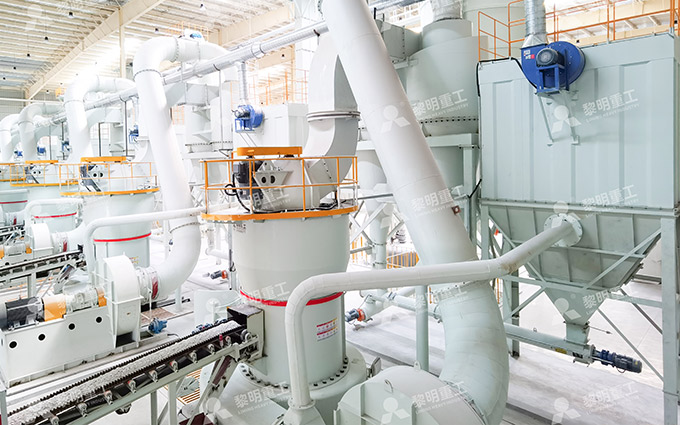
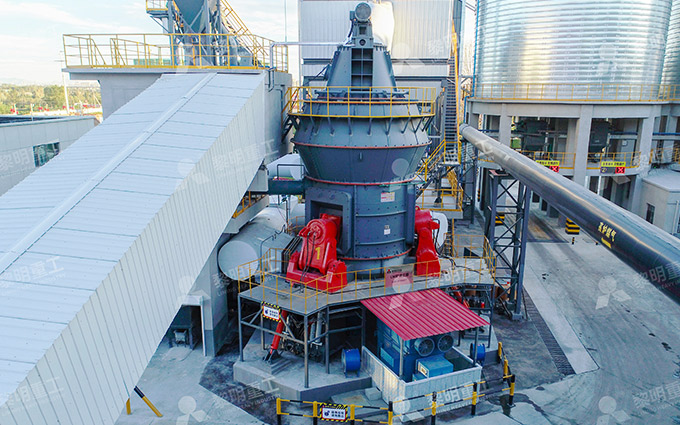
A vertical roller mill feeds material onto a rotating grinding table. Rollers apply pressure to the material bed, breaking particles through compression and inter-particle contact. An upward gas stream carries fine material toward a classifier, while rejected coarse particles return for further grinding. When sufficient hot gas is available, drying takes place during this process.
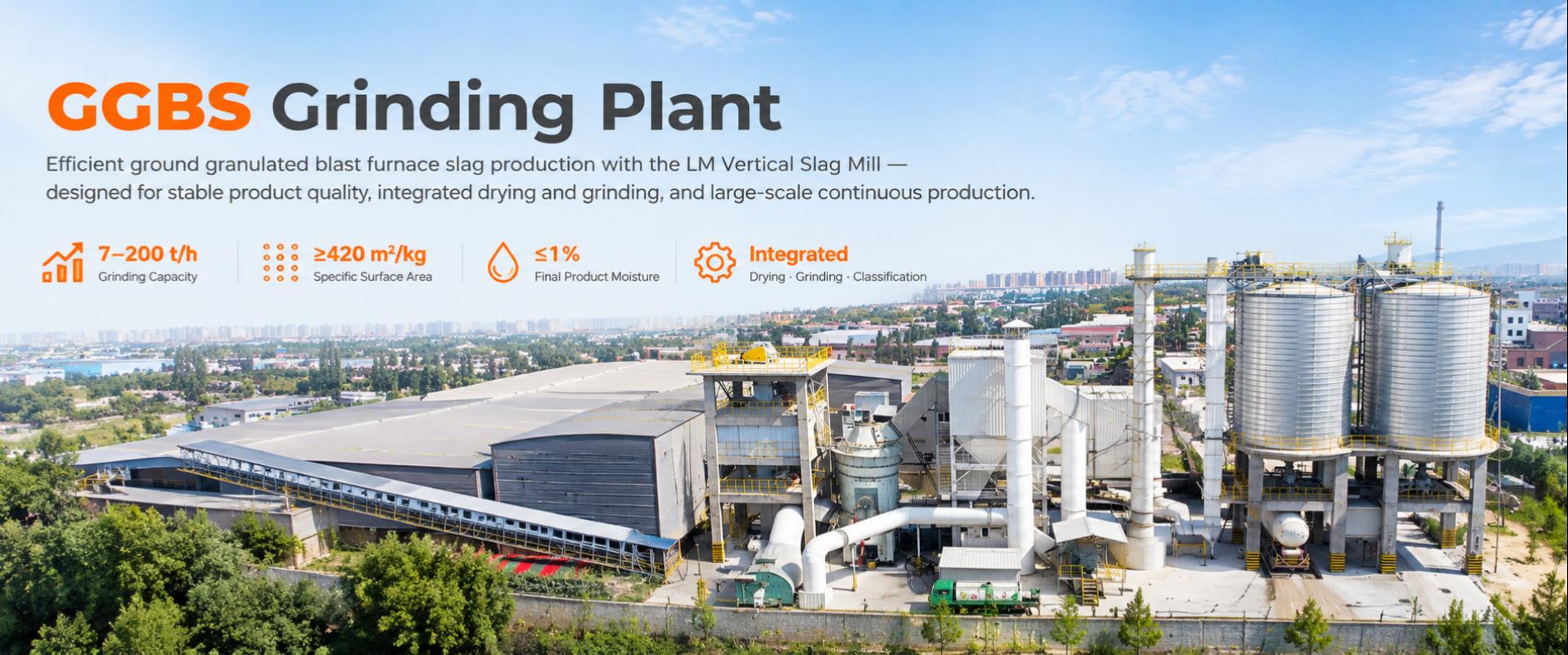
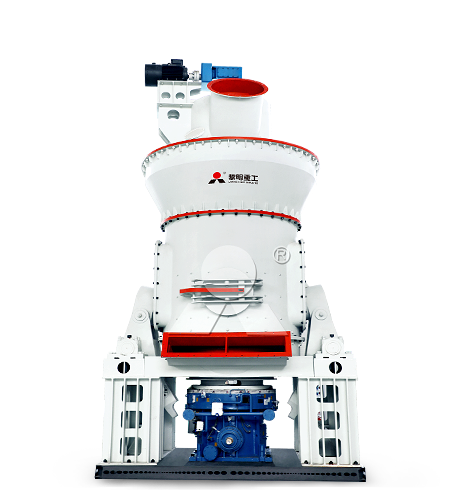
For moist slag, these connected functions are a major reason to consider the Liming Heavy Industry LM Vertical Slag Mill. Its process combines hot-air drying, material-bed grinding, internal classification, and pneumatic transport of qualified powder to collection equipment.
Ball mill: impact and abrasion from grinding media
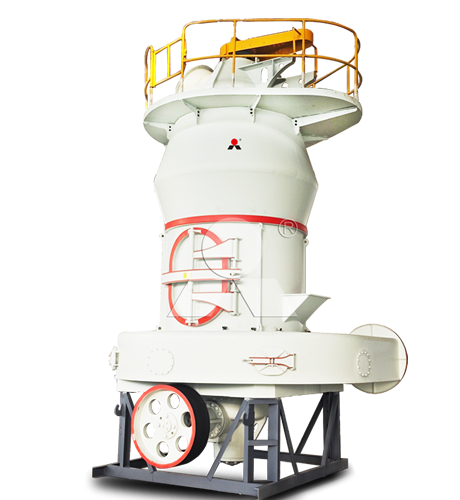
A ball mill uses a rotating cylindrical shell containing grinding media. As the shell rotates, the media move and fall, reducing material through impact and abrasion. In a closed-circuit installation, an external separator removes finished powder and returns coarse material to the mill. Drying arrangements depend on the circuit and feed conditions; a ball mill system should not automatically be treated as incapable of using hot gas.
The important comparison is therefore between complete process circuits. Comparing only the two mill bodies leaves out equipment that can determine energy consumption, drying capacity, layout, and product control.
Where the Main Differences Appear
| Selection factor | Vertical roller mill | Ball mill |
|---|---|---|
| Grinding mechanism | Compression and inter-particle grinding within a material bed. | Impact and abrasion involving grinding media. |
| Moist-feed processing | Can integrate hot-gas drying directly with grinding and classification. | Drying must be evaluated as part of the circuit; wetter feed may require additional drying equipment. |
| Electrical consumption | Generally favorable for fine slag grinding, subject to feed and circuit conditions. | Typically higher for comparable conventional slag-grinding duties. |
| Classification | Usually integrated into the mill assembly. | Usually external in a closed-circuit system. |
| Particle-size distribution | Influenced by grinding pressure, classifier settings, airflow, and internal circulation. | Influenced by media grading, mill operation, separator performance, and circulating load. |
| Plant arrangement | Combines several process functions, but requires appropriate height and maintenance access. | Uses a horizontal mill with associated separation, conveying, and any required drying equipment. |
| Key maintenance areas | Rollers, table liners, classifier, hydraulic equipment, and gas-path components. | Grinding media, liners, bearings, drive components, and external circuit equipment. |
These are typical system characteristics, not guaranteed outcomes for every installation. Feed properties, fineness, operating conditions, and the equipment included in the comparison can materially change the result.
Energy: Compare Saleable Powder, Not Motor Ratings
Vertical roller mills commonly have an electrical-efficiency advantage over conventional ball mills in slag grinding. However, a universal saving percentage is not a reliable basis for purchasing equipment. Published comparisons themselves identify material properties, moisture, fineness, and circuit conditions as obstacles to a true like-for-like assessment.
A useful comparison should hold the following conditions as close as practicable:
The raw-material source and representative grindability.
Feed moisture and feed-size distribution.
Finished-product Blaine, coarse residue, and particle-size distribution.
Required product moisture and performance.
The boundary used to measure electrical consumption.
The operating rate and whether the circuit is running steadily.
Include the main drive, classifier, fans, collection equipment, and relevant conveying within a clearly defined measurement boundary. A low mill-drive figure can be misleading if it excludes substantial auxiliary demand.
Thermal consumption should be assessed separately. Integrated drying simplifies the process, but it does not eliminate the heat required to evaporate water. The available hot-gas temperature and volume, feed moisture, and production rate determine whether the proposed arrangement can meet the drying duty.
Moisture Can Decide the Process Arrangement
Water-granulated blast-furnace slag often arrives with enough moisture to make drying a central design requirement. In this situation, the vertical mill’s ability to expose material to hot gas during grinding can avoid a separate drying stage where the heat and gas-handling conditions are adequate.
For the Liming Heavy Industry LM Vertical Slag Mill, drying capability must be checked against the actual incoming moisture, hot-air supply, feed rate, and required finished moisture. A quoted maximum feed-moisture figure is not an unconditional operating guarantee at every capacity.
A ball mill project can still be practical when suitable drying equipment already exists or when the feed is sufficiently dry. This is why a brownfield expansion may lead to a different decision from a new plant using the same raw material. The value of existing infrastructure belongs in the comparison rather than being ignored in favor of a mill-only energy figure.
Can Both Systems Produce Suitable SCM Powder?
Both technologies can produce fine slag powder, but similar Blaine values do not guarantee identical particle characteristics or concrete performance. Grinding conditions and classification affect the distribution of fine and coarse particles, and those differences must be evaluated rather than inferred from the mill name.
Do not treat particle-size distribution as a fixed property of the mill type
Vertical mill products are often associated with steeper particle-size distributions. However, grinding pressure, circulation, and separation conditions can change that distribution. A ball mill circuit also changes behavior with media selection, separator operation, and circulating load. Statements such as “one system always produces the better distribution” oversimplify a controllable process.
Check more than Blaine fineness
A meaningful product comparison should include specific surface area, coarse residue, particle-size distribution, and finished moisture. For GGBS, it should also include the activity and other qualification tests required by the intended product specification. Liming Heavy Industry’s slag-grinding guidance likewise treats moisture, specific surface, distribution, and activity as connected product requirements.
Confirm performance in the intended mixture
Neither a vertical roller mill nor a ball mill automatically produces a qualified SCM. Mortar and concrete testing should verify the required strength development, workability, and admixture compatibility using representative materials. Equipment selection establishes a processing route; finished-product testing establishes whether that route delivers the required material.
Operating Stability and Maintenance Need Different Planning
A vertical roller mill depends on coordinated control of feed, material-bed conditions, grinding pressure, airflow, and classification. Changes in moisture or feed behavior can affect more than one of these functions at the same time. Stable feeding and an adequate hot-gas supply therefore deserve attention during plant design, not only during commissioning.
A ball mill has different operating priorities. Grinding-media condition, media grading, liners, ventilation, separator operation, and circulating load influence performance. Its relatively familiar mechanical arrangement does not remove the need for circuit control or wear management.
For either system, maintenance planning should answer practical questions:
Which wear parts will be held on site?
What lifting equipment and access routes are required?
How long will inspection and replacement work take?
Which tasks require specialist support?
How will wear be reflected in the operating-cost estimate?
What production will be lost during planned maintenance?
Compare annual saleable output after allowing for realistic maintenance and operating interruptions. A higher nominal capacity is useful only if the plant can sustain it at the required quality.
Three Project Situations That Lead to Different Decisions
A new GGBS plant receiving moist slag
This is a strong application for evaluating the Liming Heavy Industry LM Vertical Slag Mill. Integrated drying, grinding, and classification fit the processing requirements of moist granulated slag, while the equipment assessment can be built around the required output and powder specification.
The project should confirm worst-case moisture conditions and hot-gas availability before fixing the mill size. A plant sized only around average moisture may face a different operating limitation during wetter periods.
An existing plant with a serviceable ball mill circuit
Replacement should not be assumed to be the best investment. First establish whether the current limitation lies in grinding capacity, drying, classification, ventilation, or material handling. Improving the limiting part of an existing circuit may offer a different investment profile from installing a new grinding system.
A replacement assessment should compare the value of lower operating consumption against new capital expenditure, construction requirements, integration work, and shutdown time. The correct choice depends on the complete project rather than the efficiency of the grinding mechanism alone.
A plant producing several SCM products
A multi-product installation needs a separate duty definition for each feed. Record moisture, grindability, fineness, required throughput, and cleaning or changeover requirements. Do not assume that a slag grinding arrangement will achieve the same capacity or operating behavior with calcined clay or a natural pozzolan.
Also confirm whether further grinding is necessary at all. Some incoming materials may need classification, blending, or quality correction rather than extensive size reduction. Defining the treatment requirement prevents unnecessary processing from becoming part of the plant design.
What to Request in a Grinding-System Proposal
To make competing process arrangements comparable, request a proposal tied to a clear set of feed and product conditions.
| Proposal item | What should be defined |
|---|---|
| Feed basis | Material source, test results, feed size, moisture range, and expected variability. |
| Finished product | Blaine, residue, particle-size requirements, moisture, and applicable qualification criteria. |
| Capacity | Saleable output at the stated feed and product conditions. |
| Electrical consumption | Equipment included in the measurement boundary and the conditions for verification. |
| Drying duty | Hot-gas supply conditions, expected thermal requirement, and moisture limits at the proposed output. |
| Plant scope | Feed handling, metal removal where needed, collection, conveying, storage interfaces, and controls. |
| Maintenance provision | Wear-part access, lifting requirements, spare parts, and planned service arrangements. |
| Acceptance testing | Sampling procedures, test methods, operating duration, and responsibility for verification. |
Choosing a Practical Route for SCM Production
For a new slag powder line, evaluate the Liming Heavy Industry LM Vertical Slag Mill against the actual drying duty, output requirement, and finished-product specification. Its integrated process is particularly relevant where moist granulated slag must be converted continuously into controlled GGBS powder.
For an existing ball mill installation, begin with a circuit audit before deciding whether to modify or replace it. In either case, the purchase decision should rest on verified powder quality, total operating requirements, maintainability, and annual production—not on a generic claim that one mill is always superior.