FGD Limestone Grinding Plant
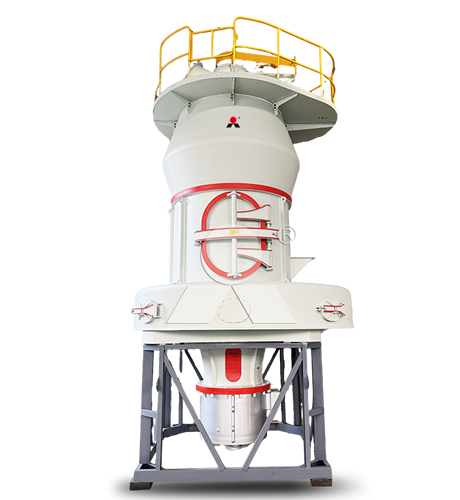
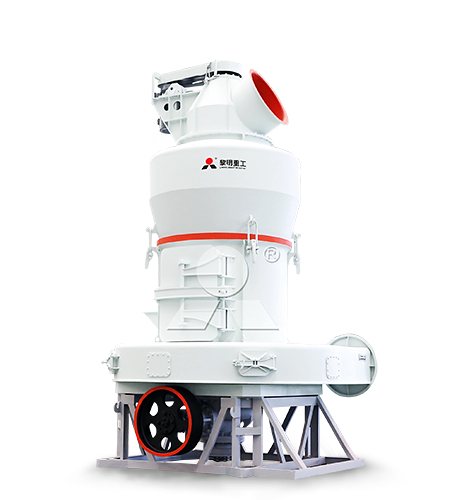
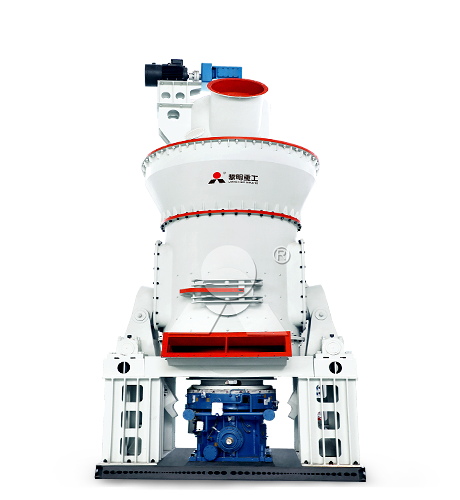
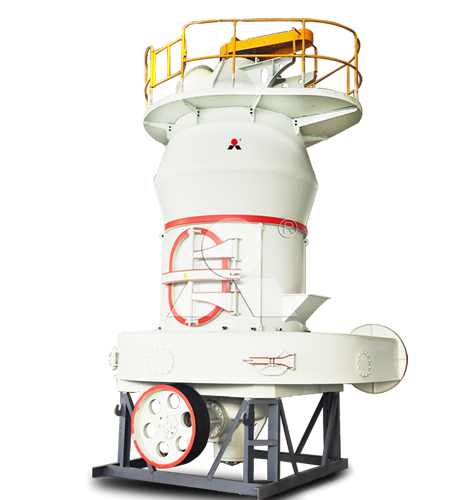
MTW European Mill for Medium FGD Powder Production
2026-09-19 10:32:18
We are Liming Heavy Industry, a manufacturer of various types of industrial crushers, such as Raymond Mill, Trapezoidal Mill, Vertical Mill, Ultrafine Mill, Ball Mill, etc.
Our mills can process the following minerals:
limestone, quicklime, kaolin, talc, barite, bentonite, calcium carbonate, dolomite, coal, gypsum, clay, carbon black, slag, cement raw materials, cement clinker, etc.
If you need a mill to process stone or minerals into powder, please feel free to contact me (WhatsApp: +8615333807511). Thank you.
The MTW European Mill is a practical limestone grinding solution for medium-capacity wet FGD powder production. It is designed for projects that require stable fine limestone powder, controlled output in the 200–325 mesh range, and a process layout that is easier to integrate with existing boiler or absorber systems.
For wet limestone FGD, the finished powder is mixed with water to make an alkaline slurry. This slurry absorbs sulfur dioxide in the absorber and, with oxidation, produces gypsum. A common target is 90% passing 250–325 mesh, depending on the limestone reactivity and the operating conditions of the FGD system.
Where MTW Fits Best
The MTW European Mill is intended for medium-scale limestone powder lines rather than very large central grinding stations. It is well suited to industrial boilers, captive power plants, medium thermal units, retrofit projects, and satellite limestone preparation facilities that need dependable output without the larger footprint of a high-capacity vertical-mill system.
| Project Condition | MTW European Mill Suitability |
|---|---|
| Required output | Suitable for medium powder demand, with published MTW capacity ranges of approximately 3–55 t/h depending on model, limestone characteristics, and finished fineness. |
| Finished powder target | Suitable for FGD limestone in the common 200–325 mesh range, approximately 75–45 μm. |
| Raw limestone condition | Best matched with relatively dry, crushed limestone having a stable feed size. |
| Plant layout | Appropriate where available space, investment scale, and operating demand do not justify a larger vertical grinding system. |
| Operating requirement | Useful where the plant needs adjustable fineness, steady powder output, and straightforward powder-silo connection. |
| FGD arrangement | Can serve one absorber, several smaller boilers, or a localized slurry preparation station. |
Typical Process Flow
Limestone receiving → crushing → raw-material bin → electromagnetic vibrating feeder → MTW European Mill → classifier → pulse dust collector → finished-powder silo → slurry preparation tank → wet FGD absorber
Raw limestone is first crushed to the feed size required by the selected MTW model. The crushed material is stored in a buffer bin, where a controlled feeder maintains a stable supply to the mill. Stable feeding is essential because sudden fluctuations can affect grinding pressure, airflow, classifier performance, and finished-powder fineness.
Inside the MTW European Mill, the grinding rollers apply pressure to the limestone on the grinding ring. The material is reduced into fine powder, while the internal air stream carries lighter particles upward to the classifier. Particles that meet the target fineness continue to the collection system. Oversized particles return to the grinding chamber for further processing.
Qualified limestone powder is collected by the pulse dust collector and transferred to a sealed finished-product silo. From the silo, the powder is accurately dosed into an agitated slurry tank, where it is mixed with process water before being pumped to the FGD absorber.
Model Selection by Output
The final model should be selected after evaluating limestone hardness, feed moisture, target fineness, operating hours, peak reagent demand, and required standby inventory. The following capacity references are useful for preliminary planning of medium FGD limestone powder projects.
| MTW Model | Maximum Feed Size | Typical Capacity Range | Typical FGD Application |
|---|---|---|---|
| MTW115G | Below 30 mm | 3–10 t/h | Small industrial boiler systems, localized desulfurization units, or low-consumption slurry preparation lines. |
| MTW145G | Below 35 mm | 6–17 t/h | Medium industrial plants and projects requiring continuous limestone supply to one or more FGD units. |
| MTW178G | Below 40 mm | 12–33 t/h | Medium power-generation projects or centralized limestone powder preparation for several boilers. |
| MTW218G | Below 50 mm | 15–45 t/h | Higher-demand medium FGD projects requiring a larger powder-production margin and greater finished-powder storage capacity. |
Actual production capacity varies with feed size, Mohs hardness, moisture, required particle-size distribution, system air volume, and maintenance condition. Capacity should therefore be confirmed through limestone testing and project-specific technical evaluation rather than selected from a nameplate value alone.
Controlling FGD Powder Quality
Fine powder quality affects slurry preparation and absorber performance. If limestone is too coarse, it dissolves more slowly and may leave more unreacted particles in the FGD reaction tank or gypsum slurry. If it is ground much finer than the absorber requires, power consumption can increase without a proportional improvement in sulfur dioxide absorption.
For most medium wet FGD projects, the practical objective is a stable limestone powder with sufficient surface area for dissolution and a controlled quantity of coarse particles. The classifier in the MTW European Mill allows the finished fineness to be adjusted through operating settings, supporting product control down to 0.038 mm, or about 400 mesh.
Key quality-control items include:
CaCO3 content of the incoming limestone, normally selected at 90% or above for wet FGD service.
Stable crushed feed size before the grinding mill.
Finished-powder fineness, often set within the 200–325 mesh range.
Residue on the specified control sieve, commonly 325 mesh for higher-reactivity applications.
Particle-size distribution, including control of oversized particles.
Finished-powder moisture and flowability in the storage silo.
Slurry density after powder is mixed with water.
Absorber slurry pH and residual limestone in the gypsum stream.
From Powder to FGD Slurry
Finished powder from the MTW mill enters the limestone silo through a sealed conveying system. A screw feeder, rotary feeder, or loss-in-weight dosing system delivers powder to the slurry preparation tank. Process water and limestone powder are mixed under continuous agitation until the slurry reaches the required solids concentration.
The prepared slurry is transferred to a storage tank or supplied directly to the absorber reaction tank. Slurry density, tank level, pH, and feed flow should be monitored continuously. Duty-and-standby slurry pumps are normally used to maintain reagent supply if one pump requires maintenance.
Within the wet FGD absorber, limestone slurry reacts with sulfur dioxide and oxygen to form gypsum:
CaCO3 + SO2 + ½O2 + 2H2O → CaSO4·2H2O + CO2
The quality of the limestone powder supplied by the grinding plant has a direct influence on the speed and completeness of this reaction. Consistent powder fineness allows the slurry preparation system to maintain more stable density and supports a smoother absorber chemistry.
Equipment Around the Mill
An MTW-based FGD limestone powder line is normally configured as a complete process system, not as a stand-alone grinding unit. The supporting equipment should be selected to match the mill’s capacity and the required operating availability.
Jaw crusher, impact crusher, or another suitable crushing unit for raw limestone reduction.
Raw-material storage bin with enough buffer capacity for steady mill feeding.
Vibrating feeder or belt feeder for controlled limestone delivery.
Bucket elevator and enclosed conveying equipment.
MTW European Mill with classifier and main fan system.
Pulse dust collector and sealed discharge equipment.
Finished limestone powder silo with level indicators and bin aeration.
Powder dosing system for controlled slurry preparation.
Agitated slurry preparation and storage tanks.
Slurry pumps, density instruments, flow meters, and automatic valves.
The dust collection system is especially important in dry limestone grinding. It captures qualified powder, stabilizes the system airflow, reduces material loss, and keeps the powder-handling area cleaner.
Operating Practices
For long-term operation, the MTW European Mill should run with a stable feed rate and consistent airflow. Frequent changes in feed volume or classifier settings can create unnecessary variation in powder fineness. The operating team should coordinate mill output with the finished-powder silo level and the real-time limestone consumption of the FGD system.
Maintain adequate raw limestone inventory before the grinding line.
Prevent oversized stone and metal fragments from entering the mill.
Keep feed moisture within the mill’s suitable operating range.
Check powder fineness regularly and adjust the classifier only when process requirements change.
Maintain adequate powder storage to cover planned maintenance and temporary mill interruptions.
Inspect grinding rollers, grinding rings, classifier components, and dust-collection equipment according to the maintenance schedule.
Flush slurry pipelines when required to avoid limestone settlement during extended stops.
The MTW European Mill provides a balanced option for medium FGD limestone powder production: it offers adjustable fine grinding, a practical capacity range, compact integration with powder storage and slurry preparation, and the ability to produce limestone powder down to 0.038 mm. With properly matched crushing, conveying, storage, and slurry systems, it can provide a stable reagent supply for wet limestone FGD operation.