Powder Processing for Activated Carbon
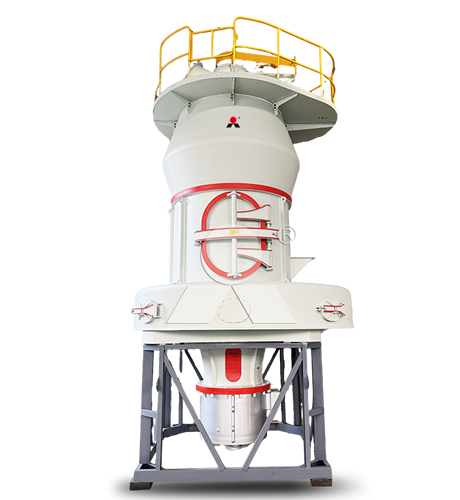
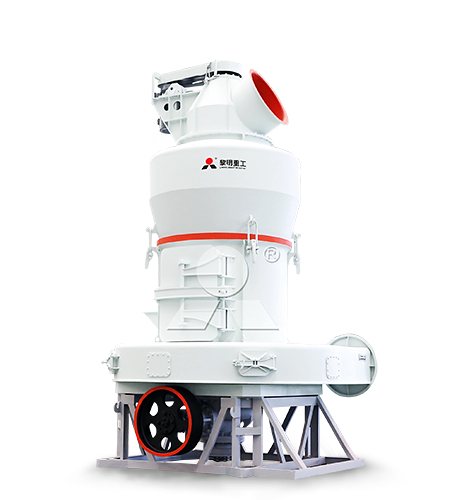
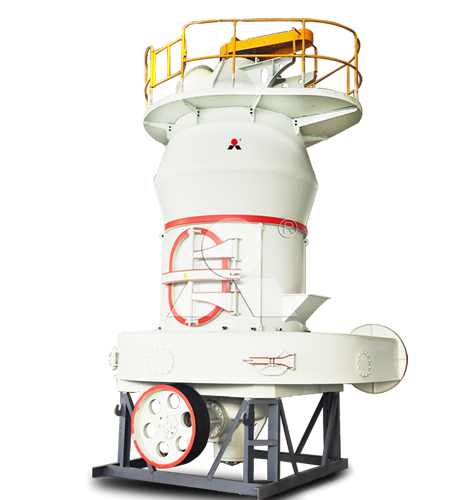
MTW European Trapezium Grinding Mill for Activated Carbon Powder
2026-09-15 14:45:36
We are Liming Heavy Industry, a manufacturer of various types of industrial crushers, such as Raymond Mill, Trapezoidal Mill, Vertical Mill, Ultrafine Mill, Ball Mill, etc.
Our mills can process the following minerals:
limestone, quicklime, kaolin, talc, barite, bentonite, calcium carbonate, dolomite, coal, gypsum, clay, carbon black, slag, cement raw materials, cement clinker, etc.
If you need a mill to process stone or minerals into powder, please feel free to contact me (WhatsApp: +8615333807511). Thank you.
The MTW European Trapezium Grinding Mill is a practical solution for producing activated carbon powder in the medium-to-fine range. It is suitable for dry activated carbon, coconut-shell activated carbon, wood-based activated carbon, biomass carbon, petroleum coke, and other non-coal carbonaceous materials that require stable grinding, controlled fineness, efficient powder collection, and sealed handling.
Activated carbon grinding is more than reducing particle size. The system must protect product quality, maintain a stable particle-size distribution, minimize powder loss, and control fine carbon dust throughout feeding, grinding, classification, conveying, storage, and packaging.
Why MTW Is Suitable for Activated Carbon
Activated carbon is porous, lightweight, brittle, and often irregular in shape. Depending on the raw material and activation degree, it may also have low bulk density, high dust content, variable moisture, and a tendency to accumulate at transfer points. These characteristics require a grinding system with stable airflow, reliable feeding, adjustable classification, and effective dust recovery.
The MTW European Trapezium Grinding Mill is designed for fine powder processing with a pendulum grinding structure. Material is fed into the grinding chamber, lifted into the grinding zone, and ground between the rollers and grinding ring. Airflow carries qualified fine powder to the classifier, while particles that do not meet the fineness requirement return for further grinding.
This internal circulation helps the system produce a more uniform powder than simple open-circuit crushing. The classifier separates finished powder from coarse material, allowing the operator to adjust the final product according to the required mesh range, sieve residue, or particle-size distribution.
MTW grinding systems are commonly configured for fine-powder processing from approximately 30 to 325 mesh, equivalent to about 600 to 45 μm. This range covers many activated carbon powder grades used in water treatment, air purification, decolorization, odor control, chemical processing, and general adsorption applications.
Recommended Processing Scope
| Material | Recommended Grinding Equipment | Typical Processing Purpose |
|---|---|---|
| Activated carbon | MTW European Trapezium Grinding Mill | Powdered activated carbon production and customized powder grades |
| Coconut-shell activated carbon | MTW European Trapezium Grinding Mill | Fine powder for adsorption, purification, and treatment applications |
| Wood-based activated carbon | MTW European Trapezium Grinding Mill | Powder processing with adjustable final fineness |
| Biomass char and activated biomass carbon | MTW European Trapezium Grinding Mill | Preparation of fine carbon powder before final use or further processing |
| Petroleum coke and other non-coal carbon materials | MTW European Trapezium Grinding Mill | Controlled fine grinding and powder classification |
| Coal powder preparation | LM Vertical Coal Mill | Coal grinding before coal-based activated carbon forming or thermal treatment |
The MTW European Trapezium Grinding Mill should be used for activated carbon and other non-coal materials. When the feed material is coal, the appropriate choice is the LM Vertical Coal Mill. In a coal-based activated carbon project, coal can first be prepared by the LM Vertical Coal Mill; after carbonization and activation, the finished activated carbon can be processed into powder by the MTW European Trapezium Grinding Mill.
Typical Activated Carbon Grinding Flow
A complete activated carbon powder line should include more than the main grinding mill. The final result depends on the coordination of feeding, size reduction, drying, grinding, classification, collection, and packaging.
Dry activated carbon feed → hopper and controlled feeder → magnetic separation → coarse crushing when required → MTW European Trapezium Grinding Mill → dynamic classifier → cyclone collector → pulse-jet dust collector → finished-product silo → weighing and packing system.
If the activated carbon arrives as large lumps, pellets, or irregular granules, a crushing stage should be installed before the MTW mill. Stable feed size protects the mill, reduces load fluctuations, and improves the efficiency of the internal classifier. For many activated carbon grinding applications, the mill feed should be controlled below the maximum size accepted by the selected model.
Where incoming material has excessive moisture, a drying section should be added before grinding. Wet activated carbon may adhere to the feeder, reduce powder flow, increase pipeline buildup, and interfere with air classification. The target moisture level should be defined through material testing and the actual product specification.
How Particle Size Is Controlled
Particle-size control is one of the main reasons to use a closed-circuit grinding arrangement. After material enters the grinding chamber, the generated powder is carried by airflow toward the classifier. Qualified fine powder is separated and collected, while coarse particles fall back into the mill for additional grinding.
The final powder grade can be adjusted by coordinating several operating parameters:
Feed rate into the grinding mill.
Feed particle size and material moisture.
Grinding roller pressure and mill operating load.
Classifier speed and cut-size setting.
Airflow volume and system negative pressure.
Condition of grinding rollers, grinding ring, and wear components.
Efficiency of the cyclone, pulse filter, and powder conveying system.
Increasing classifier speed generally produces finer activated carbon powder because more coarse particles are returned to the grinding zone. Reducing classifier speed allows a coarser product to pass into the collection system. This adjustment should be made together with airflow and feed-rate control to avoid excessive material circulation, low output, or unstable powder fineness.
For example, a plant producing approximately 200-mesh activated carbon powder needs more than a nominal mesh setting. The operator should also control the percentage of oversize material, the proportion of ultrafine particles, moisture, bulk density, and product recovery. A 200-mesh powder is commonly associated with a particle size of about 74–75 μm, but the practical specification should state the test method and sieve-passing or particle-size-distribution requirement.
Key MTW System Advantages
The MTW European Trapezium Grinding Mill is suitable for activated carbon powder production because it combines grinding and classification in a compact process arrangement. Its operating principle supports continuous powder production while the classifier separates qualified product from material that requires further grinding.
For activated carbon applications, the following system features are especially important:
Adjustable powder fineness for different activated carbon grades.
Internal classification that supports controlled product particle-size distribution.
Continuous material flow for stable industrial production.
Compatibility with enclosed feeding, negative-pressure conveying, and dust collection.
Support for cyclone separation and pulse-jet bag filtration.
Suitable configuration for automated powder storage and bagging.
Flexible arrangement for standalone grinding sections or complete activated carbon powder plants.
Published MTW product information from comparable mill configurations describes an output range that reaches fine powder sizes around 0.045 mm, with some versions capable of approximately 0.038 mm under suitable operating conditions. Actual fineness and output depend on the feed properties, moisture, target powder grade, equipment configuration, and test results.
Dust Collection and Sealed Operation
Activated carbon powder must be handled in a closed and well-controlled system. Fine particles can escape from open transfer points, create material losses, contaminate surrounding equipment, and increase cleaning requirements. A negative-pressure grinding arrangement helps draw air inward at potential leakage points rather than allowing powder to disperse into the workshop.
The recommended collection arrangement includes a cyclone collector for primary separation and a pulse-jet bag filter for fine-powder recovery. The cyclone captures much of the qualified activated carbon powder, while the bag filter recovers remaining fine particles from the airflow before clean air is discharged through the fan system.
Dust collection should be sized according to powder fineness, carbon bulk density, mill airflow, duct layout, production capacity, and the required collection efficiency. Dust-collection design should be based on the actual physical and chemical characteristics of the powder, including particle-size distribution, particle morphology, and reactivity.
Fine activated carbon powder can form a combustible dust cloud under certain conditions. OSHA identifies finely divided combustible particulate solids as a potential flash-fire and explosion hazard, and notes that particle size can change the nature and magnitude of dust hazards.
Accordingly, the final system should be evaluated through a project-specific dust-hazard assessment. Depending on applicable local requirements and the test results for the actual material, the line may require grounding and bonding, dust-tight equipment, suitable electrical components, temperature monitoring, spark prevention, explosion venting, explosion isolation, emergency shutdown functions, and controlled housekeeping practices.
Selecting the Right MTW Configuration
The correct MTW model should be selected from the actual production target rather than from the highest listed capacity. Capacity changes with activated carbon hardness, feed size, moisture, target fineness, classifier setting, operating hours, and the efficiency of downstream collection equipment.
| Selection Item | Why It Matters |
|---|---|
| Feed material | Different activated carbons vary in hardness, density, moisture, ash, and grinding behavior |
| Maximum feed size | Determines whether pre-crushing is needed before mill feeding |
| Initial moisture | Determines whether the line needs pre-drying or hot-air support |
| Target fineness | Controls mill load, classifier selection, airflow demand, and actual output |
| Required capacity | Defines the mill model and sizing of feeder, collector, fan, silo, and packing equipment |
| Product application | Determines the required particle-size distribution, adsorption index, purity, and moisture specification |
| Plant safety requirements | Determines the required dust-control and risk-control configuration |
A plant producing a relatively coarse activated carbon powder may prioritize output and efficient collection. A plant supplying a finer PAC grade may require tighter classification control, increased filter capacity, more precise feeding, and a more carefully balanced airflow system. The entire line should be sized according to the final product, not only according to the grinding chamber.
From Activated Carbon Granules to Finished Powder
Consider a line that receives dried activated carbon granules and needs to produce a stable fine powder for a water-treatment additive. The material first passes through a hopper, feeder, and magnetic separator. If the granules are too large, they are reduced by a crusher before entering the MTW European Trapezium Grinding Mill.
Inside the mill, the activated carbon is ground and transported by airflow to the classifier. Fine particles that meet the required grade move to the cyclone collector and finished-product storage section. Coarse particles return for further grinding. Remaining dust is captured by the pulse-jet bag filter, and the finished activated carbon powder is conveyed in a sealed system to a silo or packing machine.
This arrangement can support continuous production of consistent activated carbon powder while reducing manual handling and improving powder recovery.
Complete Equipment Arrangement
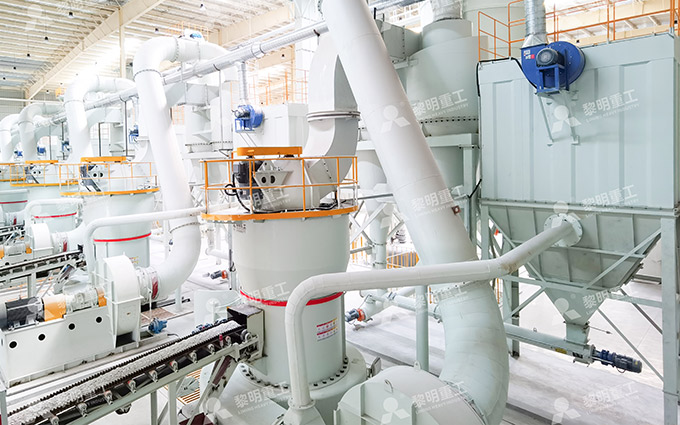
A complete MTW activated carbon grinding plant can include a raw-material hopper, vibrating or belt feeder, magnetic separator, crusher, MTW European Trapezium Grinding Mill, classifier, cyclone collector, pulse-jet dust collector, fan, ducting, rotary valves, screw conveyors, finished-product silo, weighing system, and automatic packing machine.
For coal-based activated carbon production, this line should be positioned after the carbonization and activation stages when the material has become activated carbon. The coal preparation stage remains separate and uses the LM Vertical Coal Mill. The MTW European Trapezium Grinding Mill is then used for final activated carbon powder processing, allowing the plant to convert qualified activated carbon into market-ready powder with controlled fineness and stable packaging performance.