Powder Processing for Activated Carbon
Powdered Activated Carbon vs Granular Activated Carbon: Processing Differences
2026-09-15 14:49:42
We are Liming Heavy Industry, a manufacturer of various types of industrial crushers, such as Raymond Mill, Trapezoidal Mill, Vertical Mill, Ultrafine Mill, Ball Mill, etc.
Our mills can process the following minerals:
limestone, quicklime, kaolin, talc, barite, bentonite, calcium carbonate, dolomite, coal, gypsum, clay, carbon black, slag, cement raw materials, cement clinker, etc.
If you need a mill to process stone or minerals into powder, please feel free to contact me (WhatsApp: +8615333807511). Thank you.
Powdered activated carbon and granular activated carbon can be made from the same carbonaceous raw materials and may have similar internal adsorption pore structures. Their main difference is physical form: powdered activated carbon is a finely ground product intended for direct dosing, while granular activated carbon is supplied as larger particles for packed-bed and continuous-flow treatment systems.
That difference changes the entire finishing section of the production line. PAC requires crushing, fine grinding, air classification, dust collection, and powder packing. GAC requires controlled crushing, screening, particle-size separation, dust removal, and packaging that protects the granules from breakage.
Quick Comparison
| Item | Powdered Activated Carbon (PAC) | Granular Activated Carbon (GAC) |
|---|---|---|
| Physical form | Fine activated carbon powder | Coarse activated carbon granules |
| Typical particle size | Often below 0.18 mm; many commercial grades have mean particle sizes around 10–50 μm | Commonly about 0.5–4 mm, depending on the grade and application |
| Final processing method | Fine grinding and air classification | Crushing, screening, grading, and dust removal |
| Use method | Usually dosed into water, slurry, liquid, or process streams | Usually placed in fixed beds, filters, columns, and adsorption vessels |
| Adsorption rate | Generally faster because the particle diffusion path is shorter | Generally slower than PAC, with performance strongly related to bed depth and contact time |
| Post-treatment handling | Separated by sedimentation, filtration, flotation, membrane treatment, or another solid-liquid separation process | Retained in the adsorption vessel and replaced or regenerated after breakthrough |
| Primary plant concern | Particle-size control, powder recovery, dust collection, sealed conveying | Granule strength, low fines content, screen accuracy, bed hydraulic performance |
PAC is generally described as crushed or ground activated carbon passing a designated sieve. Typical commercial PAC may have a mean particle size of roughly 10–50 μm, while GAC is commonly supplied at approximately 0.5–4 mm for packed-bed use.
Shared Upstream Production Stages
PAC and GAC often share the same upstream production route. The plant receives carbonaceous feedstock, prepares the material, carbonizes it, activates the resulting char, cools the product, washes it when chemical activation is used, and dries the material before final sizing.
Typical feedstock can include coconut shell, coal, wood, sawdust, peat, biomass residues, petroleum coke, and other suitable carbon-rich materials. The choice of feedstock influences hardness, ash level, pore structure, particle strength, and the suitability of the final carbon for liquid-phase or gas-phase adsorption.
A common upstream process flow is:
Raw material receiving → preliminary crushing or grinding → drying → carbonization → activation → cooling → washing and neutralization when required → final drying → product sizing → inspection → packing.
The separation between PAC and GAC production normally occurs after activation and drying, when the carbon is converted into the required commercial particle-size grade.
How Granular Carbon Is Processed
Granular activated carbon production focuses on preserving a controlled granule size. After activation and drying, the carbon may be crushed to break down large lumps or oversized fragments. It is then passed through a multi-deck screening system that separates the material into commercial size fractions.
For example, a plant may produce a coarse grade for vapor-phase treatment, a medium grade for water-filtration vessels, and a finer granular grade for compact adsorption equipment. Each grade is defined by an upper and lower screen size. Oversize material can be returned to the crushing stage, while undersize particles and dust are removed or processed as feed for PAC production.
A typical GAC finishing flow is:
Dried activated carbon → controlled crushing → screening and grading → oversize recycle → fines separation → dust removal → product silo → bagging or bulk loading.
Granule integrity is important because GAC is used in a packed bed. Excessive fines can increase pressure drop, reduce flow uniformity, create channeling problems, and contribute to carbon carryover from the filter or column. The line should therefore minimize unnecessary crushing after activation and use gentle conveying where possible.
GAC is normally used in fixed-bed adsorbers, where water or gas flows through a packed layer of carbon. The carbon stays in the vessel while contaminants are adsorbed. This arrangement requires adequate contact time, correct bed depth, suitable hydraulic design, and periodic replacement or regeneration of the carbon.
How Powdered Carbon Is Processed
PAC production begins with qualified activated carbon granules, pellets, coarse carbon fragments, or carbon fines. The material is first inspected for moisture, particle size, foreign matter, and product quality. If necessary, it is dried and pre-crushed before fine grinding.
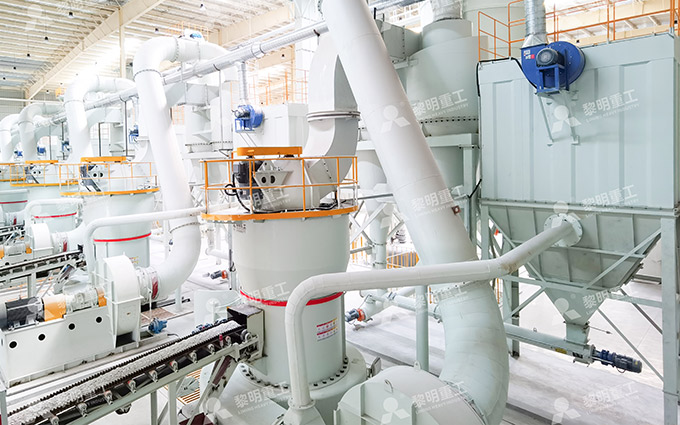
The PAC finishing section uses a closed-circuit powder-processing arrangement. The activated carbon is fed into a mill, ground into fine powder, and transported by airflow to a classifier. Qualified powder is collected, while coarse particles are returned to the grinding zone for additional reduction.
A typical PAC finishing flow is:
Dried activated carbon → feed hopper → magnetic separation → coarse crusher when required → fine grinding → air classification → cyclone collector → pulse-jet bag filter → finished-powder silo → weighing and packing.
In this process, the objective is not simply to produce the finest possible powder. The objective is to achieve the required particle-size distribution with stable throughput, high powder recovery, acceptable bulk density, controlled moisture, and manageable dust loading.
PAC is usually added directly to a process stream, mixing tank, clarification basin, or treatment system. It must later be removed with the loaded solids. In wastewater treatment, PAC is added to the water and requires thorough mixing to support mass transfer, followed by a separation step after the intended contact time.
Why Particle Size Changes Performance
Particle size changes adsorption kinetics because it affects the distance contaminants travel from the external particle surface to the internal pore structure. Smaller activated carbon particles generally have shorter intraparticle diffusion paths, allowing adsorption to proceed more rapidly.
PAC can therefore be effective where contact time is short or where operators need flexible dosage adjustment in response to changing contaminant conditions. Calgon Carbon notes that PAC’s smaller particle size provides faster adsorption kinetics than larger carbon particles, while GAC systems typically rely on fixed-bed contact time to achieve adsorption performance.
However, finer is not always better. Extremely fine carbon can create greater dust loading, increase grinding energy demand, reduce powder-handling efficiency, and make downstream filtration more difficult. Research on carbon processing has also noted that very fine fractions can adversely affect filtration flow and promote channeling in some treatment arrangements.
For GAC, the focus is different. Larger particles offer lower resistance to liquid or gas flow and remain inside a fixed bed, but they require sufficient contact time. If particle size is too coarse or bed contact time is too short, contaminants can pass through the unit before reaching adsorption equilibrium.
Equipment Selection by Product Type
| Production Stage | PAC Line | GAC Line |
|---|---|---|
| Final size reduction | Fine grinding is essential | Controlled crushing only when required |
| Particle control | Air classification, sieve checks, and particle-size-distribution control | Multi-deck screening and strict upper/lower size separation |
| Dust collection | High priority because fine powder is generated continuously | Required mainly at crushing, screening, transfer, and packing points |
| Conveying | Sealed screw, pneumatic, or enclosed conveying systems | Low-breakage conveyors, buckets, chutes, and controlled transfer points |
| Product storage | Dust-tight powder silo with controlled discharge | Granule silo or bulk storage designed to limit attrition |
| Packaging | Valve bags, lined bags, jumbo bags, or sealed bulk powder systems | Bags, bulk bags, drums, or bulk loading with limited granule drop height |
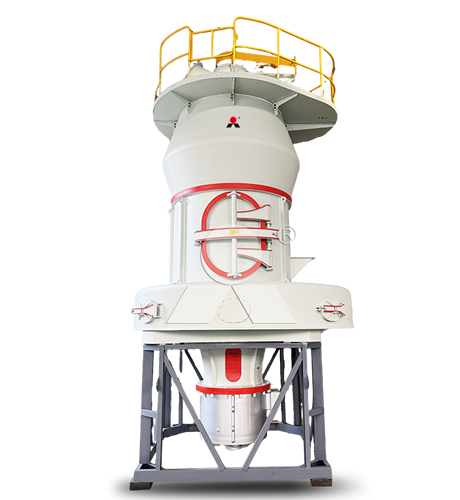
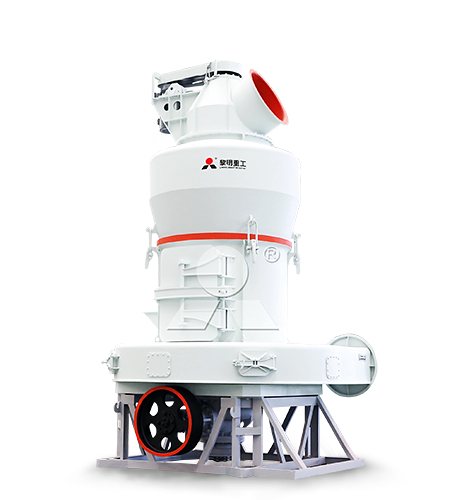
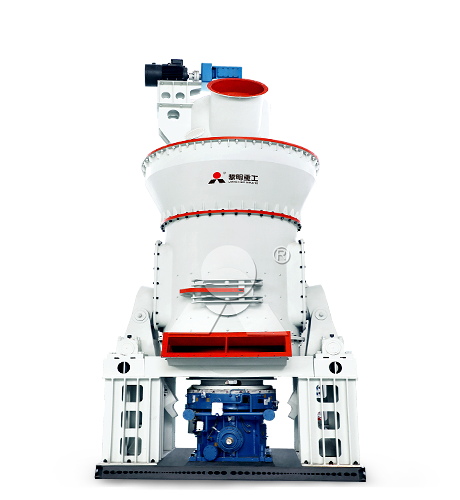
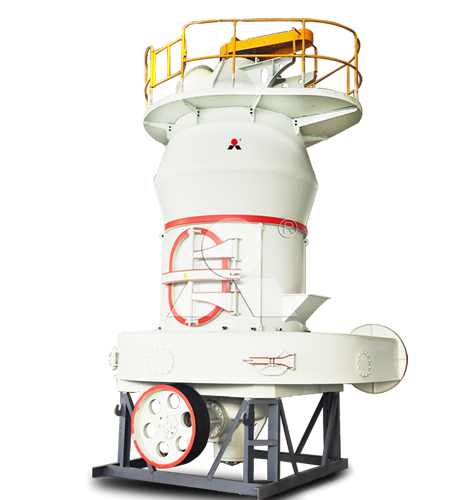
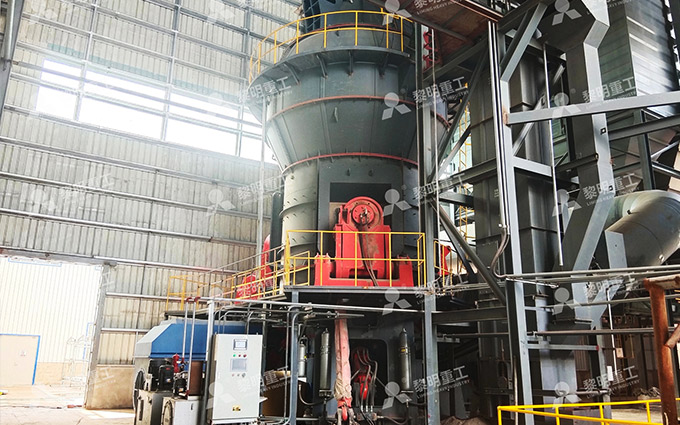
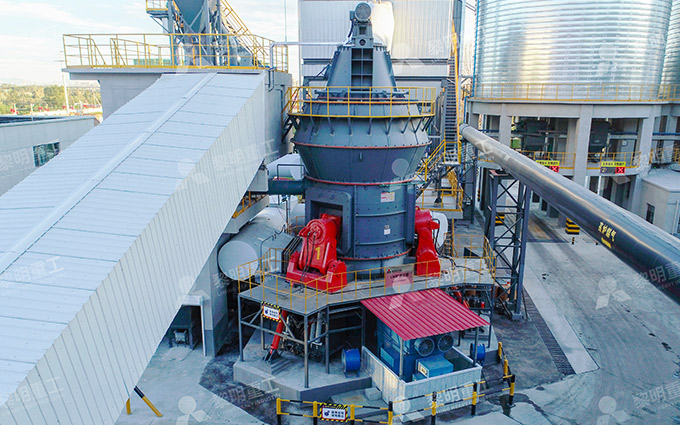
For PAC production from activated carbon or other non-coal carbon materials, the LM Vertical Roller Mill from Liming Heavy Industry provides a suitable integrated route for grinding, classification, and powder processing. The MTW European Trapezium Grinding Mill is also suitable where the project requires a separate pendulum-type grinding system for activated carbon powder.
For coal preparation in a coal-based activated carbon project, the LM Vertical Coal Mill should be used only in the coal grinding section before forming, carbonization, or activation. Once coal has been converted into activated carbon, the final powder-processing section should use the LM Vertical Roller Mill or MTW European Trapezium Grinding Mill because the material being processed is activated carbon rather than coal.
Product Quality Priorities
PAC and GAC require different final quality controls even when they originate from the same activated-carbon batch. Both products may be checked for adsorption performance, ash, moisture, pH, bulk density, iodine number, methylene blue value, and other application-specific indicators. Their physical inspection standards differ substantially.
| Quality Item | PAC Priority | GAC Priority |
|---|---|---|
| Particle-size distribution | Fine and controlled distribution; low oversize content | Defined screen range; low undersize and oversize content |
| Dust and fines | Collected efficiently as saleable product where specification allows | Minimized to protect packed-bed performance |
| Mechanical strength | Important for handling, but typically less critical than for GAC | Highly important to limit abrasion and carbon loss during service |
| Bulk density | Important for pneumatic conveying, dosing, silo storage, and packing | Important for bed volume, vessel loading, and product shipment |
| Moisture | Must support flowability and accurate dosing | Must support storage stability and product integrity |
| Adsorption behavior | Rapid adsorption under direct-contact conditions | Stable adsorption throughout a fixed-bed operating cycle |
In practical terms, PAC production is a precision powder-processing operation, while GAC production is a controlled crushing-and-screening operation. The first emphasizes fineness, classification, powder recovery, and closed handling. The second emphasizes granule strength, size consistency, low fines, and flow behavior inside adsorption beds.
Selecting the Production Route
Choose PAC production when the customer needs fast adsorption, direct dosing, flexible treatment capacity, or a powder that can be mixed with liquid or injected into a process stream. PAC is particularly suitable where the treatment system can separate the spent carbon after contact.
Choose GAC production when the customer operates a fixed-bed filter, adsorption column, or continuous-flow purification system. GAC is preferred where carbon must remain in the treatment vessel, allow water or gas to pass through the packed bed, and be replaced or thermally regenerated after its adsorption capacity is used.
Both products can be produced within the same activated carbon plant when the final sizing section is designed with separate material routes. Granular material can be screened into GAC grades, while qualified carbon fines or selected granular fractions can be directed to a dedicated milling and classification system for PAC production. This approach helps the plant serve multiple product applications while improving the use of qualified activated carbon material.